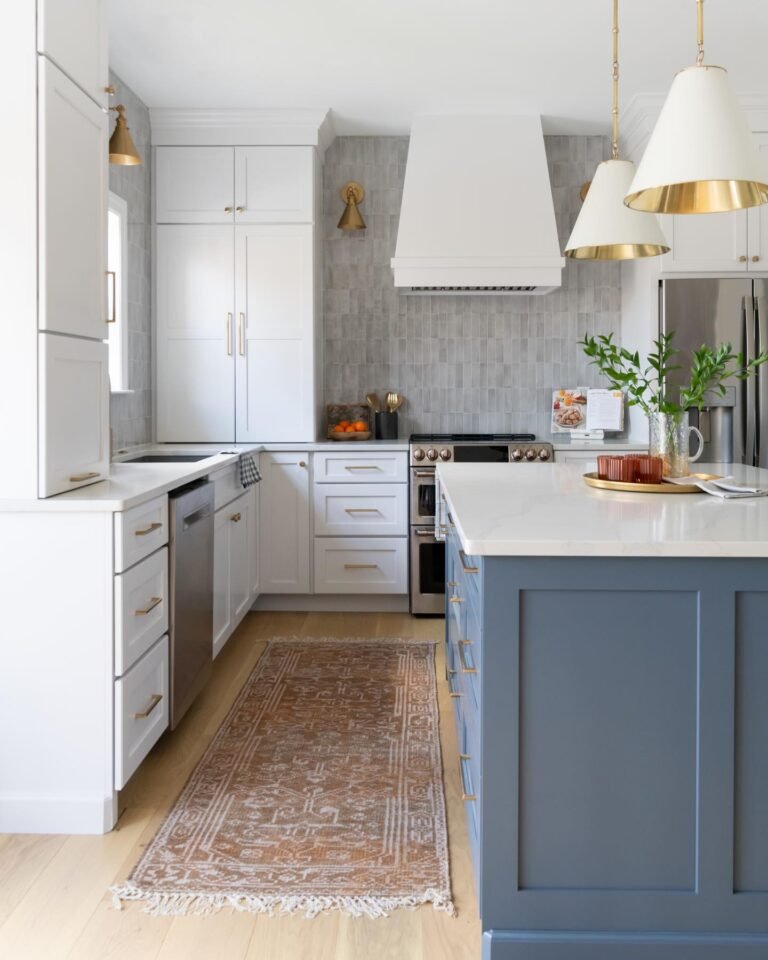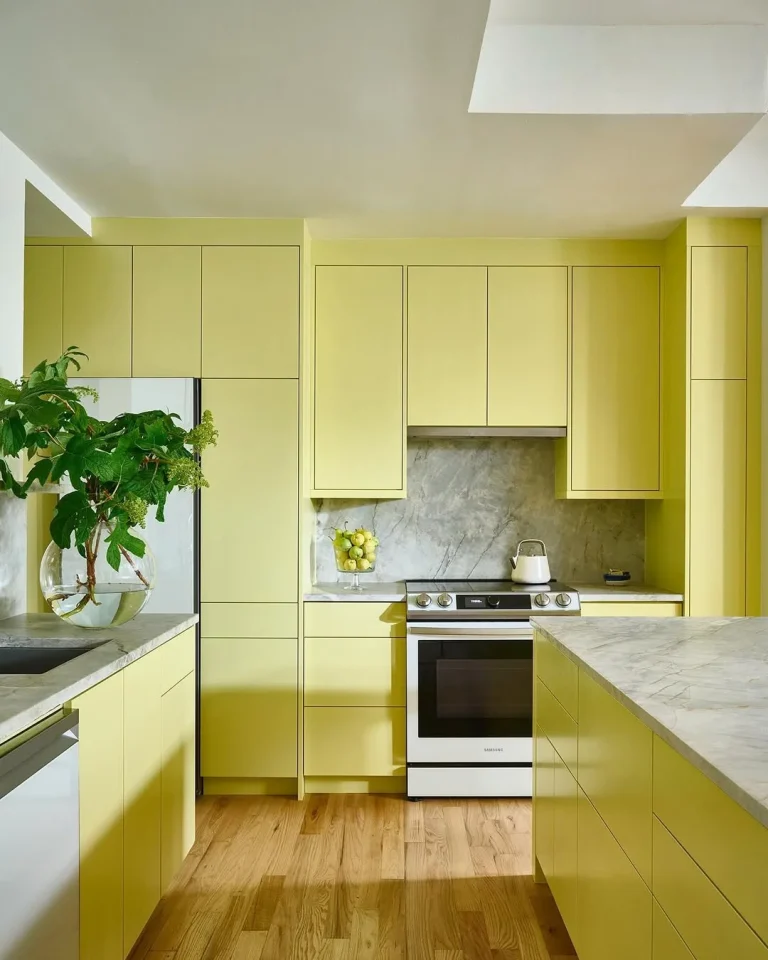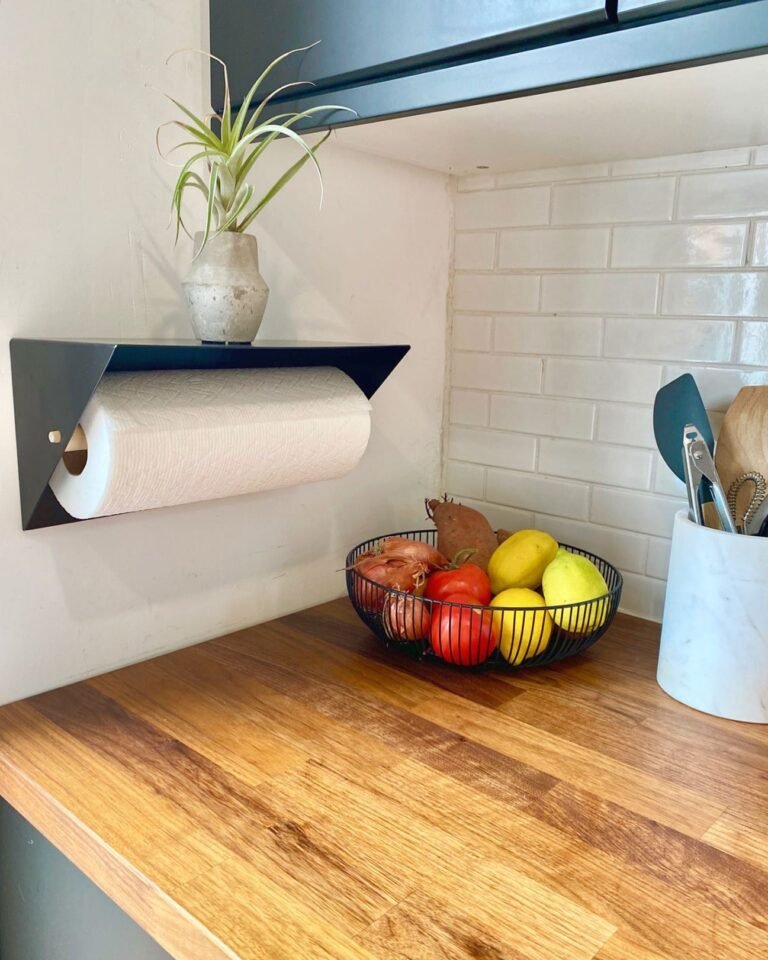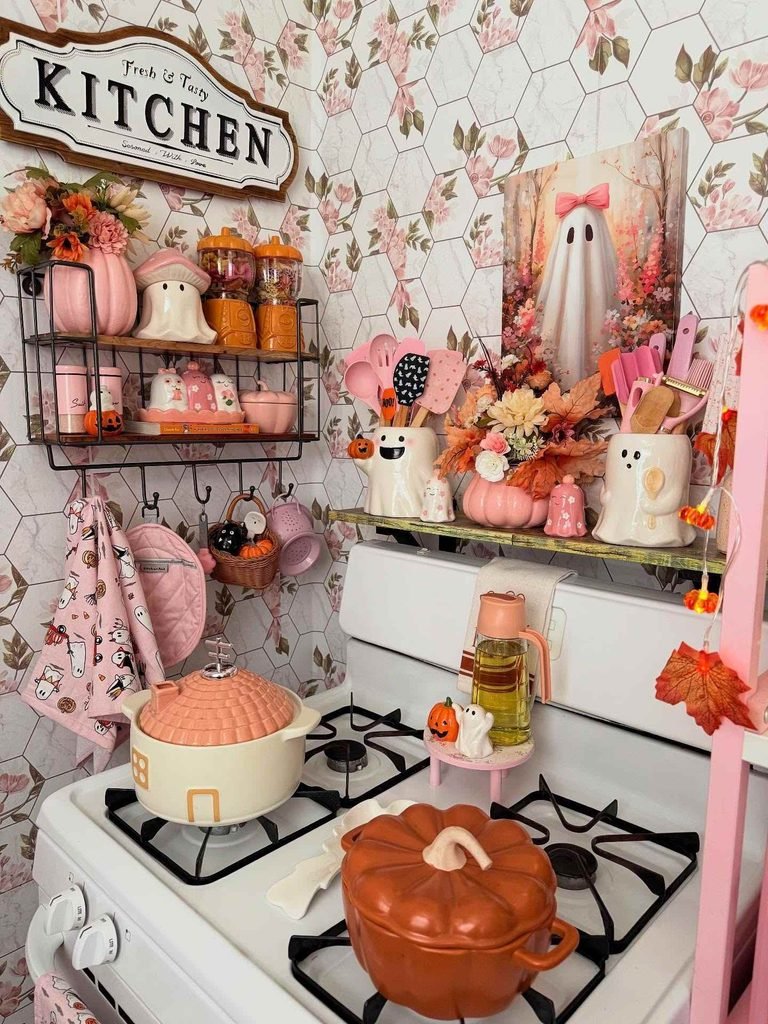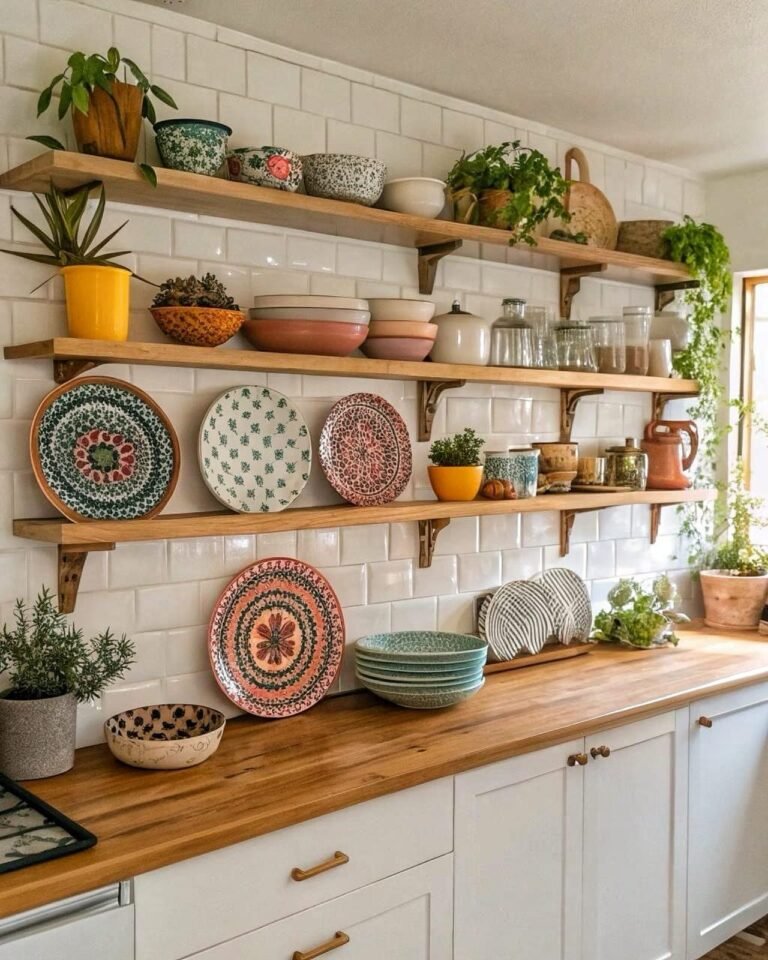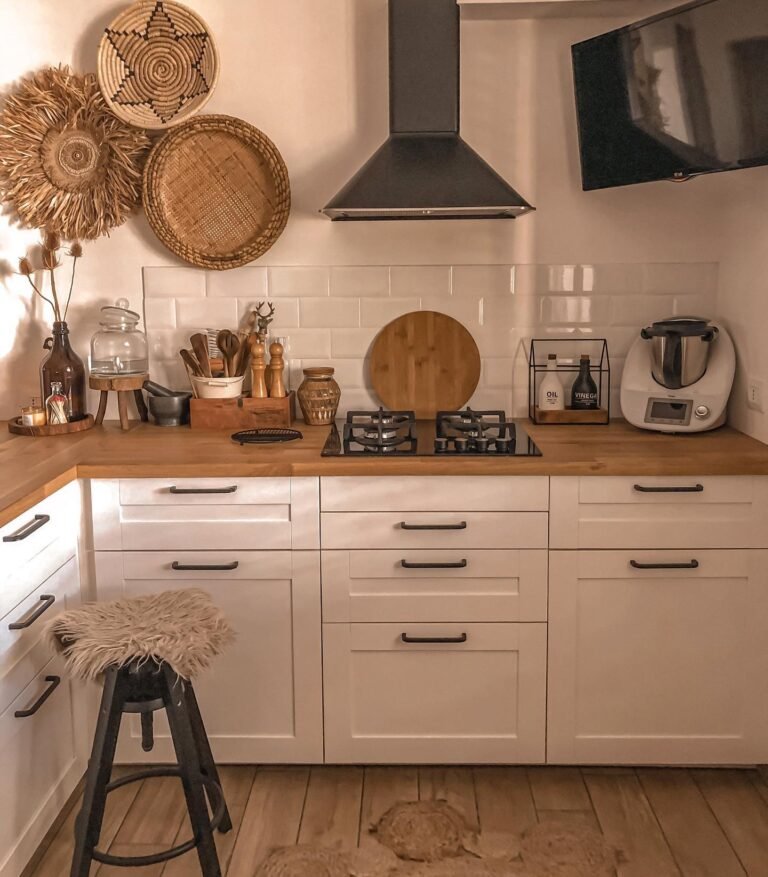
21 Colorful Kitchen Ideas Full of Personality
A colorful kitchen can feel cheerful without becoming chaotic. The right mix of painted cabinets, patterned tiles, warm wood, plants, and playful accessories can improve style while keeping everyday tasks practical.
Whether you are updating a compact rental or planning a full renovation, these ideas show how color can define zones, brighten dark corners, and make storage feel intentional. Start with one confident shade, then build around it using accents you already enjoy.
Related Kitchen Articles :
20 Pantry Designs for Stylish Kitchen Storage
20 Small Kitchen Storage Ideas for Tight Spaces
Wood Kitchen Ideas That Feel Warm and Functional
1. Pink and Charcoal Contrast
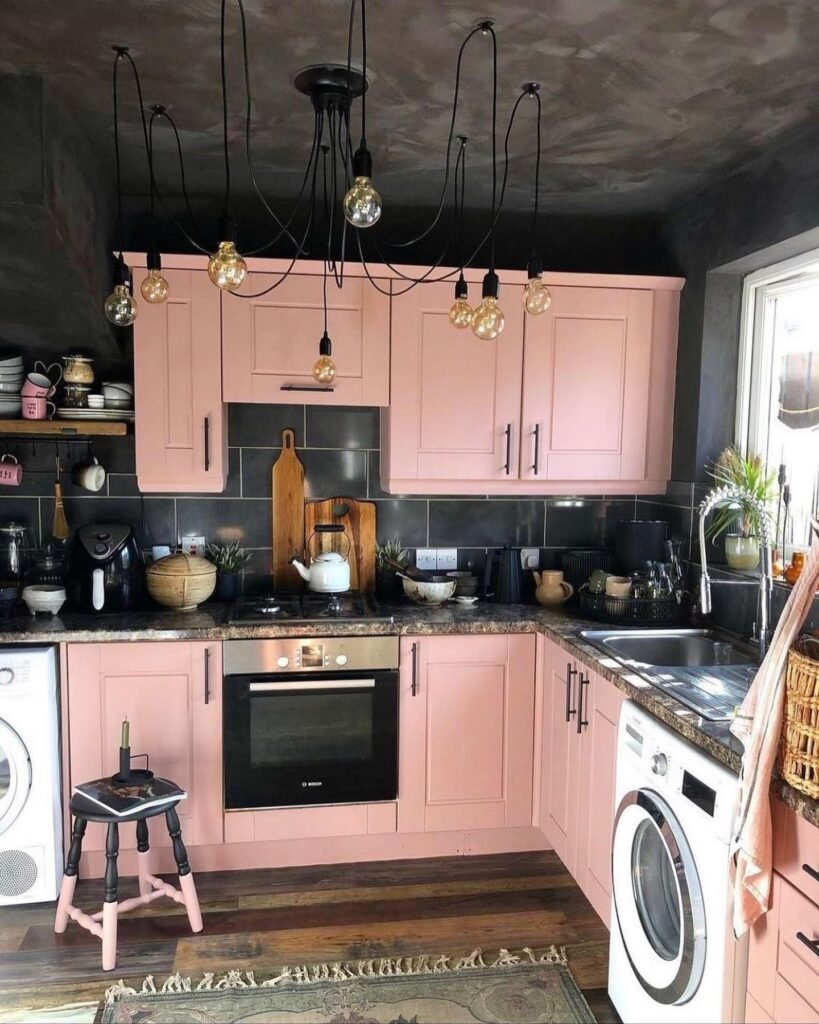
Soft pink cabinets gain depth when paired with charcoal walls, black hardware, and dark worktops.
The contrast keeps the room from feeling overly sweet while making the cabinetry stand out clearly. In a small kitchen, limit pink to cabinet fronts and repeat black on lighting, handles, and appliances for balance.
Open shelving can hold frequently used dishes, which frees enclosed storage for less attractive laundry or cooking supplies.
2. Deep Blue With Coral
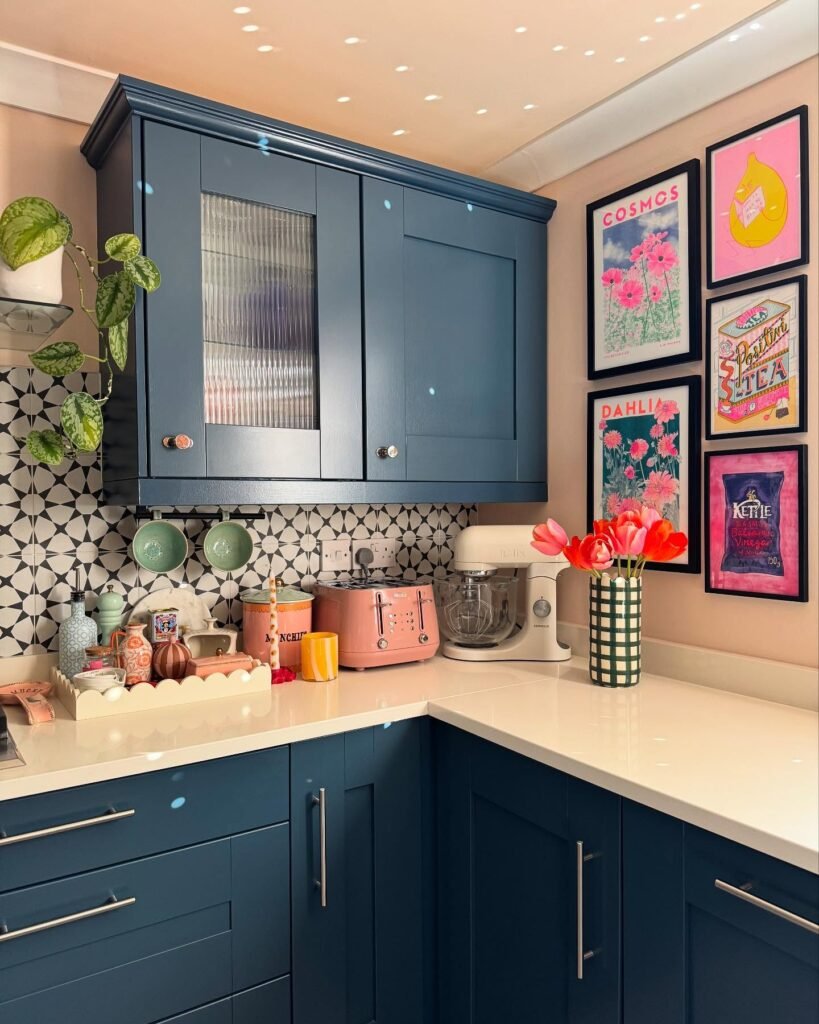
Deep blue cabinetry creates a strong base for a colorful kitchen because it works well with coral, blush, yellow, and green accents. Keep countertops pale to reflect light, especially in a corner layout where work surfaces can feel shadowed.
Framed prints add personality without taking up storage space, while small appliances in related tones make the scheme feel planned. Choose removable artwork and accessories when you want a renter-friendly update.
3. Bright Colors on Black
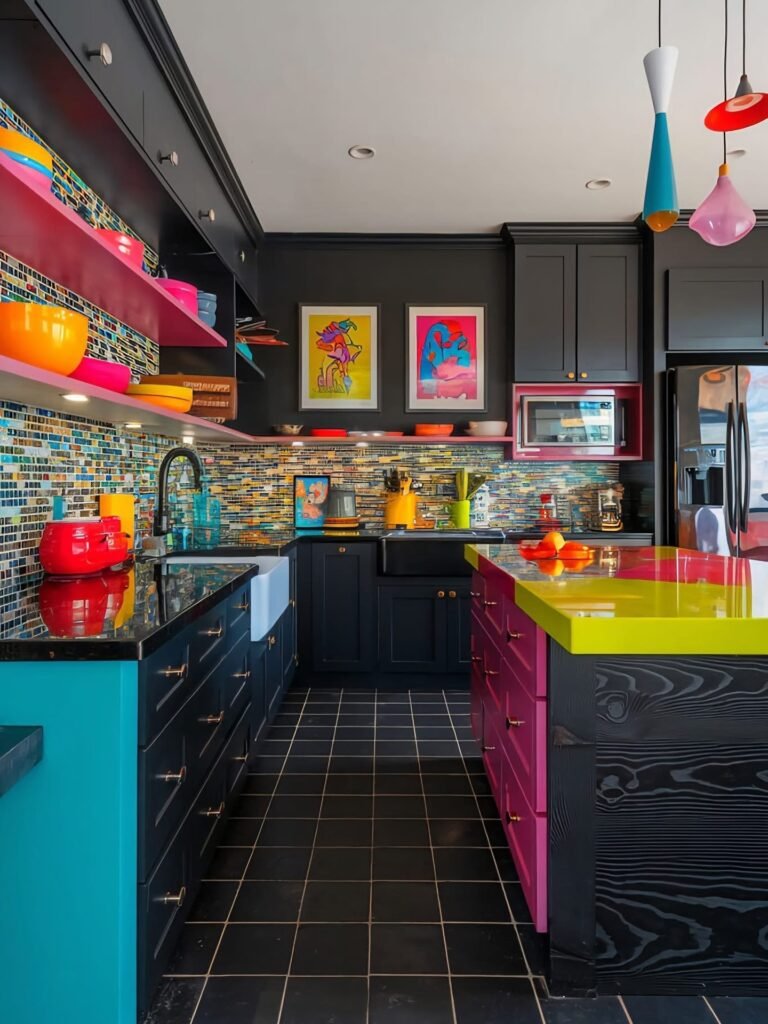
A dark kitchen can handle several bright shades when the colors are repeated with purpose.
Turquoise base units, magenta drawers, lime counters, and orange cookware feel energetic because black cabinets and flooring provide a steady background. For easier maintenance, reserve the boldest colors for replaceable elements such as shelves, pendant shades, stools, or small appliances.
Good under-cabinet lighting also prevents saturated finishes from making the preparation areas feel too dim.
4. Botanical Teal Kitchen
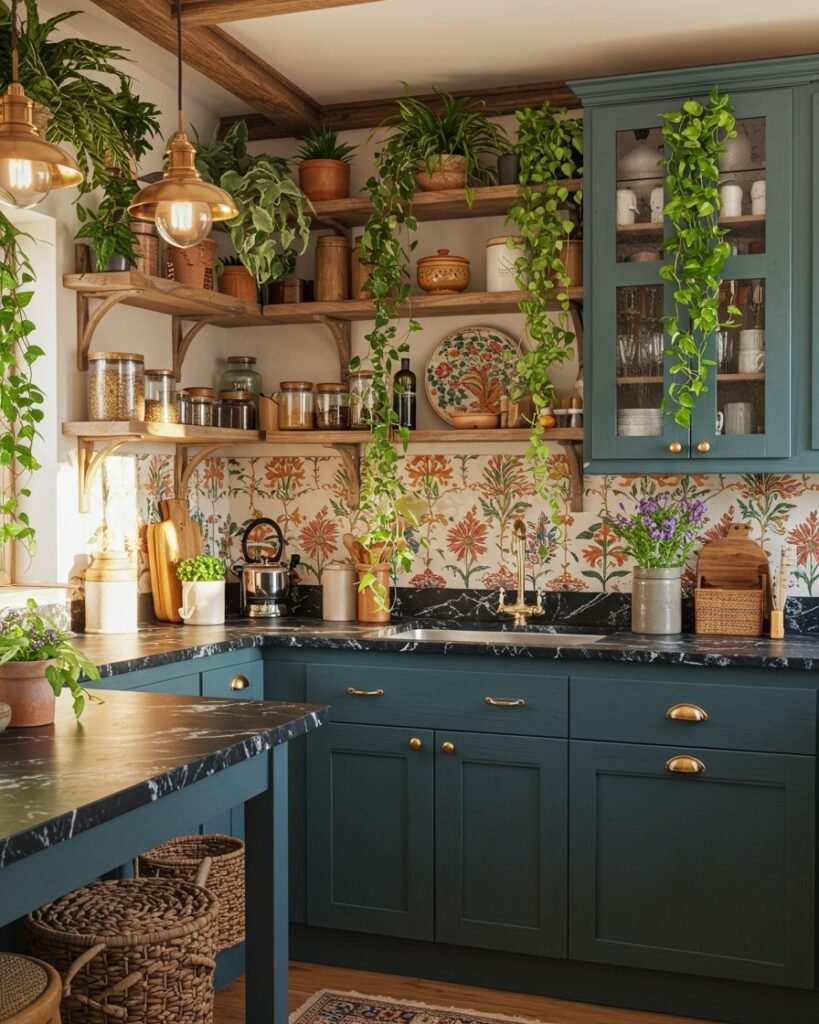
Muted teal cabinets offer color without overwhelming a relaxed, nature-inspired kitchen. Rustic wood shelves, brass handles, patterned wallpaper, and trailing plants soften the fitted units and make the room feel collected over time.
Keep everyday jars grouped by height so open storage looks useful rather than cluttered. In smaller spaces, use hanging plants near upper shelves instead of filling valuable countertop corners, and choose easy-care varieties that tolerate warm indoor conditions.
5. Mint and Blush Pairing
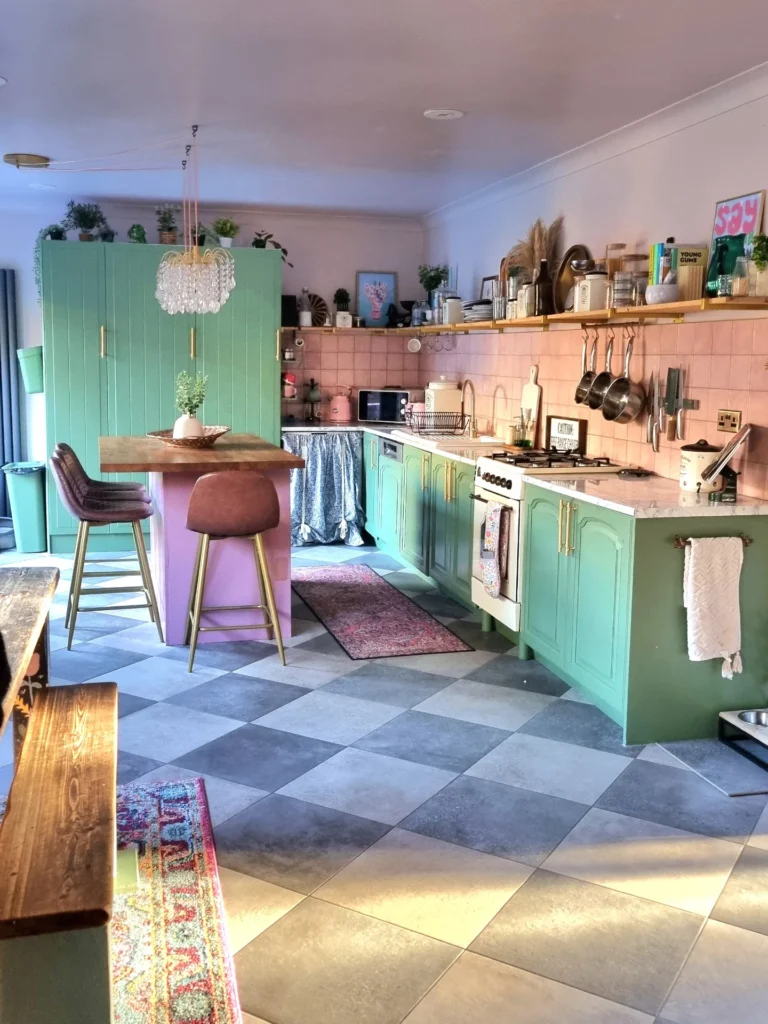
Mint green cabinets and a pink backsplash create a playful pairing that still feels usable for daily life.
Repeating brass on handles, shelves, and stool legs ties the colors together, while a neutral floor gives the eye somewhere to rest. A movable island or narrow breakfast table can add prep space without requiring permanent construction.
To stay on budget, paint existing cabinet doors and update only the most visible hardware rather than replacing the full kitchen.
6. Cobalt Blue Cabinetry
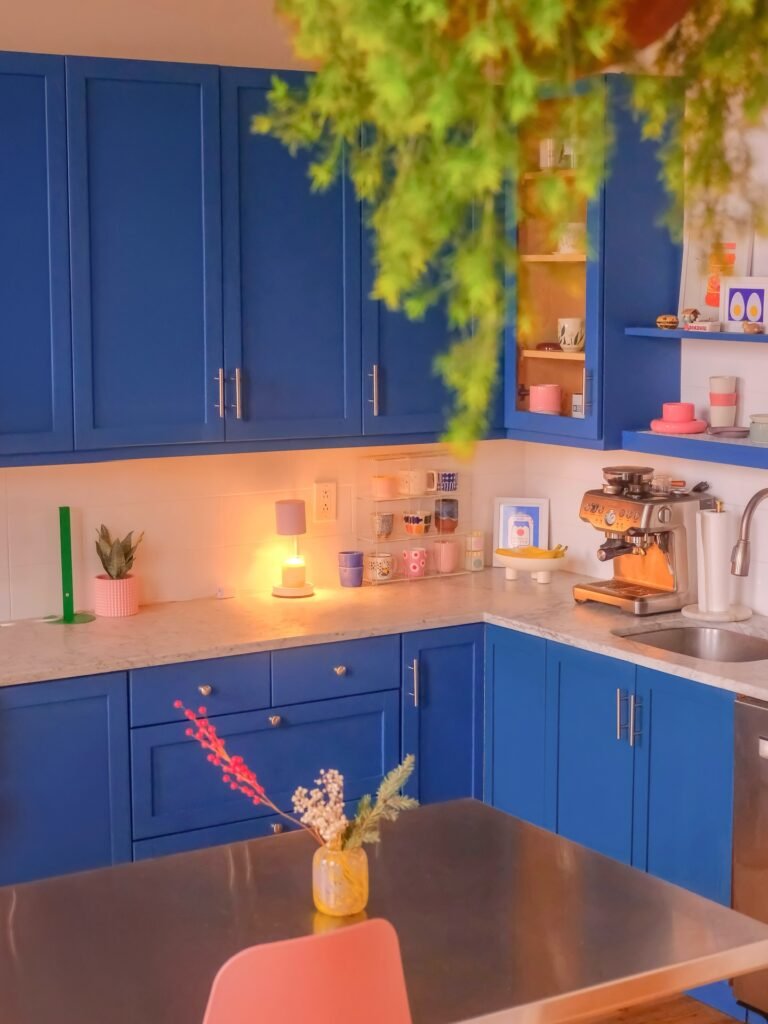
Bright cobalt cabinetry brings instant energy to a compact kitchen, especially when walls and countertops remain pale.
Small pink cups, warm lighting, and simple artwork prevent the blue from feeling cold without crowding the workspace. Keep decorative objects on wall shelves or slim racks so the main counters stay open for cooking.
Matching storage jars can make an exposed coffee station look tidy, and under-cabinet lights add useful task lighting after dark.
7. Soft Blue and Wood
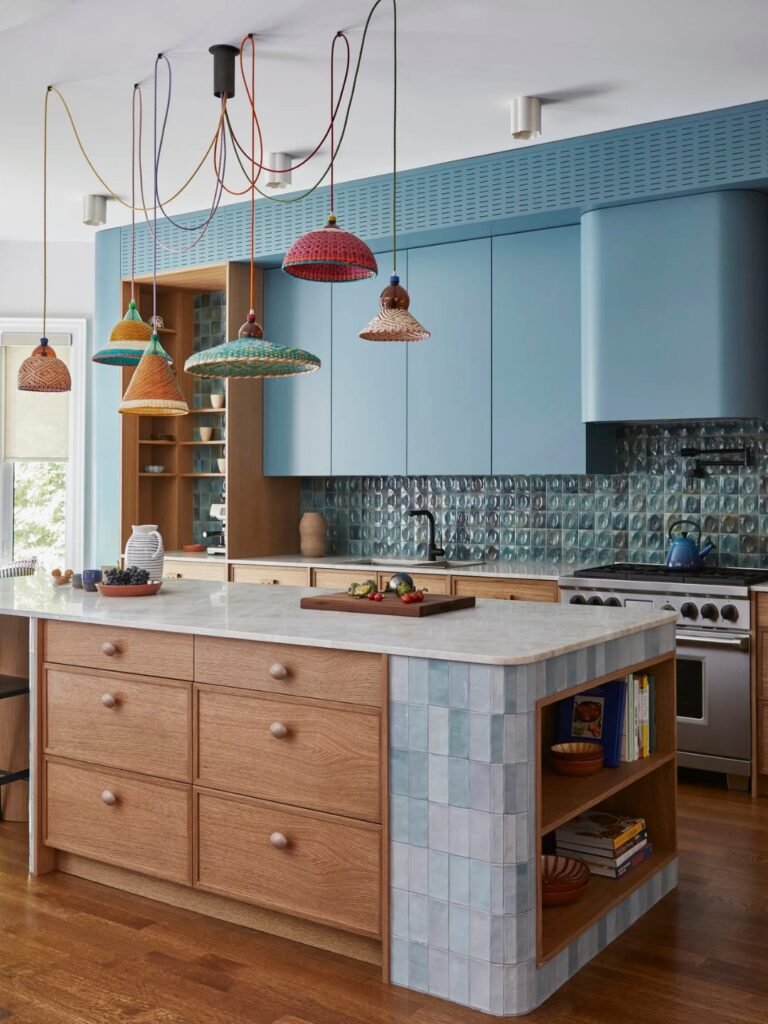
Pale blue cabinets feel fresh and calm, while woven pendant lights introduce softer shades without changing the permanent finishes.
The natural wood island balances cool tones and adds generous drawer storage for cookware, linens, or pantry items. Wrapping one island end in tile protects a high-contact surface and gives the room another quiet layer of color.
Use open shelves at the end for cookbooks and serving pieces that are attractive enough to display.
8. Maximalist Floral Walls
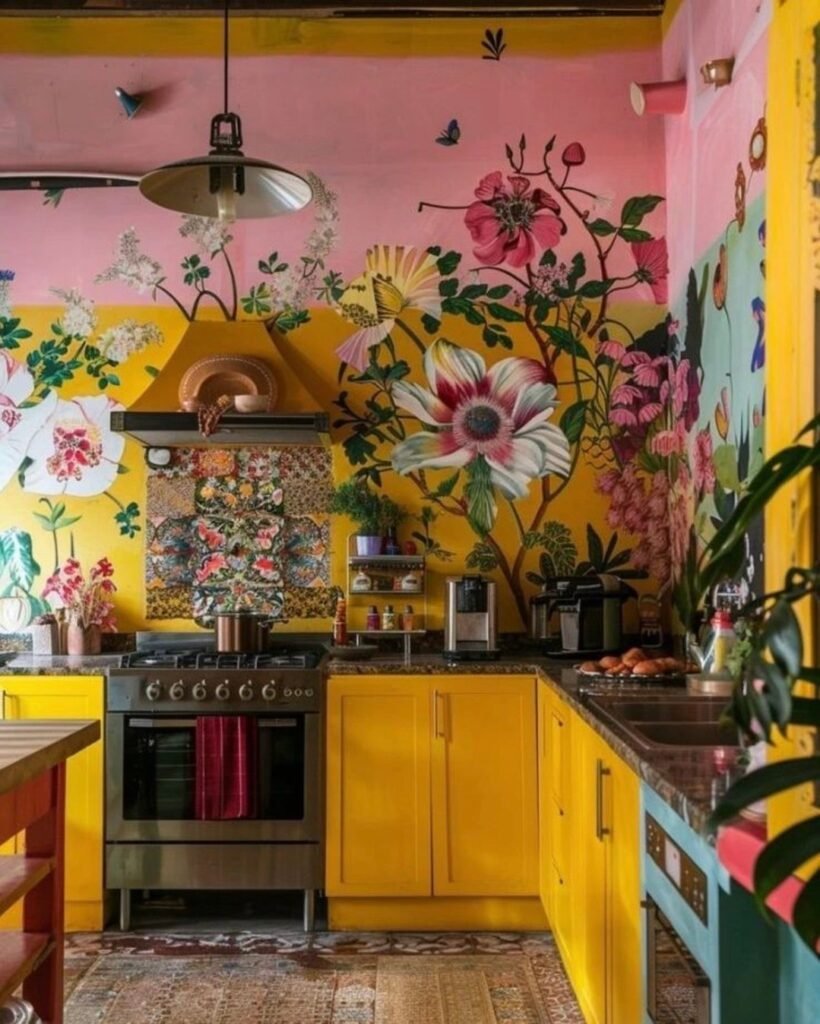
For a bold maximalist kitchen, use one dominant color to connect murals, cabinetry, textiles, and collected objects.
Sunny yellow cupboards work as a visual anchor beneath oversized floral walls, while touches of pink, turquoise, and green keep the room lively. Since pattern can quickly feel busy, leave worktops mostly clear and store small items together on a tray.
Washable paint or sealed wallpaper is a practical choice near cooking and sink areas.
9. Fresh Green Cabinets
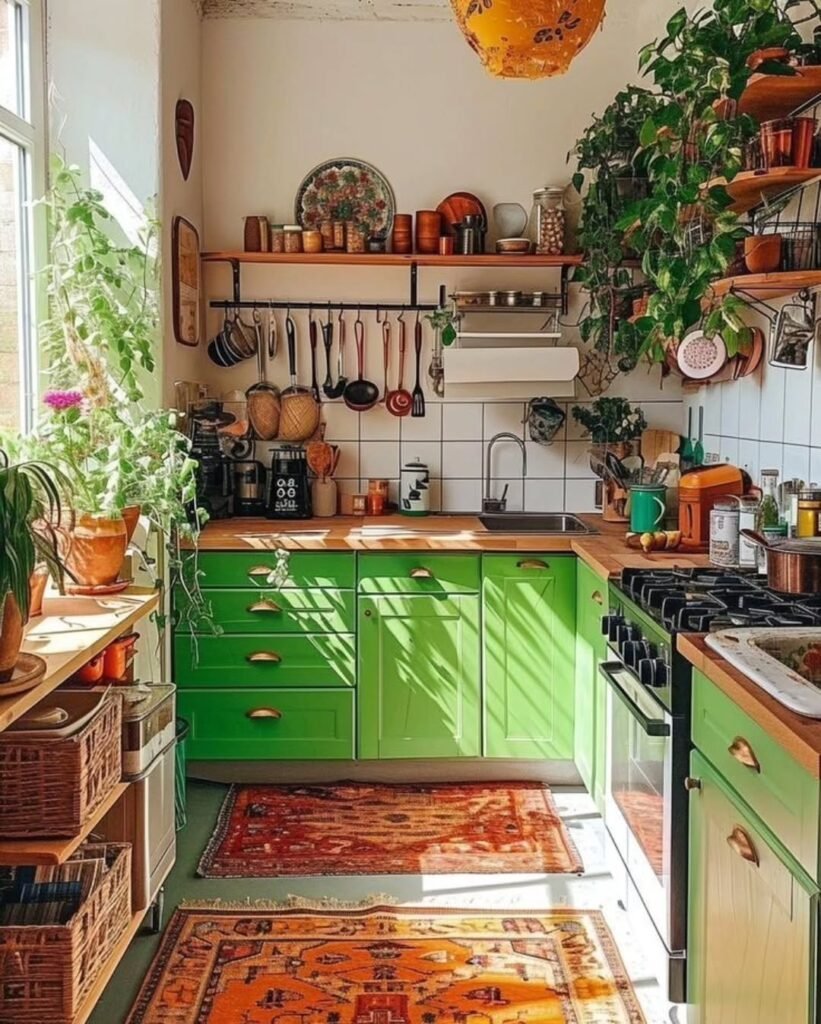
Vivid green cabinets can make a narrow kitchen feel bright, especially when natural light reaches the main work area. Warm wood counters and terracotta accessories soften the color and create a welcoming, earthy finish.
Wall rails are useful for utensils because they reduce drawer clutter and keep tools close to the stove. Add rugs only where doors and appliances can open freely, and choose low-pile washable styles for safer everyday cleaning.
10. Colorful Open Shelving
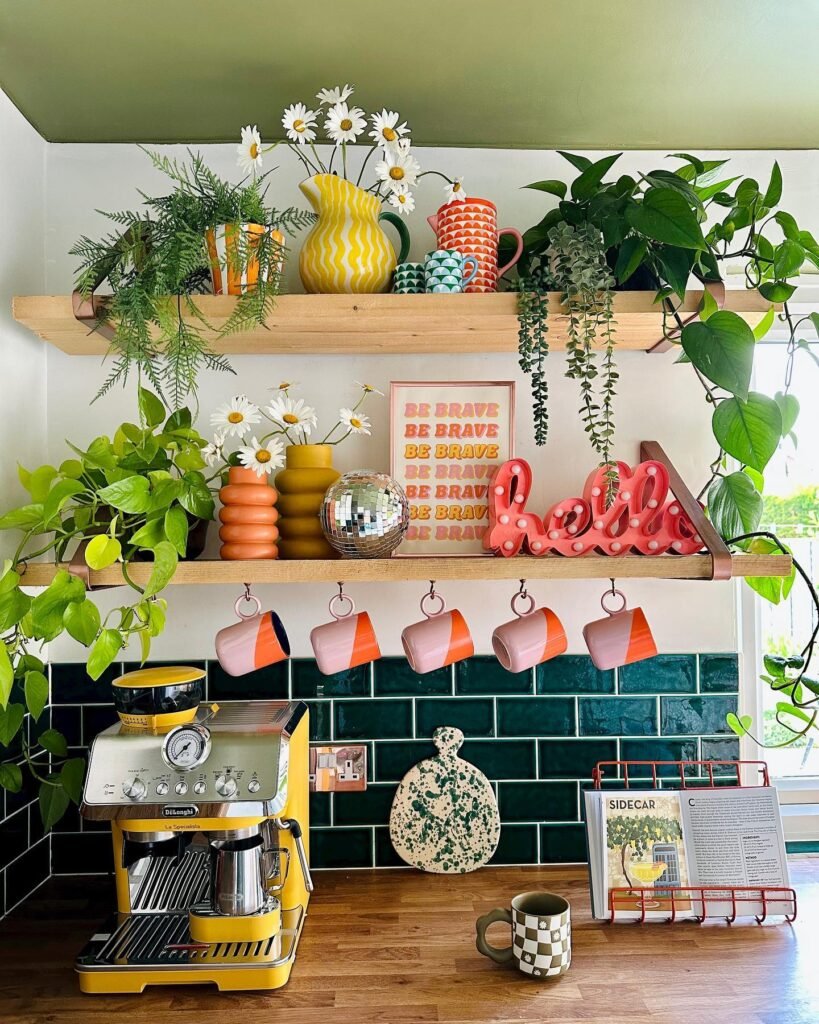
A colorful kitchen does not always need painted cabinets. Open shelves filled with patterned jugs, coral mugs, yellow appliances, green plants, and handmade pottery can turn a plain wall into a flexible focal point.
Group items by color family and leave a little empty space between clusters so the display remains readable. Shelf hooks make good use of the underside, while keeping cups within reach of a coffee station saves valuable cabinet space.
11. Cobalt and Coral Balance
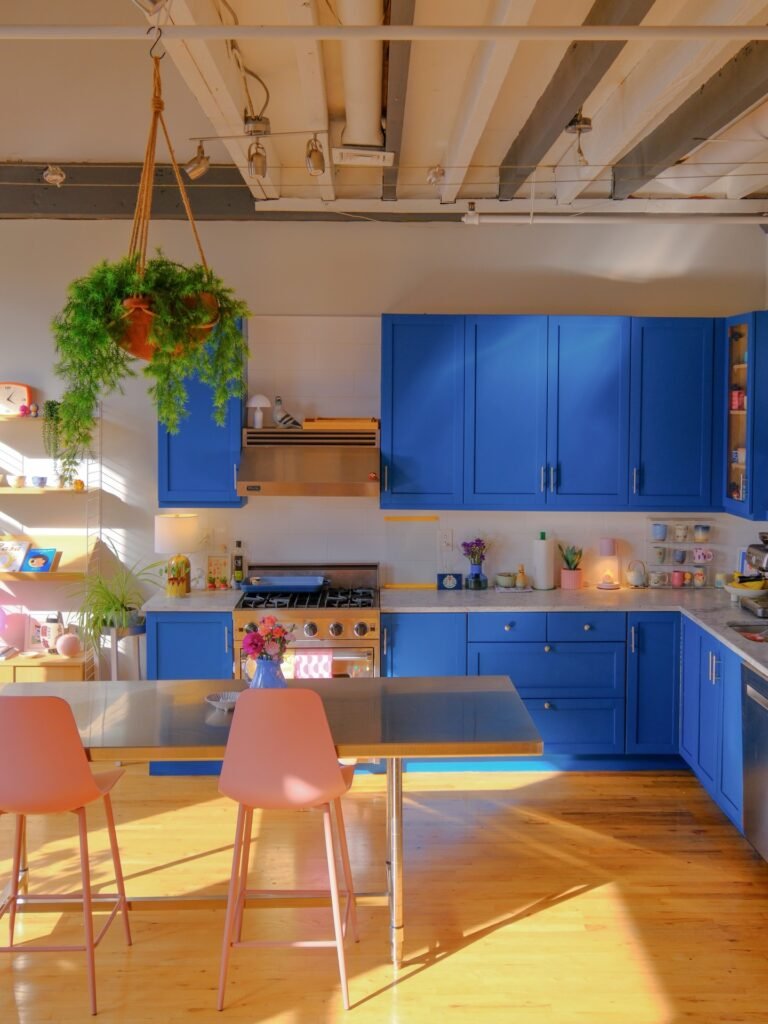
Cobalt cabinets bring structure and energy to an open kitchen, while coral seating adds a softer counterpoint. Keeping the backsplash and worktops pale stops the strong blue from closing in the room.
A slim dining table can double as extra prep space when needed, especially in a compact layout. Use plants near high shelves or windows to introduce movement without sacrificing valuable cabinet storage.
12. Warm Peach Color Blocking
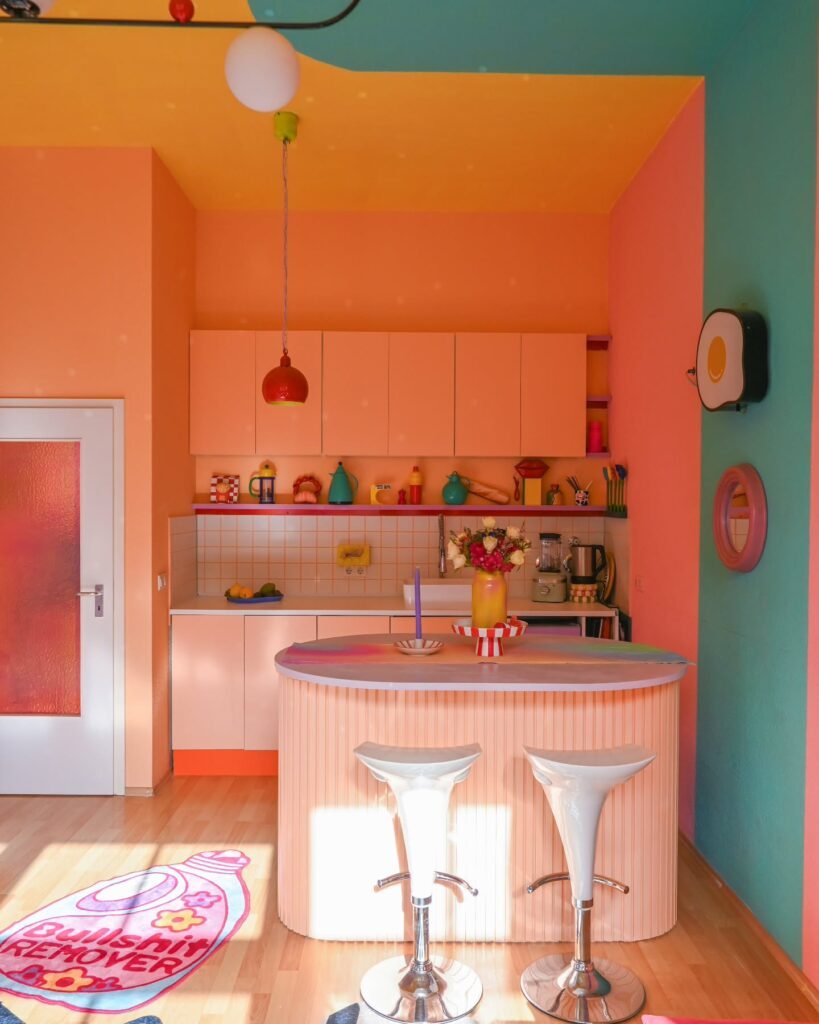
Peach walls and cabinetry create a warm, enveloping kitchen that feels playful rather than busy. Teal on an adjoining wall adds enough contrast to define the cooking zone, while red and turquoise accessories keep the palette lively.
A curved island softens sharp corners and improves circulation in a narrow room. Choose wipeable paint in food preparation areas so the saturated color remains practical for everyday use.
13. Pastel Island Accents
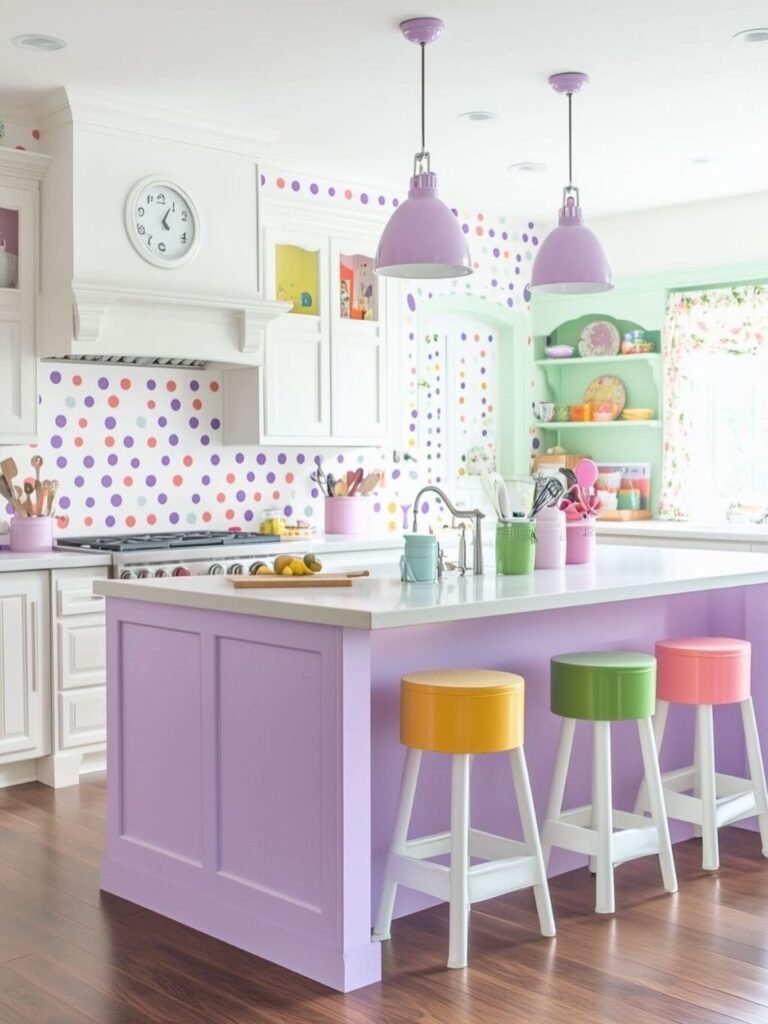
A lilac island is an easy way to add color without repainting every cabinet. White cupboards and counters keep the room bright, while pastel stools and pendants make the island feel connected to the wider scheme.
Small dot decals can animate a plain backsplash at low cost and are simple to remove later. Limit the accents to a handful of repeated shades so the cheerful look still feels organized.
14. Patterned Natural Kitchen
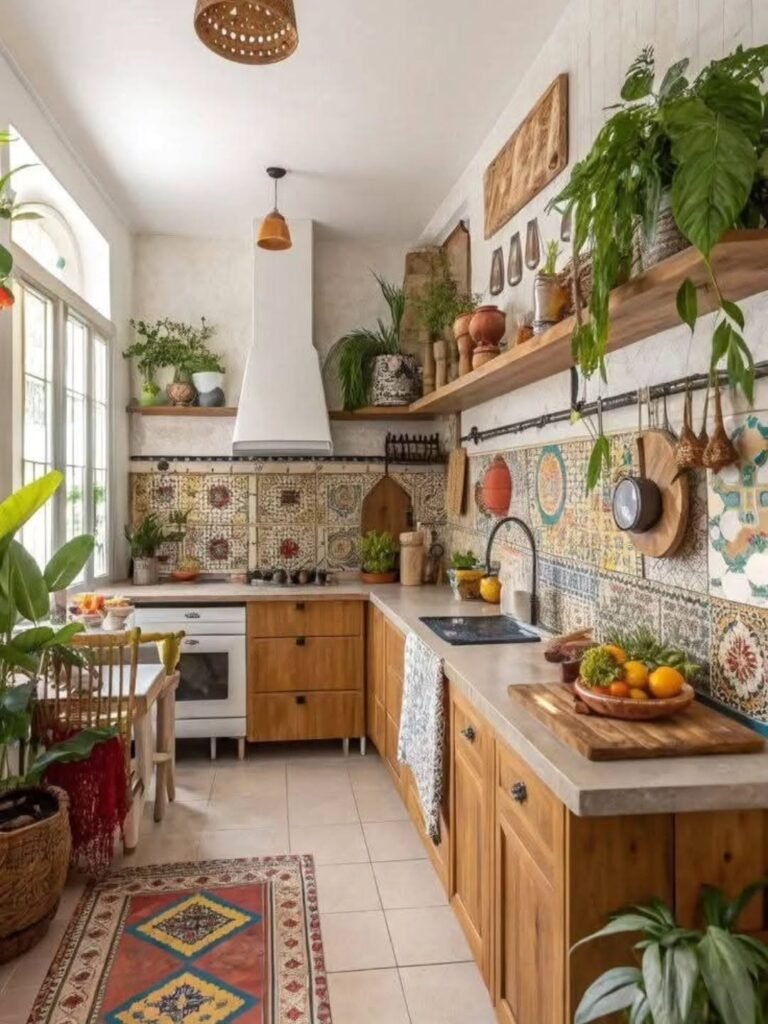
Natural wood cabinets give patterned tiles and greenery a calm foundation, making a narrow kitchen feel layered rather than crowded. Open shelves keep plants, jars, and cookware within reach, but they work best when everyday pieces are grouped by purpose.
A long runner adds softness underfoot and introduces color without taking up room. Leave one section of counter mostly clear to preserve a useful preparation zone.
15. Sunny Yellow Cabinets
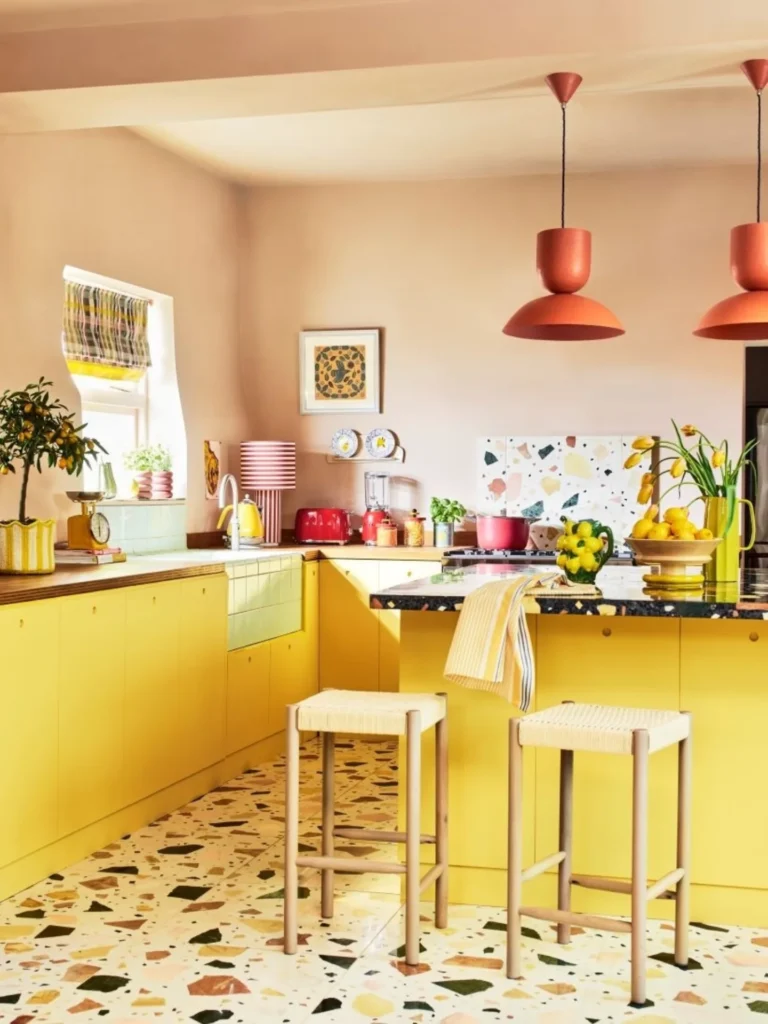
Sunny yellow cabinetry can make a kitchen feel brighter even when natural light is limited. Terracotta pendant lights and warm peach walls deepen the palette, while a terrazzo floor adds pattern without competing for attention.
Keep stools simple so the cabinetry remains the focus. For a lower-cost version, paint only base units or the island, then repeat yellow through cookware, planters, or a kettle.
16. Blue With Yellow Accents
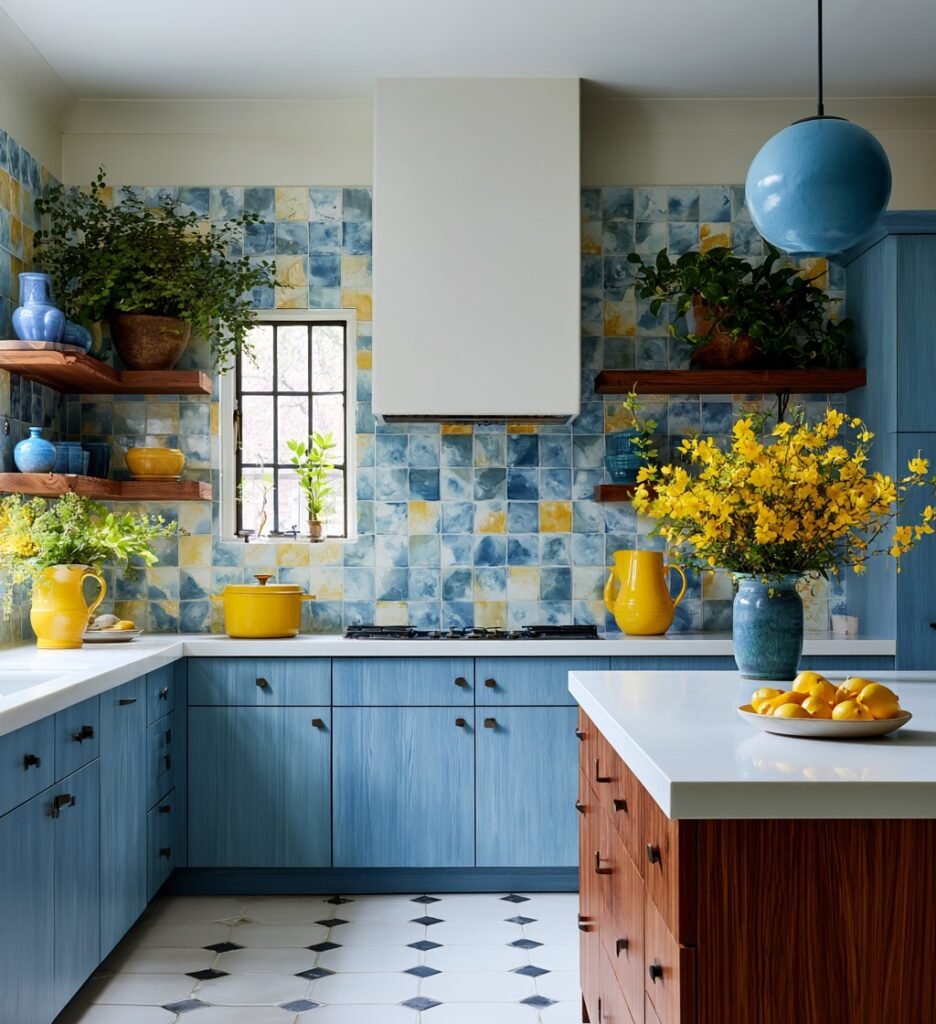
Powder blue cabinetry feels fresh when paired with handmade-looking tiles and a few strong yellow accents. The yellow flowers, vessels, and cookware break up the cool palette while staying easy to change with the seasons.
Wood shelving brings warmth and creates useful display space for plants and ceramics. Use pale counters to reflect light, and keep the largest decorative arrangement away from the main chopping area.
17. Burnt Orange Greenhouse Kitchen
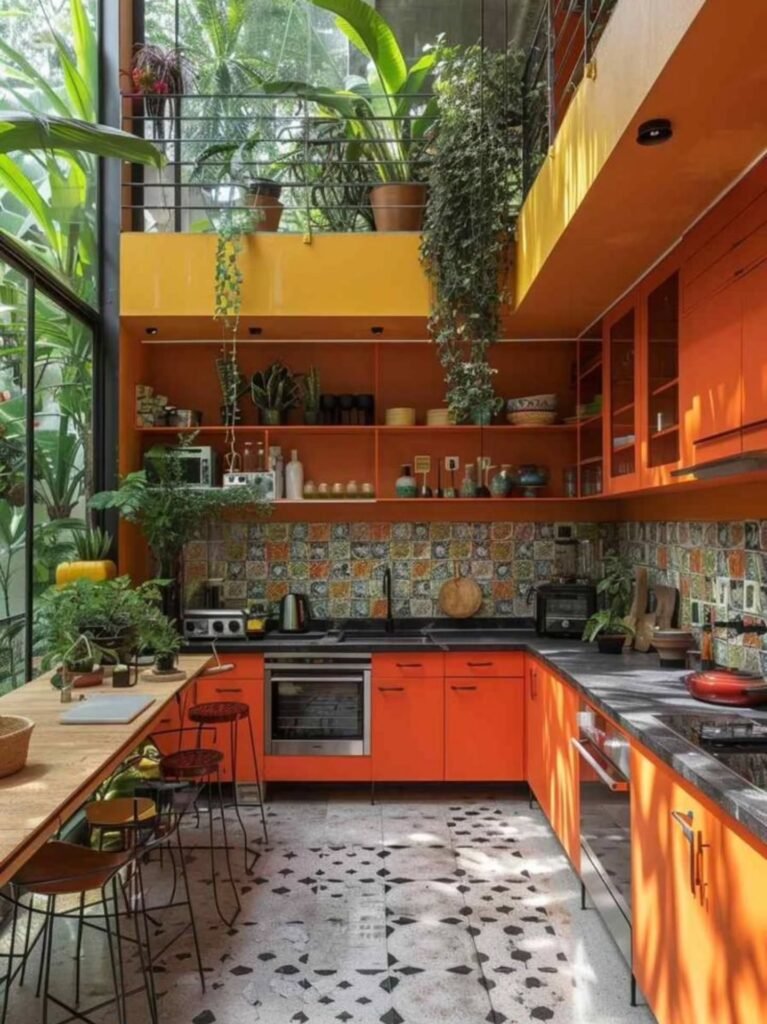
Burnt orange cabinets suit a kitchen surrounded by plants because the warm color echoes terracotta pots and sunlight.
Patterned backsplash tiles add character, while dark counters provide a durable visual break between cabinetry and decor. In a high-ceilinged room, open shelves can use vertical space efficiently without making the kitchen feel sealed in.
Keep watering trays beneath hanging plants to protect shelves, counters, and painted finishes.
18. Bold Retro Color Mix
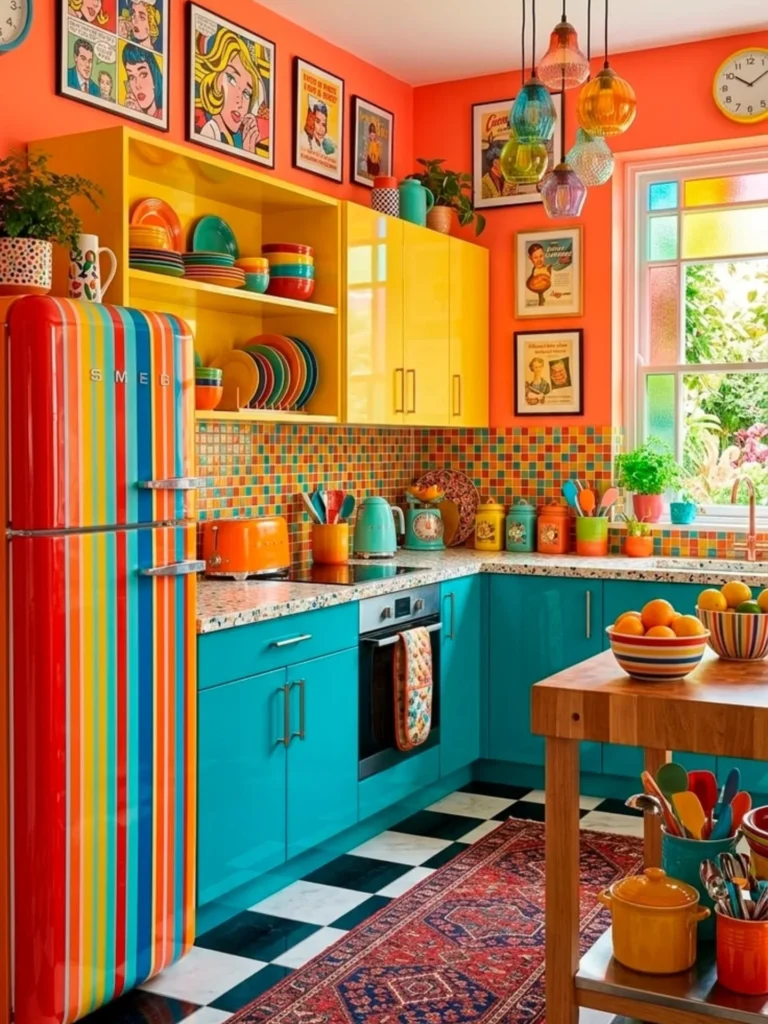
A retro colorful kitchen works best when the palette is bold but repeated consistently. Turquoise base cabinets, yellow wall units, orange walls, and striped appliances feel connected because each shade appears more than once.
Open shelving turns dishes into decoration and makes frequently used plates easy to grab. Balance the intensity with a black-and-white floor or plain wood table so the room still has visual breathing space.
19. Floral Cottage Color Scheme

Soft blue cabinets and floral wallpaper create a gentle cottage-style kitchen without relying on neutral colors. Red teapots and jugs add a clear accent that stands out against the cooler cabinetry, while brass handles bring warmth.
Open shelves are ideal for a small collection, but avoid overfilling them. Use washable wallpaper or a protective splashback panel behind the hob and sink to make the decorative finish easier to maintain.
20. Mustard and Natural Wood
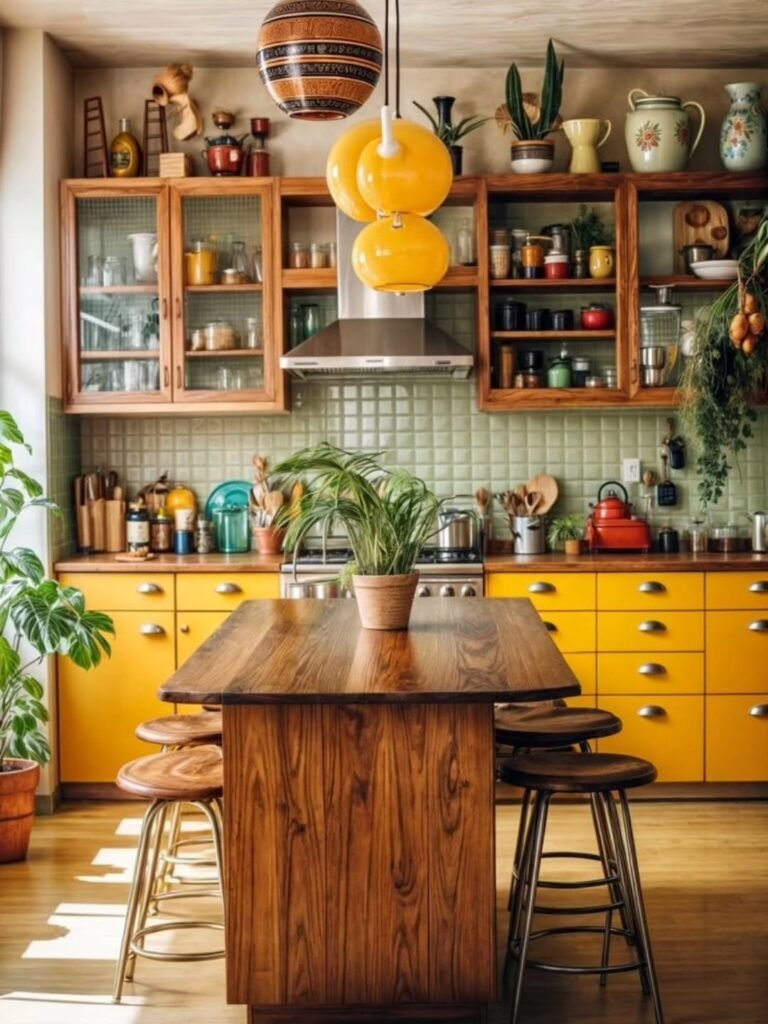
Mustard yellow base cabinets bring warmth to a practical, wood-led kitchen, while pale green tiles keep the room from feeling too heavy.
Glass-front wall cabinets make stored items easier to find and prevent solid upper units from dominating the space. A wooden island adds seating and generous prep room, but choose backless stools that tuck underneath.
Plants placed near windows soften the stronger colors without creating extra clutter.
21. Playful Colorful Dining Corner
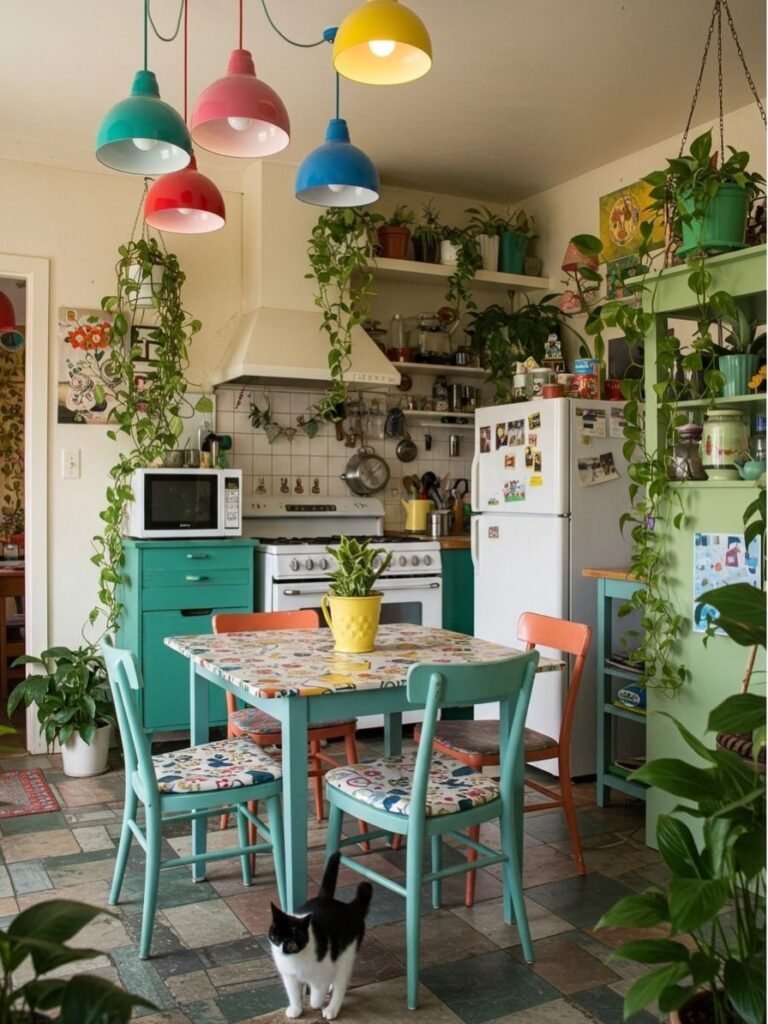
Turquoise cabinets and mismatched coral chairs give a compact eat-in kitchen plenty of personality without requiring a full remodel. Colorful pendant lights draw attention upward, helping the room feel taller, while trailing plants soften shelves and appliances.
Cover an existing table with wipe-clean vinyl or a patterned cloth for an affordable update. Keep the busiest prints on removable surfaces so the palette can evolve without replacing permanent fixtures.
Frequently Asked Questions
How can I add kitchen color cheaply?
Paint cabinet doors, replace handles, display colorful cookware, or add removable wall decals. Textiles and small appliances also provide noticeable changes without major renovation costs.
Which colors work in small kitchens?
Light blue, mint, peach, yellow, and soft pink can brighten compact rooms. Darker shades also work when balanced with pale counters, good lighting, and uncluttered surfaces.
Can a colorful kitchen feel timeless?
Yes. Choose one lasting cabinet color, then use accessories, artwork, stools, and textiles for trend-led accents that are easier to update later.
How many colors should a kitchen have?
Three main shades usually create a balanced palette. Use one dominant color, one supporting tone, and a smaller accent repeated across lighting, cookware, or decorative pieces.