19 Rustic Living Room Ideas for a Cozy Home
A rustic living room should feel warm, relaxed, and easy to use, not overly themed or cluttered. The best spaces mix natural wood, stone, soft textiles, and practical furniture in a way that suits everyday life.
Whether you are decorating a compact apartment or a large family room, these rustic living room ideas can help improve comfort, create better flow, and add character without requiring a full renovation or an oversized budget.
Related Living Room Articles :
20 Bold Living Room Ideas for Stylish Homes
Farmhouse Bedroom Ideas That Feel Cozy, Calm, and Timeless
27 Backyard Firesitting Ideas for a Cozy and Stylish Outdoor Space
1. Balance Stone With Blue
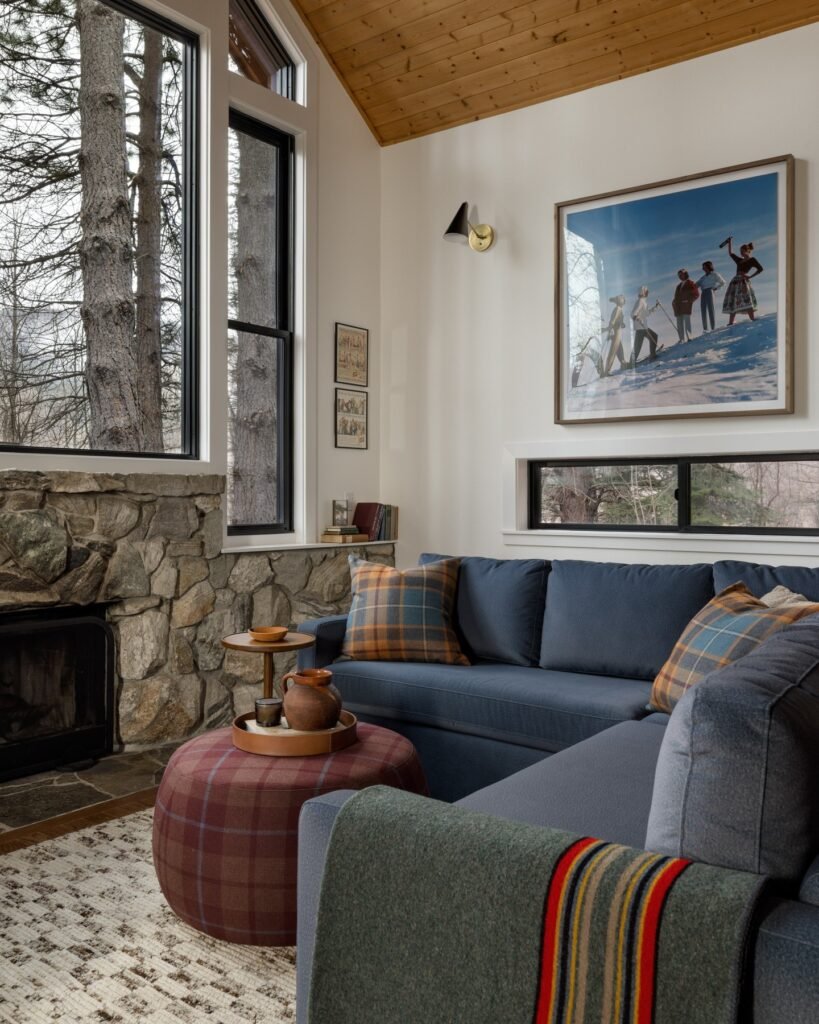
Pairing a stone fireplace with a deep blue sectional creates a rustic living room that feels fresh rather than overly traditional. Plaid cushions and a wool throw bring in cabin warmth, while the clean upholstery keeps the space polished.
In a room with tall windows, choose low furniture so views and natural light remain open. A round upholstered ottoman can soften sharp angles and double as extra seating when guests arrive.
2. Add Practical Cottage Storage
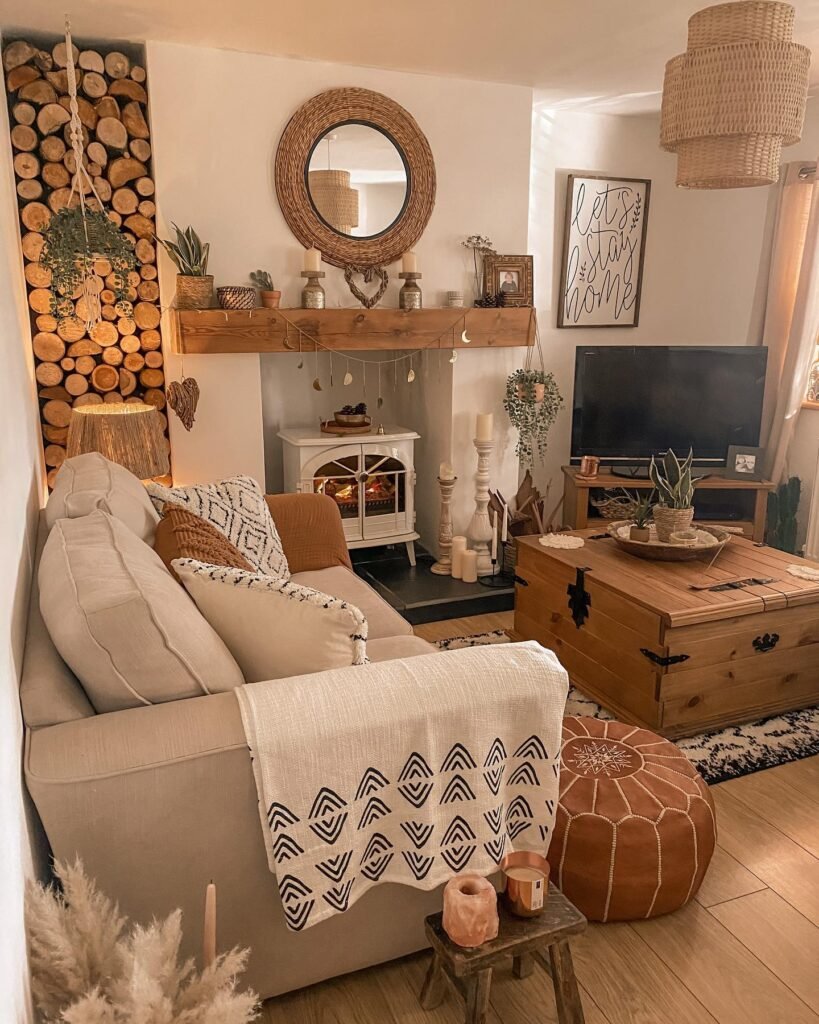
A neutral sofa makes a useful starting point for a cozy rustic living room, especially when the surrounding details carry the personality. Try a wooden storage chest as a coffee table to hide blankets, games, or everyday clutter.
Woven lighting, terracotta accents, and a leather pouf add warmth without taking up much room. For a budget update, stack cut logs in one narrow wall section instead of covering an entire wall.
3. Soften Heavy Timber Beams
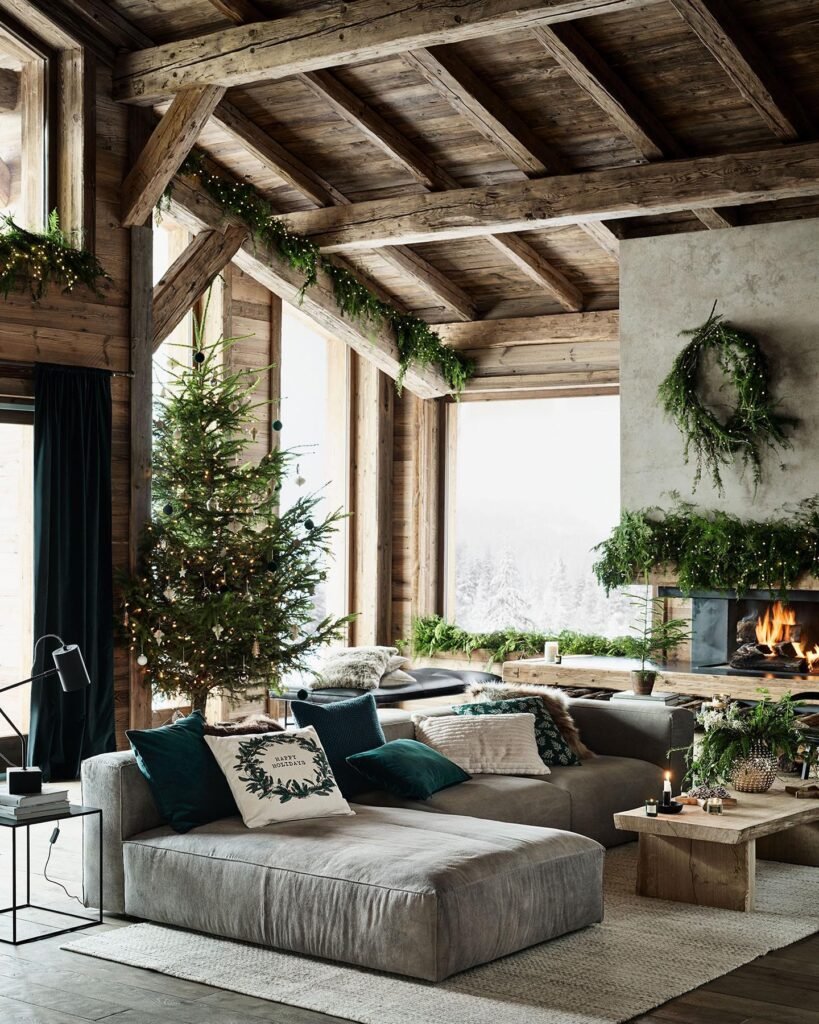
Exposed beams instantly give a living room a strong lodge character, but soft furniture prevents all that timber from feeling heavy. A large modular sectional works well for family gatherings and can define the seating area in an open plan.
Keep the main upholstery quiet, then add forest green cushions, faux fur, and simple greenery for seasonal depth. Warm white string lights can stay year-round when used sparingly along architectural lines.
4. Mix Rustic And Industrial
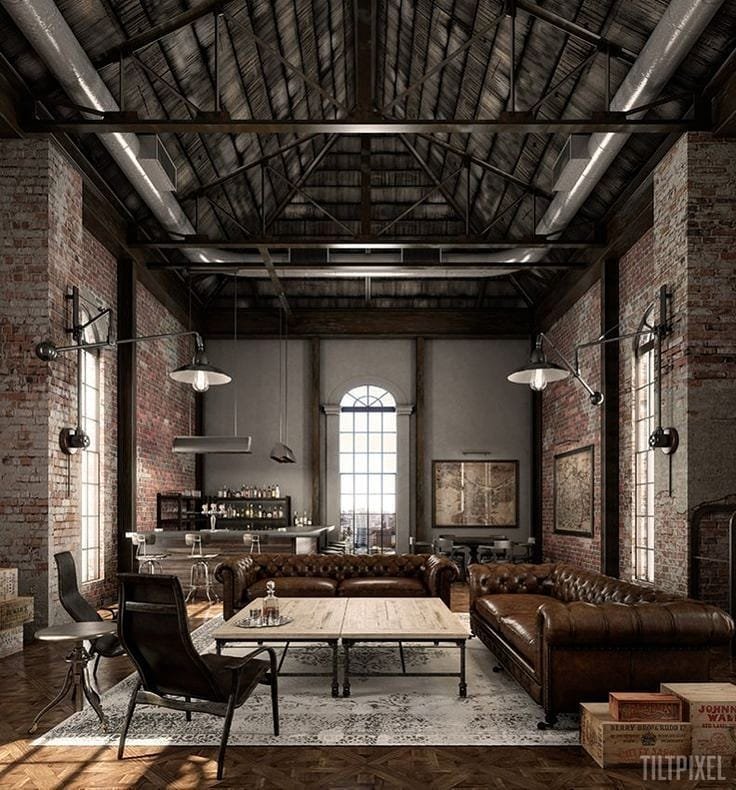
Industrial spaces can still feel comfortably rustic when leather, brick, and weathered wood are balanced with a clear furniture layout. Two matching sofas create a defined conversation zone without blocking the open room, while a pale rug lightens darker materials.
Choose a coffee table with a slim metal base to echo exposed beams and factory windows. In a large loft, repeat similar wood tones across tables and storage pieces to make the space feel connected.
5. Use Calm Earthy Textures
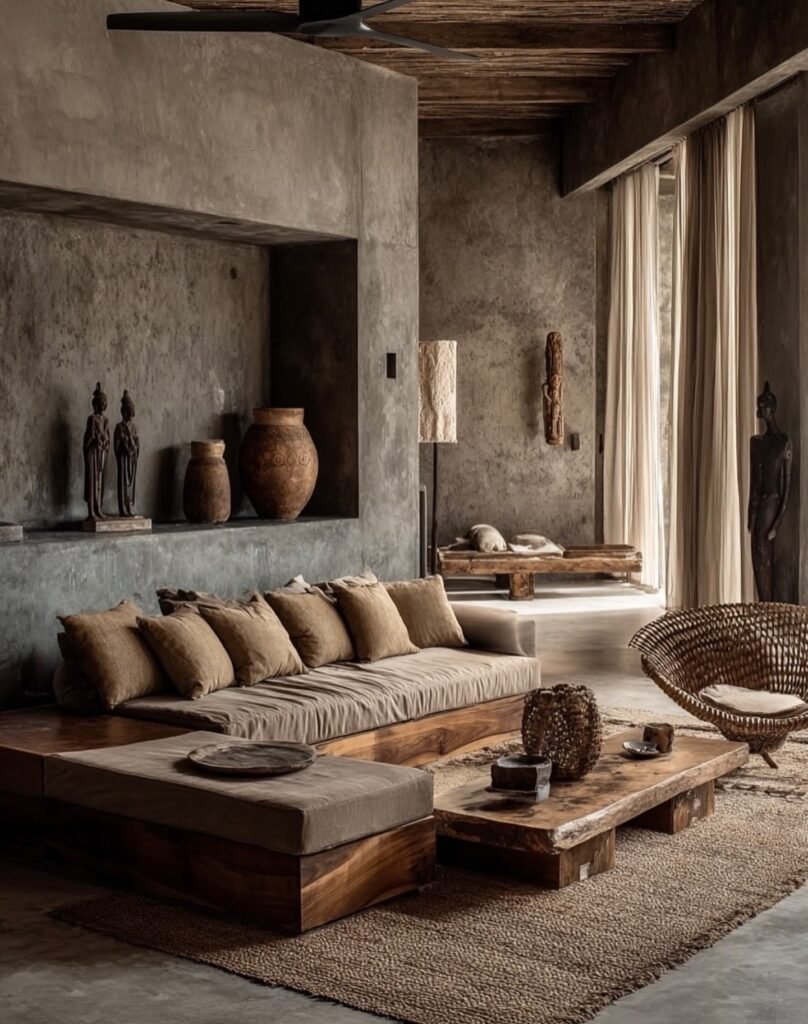
Earthy plaster walls and low wooden seating create a calm rustic living room with a handmade, collected feel. Instead of adding many small decorations, rely on a few substantial pieces such as clay vessels, carved figures, and a thick woven rug.
A low platform sofa can also make a compact room appear wider because it leaves more wall visible. Keep cushions in closely related sand and brown tones so the textures remain the main focus.
6. Fill Corners With Greenery
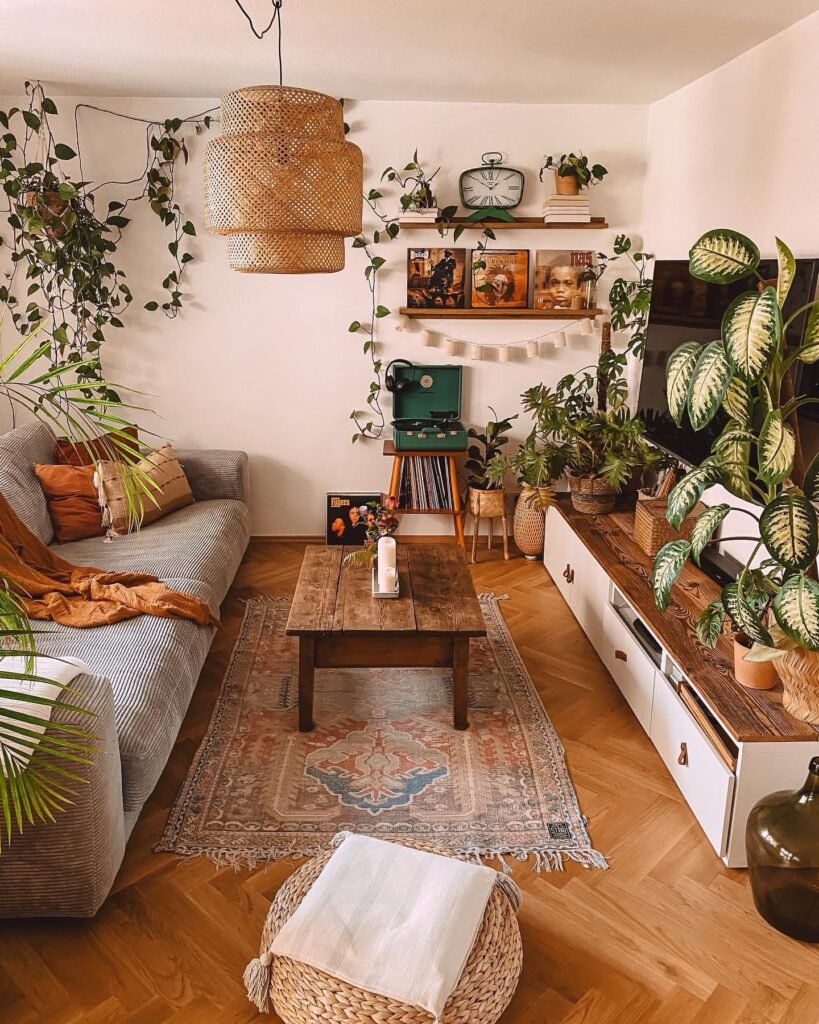
Plants can bring softness to a small rustic living room without requiring expensive architectural changes. Combine trailing vines, broad leaves, and woven pots to create different heights while keeping floor space clear.
A narrow media unit with closed drawers helps control cables and clutter, and floating shelves make use of the wall above. Finish with a faded vintage rug and a simple wooden coffee table to give newer furniture a warmer, lived-in look.
7. Create An Intimate Lodge
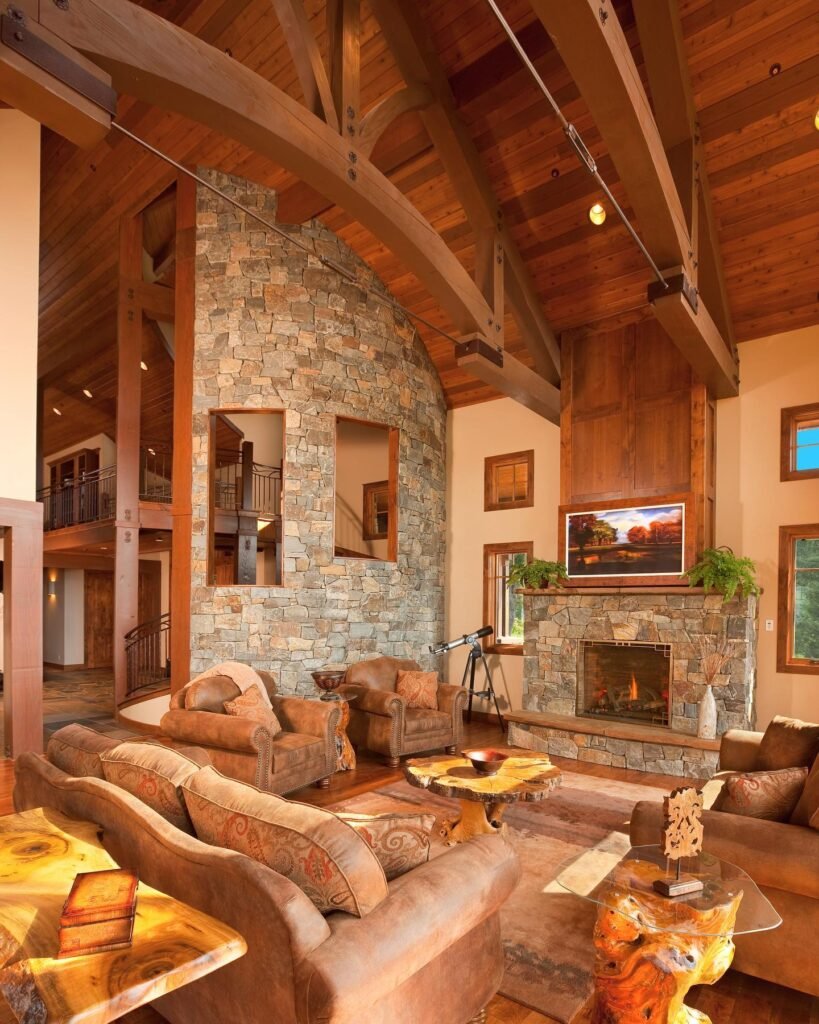
In a large lodge-style room, scale matters more than filling every corner. A tall stone fireplace and heavy timber ceiling need substantial seating, generous rugs, and sturdy tables to feel balanced. Arrange sofas and armchairs inward so the conversation area remains intimate despite the room’s size.
Live-edge tables add character, but one or two statement pieces are enough. Leaving open pathways around the group keeps the space practical for family gatherings.
8. Frame The Outdoor View
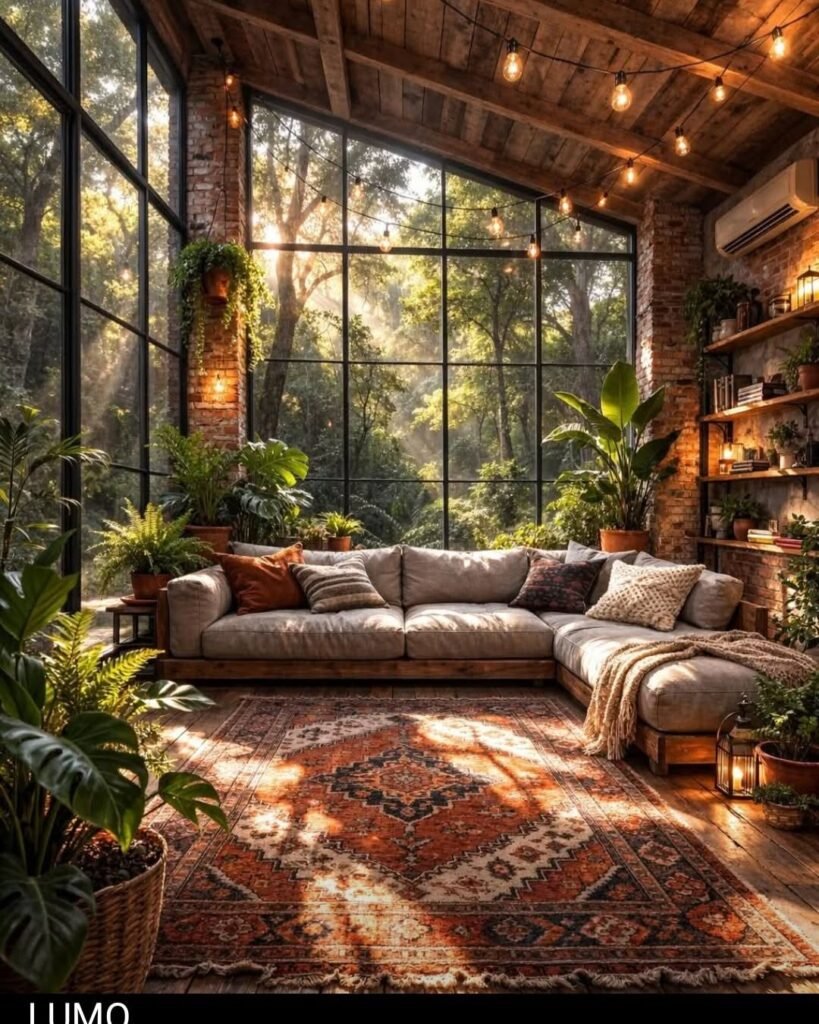
Large black-framed windows can give a rustic living room a modern edge while still keeping nature at the center. Use a soft sectional, a richly patterned rug, and warm wood floors to stop the glass and metal from feeling cold.
Plants placed near the windows create privacy and help blur the boundary between indoors and out. String lights work best when hung loosely overhead, adding gentle evening light without competing with the daytime view.
9. Try A Dark Palette
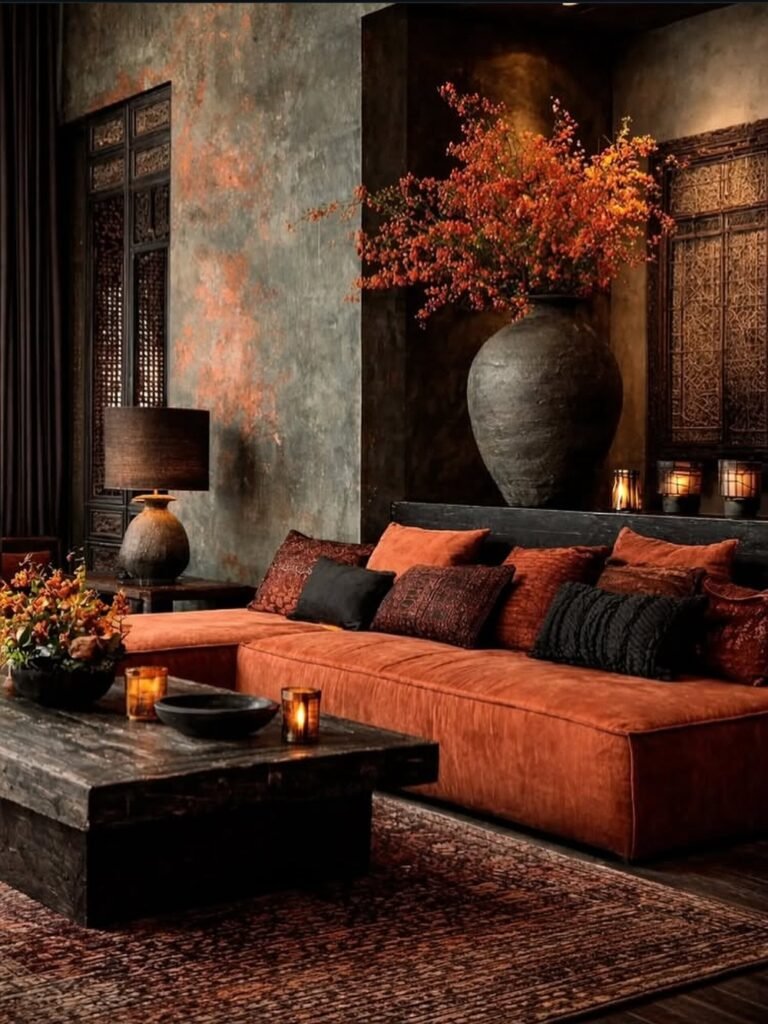
A dark rustic living room can feel inviting when rich color is used with intention. Burnt orange seating brings warmth to charcoal walls, while black tables and carved wood panels create depth.
Keep the lighting low and layered with table lamps, candles, and focused wall lights rather than one bright ceiling fixture. An oversized clay vase can fill a difficult empty corner, and seasonal branches offer an affordable way to refresh the room throughout the year.
10. Build A Wood Media Wall
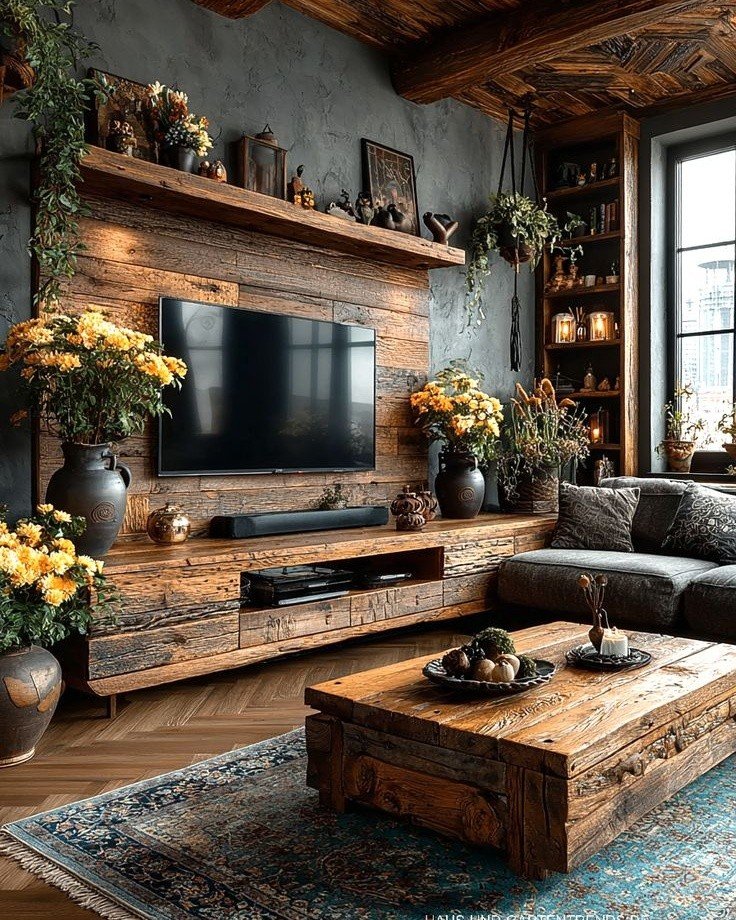
A reclaimed wood media wall gives a rustic living room a strong focal point while also hiding wiring and supporting useful storage. Pair it with a simple gray sofa so the wood grain remains noticeable without overwhelming the room.
Built-in shelves can hold books, plants, and lanterns, but leave some gaps to avoid visual clutter. A trunk-style coffee table adds concealed storage, making the setup especially practical for busy family spaces.
11. Warm Layered Lighting
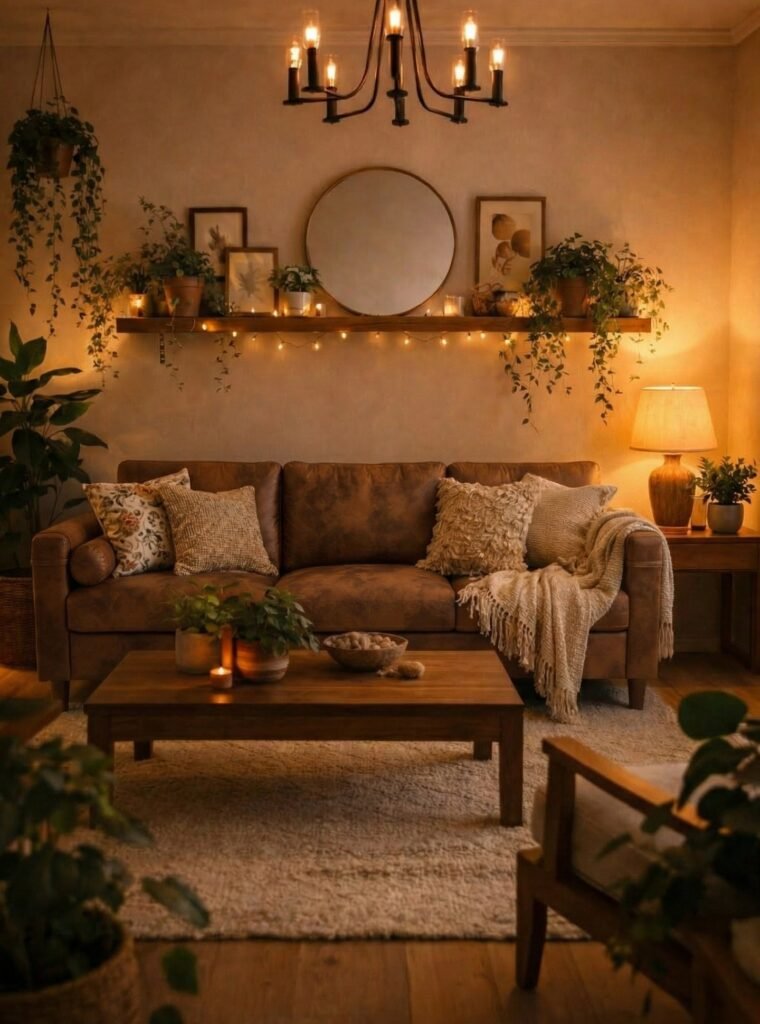
Warm lighting can make a simple rustic living room feel noticeably more welcoming after sunset. Combine a black metal chandelier with a table lamp, small candles, and discreet string lights for depth rather than relying on one harsh fixture.
A leather sofa, wooden coffee table, and trailing plants keep the arrangement grounded. Use warm LED bulbs throughout so every light source shares the same soft tone and the room feels visually connected.
12. Embrace Moody Plum Tones
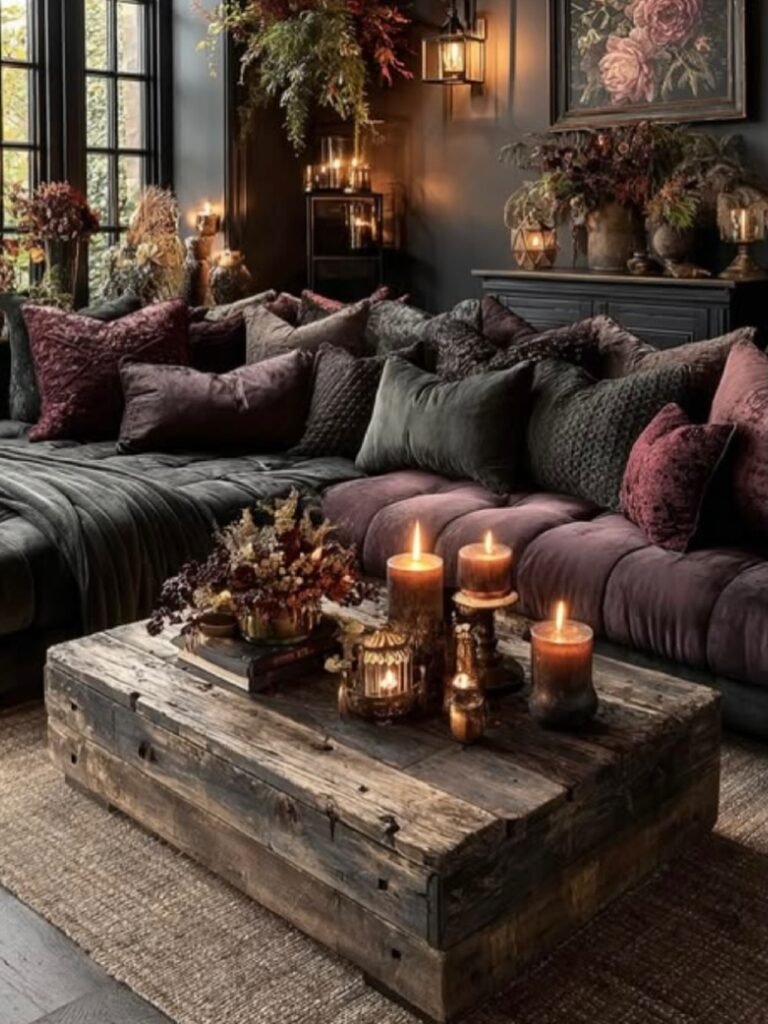
Deep plum and charcoal create a dramatic rustic living room without losing comfort. The key is balancing dark upholstery with tactile fabrics, candlelight, and a weathered wood coffee table that adds natural contrast.
Layer cushions in several shapes, but repeat two or three colors to keep the sectional from looking crowded. Dried flowers are an easy seasonal accent because they bring texture and last much longer than fresh arrangements.
13. Plan An Open Layout
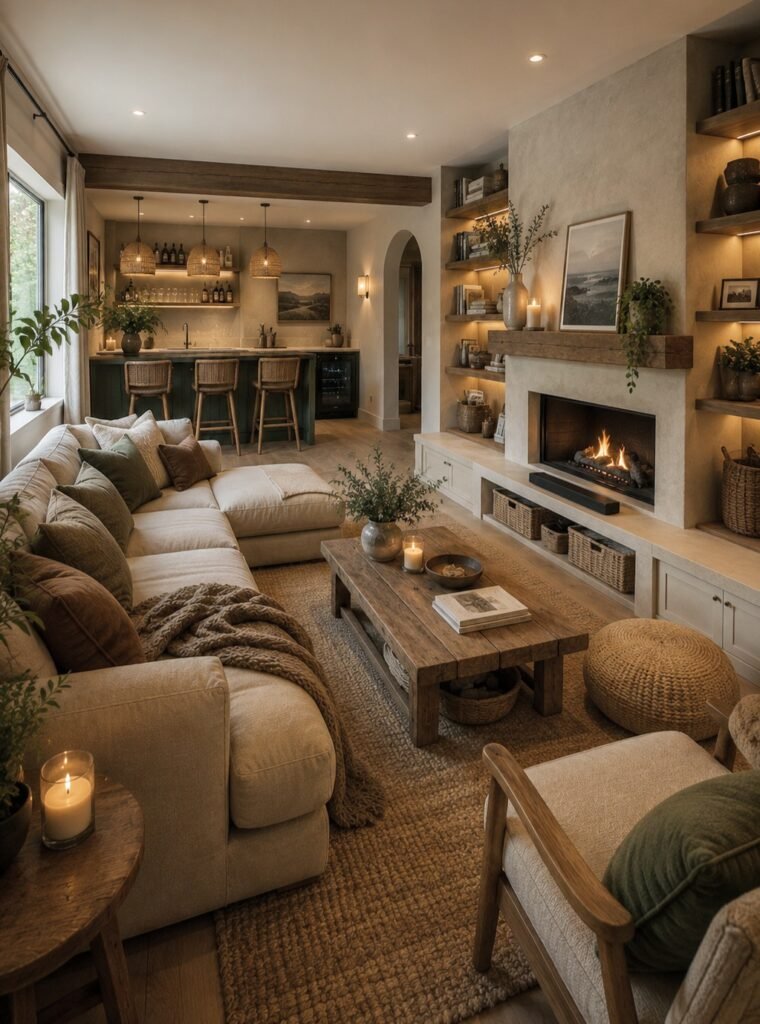
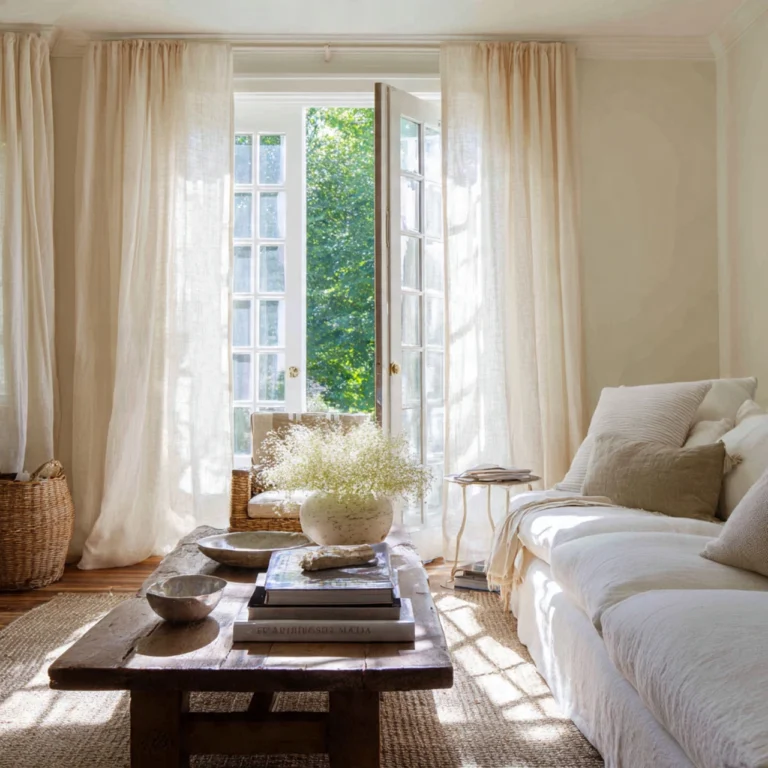
An open living area feels calmer when storage, seating, and lighting follow one consistent palette. Cream upholstery, olive cushions, woven baskets, and aged wood create a soft modern rustic style that works well for everyday family life.
Built-in shelves make awkward wall space useful, while baskets below the fireplace hide toys or media accessories. Keep the coffee table clear apart from one tray so the narrow walkway remains easy to navigate.
14. Choose Light Rustic Finishes
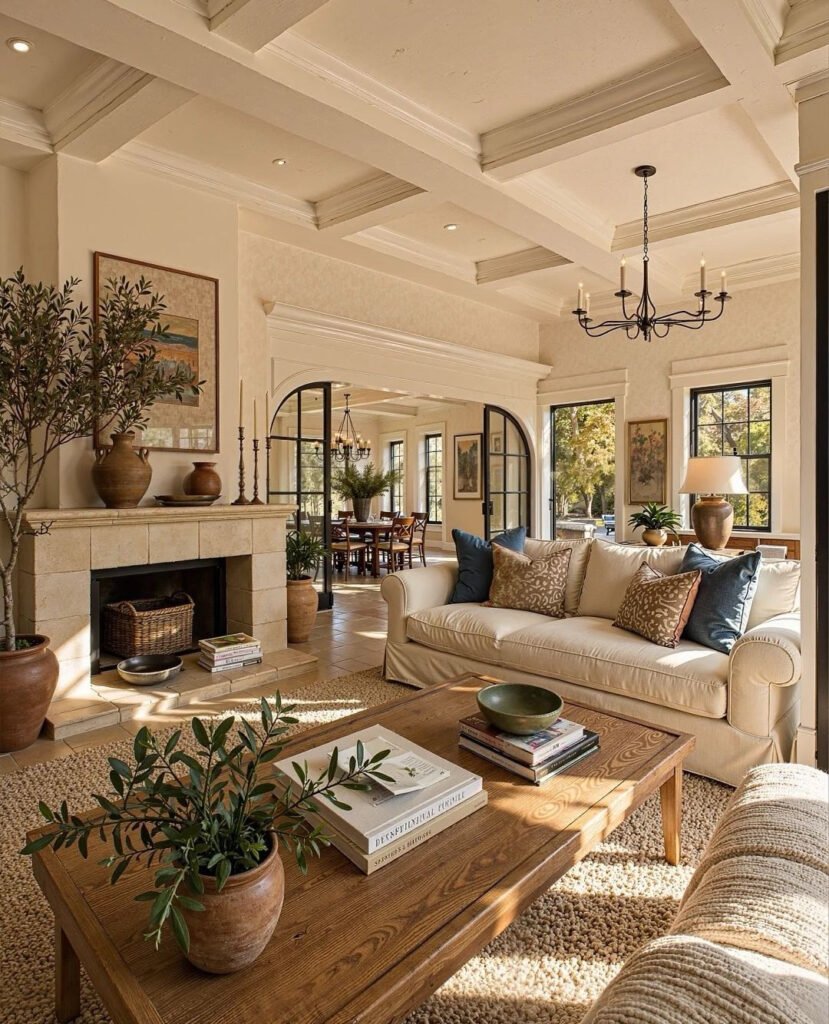
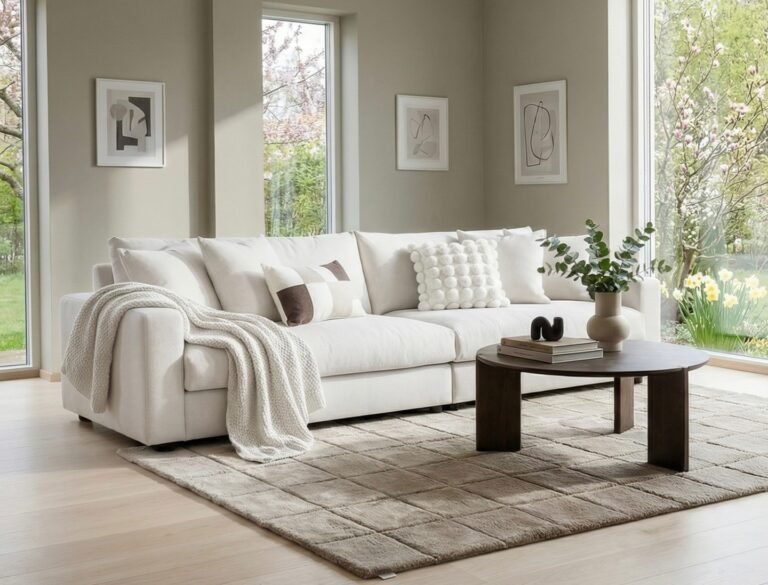
Rustic decor does not always need dark timber or heavy stone. Pale walls, a limestone fireplace, and a cream sofa can create a brighter interpretation that suits sunny homes. Blue accent cushions add gentle contrast, while terracotta pots and a natural fiber rug prevent the room from feeling formal.
Choose a wide coffee table for books and drinks, but leave enough clearance around it for comfortable movement between the seating and fireplace.
15. Create A Floor Lounge
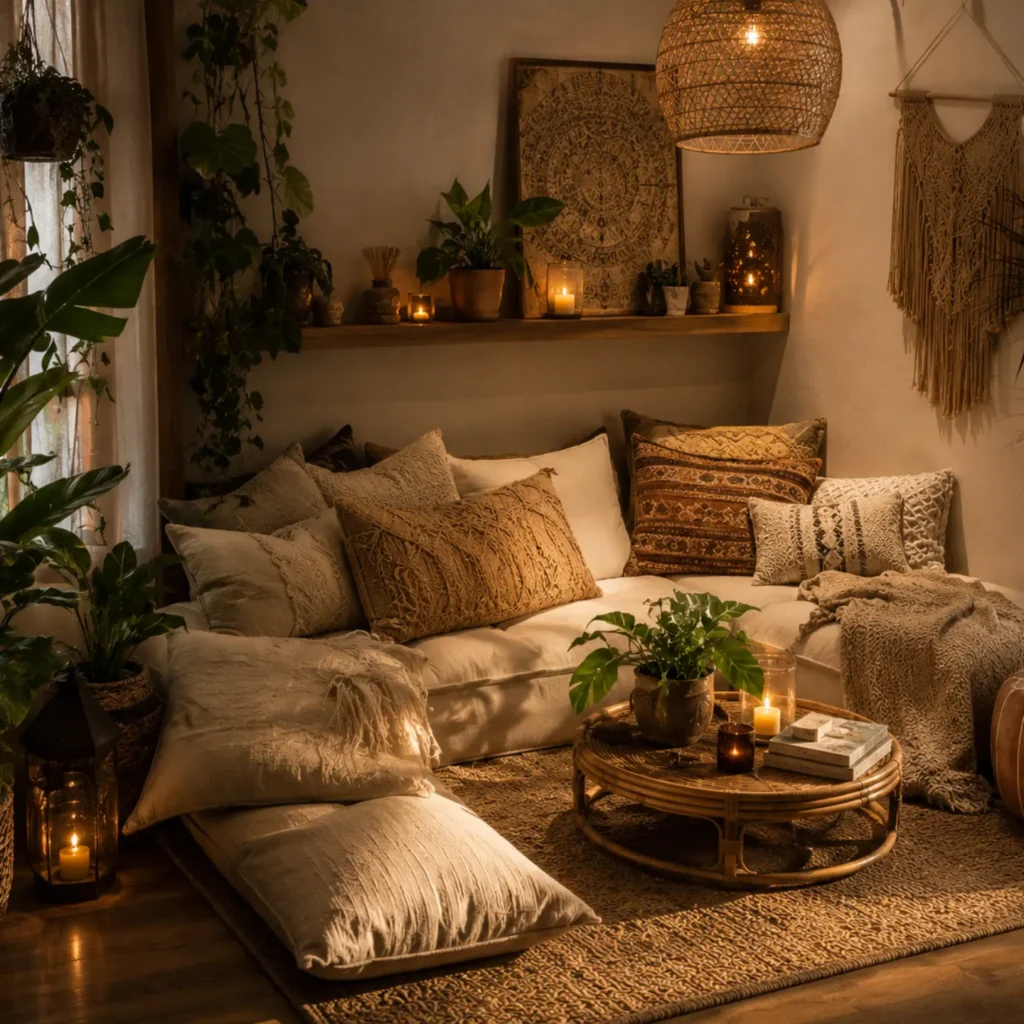
A small corner can become a cozy rustic retreat with floor cushions, layered pillows, and low furniture. Keeping the seating close to the ground makes the ceiling appear higher and creates an informal place for reading or quiet evenings.
Woven lighting and macrame add character without using bulky furniture. Place candles inside enclosed lanterns for safer ambient light, then use a round rattan table to avoid sharp corners in the compact layout.
16. Add Soft Sage Accents
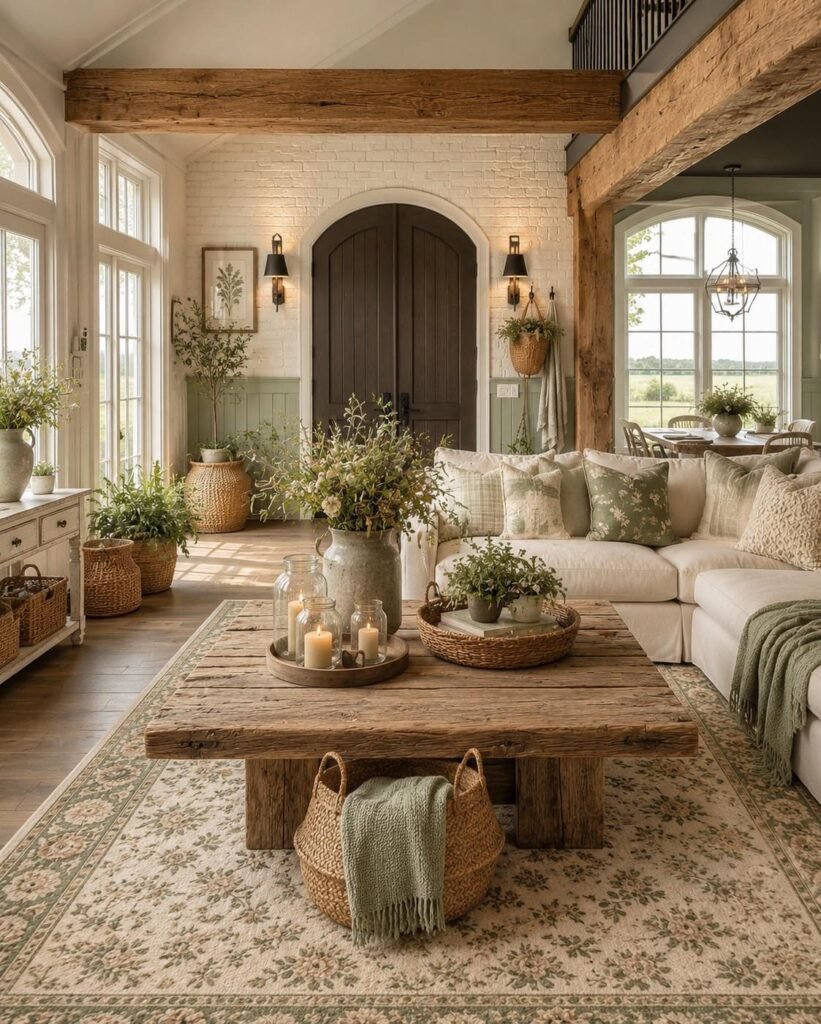
Soft sage green is a useful choice when you want rustic character without a heavy cabin look. Pair a light sectional with reclaimed wood, woven baskets, botanical patterns, and a faded floral rug for a relaxed farmhouse feel.
Large branches in an aged vessel can fill an empty table beautifully without adding many small objects. Store spare throws in open baskets so they remain easy to reach while still looking like part of the decor.
17. Define A Loft Seating Zone
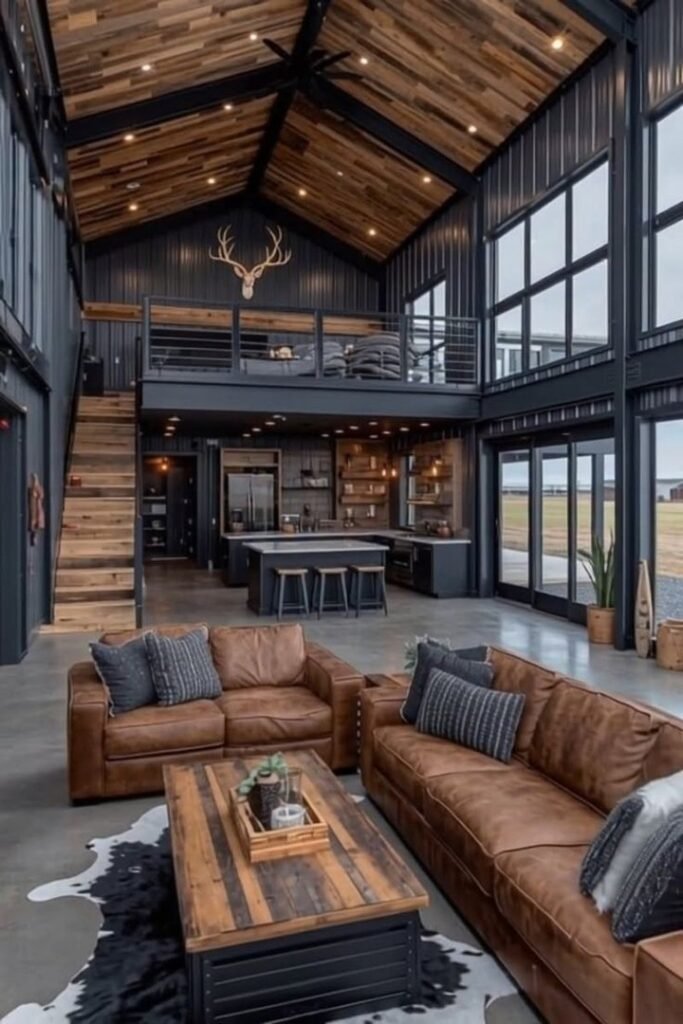
In a tall open-plan home, a compact seating group can stop the living room from feeling lost. Brown leather sofas bring warmth against black metal walls, concrete floors, and large industrial windows.
A reclaimed wood coffee table ties the seating area to the timber ceiling, while a cowhide-style rug marks the zone without covering too much floor. Keep furniture away from main walkways so movement between the kitchen, stairs, and doors stays clear.
18. Layer Olive And Wood
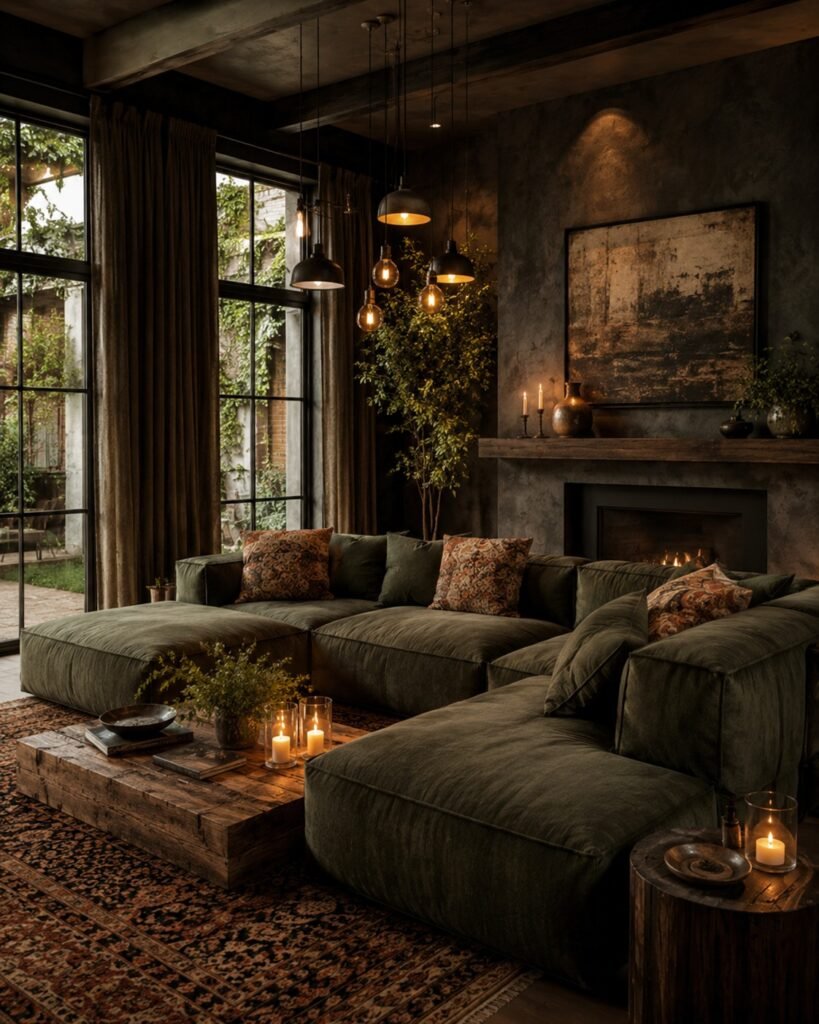
Olive upholstery gives a dark rustic living room depth while still feeling connected to nature. A generous modular sofa works best when the rest of the furniture stays low and simple, allowing the room to feel comfortable rather than crowded.
Combine a distressed rug, chunky wood table, and patterned cushions for warmth. Several pendant lights at different heights can brighten a large seating area more evenly than a single central fixture.
19. Make Red The Focus
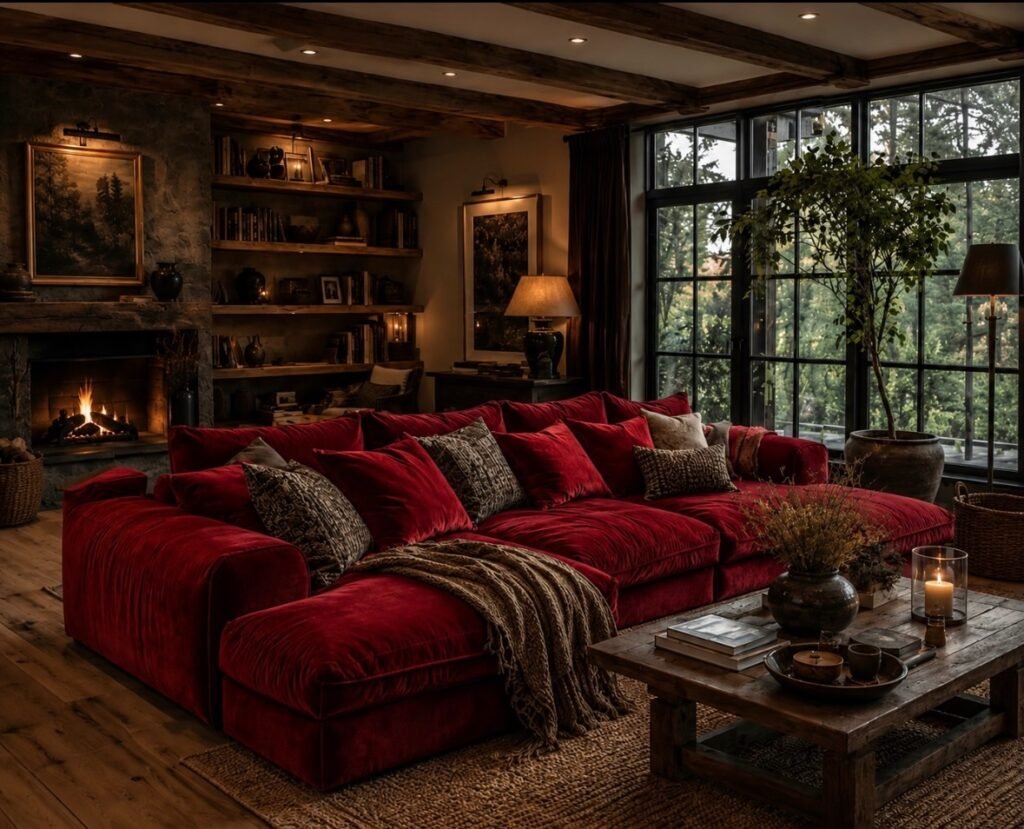
A red velvet sectional can become a striking centerpiece in a rustic living room when the surrounding finishes remain earthy and restrained. Dark wood floors, ceiling beams, woven rugs, and a simple timber coffee table keep the bold color grounded.
Use neutral patterned cushions to break up the red without weakening its impact. Built-in shelves beside the fireplace add practical storage and make the room feel collected rather than staged.
Frequently Asked Questions
What colors work in a rustic living room?
Warm neutrals, olive green, deep blue, rust, brown, cream, and muted red pair naturally with wood, stone, leather, and woven textiles.
How can I create rustic style cheaply?
Shop secondhand for solid wood furniture, reuse baskets for storage, add affordable throws, and bring in branches or dried flowers instead of buying many decorative objects.
Can rustic decor suit a small room?
Yes. Choose low furniture, lighter wall colors, closed storage, and a few textured accents. Avoid oversized pieces that block walkways or make the room feel crowded.
How do I modernize rustic decor?
Combine reclaimed wood and natural textiles with clean-lined furniture, simple lighting, uncluttered surfaces, and a restrained color palette.