13 Refrigerator Storage Hacks That Make Food Easy to Find
A freezer can save time, reduce last-minute grocery trips, and make busy evenings easier. The trouble starts when every shelf becomes a frozen pile and nobody remembers what is hiding behind the ice cream.
These refrigerator Storage Hacks focus on simple systems that are easy to maintain after the first organizing session. You will create clear zones, use food in the right order, and make everyday ingredients easier to grab without emptying the entire refrigerator.
1. Create a Refrigerator Map Before Rearranging
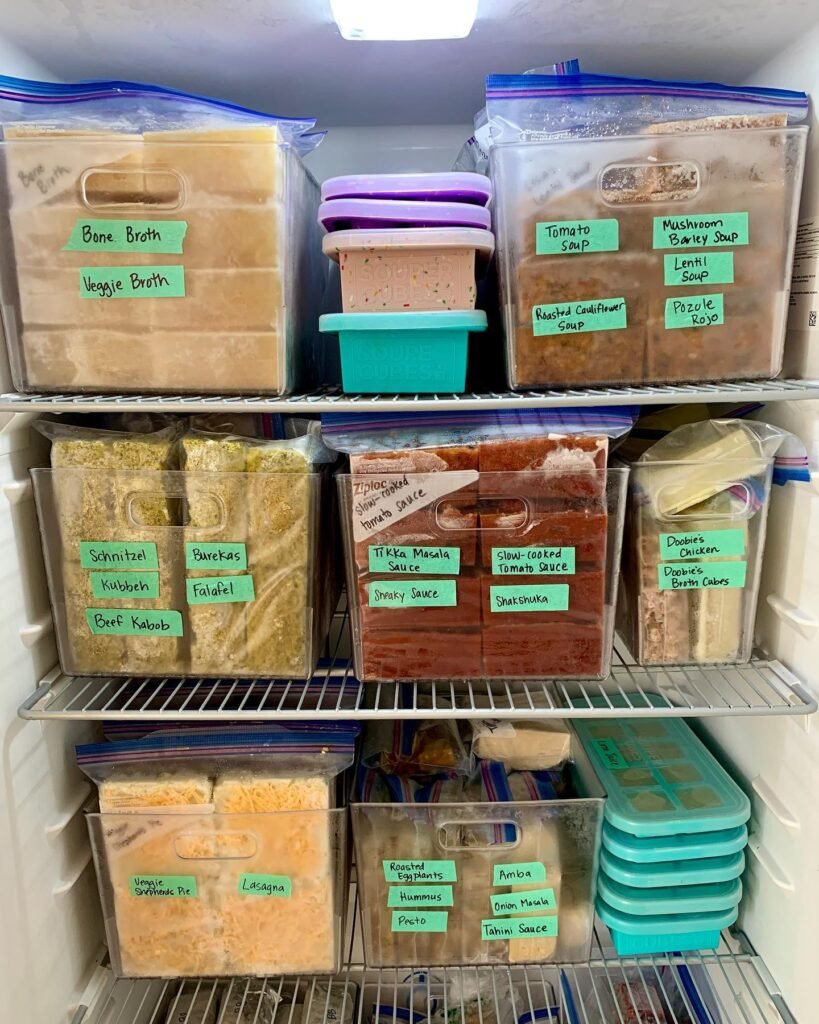
Before buying bins or moving food, sketch the freezer’s shelves, drawers, and door sections on paper. Assign one broad category to each area, such as proteins, vegetables, prepared meals, breakfast foods, or treats. A simple map prevents random storage decisions later.
Keep the plan broad enough to survive changing grocery habits. If every tiny item gets its own category, the system becomes difficult to maintain. This is also a good time to review your kitchen food container organization so containers move smoothly between meal prep and freezer storage.
Quick tip: Draw a simple shelf and drawer layout, then assign one broad food category to each area. Keep the map near the freezer for a few weeks so everyone knows where items should be returned.
2. Reserve One Shelf for Ready-to-Eat Meals
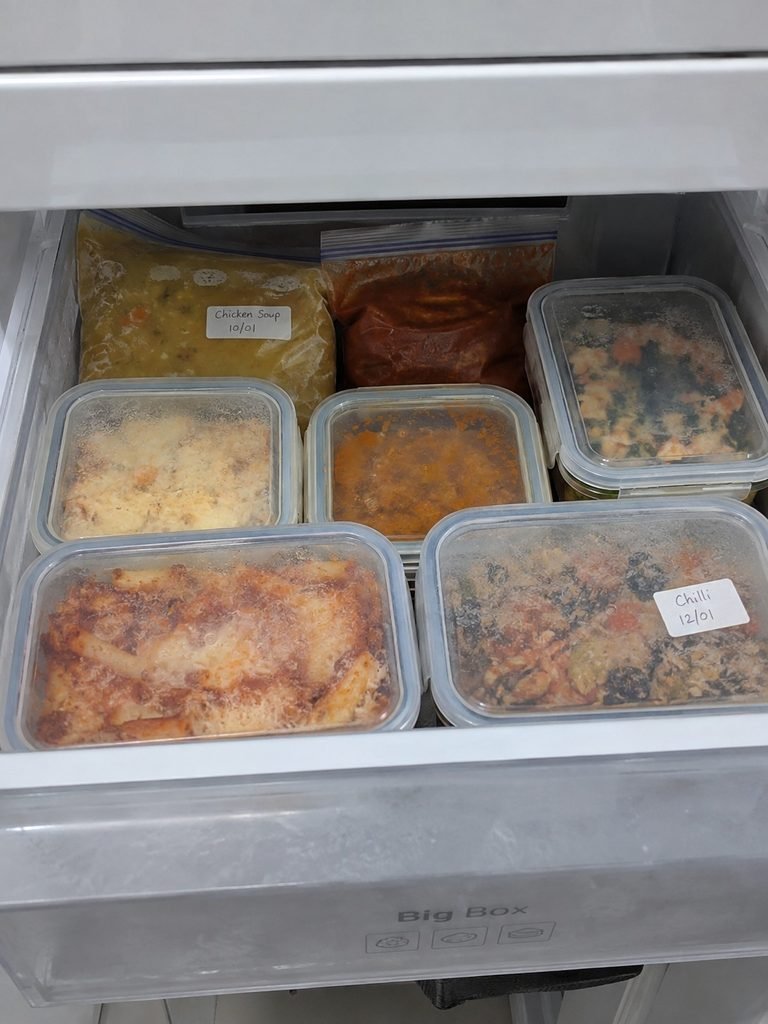
Give cooked meals their own shelf or drawer instead of mixing them with raw ingredients. This makes quick lunches and busy-night dinners easier to see, especially when portions are packed in similar containers. Place the oldest meals at the front.
Avoid stacking different dishes in one tall pile. A low, wide arrangement lets you read labels without moving several containers first. When the shelf is almost full, plan one or two meals from it before freezing anything new.
Practical note: Arrange prepared meals with the oldest containers at the front and newer ones behind them. This simple rotation helps you use meals before they are forgotten and makes quick dinners easier to choose.
3. Build Vertical Files for Flat Packages
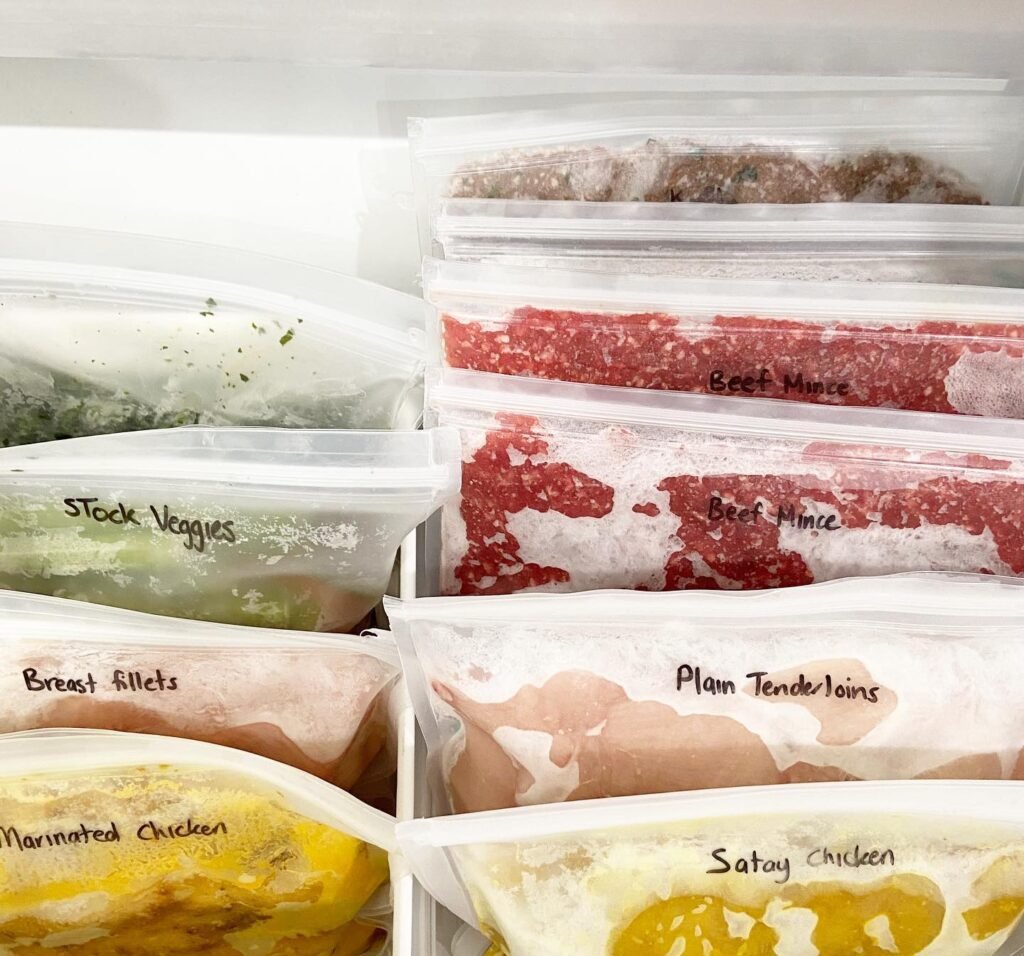
Freeze soups, sauces, cooked grains, and chopped ingredients in flat, evenly shaped packages. Once firm, store them upright like files. This uses shelf depth efficiently and lets you remove one package without disturbing everything around it.
Leave a little room for expansion and press out excess air before sealing. Add the food name and date where they remain visible when the package stands upright. For a more complete kitchen reset, pair this method with these fridge organization ideas.
Quick tip: Place filled freezer bags flat on a baking tray until completely frozen. Once firm, stand them upright inside a narrow bin so soups, sauces, and chopped ingredients can be viewed like files.
4. Add a Use-First Basket
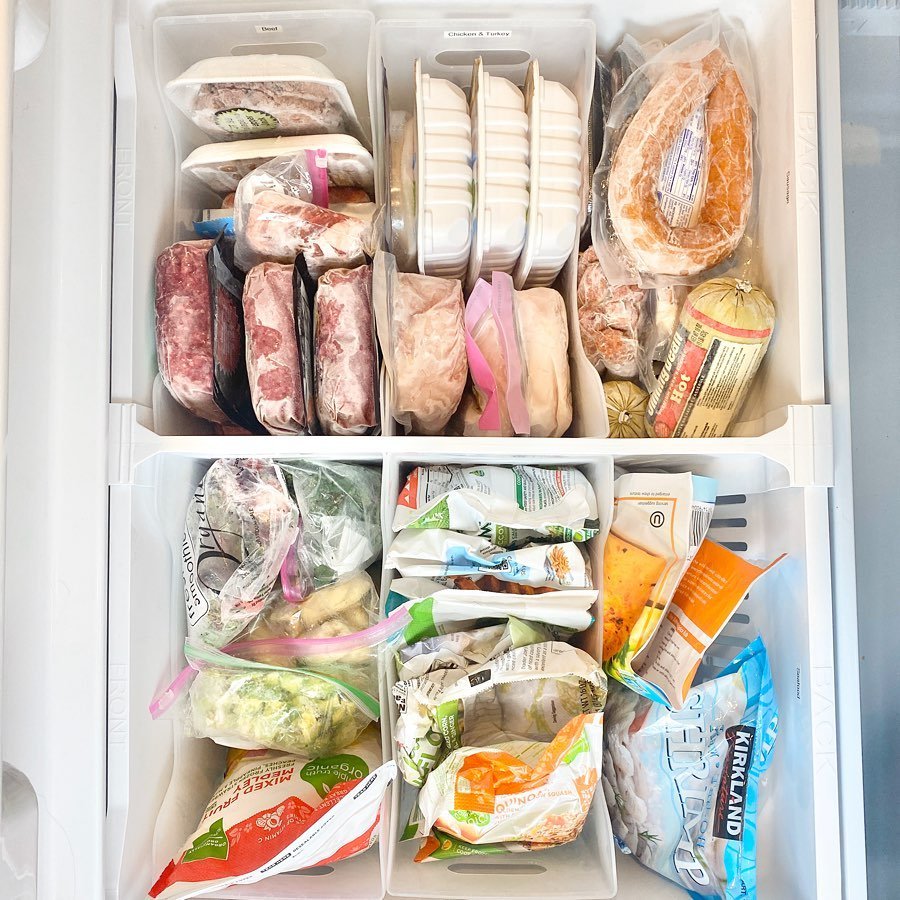
Create one clearly marked basket for foods that should be eaten soon. Add open packages, older leftovers, partial bags, and items nearing the end of their best-quality window. Check this basket before planning meals or making a grocery list.
A use-first area prevents forgotten food from disappearing behind newer purchases. It also removes the need to inspect every label each week. For more low-cost ideas using simple supplies.
Keep the basket simple:
- Add older leftovers and open packages.
- Check it before grocery shopping.
- Use its contents in upcoming meals.
- Avoid letting it become another cluttered storage area.
5. Keep Small Breakfast Items Together
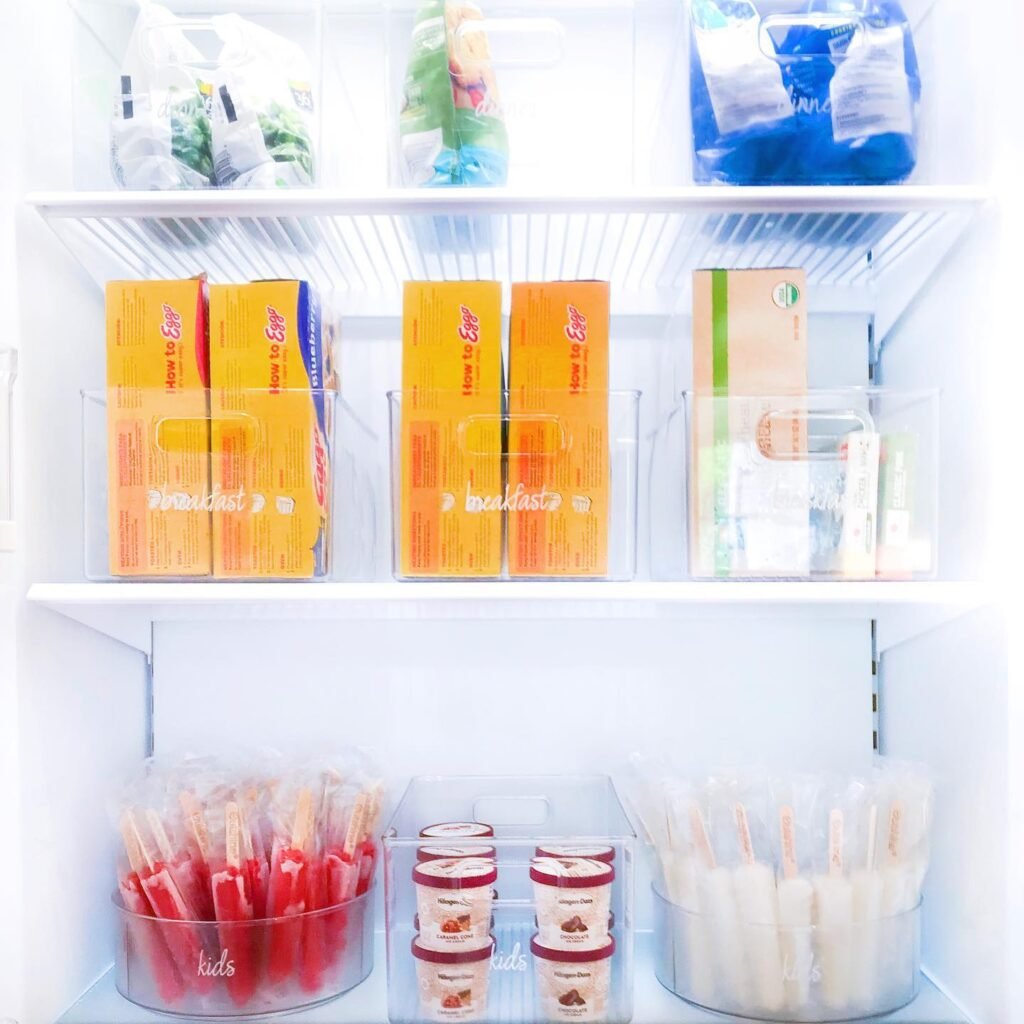
Breakfast foods are often small, individually wrapped, and easy to lose. Group waffles, muffins, smoothie packs, breakfast sandwiches, and frozen fruit portions in one accessible zone. Choose a spot that can be reached quickly during a rushed morning.
Store frequently used items at eye level or near the front. Less common foods can sit behind them. A dedicated breakfast area also helps family members find what they need without opening every drawer or leaving the freezer door open for too long.
Quick tip: Group waffles, muffins, smoothie packs, and breakfast sandwiches in one easy-to-reach section. Store the most frequently used choices near the front so busy mornings do not turn into long refrigerator searches.
6. Portion Ingredients by Real Cooking Needs
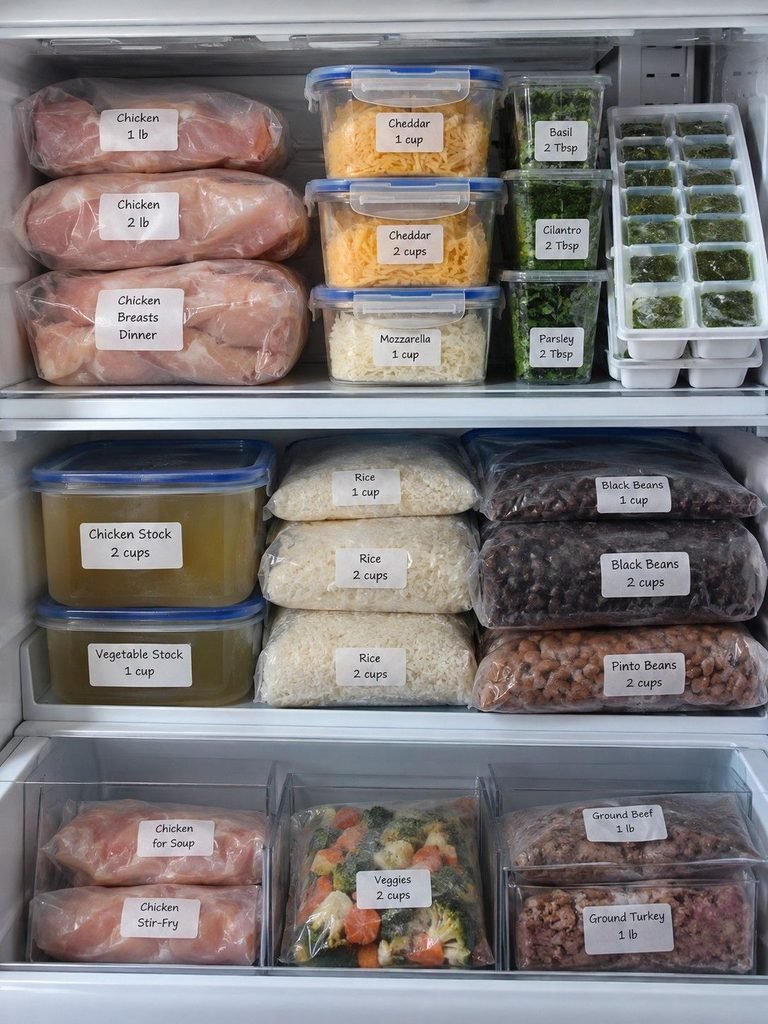
Large frozen blocks are difficult to use when a recipe needs only a small amount. Divide meat, cheese, herbs, stock, rice, and cooked beans into portions that match the meals you usually prepare. Practical portions reduce thawing time and unnecessary leftovers.
Think about your household rather than copying a standard serving size. A couple may need smaller packs, while a larger family may prefer dinner-sized bundles. Write the amount on each label so you can choose the right package without guessing.
Practical note: Divide ingredients according to the meals your household usually prepares. Freeze small portions for sauces and lunches, then create larger packs for soups, casseroles, or family dinners to avoid thawing more than necessary.
7. Give Open Packages a Dedicated Home
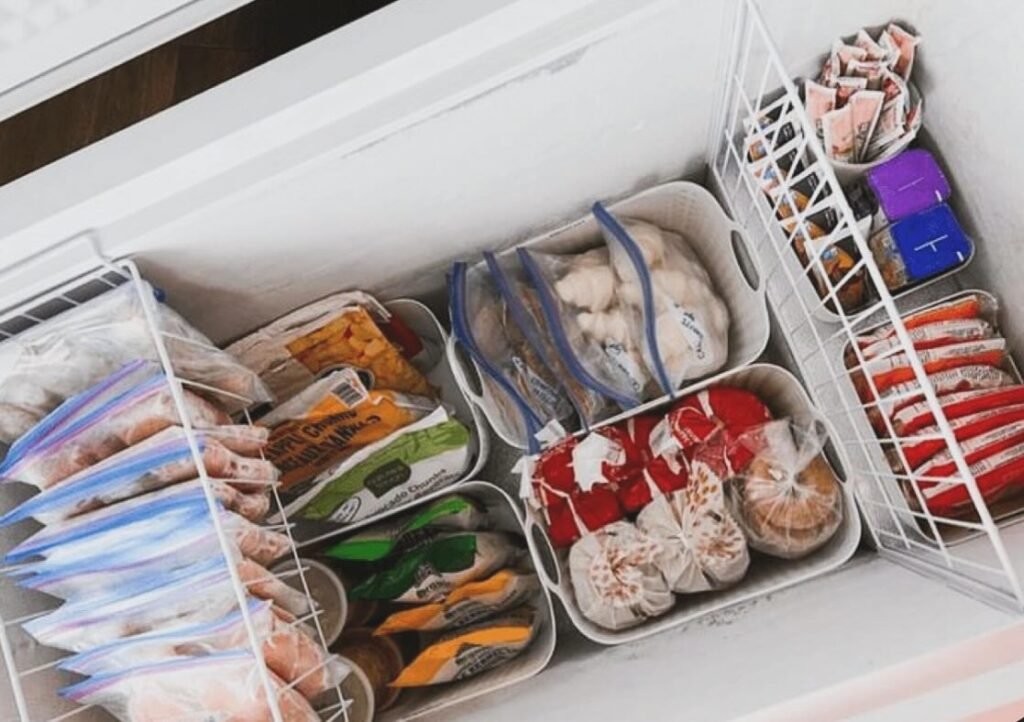
Half-used bags create clutter because they slide into gaps and spill small pieces. Choose one bin or drawer for opened packages, then close each bag securely before returning it. This makes partial ingredients visible before a new package is opened.
Keep the category simple. The area can hold open vegetables, fruit, snacks, bread products, and other loose packages together. The goal is not perfect sorting. The goal is to stop five unfinished bags from being hidden in five different places.
Quick tip: Place every opened freezer bag in one clearly labeled bin or drawer. Secure each package with a clip and turn the label forward so partial ingredients remain visible before anyone opens another bag.
8. Freeze Produce in Recipe-Friendly Portions
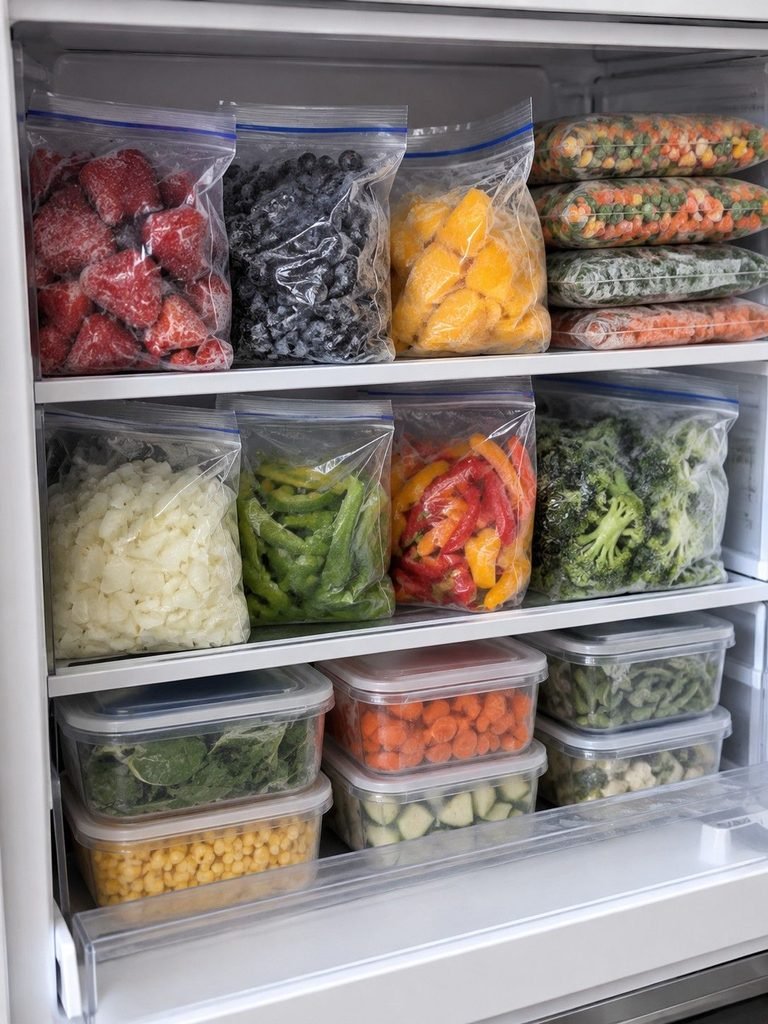
Prepare fruits and vegetables according to how you actually use them. Portion berries for smoothies, chopped onions for cooking, and mixed vegetables for quick side dishes. Smaller packs are easier to organize and prevent repeated thawing and refreezing.
Do not overload one oversized produce bag with unrelated items. Separate packages keep flavors, textures, and meal plans clear. For ideas on handling fresh produce before it reaches the freezer, explore these ways to store fruits and vegetables.
Practical note: Package fruit and vegetables according to their intended use. Create separate portions for smoothies, soups, stir-fries, baking, and side dishes so you can grab the correct amount without thawing a large mixed bag.
9. Use Clear Limits for Bulk Purchases
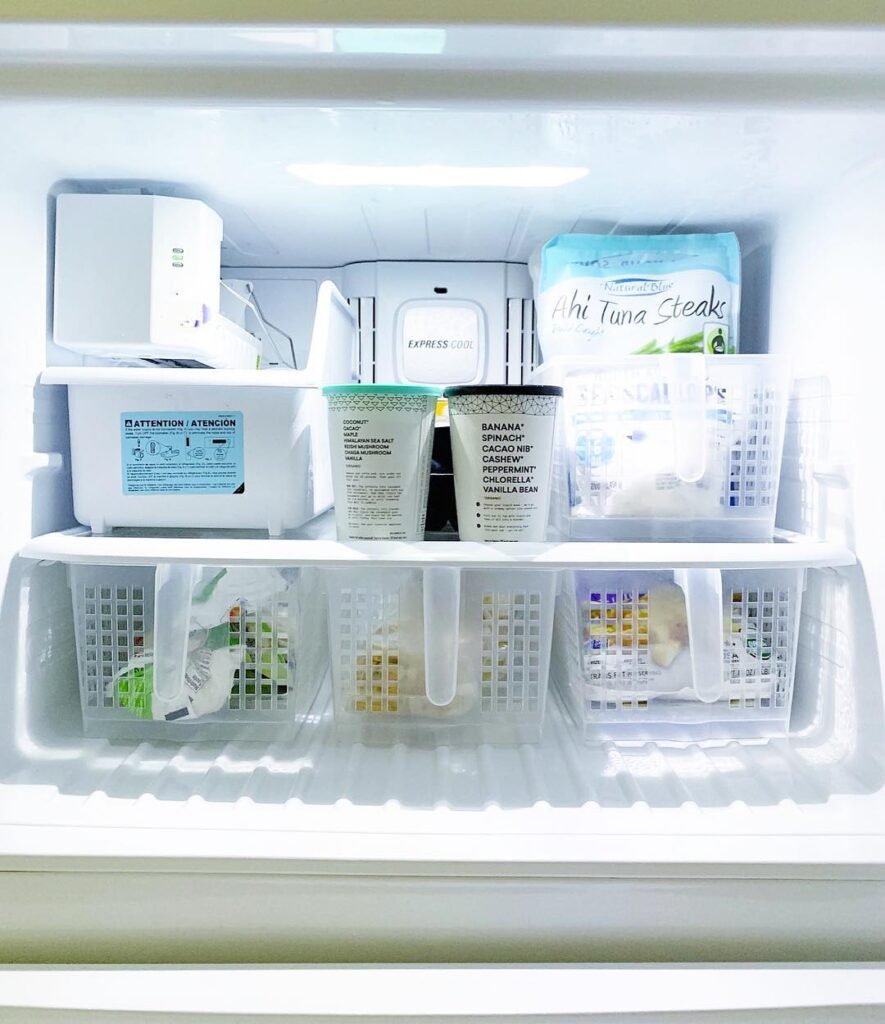
Bulk buying only saves money when the refrigerator has room and the food gets used. Set a space limit for each high-volume category before shopping. For example, allow one drawer for meat or one shelf section for frozen vegetables.
When the assigned space is full, use what you have before purchasing more. This rule keeps sale items from taking over the freezer and makes shortages easier to notice. It also leaves breathing room for leftovers and unexpected meal-prep batches.
Before shopping: Decide how much freezer space each bulk category may use. For example, reserve one drawer for meat or half a shelf for vegetables. When that section is full, use existing food before buying more.
10. Maintain a Simple Door Zone
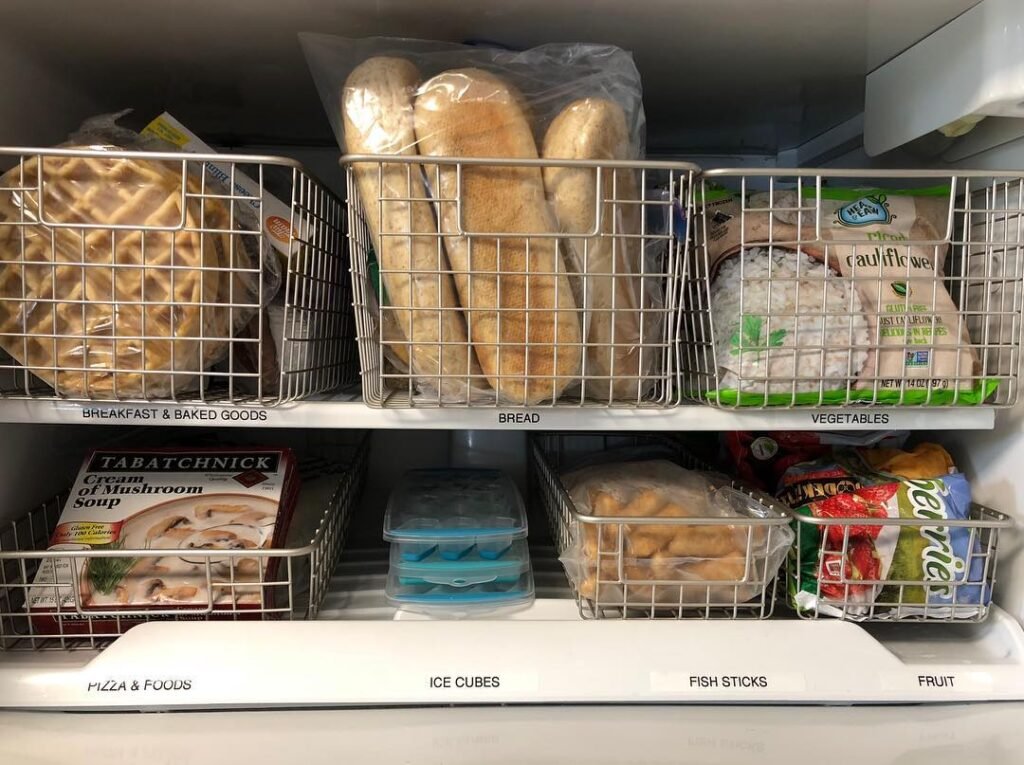
The freezer door is useful for small, frequently reached items, but it can become crowded quickly. Assign it a limited purpose, such as frozen herbs, ice packs, breakfast add-ons, or small dessert portions. Avoid turning every pocket into a mixed catchall.
Use the same position for repeat purchases so family members know where to look. Keep packages upright where possible and remove empty boxes promptly. A tidy door reduces visual clutter and protects the main shelves from becoming storage space for tiny items.
Quick tip: Limit the freezer door to two or three small categories, such as frozen herbs, ice packs, or breakfast add-ons. Keeping the purpose narrow prevents the door pockets from becoming crowded with unrelated items.
11. Track Inventory With Broad Counts
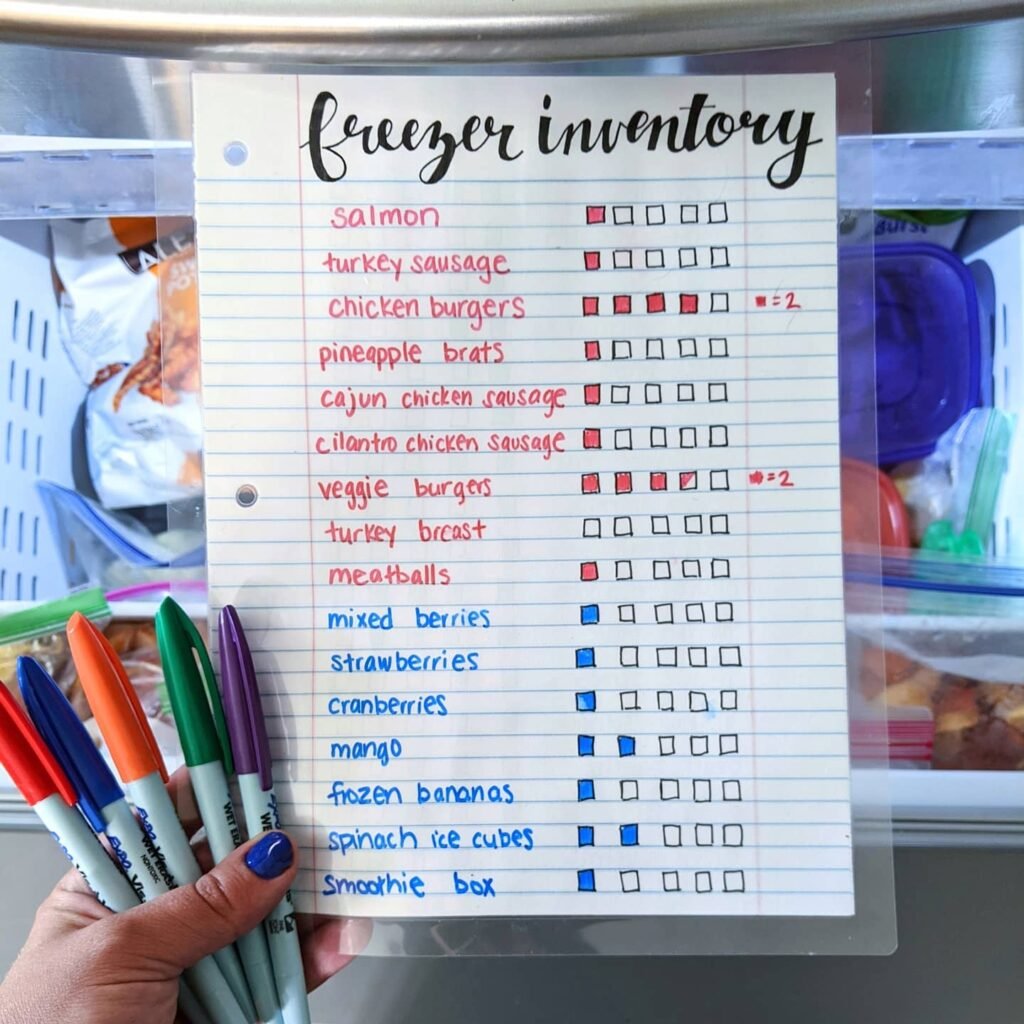
A freezer inventory does not need to list every cube of stock or every bread slice. Track broad counts for the foods that affect meal planning, such as four chicken packs, three prepared dinners, or two bags of vegetables.
Keep the list on a whiteboard, notepad, or phone note. Update it when you add or remove a major item. Broad counts offer enough information for grocery planning without turning freezer organization into a daily record-keeping job.
Keep the list manageable:
- Count major protein packages.
- Note prepared meals.
- Record vegetable bags.
- Track bread and breakfast foods.
- Update the list after shopping or meal preparation.
12. Store Refrigerator Tools Close By
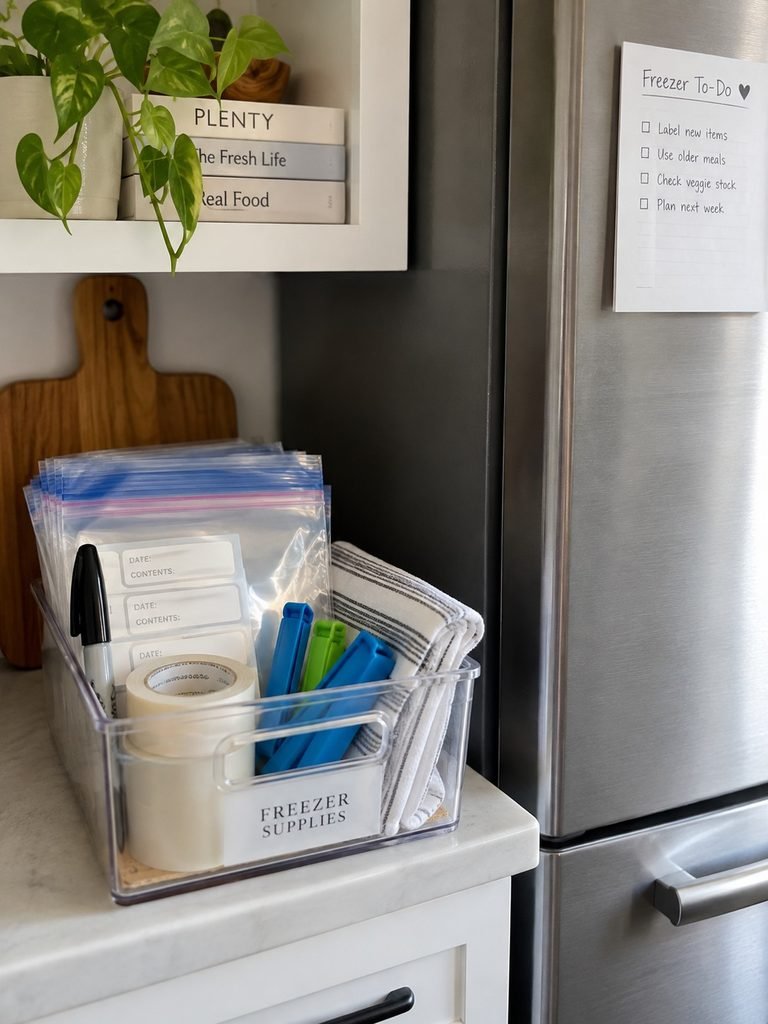
Keep labels, a marker, bag clips, and a small cleaning cloth near the freezer. When supplies are convenient, food is more likely to be sealed, dated, and returned neatly instead of being pushed onto the nearest shelf.
A small handled container works well inside a cabinet or pantry. If nearby cabinet space is limited, these top of fridge storage ideas can help create a practical home for lightweight organizing supplies without crowding food-storage areas.
Practical note: Keep a marker, labels, bag clips, and a small cleaning cloth together in a nearby container. Easy access makes it more likely that food will be dated, sealed properly, and stored neatly.
13. Schedule a Ten-Minute Monthly Reset
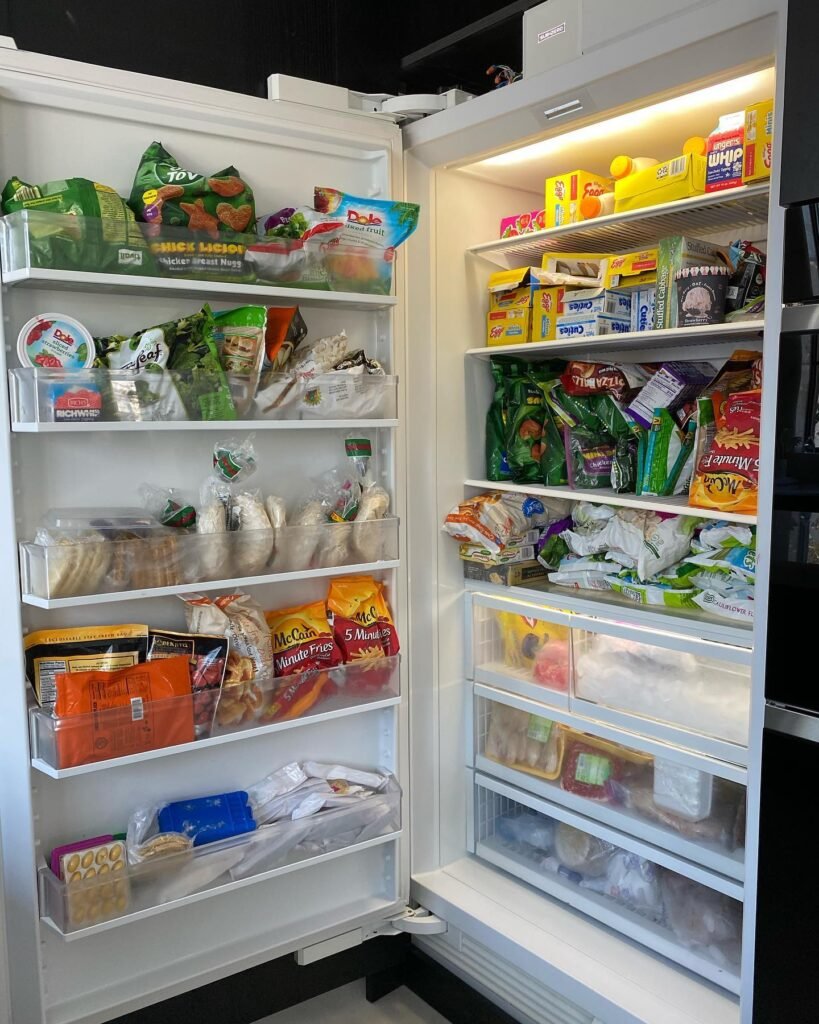
Choose one day each month for a quick freezer check. Remove empty packaging, wipe small spills, combine duplicate open bags when appropriate, and move older food forward. A short reset keeps small problems from turning into a full afternoon project.
Use the same routine every month so it becomes automatic. Check the use-first basket, review your broad inventory, and leave a little open space for new meals. Consistent maintenance matters more than creating a picture-perfect freezer once.
Quick tip: Complete the reset before your main grocery trip. Remove empty packaging, wipe small spills, move older food forward, and review available space so you know exactly what needs to be used or replaced.
FAQs
What temperature should a home freezer be?
Keep the freezer at 0°F, or about -18°C, and use an appliance thermometer to confirm the temperature. USDA and FDA guidance recommends this setting for safe frozen-food storage.
How often should I organize my refrigerator?
Do a quick check every month and a deeper clean when frost, spills, or crowded shelves make access difficult. Monthly maintenance is usually easier than waiting until the freezer becomes completely disorganized.
Are bins necessary for freezer organization?
No. Bins are helpful for loose packages and broad categories, but shelf zones, drawers, flat packages, and a simple inventory can work just as well. Use containers only where they solve a specific problem.
How can I stop food from getting forgotten?
Keep older items at the front, maintain a small use-first basket, and track broad category counts. These three habits improve visibility without requiring a detailed list of every frozen item.
Should I organize an upright refrigerator and chest refrigerator differently?
Yes. Upright freezers work well with shelf zones and vertical files. Chest refrigerators usually need larger category sections and a clear top-to-bottom plan so food at the bottom remains accessible.