19 Patio Garden Ideas for Every Outdoor Space
A patio garden can turn even a plain outdoor area into a comfortable place for relaxing, dining, or growing plants.
The best Patio Garden ideas make smart use of containers, lighting, vertical space, and easy-care materials without demanding a large budget.
Whether you have a rooftop, narrow balcony, shaded courtyard, or open backyard patio, small design choices can add privacy, improve comfort, and create a greener setting that feels connected to your home.
Related Garden Articles:
20 Outdoor Bench Ideas for Gardens and Patios
23 Small Balcony Ideas That Feel Bigger and Cozier
20 Garden Pathway Ideas That Make Any Yard Feel Beautiful
1. String Light Garden Lounge
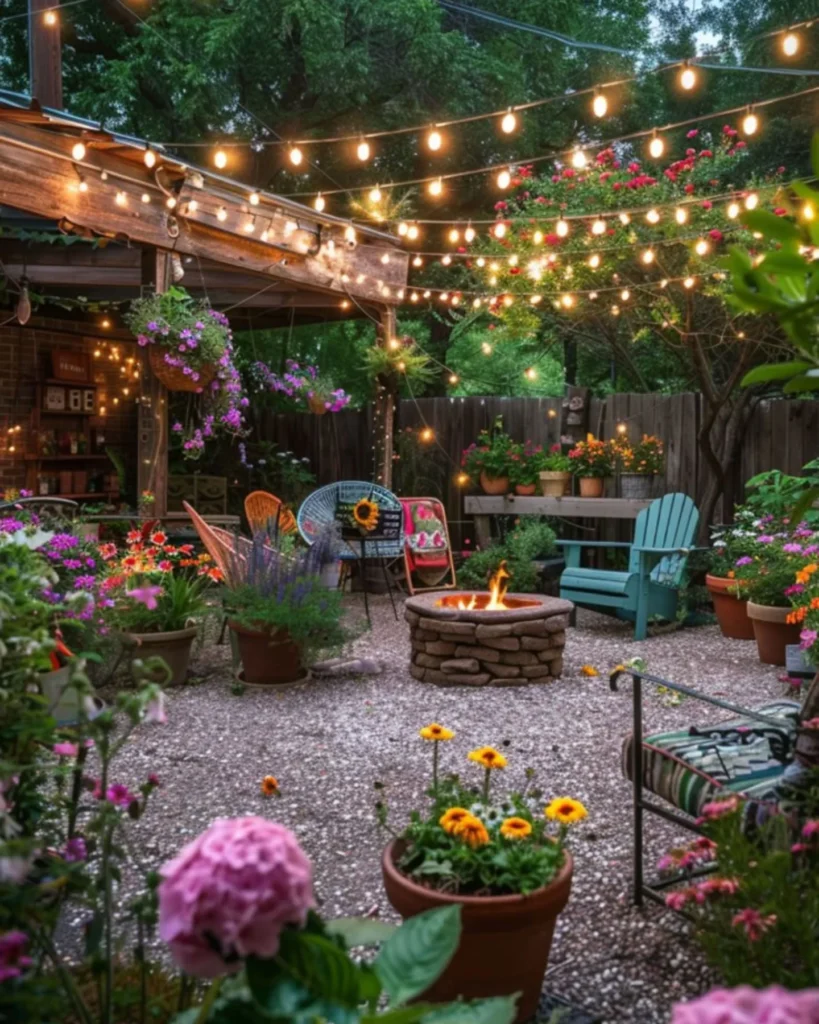
Bring warmth and personality to an open patio by combining colorful containers, casual seating, and overhead string lights. A compact fire pit gives the area a natural gathering point, while gravel keeps the ground affordable and easy to maintain.
Arrange pots around the edges rather than across walkways, and mix upright plants with trailing flowers for depth. Solar string lights are a practical choice when outdoor outlets are limited or inconvenient.
2. Vertical Side Patio Garden
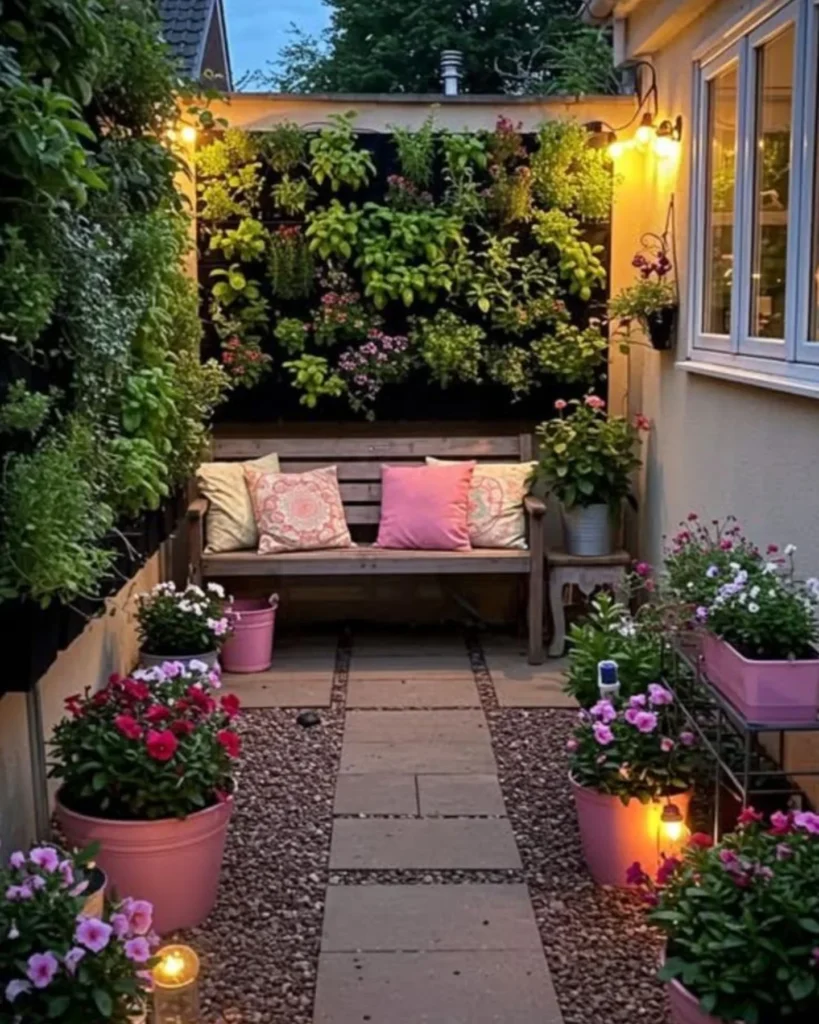
A narrow side patio can feel surprisingly inviting when the back wall becomes part of the garden.
Use wall-mounted planters or a vertical planting panel to hold herbs, flowers, and compact greenery without taking up floor space. A simple bench creates a useful destination at the far end, making the layout feel intentional.
Keep the central path clear, and repeat one container color to give a small collection of pots a calmer, coordinated look.
3. Minimal Courtyard Bar Garden
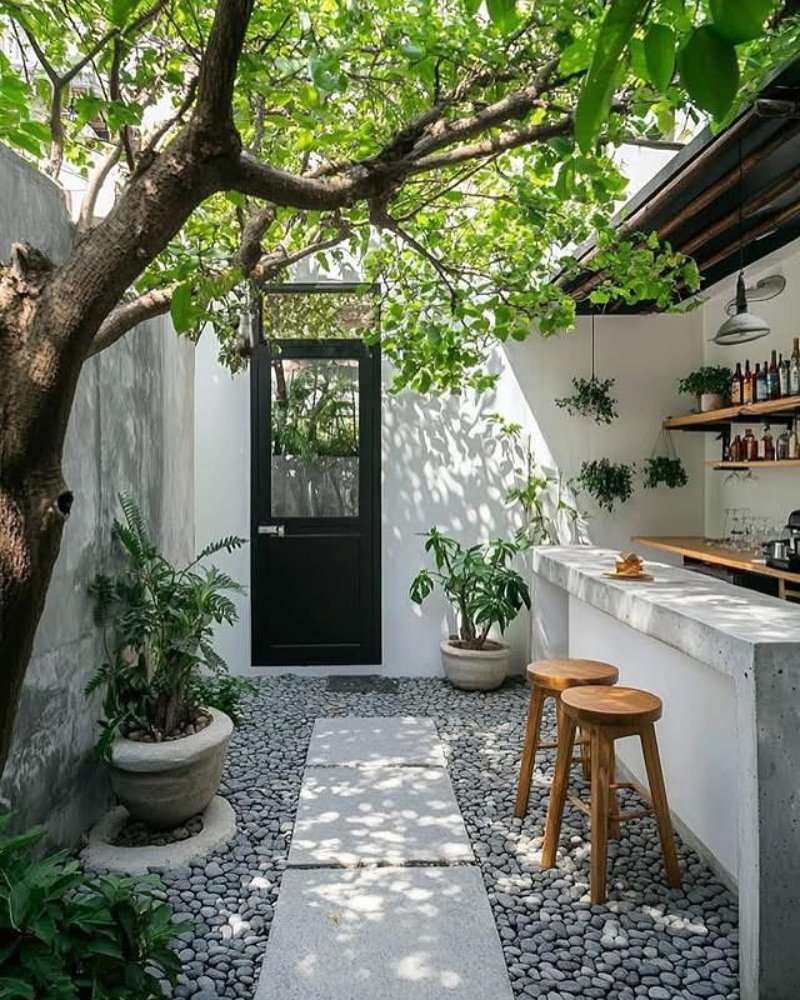
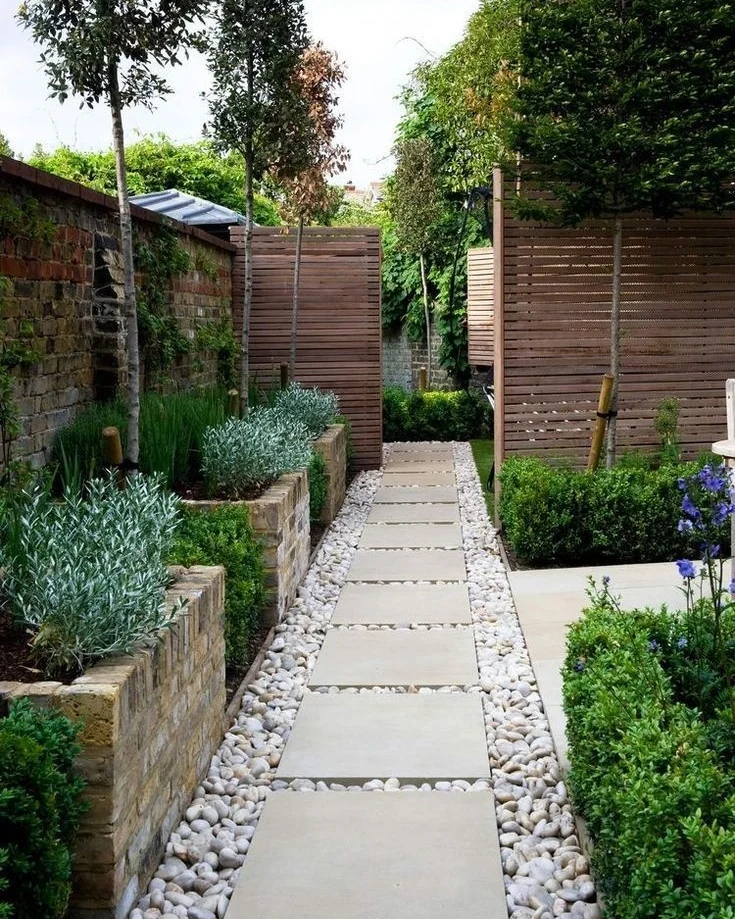
For a clean courtyard garden, let one mature tree provide shade and visual structure while the rest of the design stays simple. Pebbles, large stepping slabs, and a few oversized planters create an uncluttered surface that handles foot traffic well.
Add a narrow counter with stools to make the patio useful for coffee or casual meals. Choose shade-tolerant plants, and place containers where falling leaves can be swept up without moving heavy furniture.
4. Mediterranean Water Channel Patio
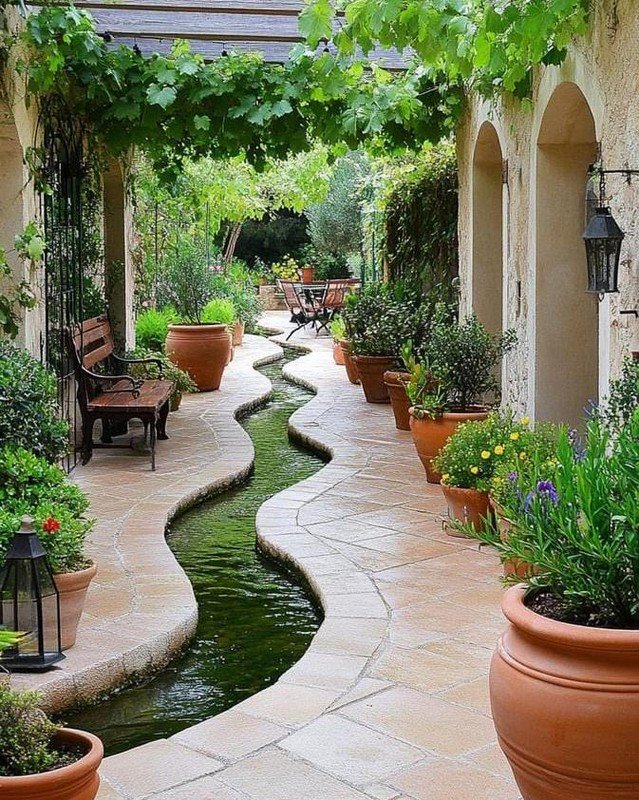
A slim water channel can give a patio garden a peaceful Mediterranean feel while helping a long courtyard appear wider and more dynamic.
Terracotta pots suit the warm paving and make it easy to rotate flowering plants through the seasons. Keep the water feature shallow and accessible for cleaning, especially where leaves may collect.
A bench placed beside the channel offers a quiet resting spot without blocking the route to dining or garden areas beyond.
5. Rooftop Perimeter Garden
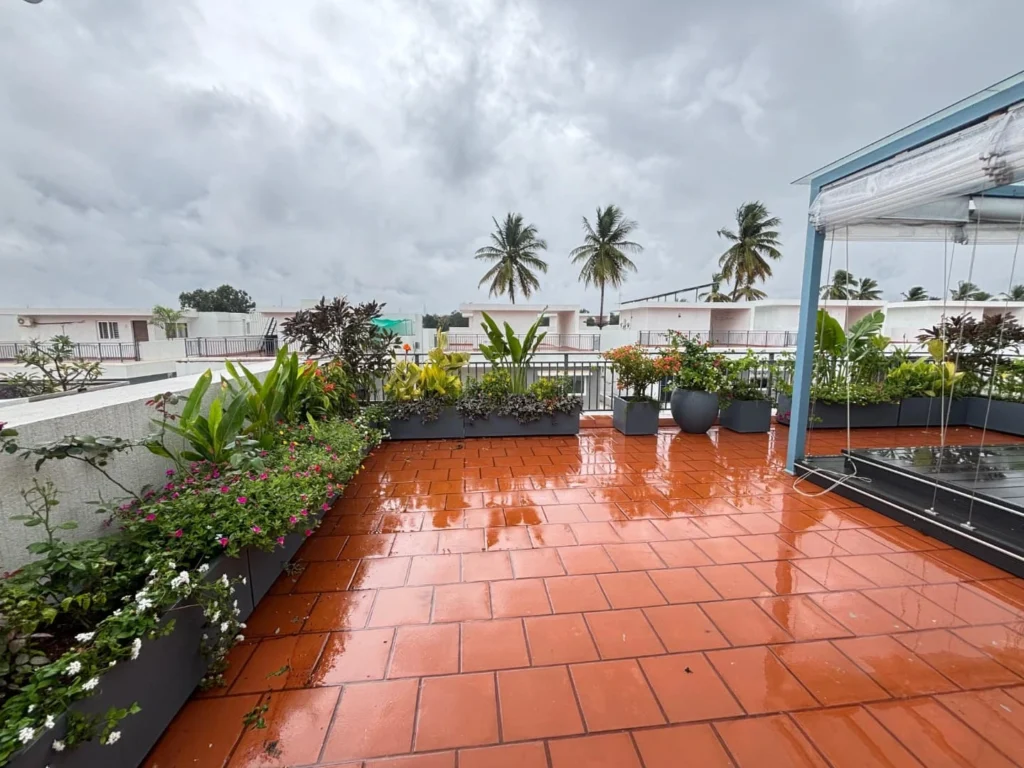
Rooftop patios benefit from planting around the perimeter, leaving the center open for movement, seating, or flexible entertaining.
Long rectangular planters create a low green border, while larger pots can hold palms, flowering shrubs, or other wind-tolerant plants. Check weight limits and drainage before adding soil-filled containers.
Lightweight fiberglass planters are often easier to manage than stone, and adding saucers or raised feet helps prevent standing water from staining tiled surfaces.
6. Pergola Garden With Pond
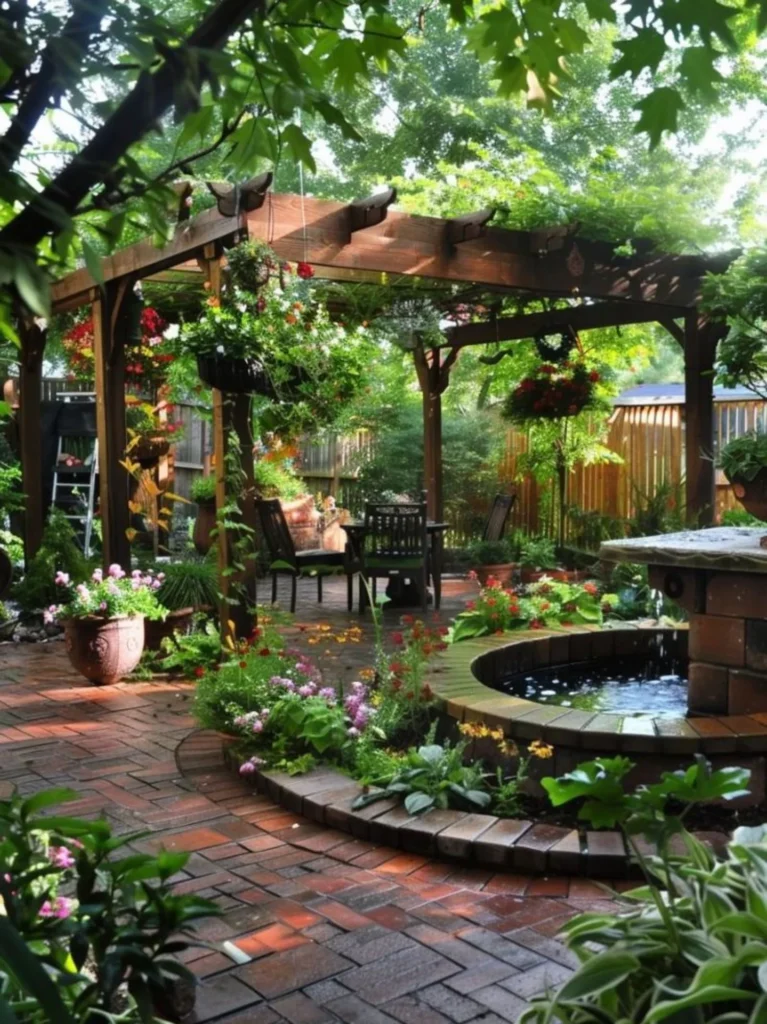
Turn a shaded patio into a lush retreat by layering plants at several heights. Hanging baskets soften a pergola, border beds fill the ground level, and a small pond adds movement without taking over the seating area.
Brick paving works well in leafy gardens because it develops character as it ages.
Leave enough space around the water for safe maintenance, and choose moisture-loving plants nearby so occasional splashes support the planting rather than create extra cleanup.
7. Curved Path Dining Patio
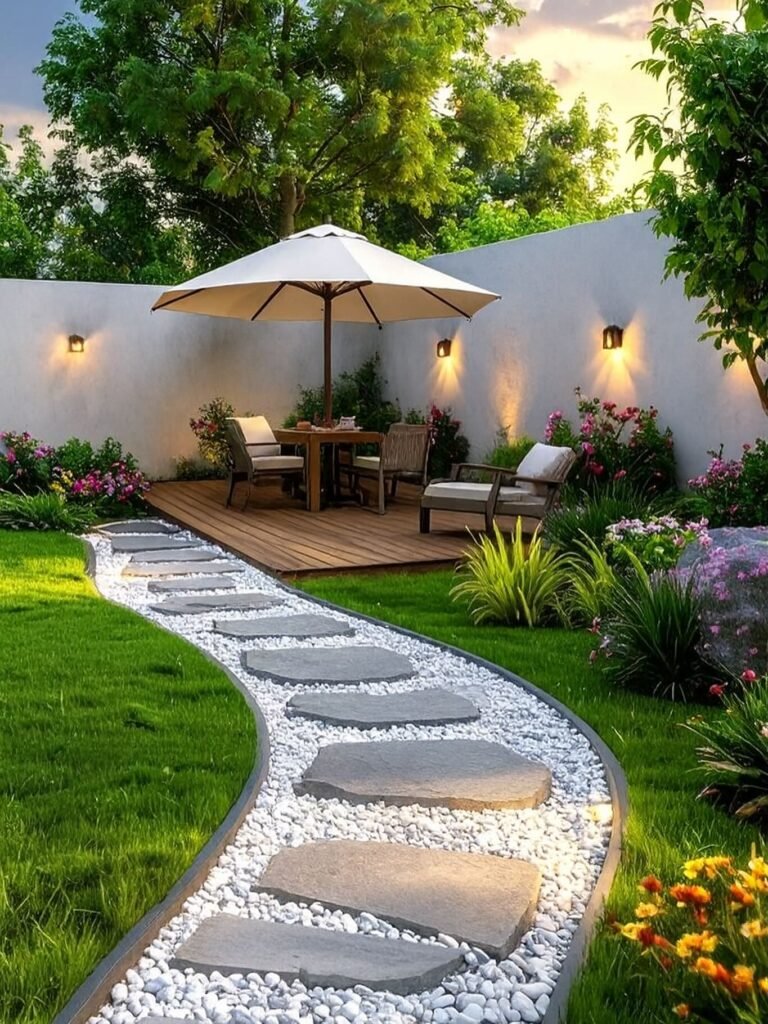
A tidy garden path can make a simple patio feel more polished and welcoming. Large stepping stones set into white gravel create a strong route toward a wooden dining deck, while curved edging keeps the design softer than a straight walkway.
Place flowering plants along the outer borders to preserve open lawn space. An oversized umbrella improves comfort during hot afternoons, and wall lights allow the seating area to remain useful after sunset without crowding the tabletop.
8. Secret Garden Reading Nook
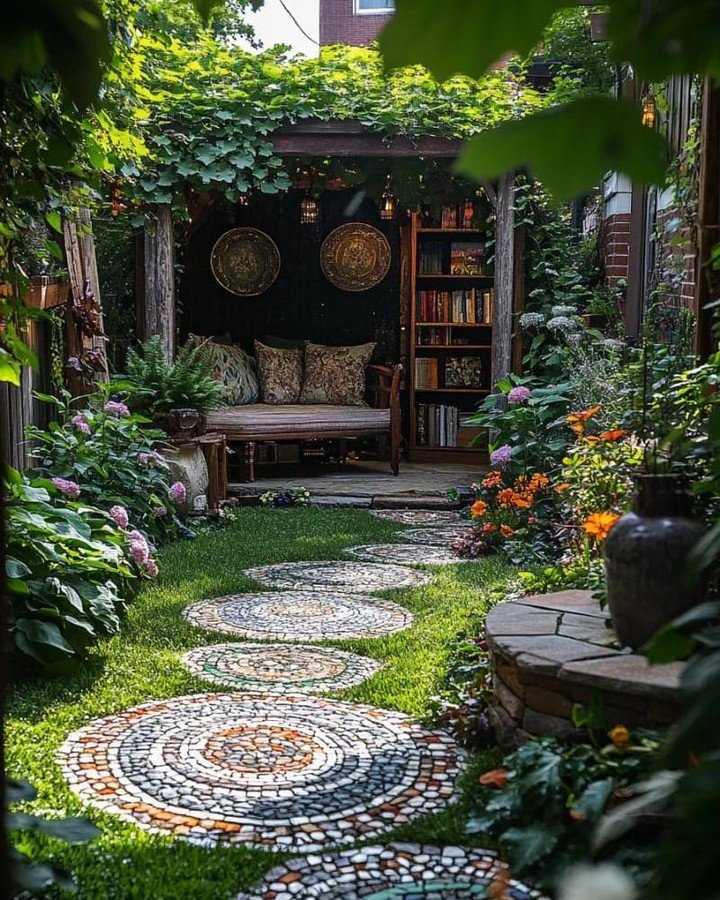
Create a secluded reading corner by guiding the eye toward a small covered bench or daybed at the end of the garden. Round mosaic stepping stones add pattern while keeping more grass visible than a solid path would.
Dense foliage and flowering borders provide privacy, but trim plants back from the walkway to avoid damp leaves brushing against visitors. A narrow outdoor shelf can hold weather-safe decor, with books brought outside only when the space is being used.
9. Modern Succulent Patio
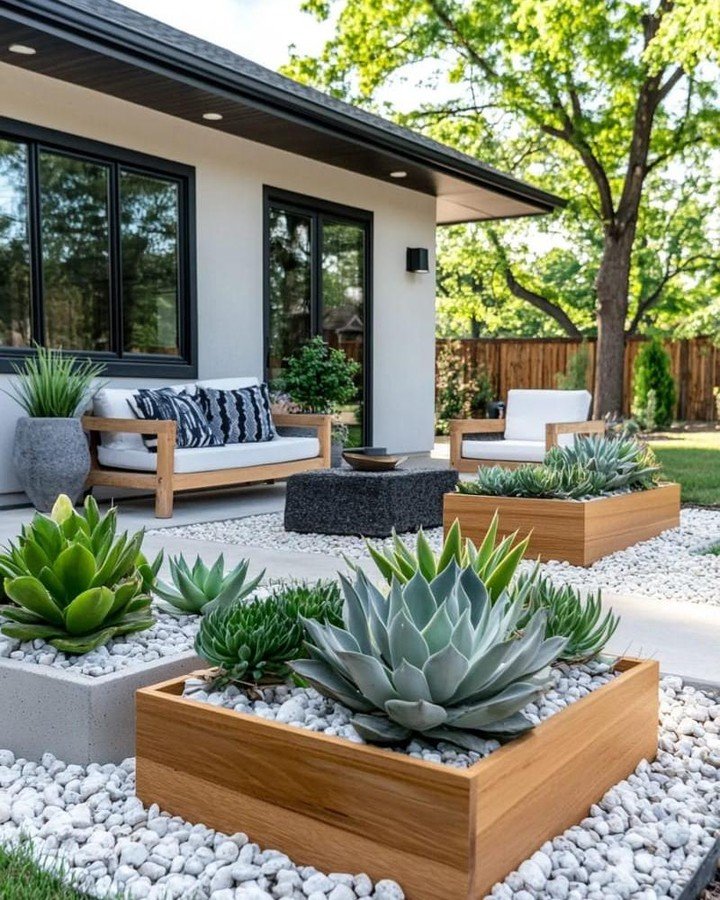
Low-water planting suits a modern patio where crisp lines and minimal upkeep matter. Group sculptural succulents in square raised planters, then surround them with pale gravel to reflect light and reduce muddy areas.
Wooden planter boxes add warmth beside concrete and white stone, but line their interiors to slow moisture damage.
Leave generous spacing between larger rosettes, since crowded succulents can trap dampness and lose the clean shapes that make the arrangement appealing.
10. Productive Balcony Garden
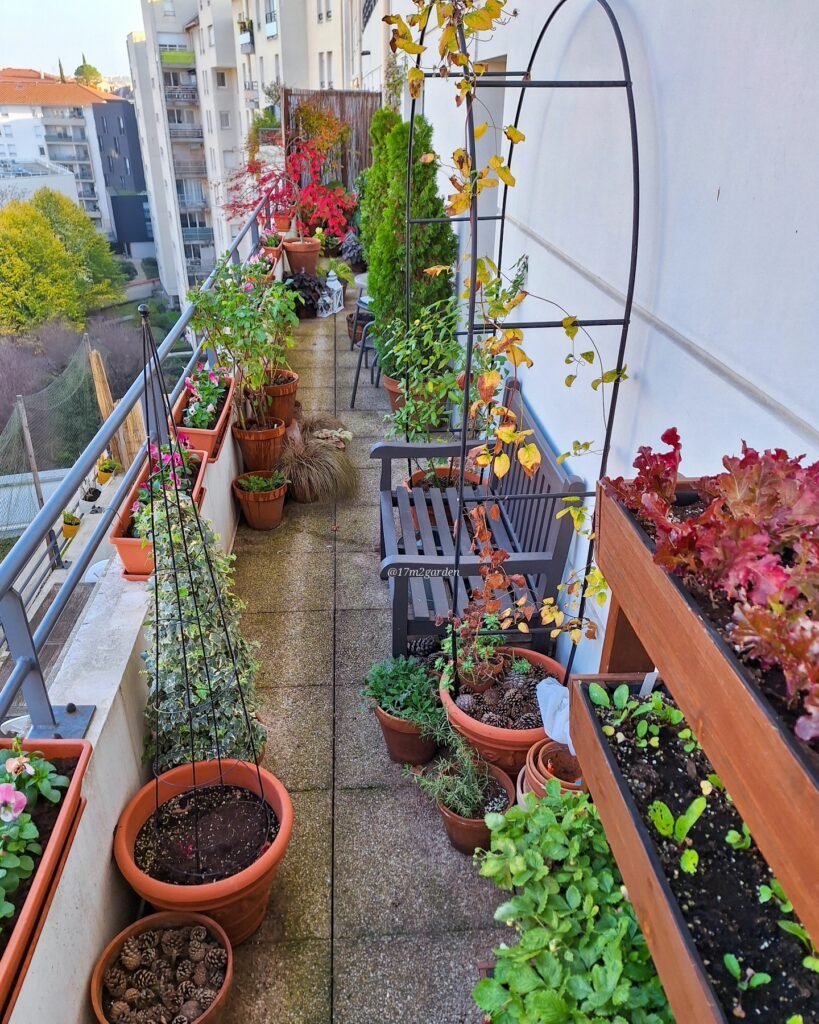
A long balcony can support an impressive edible garden when every edge is used carefully. Attach railing boxes for flowers or shallow-rooted herbs, place larger pots against the wall, and add slim trellises for climbing beans, peas, or vines.
Keep one continuous walkway open from end to end. A narrow bench offers seating without interrupting plant care, while elevated planters reduce bending and make salad greens easier to harvest, water, and protect from pests.
11. Layered Balcony Retreat
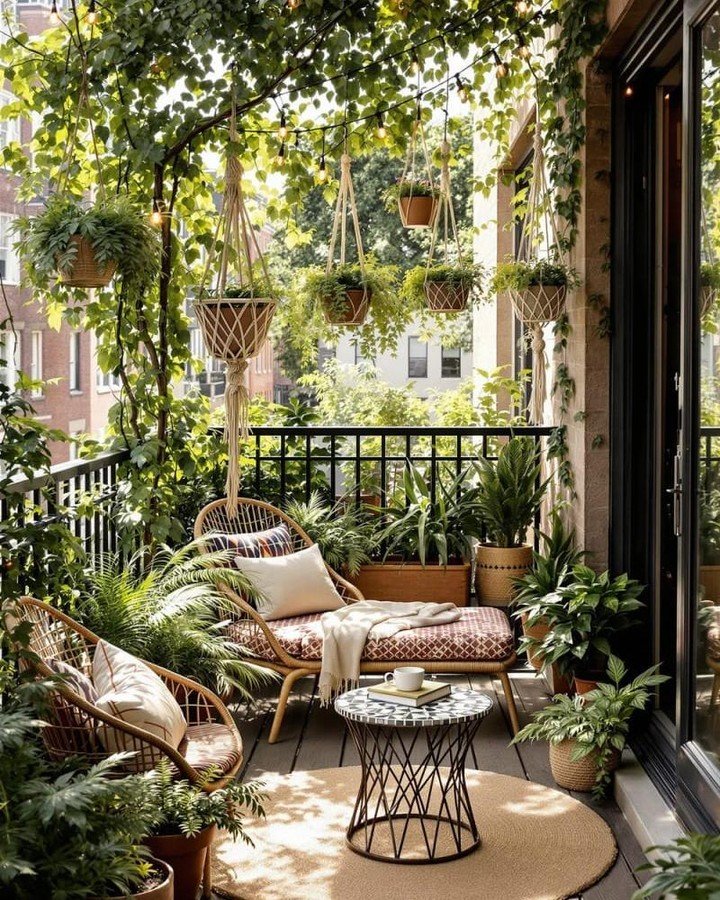
Turn a covered balcony into a leafy retreat by combining hanging baskets, trailing vines, and compact floor planters. Keeping plants at several heights creates privacy without making the seating area feel boxed in.
Choose lightweight pots for overhead displays and secure every hook to a solid support.
A slim lounge chair and small table preserve walking space, while washable outdoor textiles make the corner comfortable enough for everyday reading or morning coffee.
12. Sculpted Topiary Patio
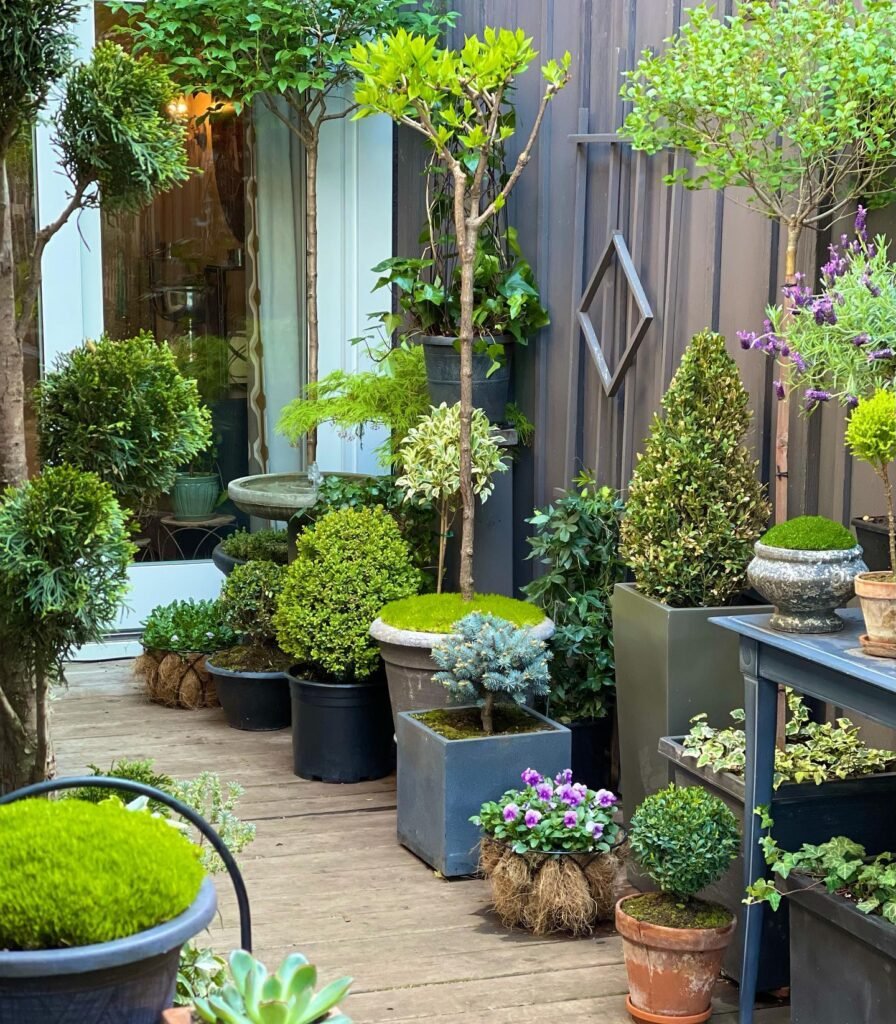
A collection of clipped shrubs and small trees gives a patio garden year-round structure, even when seasonal flowers fade. Mix round, cone-shaped, and upright forms so the arrangement feels collected rather than overly formal. Repeating dark planters helps varied greenery look connected.
Place taller specimens near walls and shorter pots beside paths, then add one or two flowering plants for softness. Slow-release fertilizer can simplify maintenance during the busiest growing months.
13. Abundant Container Collection
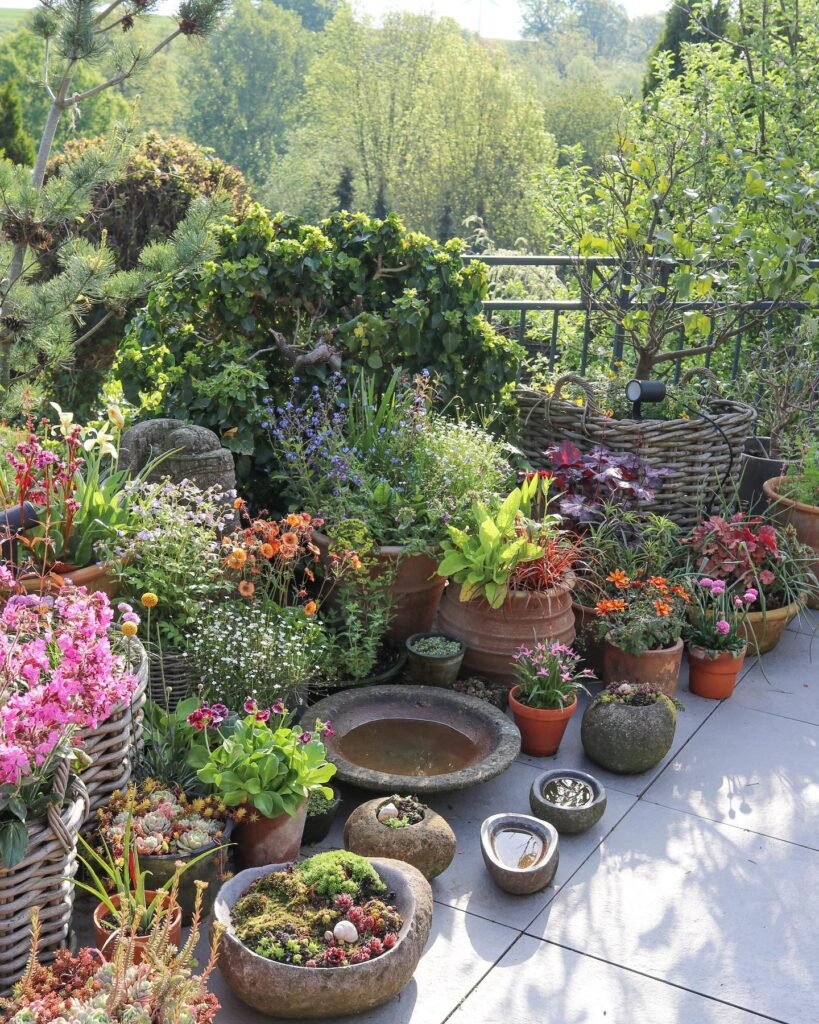
Garden lovers with many small plants can create an abundant container display by grouping pots into loose clusters instead of lining them up evenly.
Use terracotta, stone, and woven baskets to introduce texture, then place tiny water bowls between plants for birds and pollinators. Keep thirsty flowers together to make watering quicker.
Raising a few containers on stands also improves drainage and lets low-growing succulents receive enough sunlight without being hidden.
14. Lantern Lit Courtyard
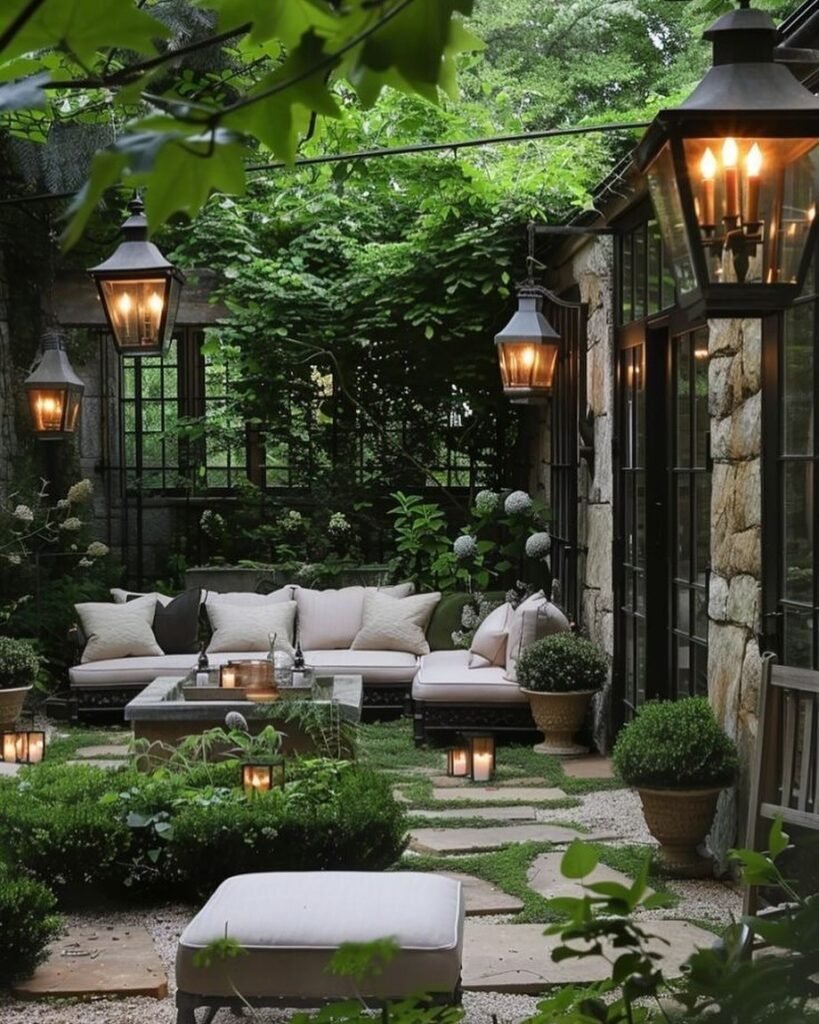
Lantern lighting can make a shaded patio feel welcoming long after sunset. Pair large hanging fixtures with smaller floor lanterns so light reaches seating, paths, and planting beds without becoming harsh.
Pale cushions brighten the space, while clipped evergreen pots add order beside looser woodland planting. Use outdoor-rated LED bulbs for lower heat and energy use. Position cables and fixtures away from irrigation lines, wet foliage, and areas where guests might brush against them.
15. Cottage Flower Patio
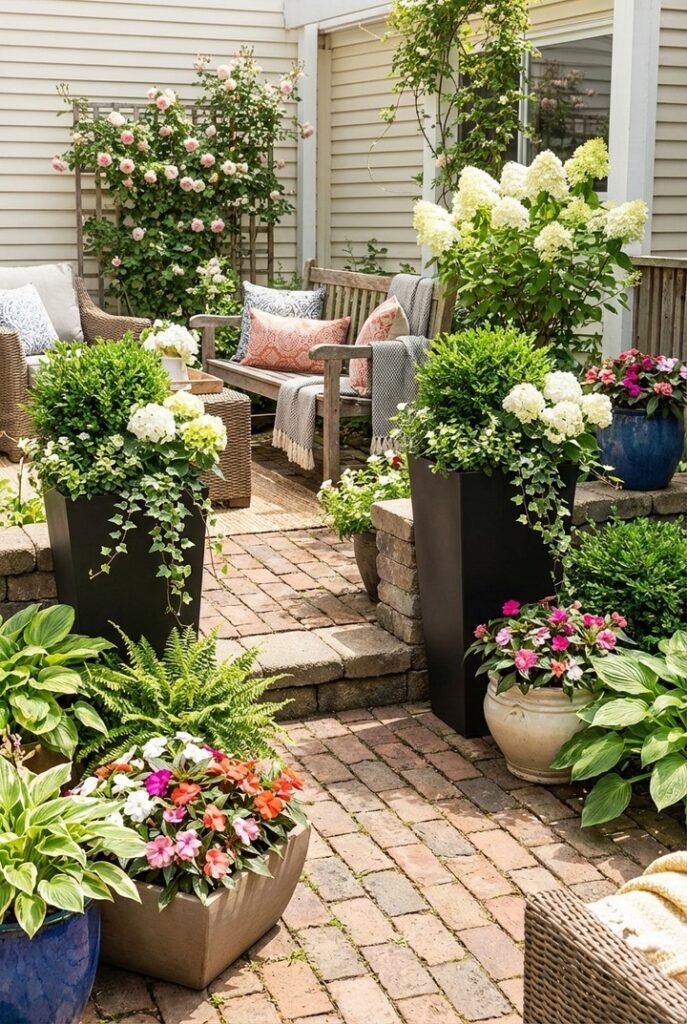
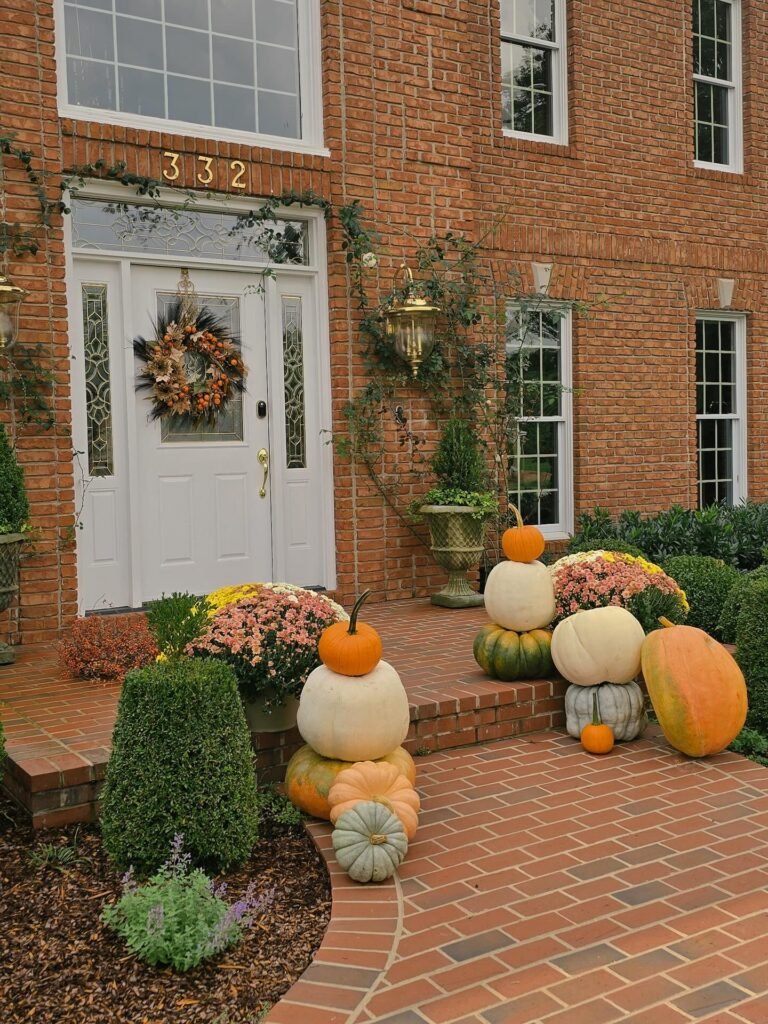
Soft hydrangeas, climbing roses, and trailing greenery can give a brick patio an inviting cottage-garden character.
Tall planters help define the entrance to a seating zone, while smaller flower pots fill awkward corners near steps. Select plants with similar moisture needs to avoid complicated care.
In partly shaded spaces, hostas and ferns can provide reliable foliage beneath flowering shrubs. A neutral furniture palette keeps the layered planting from feeling visually crowded.
16. Modern Fire Pit Garden
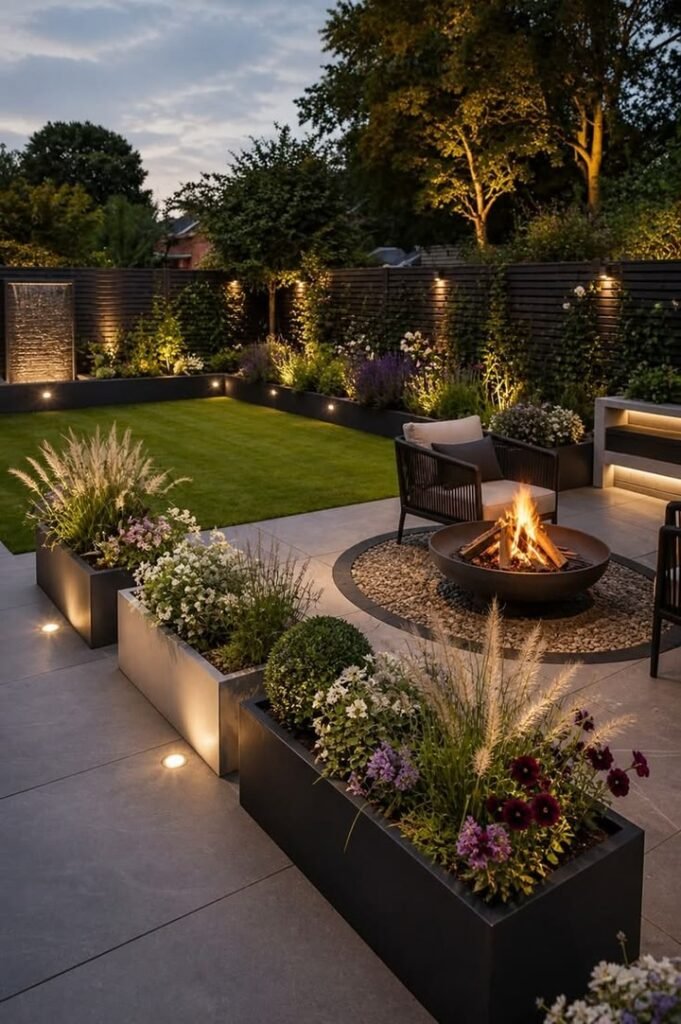
For a modern patio garden, use rectangular planters to shape clear zones around a lawn, walkway, and fire pit. Ornamental grasses soften hard paving, while compact flowering plants add color without interrupting the clean layout.
Recessed lights along planter edges improve nighttime visibility and make the garden feel larger. Keep flammable leaves and stems well away from open flames, and leave enough space around chairs for people to move safely when the fire is in use.
17. Flowering Pergola Patio
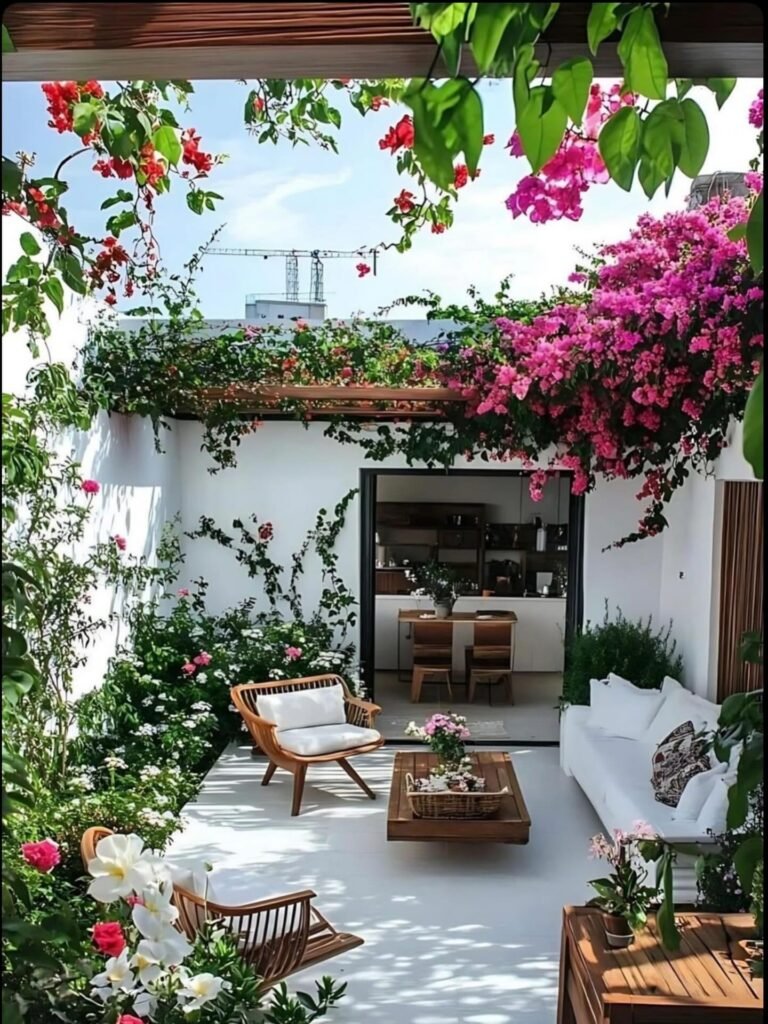
A flowering vine trained across a pergola can supply shade, privacy, and dramatic color without taking up much floor space. Bougainvillea works especially well in warm, sunny climates, while climbing roses or clematis may suit cooler areas.
Keep the furniture simple so the canopy remains the main feature. Regular pruning prevents vigorous stems from blocking doors or gutters. Large containers near the walls can hold herbs and fragrant plants close to the seating area.
18. Mediterranean Courtyard Garden
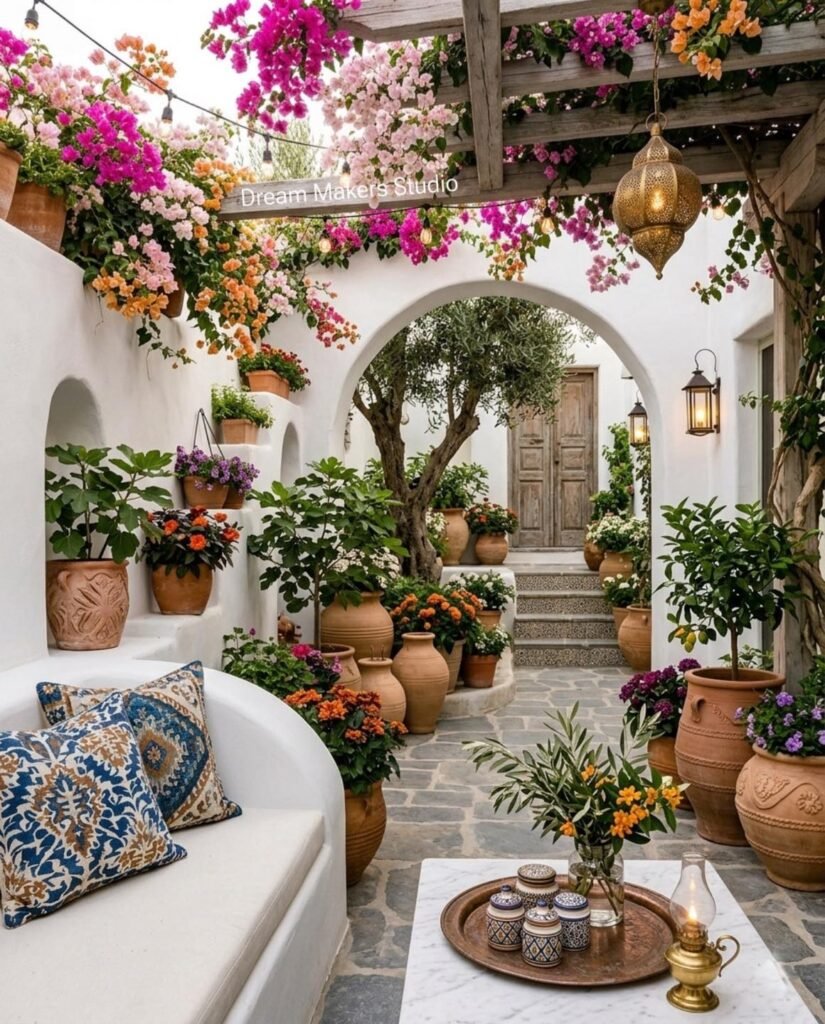
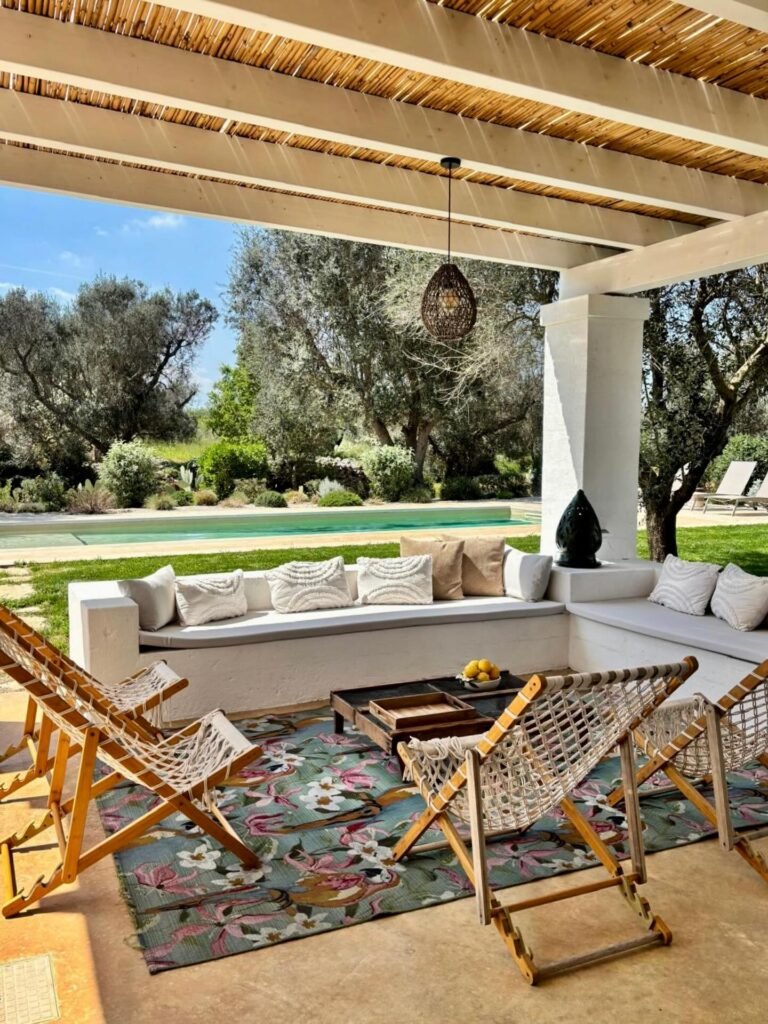
White walls, arched openings, terracotta pots, and colorful flowers create a relaxed Mediterranean patio garden that feels bright yet sheltered.
Built-in benches save floor space and can double as plant ledges when seating is not needed. Group pots by size, placing large citrus or olive trees behind smaller blooms for depth.
Choose drip irrigation for dense container arrangements, since hand watering every pot becomes time-consuming and often leaves hidden plants too dry.
19. Colorful Corner Flower Garden
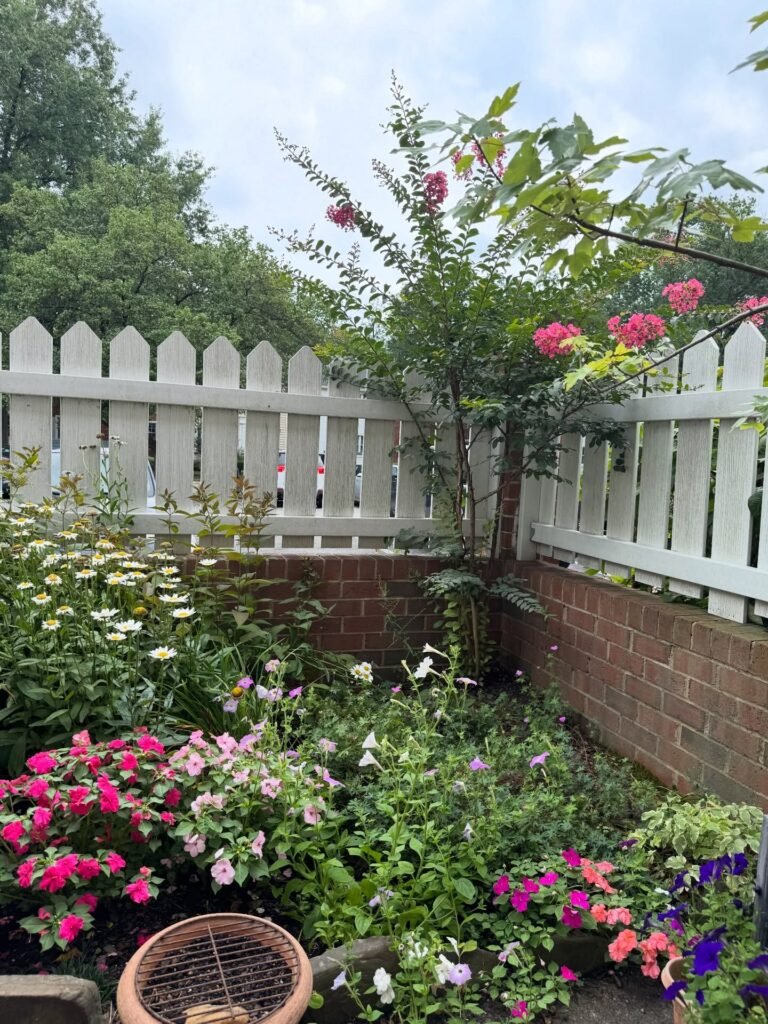
A small fenced corner can become a cheerful flower garden by planting in generous drifts rather than scattering single blooms. Daisies, impatiens, petunias, and flowering shrubs create layers of color from ground level upward. Repeat two or three shades to keep the planting cohesive.
Leave a narrow access point for pruning and watering, especially near the back fence. Mulch between plants to retain moisture, suppress weeds, and reduce soil splashing onto lower leaves.
Frequently Asked Questions
Can a patio garden work in shade?
Yes. Choose shade-tolerant plants such as ferns, hostas, begonias, and ivy, then use pale furniture or containers to brighten the space.
How do I make a small patio feel greener?
Use wall planters, railing boxes, hanging baskets, and slim trellises. Vertical planting adds greenery while preserving valuable floor space.
What are the easiest patio plants to maintain?
Succulents, ornamental grasses, herbs, geraniums, and compact evergreen shrubs are practical options. Match each plant to the available sunlight for easier care.
How can I reduce patio watering?
Group plants with similar needs, mulch larger pots, choose drought-tolerant varieties, and install a simple drip irrigation system where possible.