19 Kitchen Shelf Decor Ideas for Stylish Storage
Kitchen shelf decor can turn everyday storage into one of the most attractive features in the room. The right arrangement keeps useful items close, saves valuable cabinet space, and makes a kitchen feel warmer and more personal.
Whether you prefer colorful ceramics, simple glass jars, greenery, or collected vintage pieces, thoughtful styling can work in kitchens of any size. These ideas balance visual appeal with practical organization, including budget-friendly and space-saving solutions.
Related Kitchen Articles :
20 Small Kitchen Storage Ideas for Tight Spaces
20 Cozy Kitchen Ideas for a Warm Inviting Home
20 Open Kitchen Ideas for Stylish Functional Homes
1. Mix Bold Retro Colors
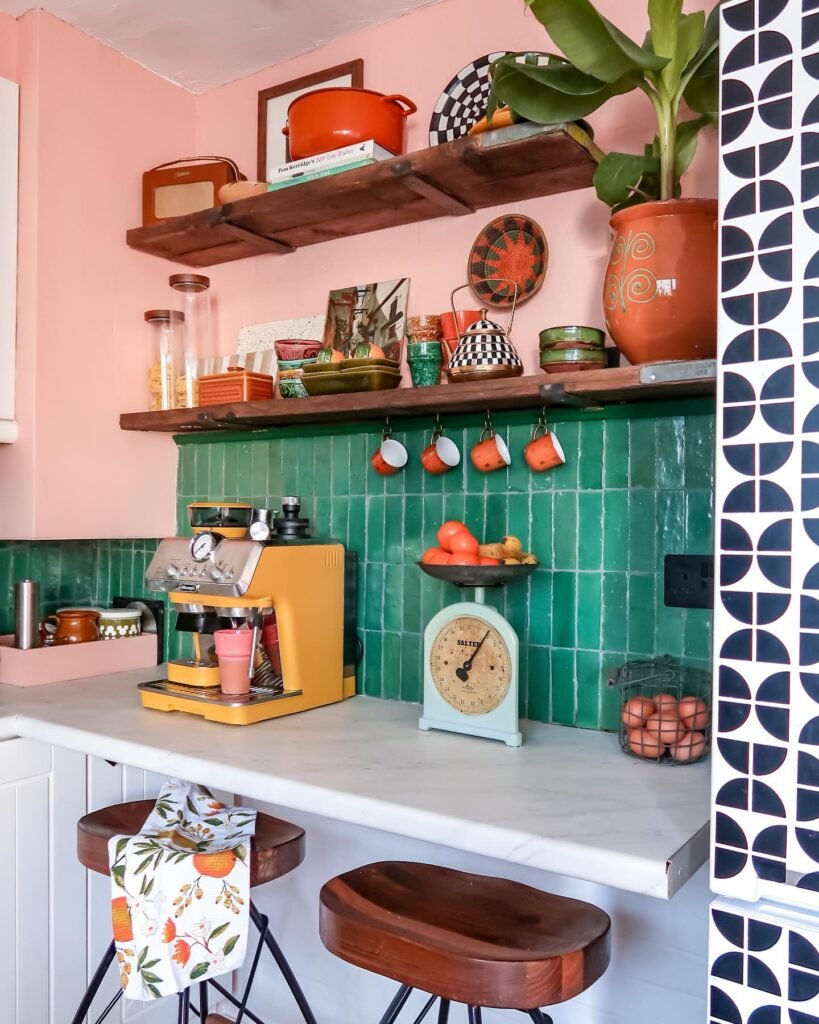
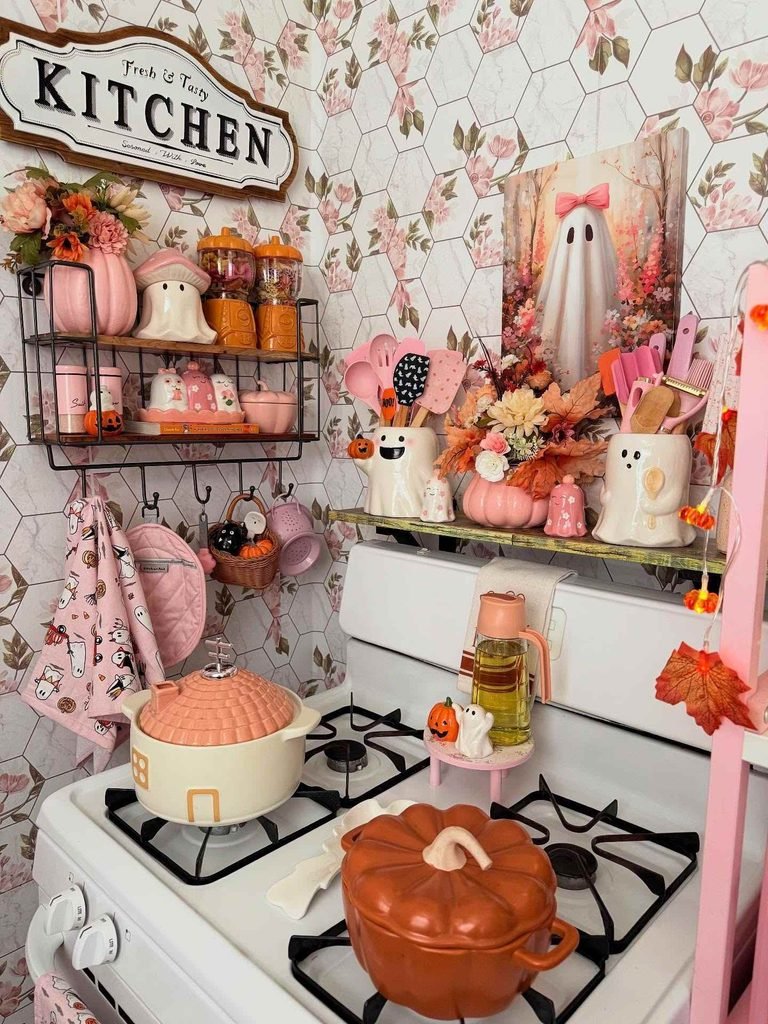
Give open kitchen shelves personality by combining warm wood, vivid cookware, patterned ceramics, and playful decorative pieces. A limited palette of coral, green, orange, and black helps varied objects feel connected rather than chaotic.
Keep heavier cooking items on the lower shelf and display lighter collectibles higher up. Small hooks beneath the shelf create extra storage for espresso cups while keeping the countertop clear and easy to use.
2. Style a Built-In Pantry
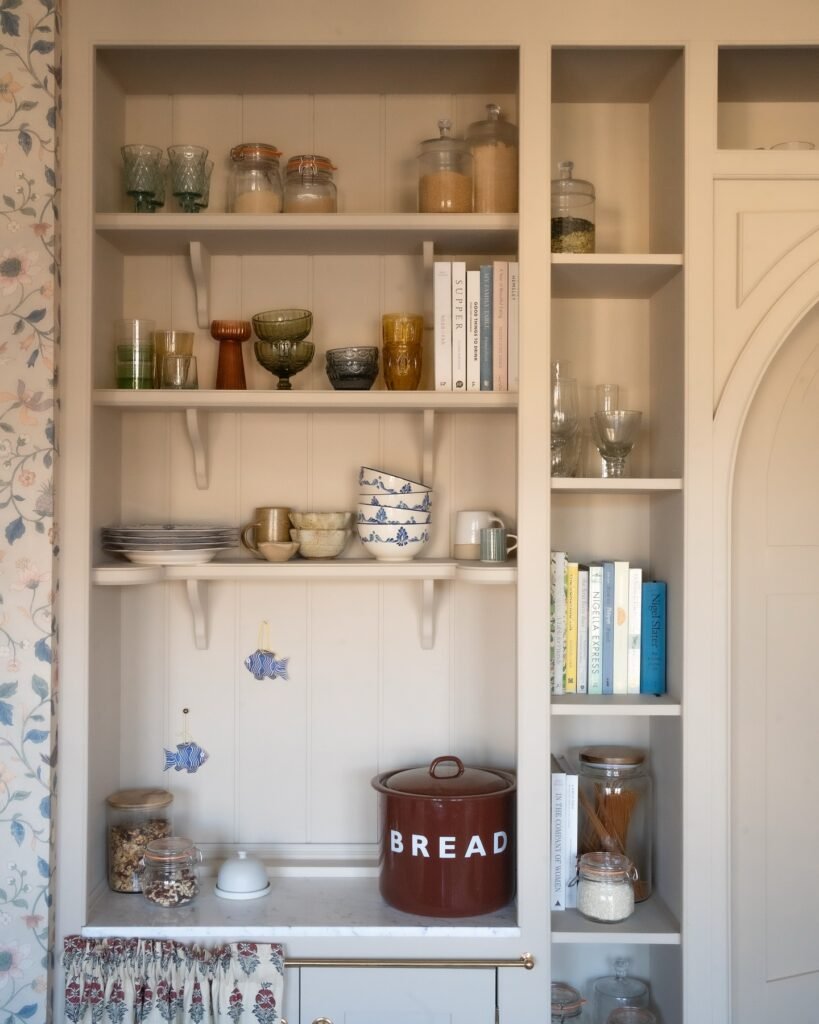
Built-in shelves become more inviting when practical dishes, glassware, cookbooks, and pantry jars are arranged like decor. Group similar items together, but vary their height to keep the display relaxed.
Everyday plates and bowls should remain within comfortable reach, while less-used glasses can sit higher. A bread bin or oversized container on the lowest surface provides hidden storage and creates a useful focal point without making the shelving feel overcrowded.
3. Add Plants and Soft Lighting
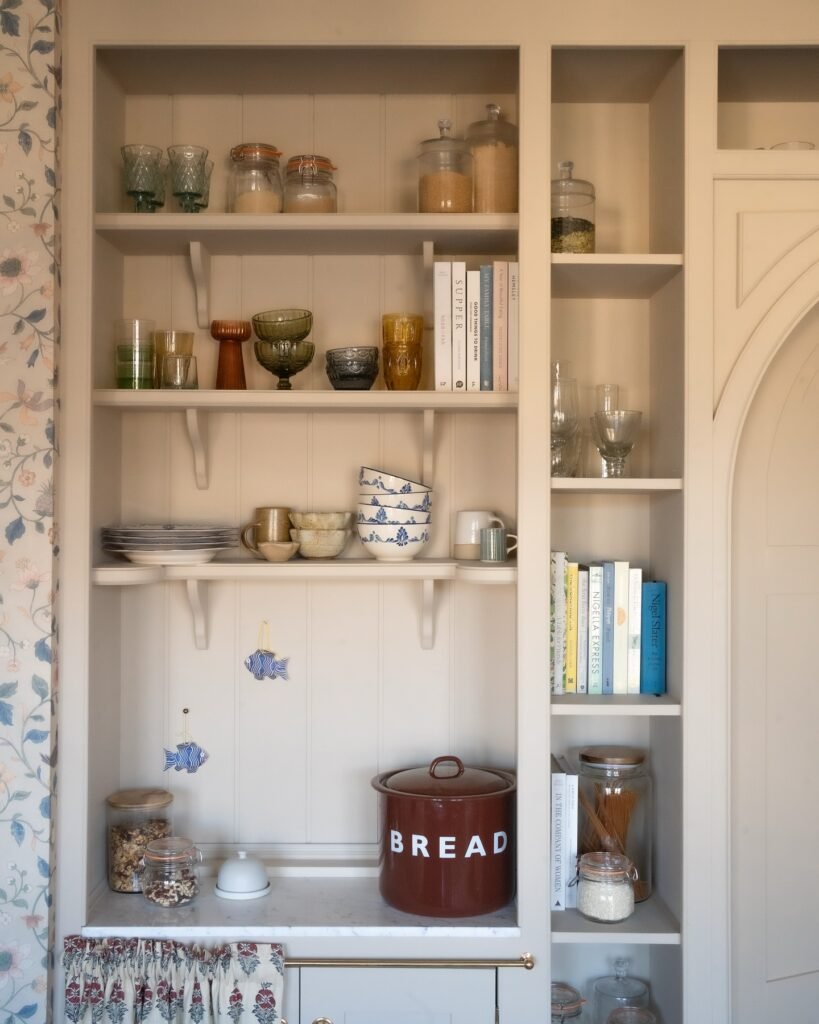
Plants can soften a hardworking kitchen and make plain wooden shelves feel warmer. Mix trailing greenery with small potted herbs, cutting boards, mugs, and a few simple vessels for a cozy kitchen shelf decor arrangement.
Under-shelf lights improve visibility around the stove and create a welcoming evening glow. Choose low-maintenance plants that tolerate warmth, and keep foliage far enough from cooking areas to avoid grease buildup or heat damage.
4. Build a Full Storage Wall
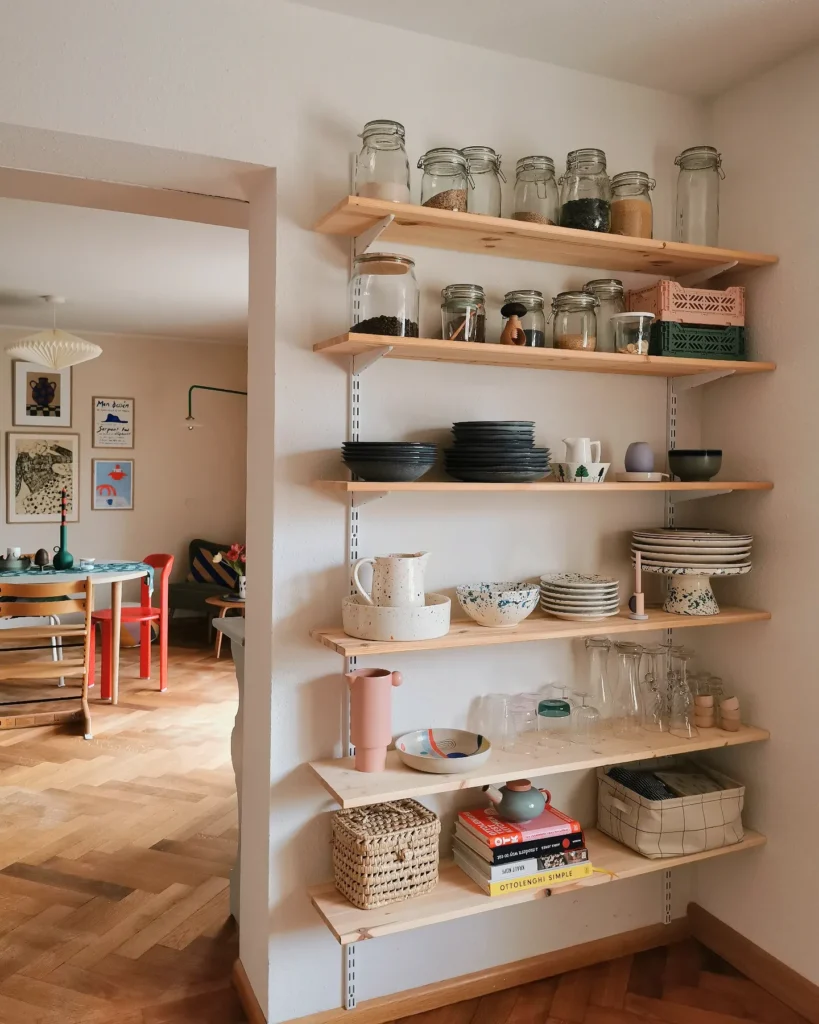
A full wall of adjustable shelving is ideal when cabinet space is limited. Organize the upper levels with dry goods in matching jars, then reserve the middle shelves for plates, bowls, and glassware used most often.
Baskets on the bottom can conceal linens, serving pieces, or less attractive supplies. Leaving small gaps between groups prevents the setup from looking like a storeroom and makes each category easier to find during busy meals.
5. Create a Rustic Coffee Station
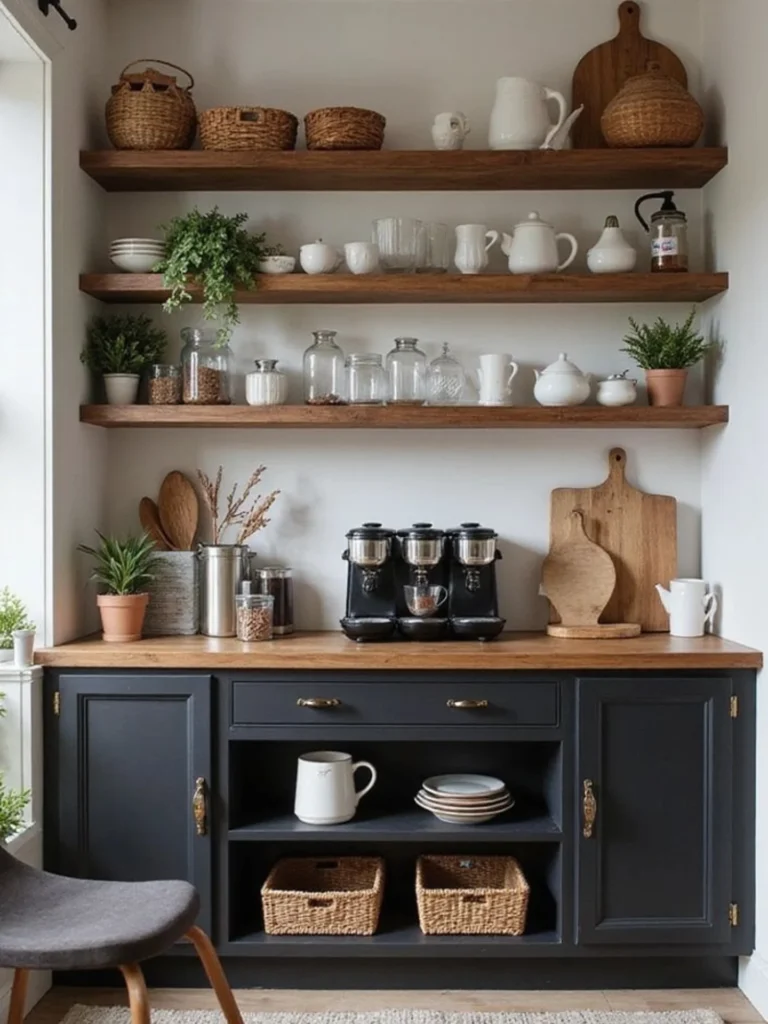
Turn an empty kitchen wall into a dedicated coffee station using deep wood shelves, neutral ceramics, glass canisters, and woven baskets. Keeping coffee supplies together makes mornings more efficient while giving the room a charming focal point.
Cutting boards and potted greenery add height without using valuable preparation space. Store refills and extra mugs in the cabinet below, allowing the open shelves to remain attractive, practical, and easy to clean.
6. Display Patterned Dinnerware
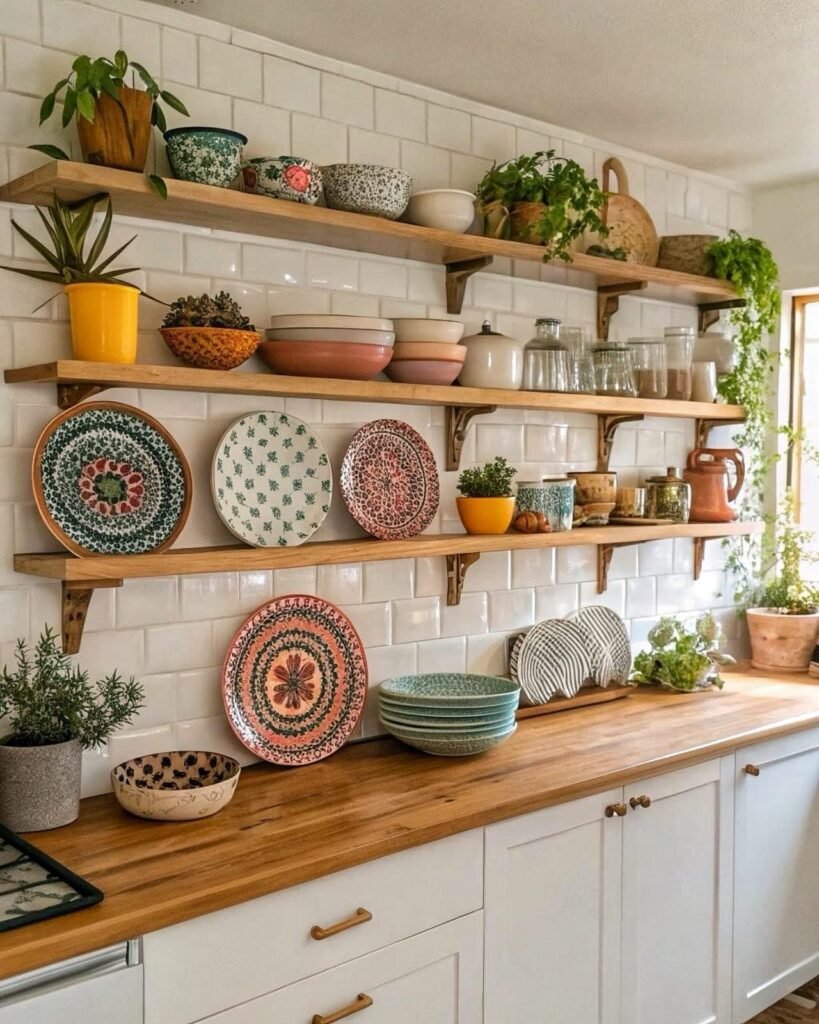
Decorative plates deserve more than being hidden inside a cupboard. Lean your favorite designs against the wall, then layer bowls, planters, jars, and simple glassware around them. Repeating a few colors across different patterns keeps the arrangement lively but coordinated.
Plate stands can add stability, especially on narrow shelves. Use the most durable pieces regularly so the display remains functional instead of becoming a collection that only gathers dust.
7. Keep a Calm Neutral Palette
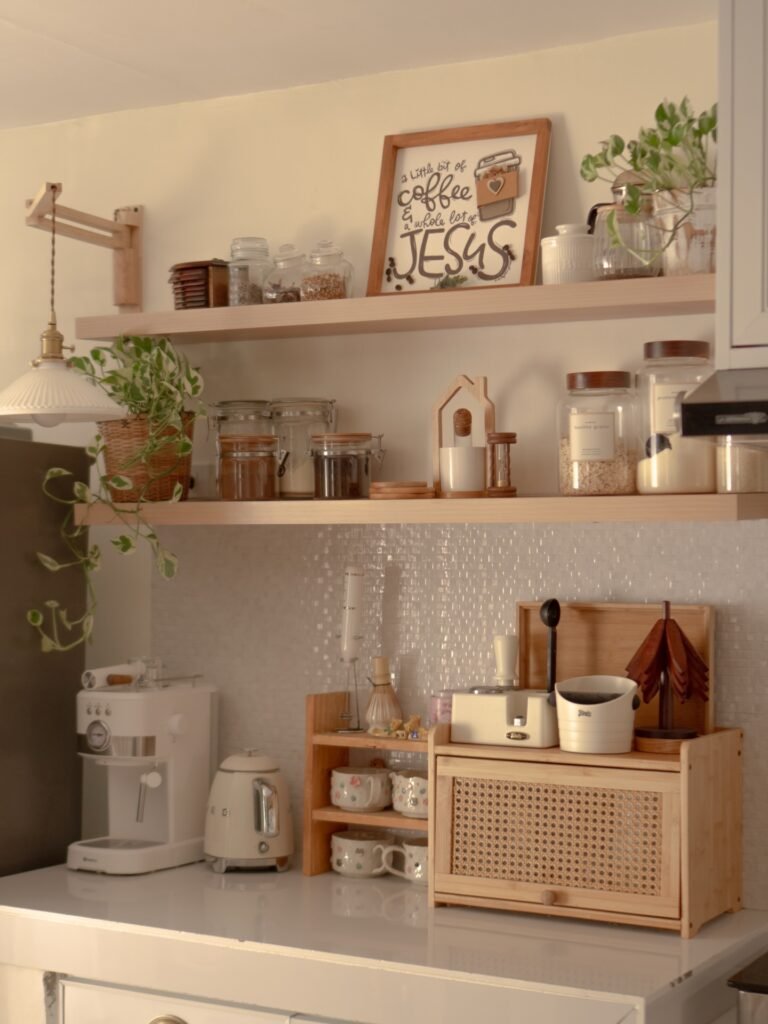
Natural wood shelves, clear containers, cream accessories, and trailing plants create a soft look that works especially well in smaller kitchens. Store ingredients in similar jars to reduce visual clutter, while one framed print gives the upper shelf a personal touch.
Keep decorative pieces toward the ends and leave the center open for frequently used supplies. Consistent container shapes help inexpensive pantry staples look organized without requiring a complete kitchen renovation.
8. Decorate Glass-Front Cabinets
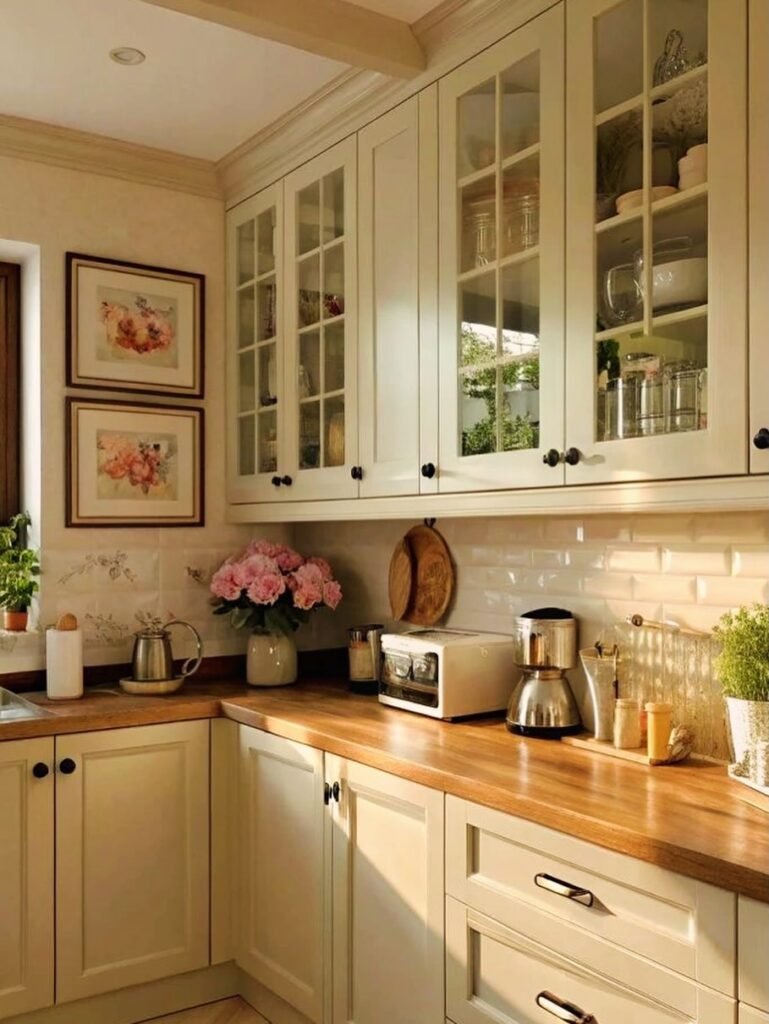
Glass-front cabinets offer the beauty of open shelving with better protection from dust and cooking residue. Arrange white dishes, clear glasses, and serving bowls in tidy groups, repeating similar shapes across each cabinet section.
Place attractive pieces at eye level and move mismatched everyday items into closed storage. A restrained display allows light to pass through the glass, helping a compact kitchen appear brighter, more polished, and less visually crowded.
9. Refresh a Small Coffee Nook
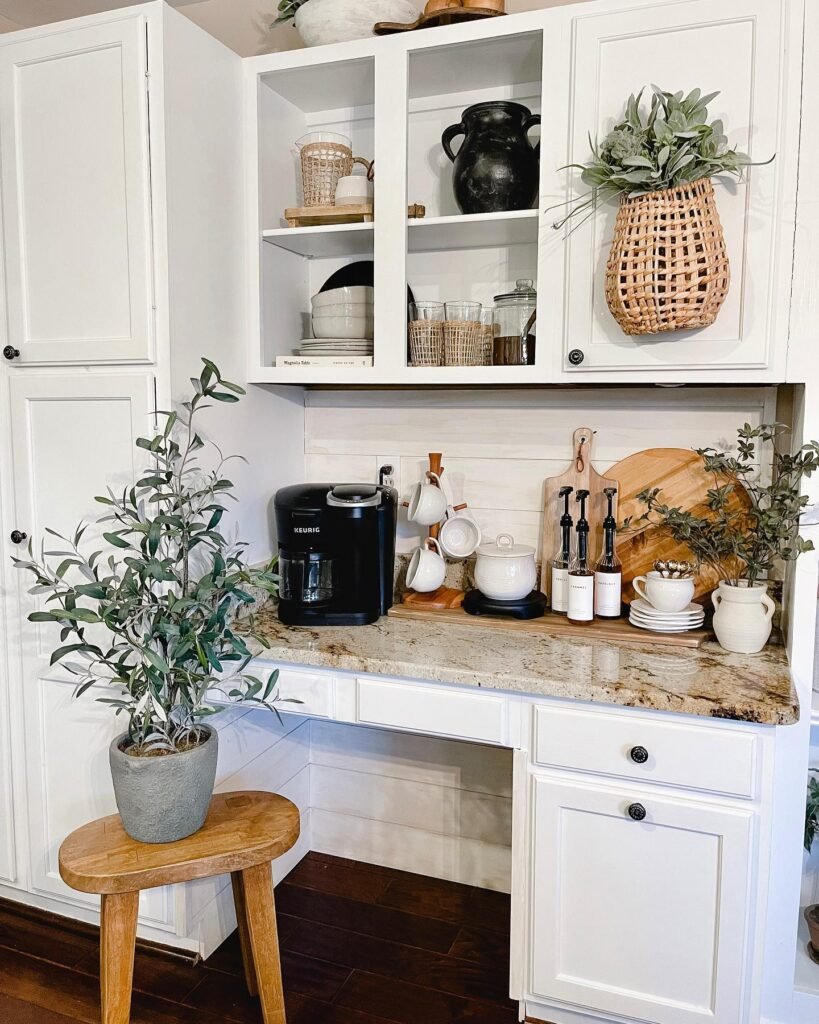
A compact coffee nook can feel finished with only a few coordinated accessories. Use a narrow tray to group syrup bottles, cups, sugar, and small utensils so the countertop remains manageable.
Open cabinet sections above can hold baskets, glassware, and one statement vase, while greenery brings softness to the white cabinetry. Keep larger plants on a nearby stool or floor space rather than sacrificing the preparation area around the coffee maker.
10. Balance Shelves with Cabinets
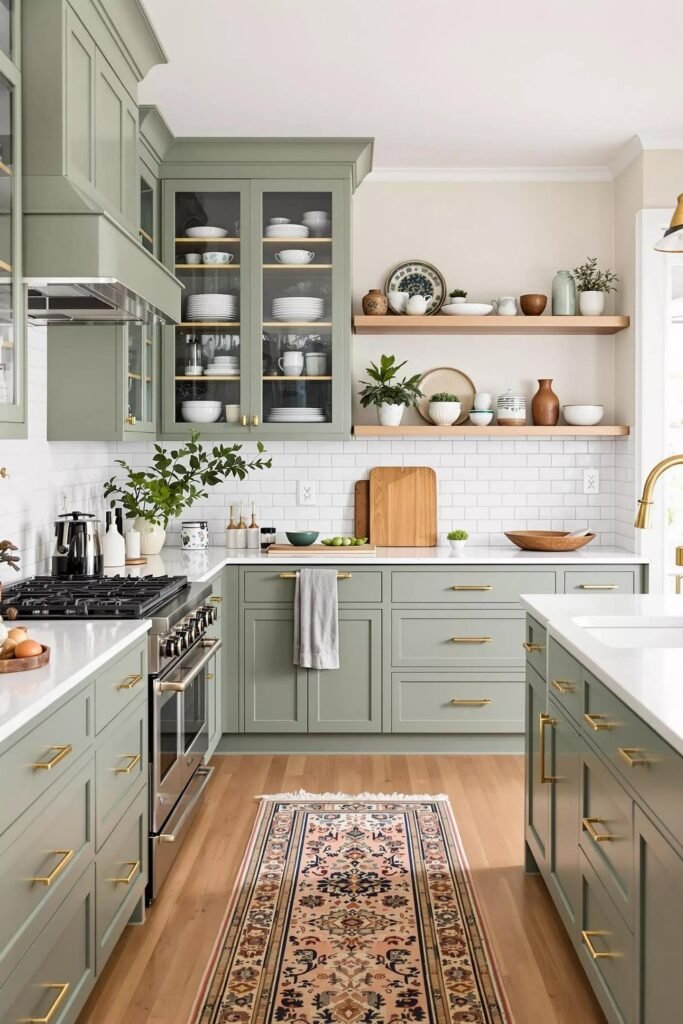
Combining closed cabinets with two open shelves gives you display space without exposing every kitchen item. Style the shelves with pottery, small plants, bowls, and one or two decorative plates, leaving enough room around each piece to create a calm appearance.
Echo the cabinet color through muted green or earthy accessories for a connected look. Frequently used dishes can stay behind glass doors, keeping them visible, protected, and conveniently arranged.
11. Style One Long Shelf
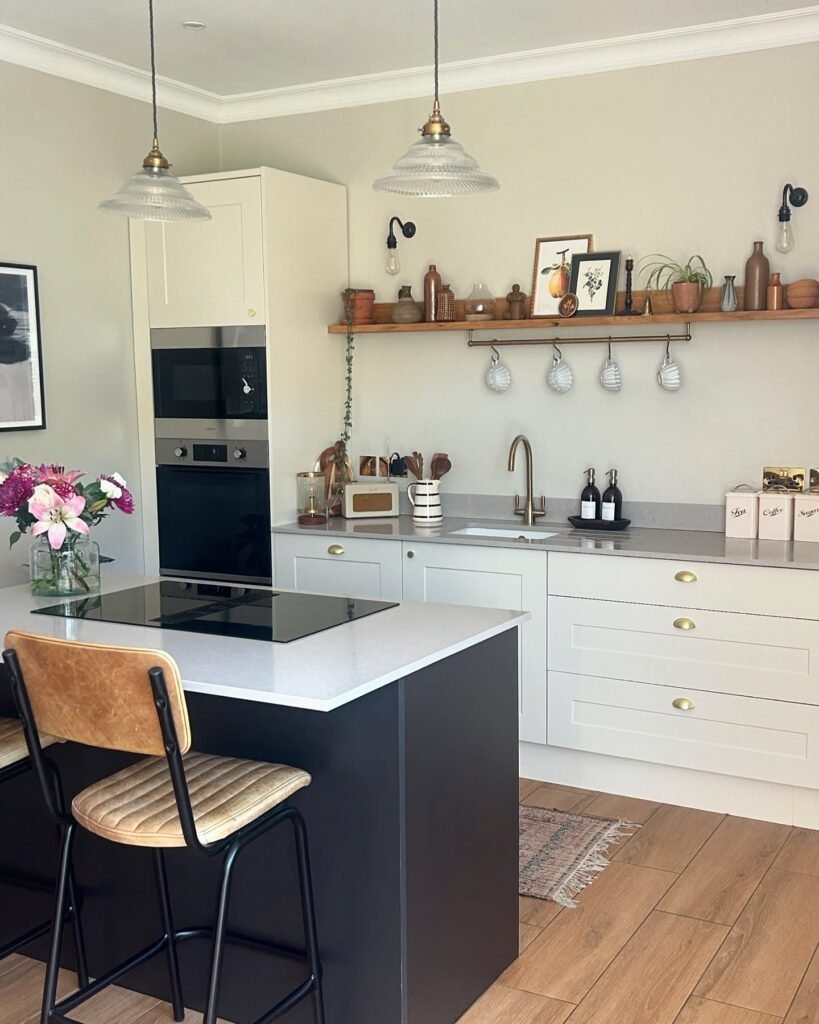
A single long shelf can make a wide kitchen wall feel intentional without adding bulky cabinetry. Combine framed artwork, earthy pottery, small plants, and a few sculptural objects, then install a rail underneath for mugs.
Keeping cups off the counter saves workspace around the sink while still placing them within easy reach. For balance, spread taller pieces across the shelf instead of clustering everything at one end.
12. Create a Colorful Coffee Bar
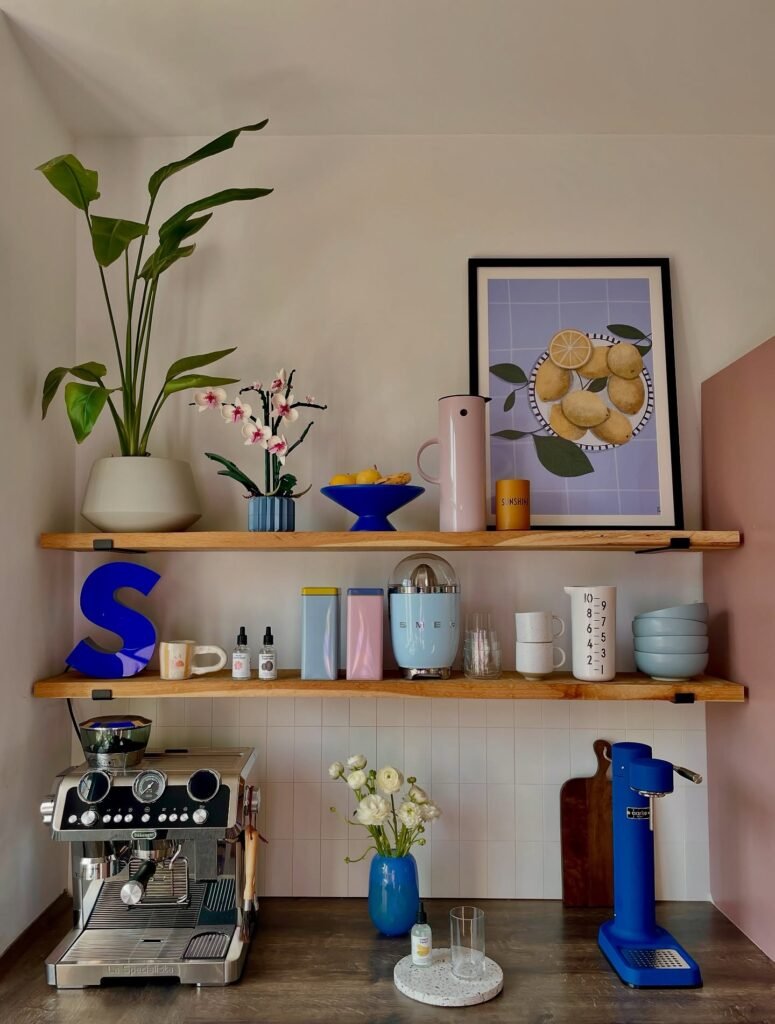
Turn a coffee station into a cheerful focal point by mixing practical appliances with bold accent colors. Blue equipment, pastel storage tins, playful artwork, and fresh flowers give the area personality without reducing function.
Keep frequently used mugs and coffee supplies on the lower shelf, while plants and decorative pieces can sit above. Repeating two or three strong colors prevents the display from feeling random or overly busy.
13. Organize Natural Pantry Shelves
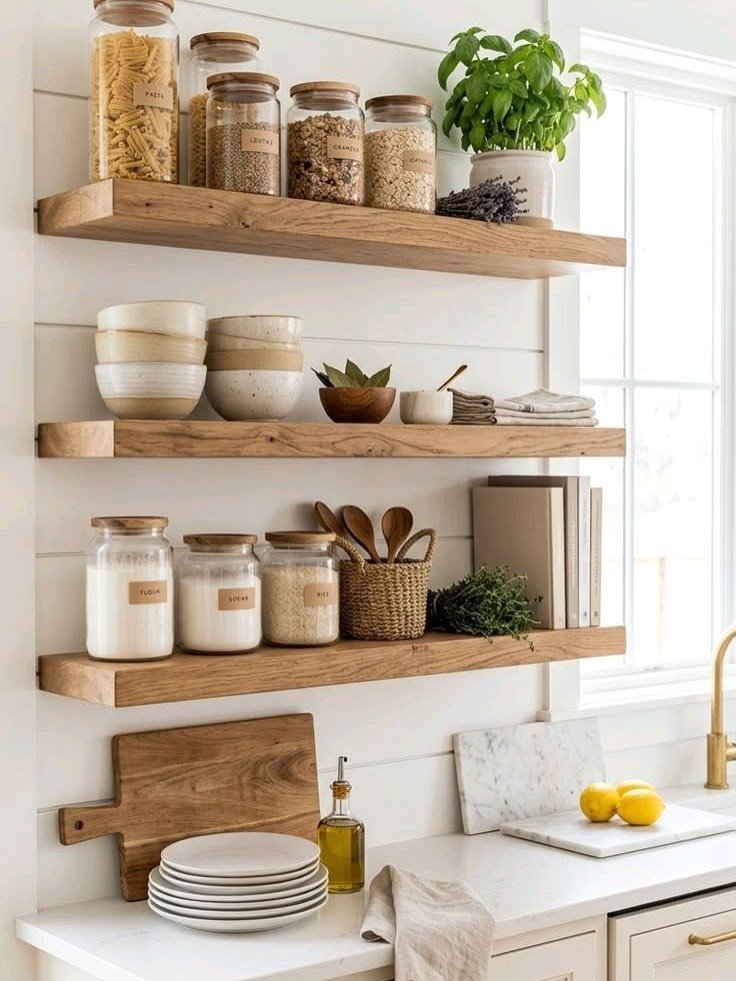
Natural wood shelves work especially well for pantry staples because they add warmth while keeping ingredients visible. Use matching glass jars for pasta, grains, flour, and sugar, then soften the arrangement with herbs, folded linens, and a woven utensil holder.
Place the heaviest jars on the lowest shelf for safer access. Simple labels also help the setup stay organized after grocery shopping or busy cooking days.
14. Coordinate a Walk-In Pantry
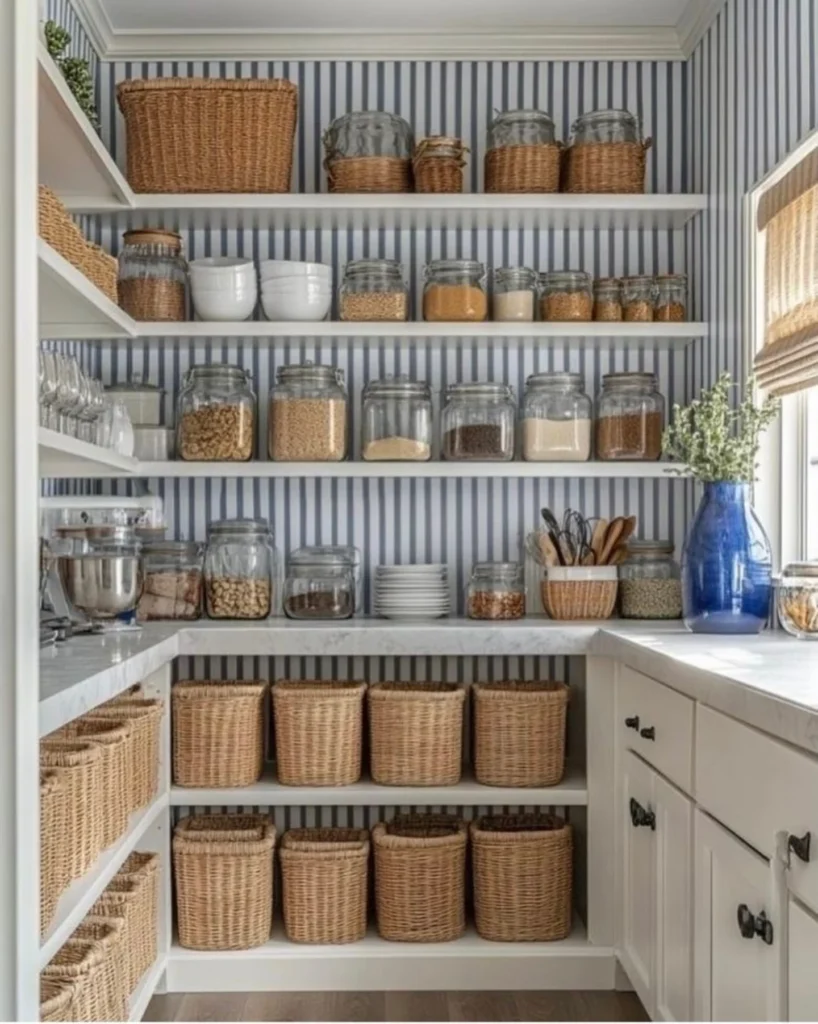
A walk-in pantry can feel polished when storage containers follow a consistent system. Line up clear jars by category, use woven baskets for packaged foods, and reserve lower shelves for heavier or less attractive items.
Striped wallpaper adds character without taking up any usable space, making it a smart decorative upgrade. Leave a little room between containers so supplies remain easy to see, remove, and restock.
15. Showcase Colorful Vintage Canisters

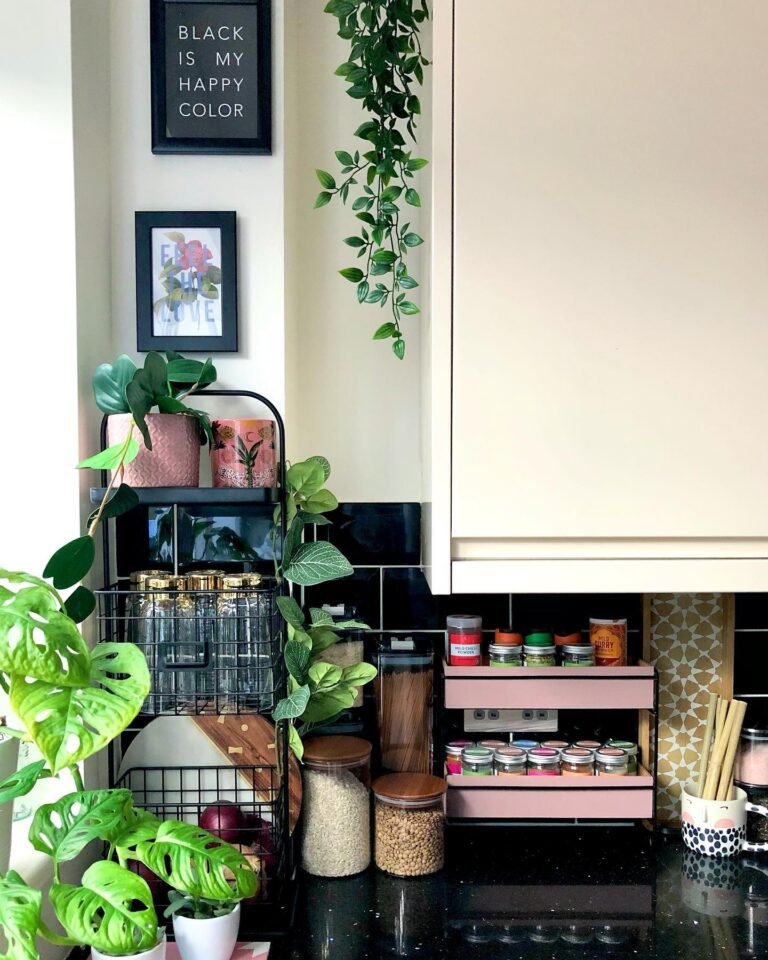
Colorful canisters can bring charm to a small corner while also storing tea, coffee, sugar, and everyday ingredients. Mix patterned ceramics with solid green containers, warm tile, and a few leafy plants for a collected look.
A narrow upper shelf keeps extra pieces off the worktop, while a countertop riser doubles the available storage below. Choose containers with secure lids so the display remains practical as well as decorative.
16. Layer Cozy Cottage Details
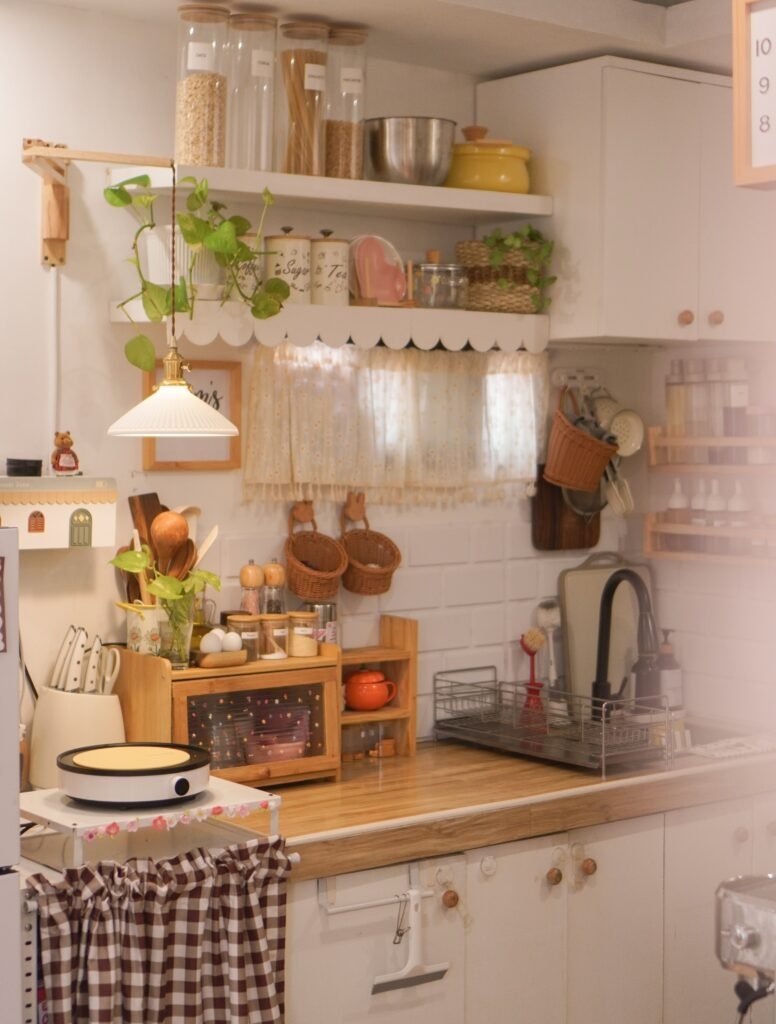
Cottage-style kitchen shelf decor feels most convincing when useful details are layered gradually. Scalloped trim, soft curtains, woven baskets, vintage canisters, and trailing plants create warmth without requiring expensive renovations.
Keep lightweight jars on the highest shelf and place daily utensils closer to the counter. Small wall baskets can hold measuring spoons or cleaning tools, helping a compact kitchen stay organized while preserving its cozy character.
17. Open Up Cabinet Walls
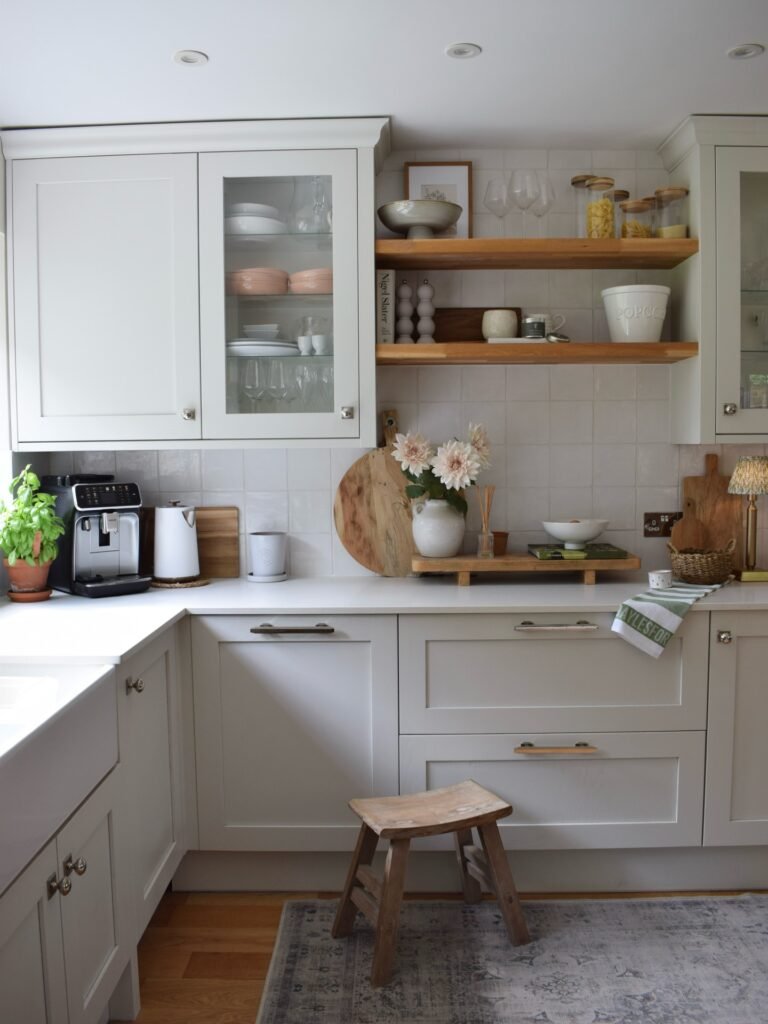
Two shelves placed between upper cabinets can break up a wall of closed storage and make the kitchen feel lighter. Style them with glassware, a serving bowl, framed art, cookbooks, and one oversized container rather than filling every inch.
Soft pink dishes and pale ceramics add gentle color to a neutral room. Keeping the arrangement sparse also makes dusting easier and allows each piece to stand out.
18. Choose Live-Edge Wood Shelves
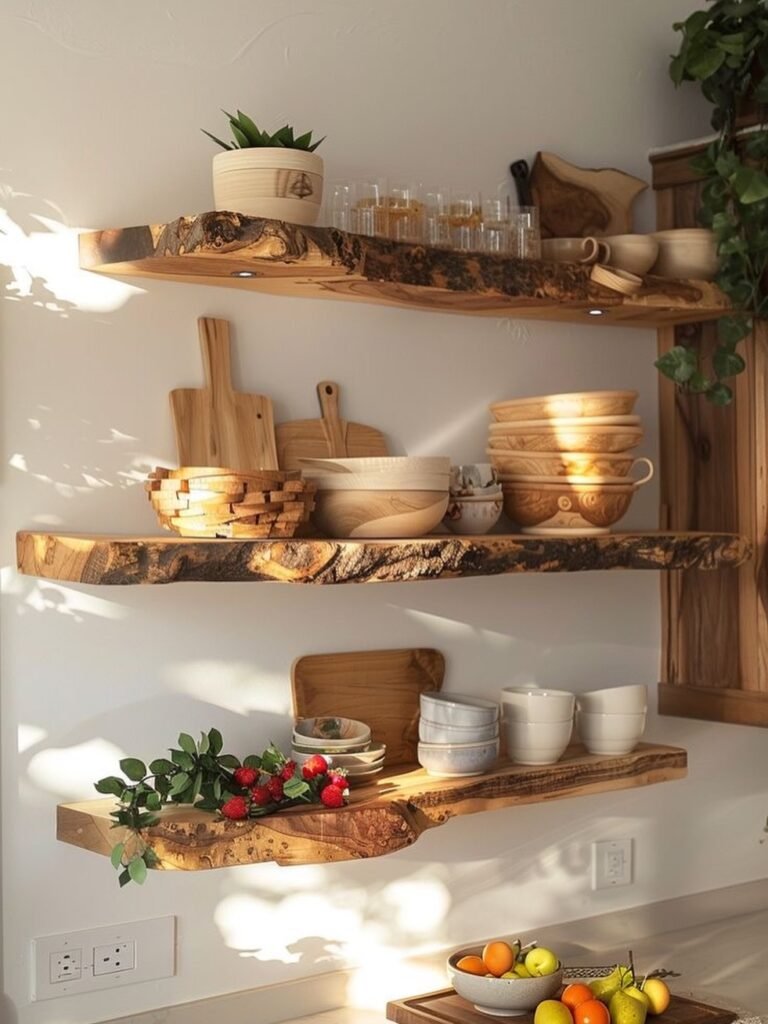
Live-edge shelves add natural texture and work beautifully when paired with wooden bowls, cutting boards, neutral cups, and greenery. Their irregular edges already create visual interest, so the styling can remain simple.
Use the upper shelf for glassware and decorative pieces, then keep bowls and plates on the lower levels for convenient access. Small integrated lights are helpful in darker corners and highlight the wood grain after sunset.
19. Use Compact Storage Displays
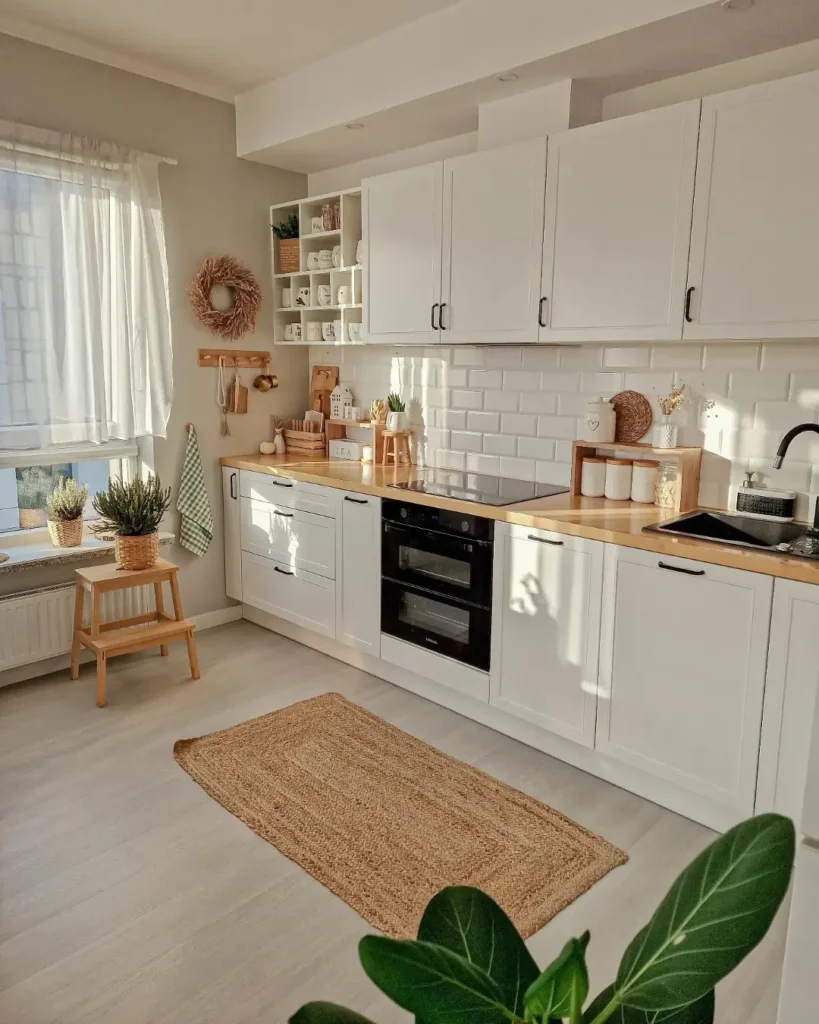
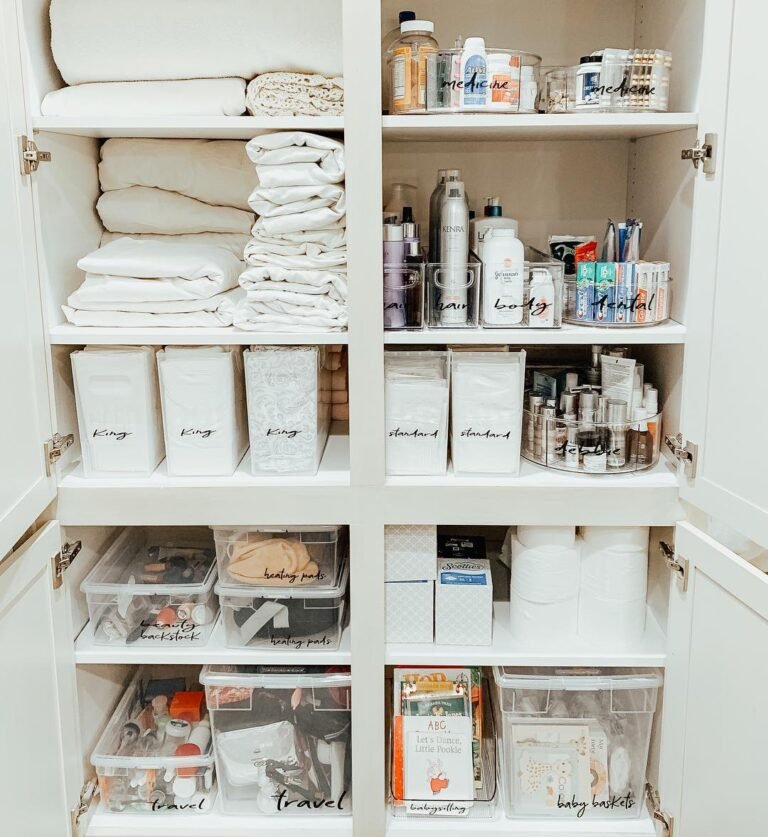
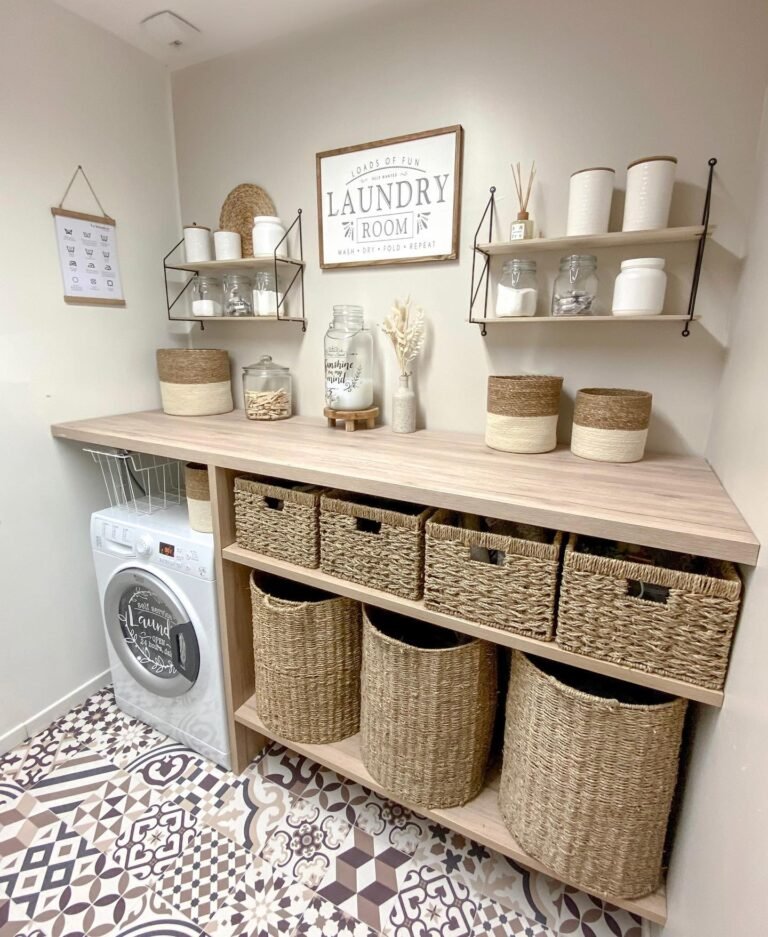
Small kitchens benefit from decor that doubles as storage. Open cubbies, countertop risers, wall pegs, and narrow trays can organize mugs, tea, utensils, and pantry jars without crowding the preparation area.
Woven accents and small plants add warmth to white cabinetry, while repeated wood tones keep the room cohesive. Limit each surface to one clear purpose so the kitchen stays calm, functional, and easy to clean.
Frequently Asked Questions
How do I decorate kitchen shelves without clutter?
Group items by color or purpose, vary their height, and leave visible gaps between arrangements. Display useful pieces instead of filling every space with decorations.
What should go on open kitchen shelves?
Everyday dishes, glasses, jars, cookbooks, cutting boards, plants, and attractive serving pieces work well. Keep rarely used or mismatched supplies inside closed cabinets.
How many items should be placed on each shelf?
There is no fixed number, but three to five small groupings usually look balanced. Adjust the amount based on shelf length, item size, and how often pieces are used.
How can renters add kitchen shelving?
Use freestanding shelf units, countertop risers, removable wall systems, or tension-mounted organizers. Check your rental agreement before drilling holes or installing permanent brackets.