15 Linen Closet Organizing Ideas for a Calm, Useful Space
A linen closet can look tidy after a quick cleanup and still become messy again within a week. The real fix is giving every sheet, towel, blanket, and bathroom extra a clear home that is easy to maintain.
These closet organizing ideas focus on practical systems rather than picture-perfect shelves. You will learn how to use shelf height wisely, control bulky items, simplify laundry put-away, and keep everyday linens easy to reach without buying dozens of matching containers.
RELATED: 21 Utility Closet Organization Ideas That Make Every Inch Work
1. Empty the Closet and Map the Space
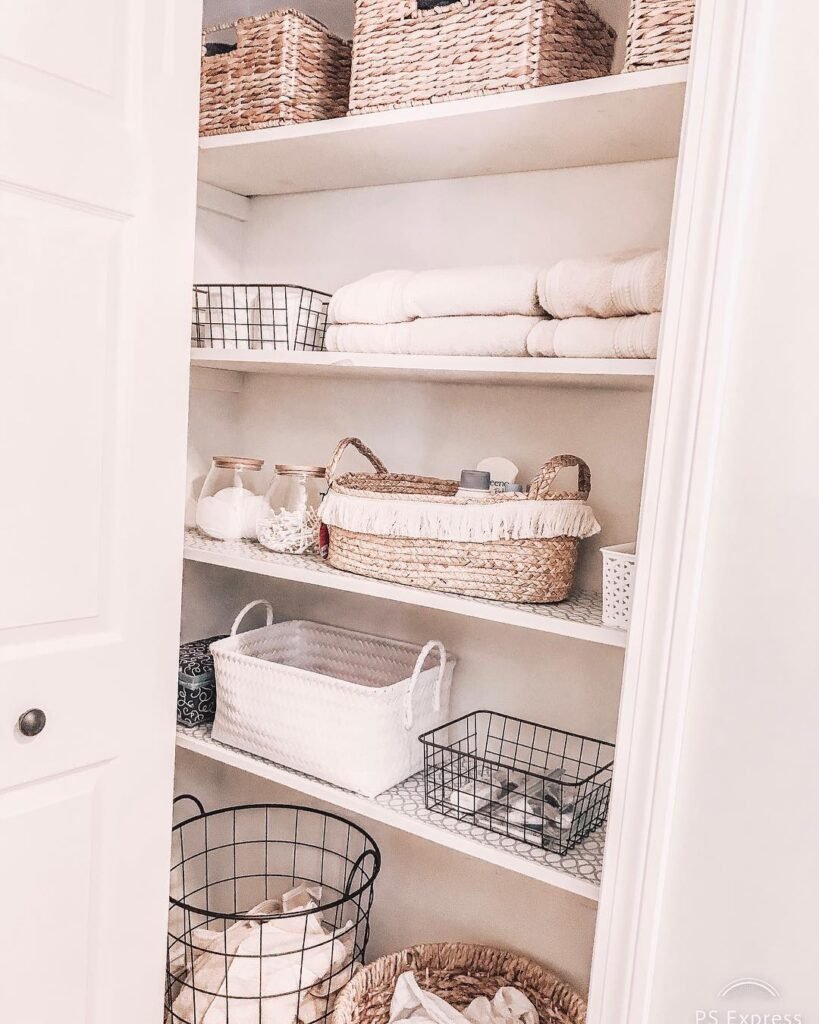
Start by removing everything, including items pushed into the back corners. Wipe the shelves, check for moisture, and group the contents into sheets, towels, bedding, toiletries, and cleaning supplies.
Before returning anything, decide which shelves are easiest to reach. Reserve those areas for daily items, while seasonal blankets and guest bedding can sit higher or lower.
Practical note: Take a quick photo of the empty closet before replacing anything. The image will help you compare shelf heights, door clearance, and unused corners while deciding where each linen category should go.
2. Set a Realistic Linen Limit
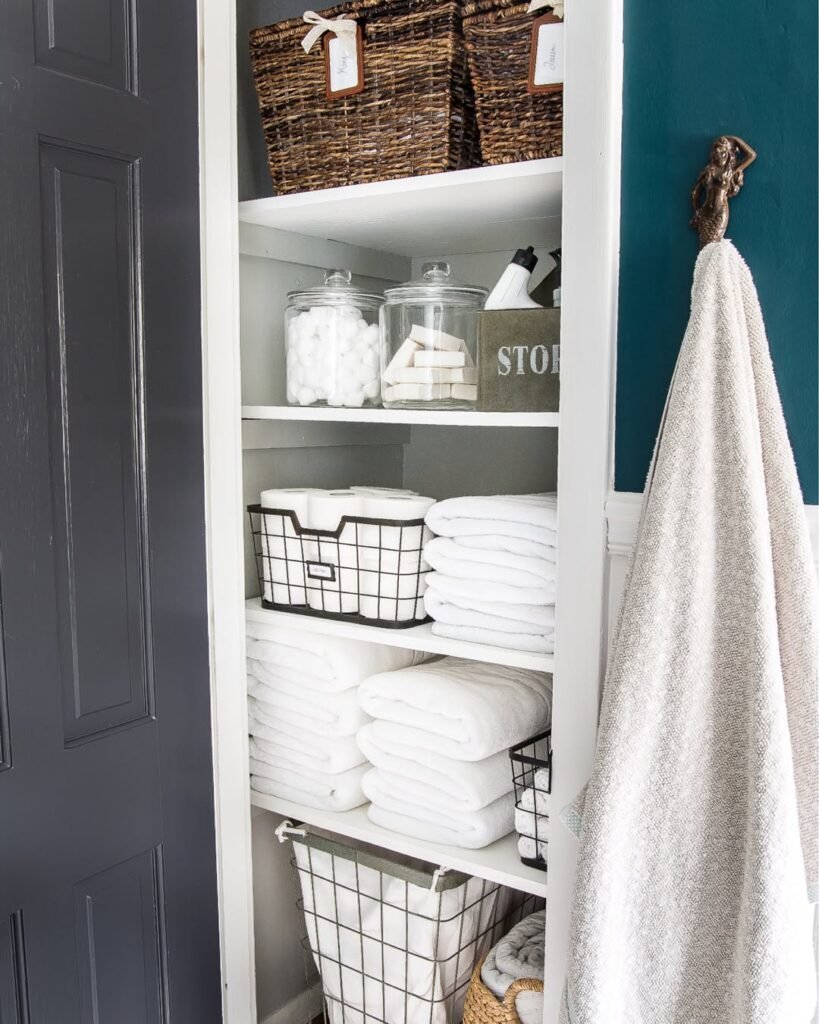
Too many spare linens make even a large closet feel cramped. A useful starting point is two sheet sets per bed and two or three towel sets per regular household member.
Keep one set in use and one ready for laundry day. Donate pieces that feel rough, no longer fit your beds, or have been sitting untouched for a year.
Quick tip: Place extra linens in a temporary box for one month. If you do not need them during that time, consider donating the best pieces and repurposing worn towels for household cleaning.
3. Build Complete Bed-Change Bundles
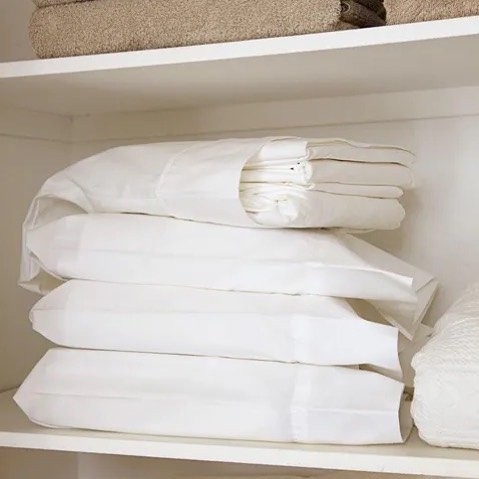
Keep each sheet set together instead of stacking fitted sheets, flat sheets, and pillowcases in separate piles. Fold the pieces and place them inside one matching pillowcase. Complete bundles are faster to count, carry, and return after washing.
This creates a compact bundle that can move straight from the closet to the bedroom. It also stops loose pillowcases from slipping behind larger stacks. Place the opening toward the back so the bundle stays neat when pulled forward.
Keep each bundle complete:
- Fold the fitted and flat sheets together.
- Add the matching pillowcases.
- Place everything inside one pillowcase.
- Label the bundle by bed size.
4. Arrange Shelves by Use Frequency
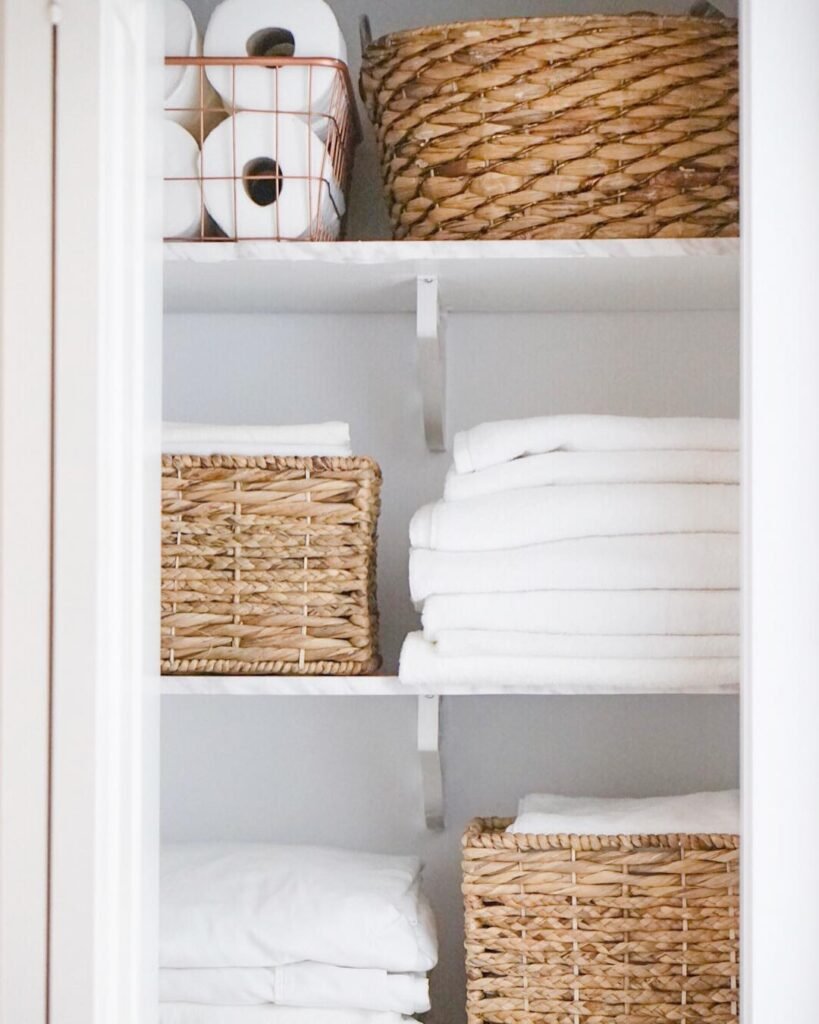
The middle shelves should hold the items your family reaches for most often. Place everyday bath towels, hand towels, and current sheet sets between waist and eye level.
Use the top shelf for lightweight seasonal items and the bottom for sturdy baskets or heavier blankets. This reduces awkward lifting and makes quick put-away much easier. Keep anything breakable away from shelves that require a step stool.
Practical note: Ask every household member which items they reach for most often. Their answers may help you choose better shelf positions and prevent daily towels or sheets from being placed too high or too low.
5. Store Small Linens Vertically
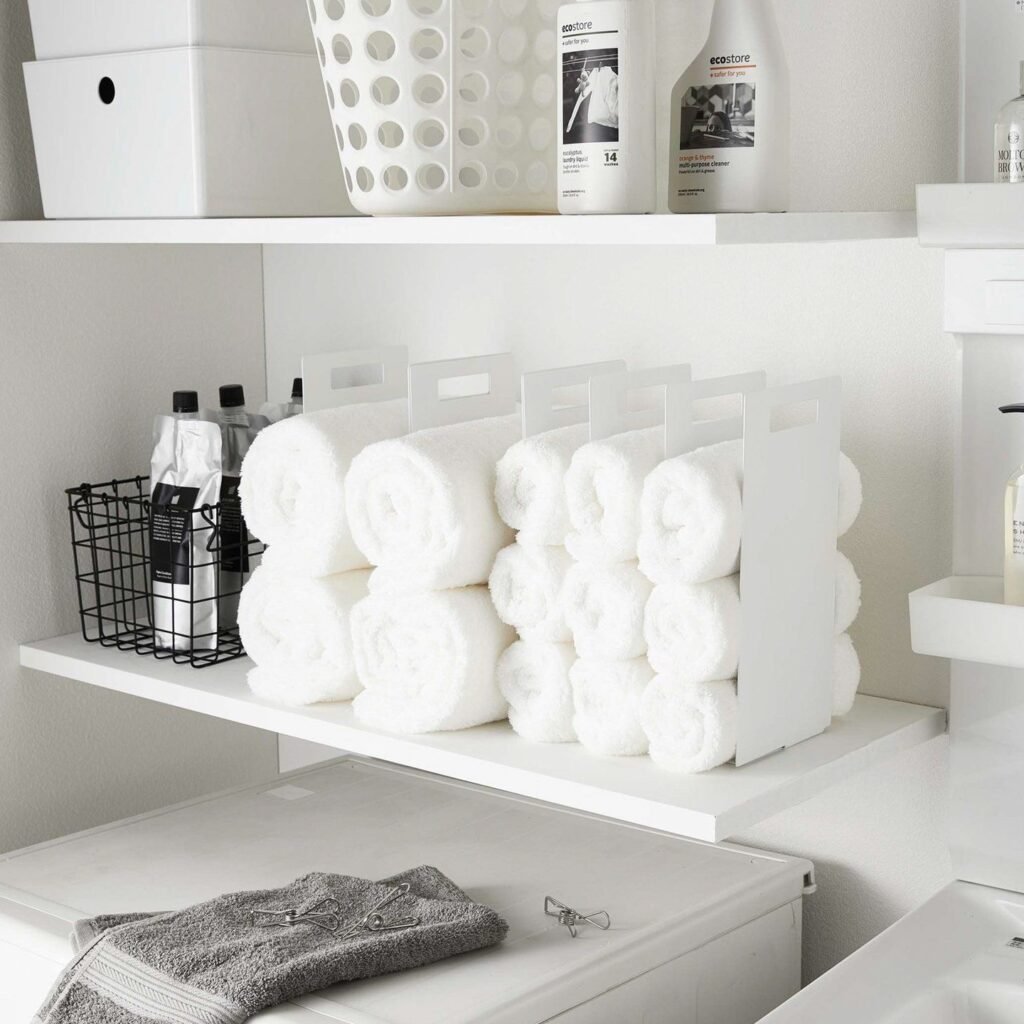
Washcloths, pillowcases, cloth napkins, and hand towels often disappear beneath larger pieces. Place them upright inside a shallow bin so each item stays visible from the front. Separate bins can prevent bathroom pieces from mixing with dining or guest linens.
Vertical storage also lets you remove one piece without disturbing the rest. It is especially useful on narrow shelves where short stacks tend to lean. Do not pack the bin tightly, since easy removal is part of the system.
Quick tip: Use shallow containers rather than deep baskets for small linens. A shallow bin keeps washcloths and pillowcases visible, while deep containers often encourage items to pile up and become difficult to find.
RELATED: 19 Small Bedroom Wardrobe Ideas That Save Space
6. Use the Back of the Door Carefully
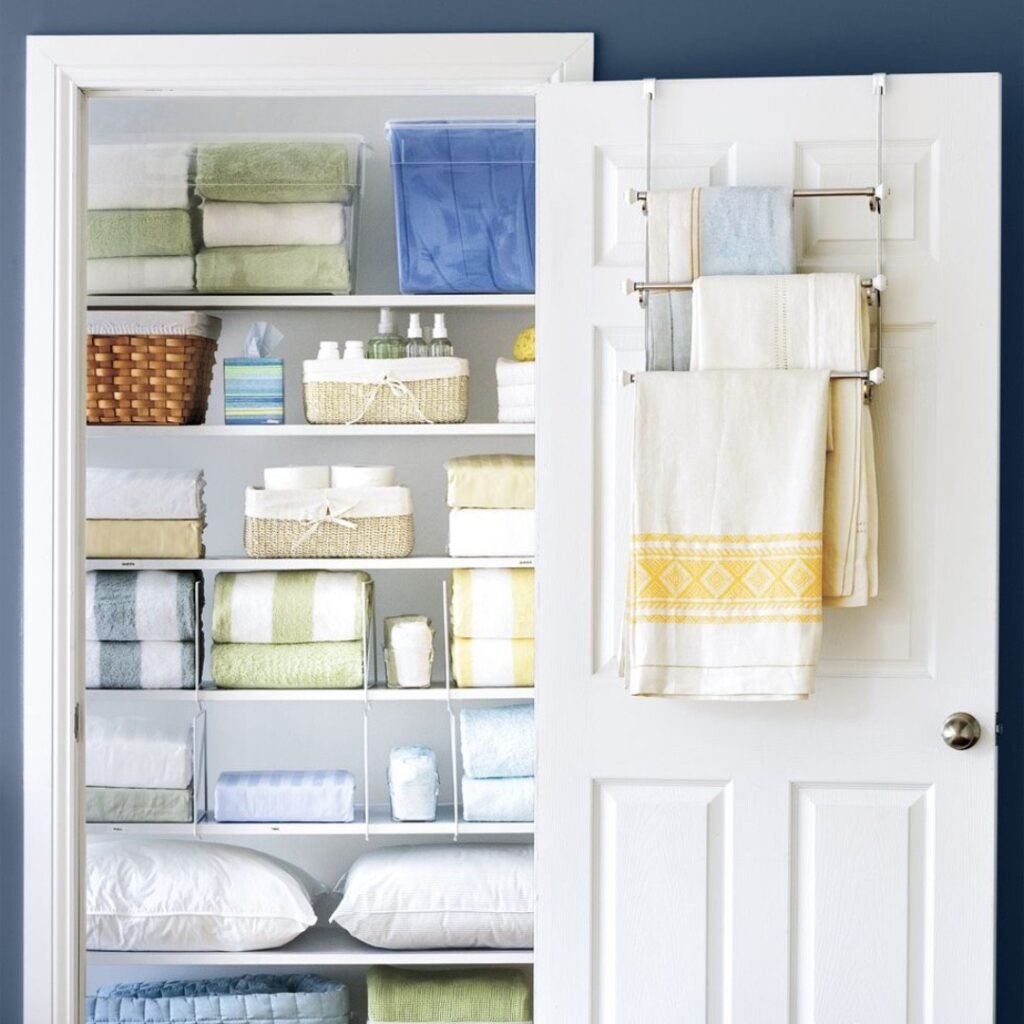
The closet door can hold light, flexible items that would otherwise crowd the shelves. A slim pocket organizer works well for washcloths, spare pillowcases, lint rollers, and small toiletry refills. Clear pockets make it easier to spot low supplies before shopping.
Avoid loading it with heavy bottles or thick towels. Too much weight can strain hinges and stop the door from closing properly. Keep frequently used pockets at eye level and lighter backups near the bottom.
Before installation: Open and close the closet door several times while holding the organizer in place. Check that pockets will not hit shelves, handles, baskets, or nearby walls when the door moves
7. Create a Ready-to-Use Guest Basket
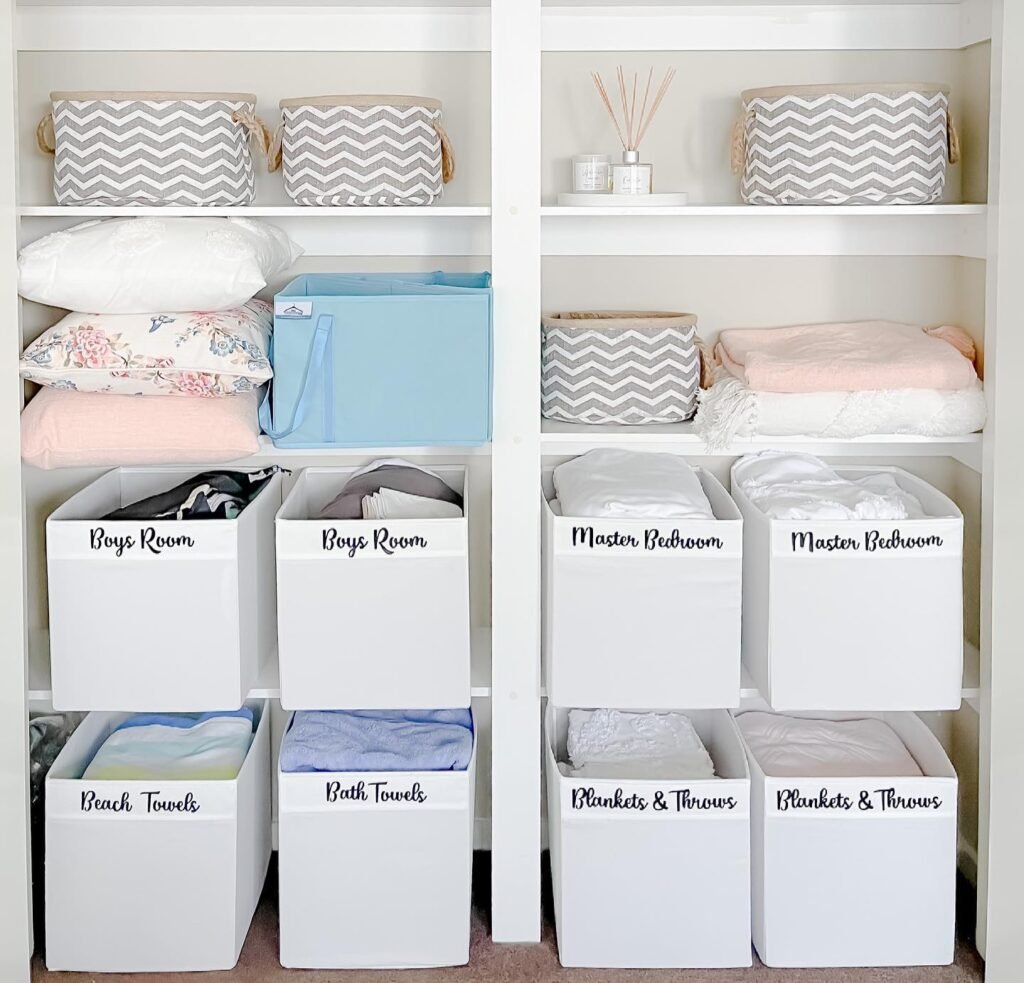
Gather guest towels, a clean sheet set, and a spare blanket in one handled basket. Add a small pouch with travel-size toiletries only when guests are expected. Choose linens that fit the actual guest bed rather than saving assorted extras.
This keeps visitors’ supplies separate from everyday household linens. It also saves you from searching several shelves while preparing a room at the last minute. After the visit, wash the contents and rebuild the basket at once.
Guest basket checklist:
- A label showing the correct guest bed
- One complete sheet set
- Fresh bath and hand towels
- One spare blanket
- A small toiletry pouch
8. Separate Active Towels From Reserve Towels
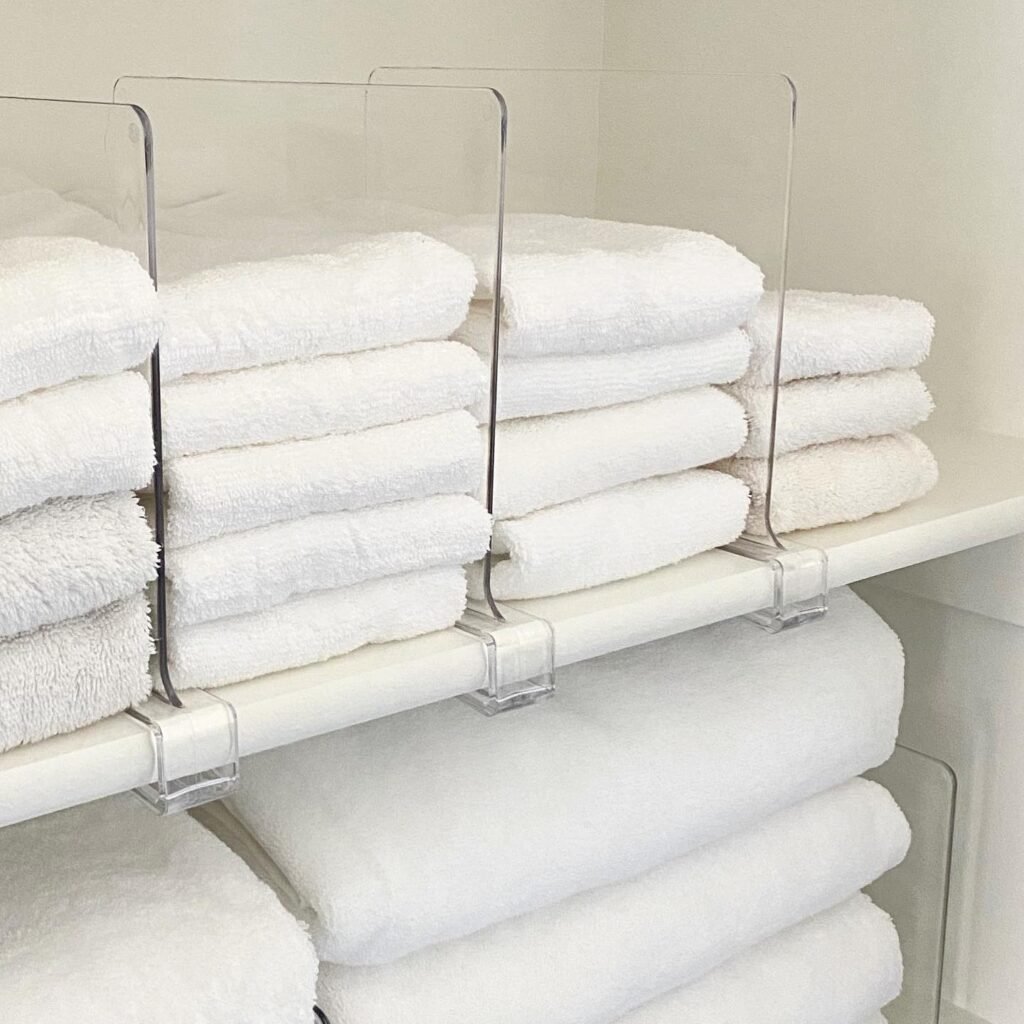
Keep the towels currently used by your household on one shelf and unopened or less frequently used sets in a reserve area. This prevents every towel from entering rotation at once. The active shelf should contain only what fits without leaning or squeezing.
A smaller active supply means less overstuffing and more even wear. When an everyday towel is removed, replace it from the reserve stack instead of buying another set. Rotate colors together if you prefer coordinated bathrooms without constant sorting.
Quick tip: Put newly purchased towels at the bottom or back of the reserve stack. This encourages you to use older towels first and helps prevent forgotten sets from sitting untouched for years.
RELATED: 13 Smart Small Walk-In Closet Ideas That Make Every Inch Work
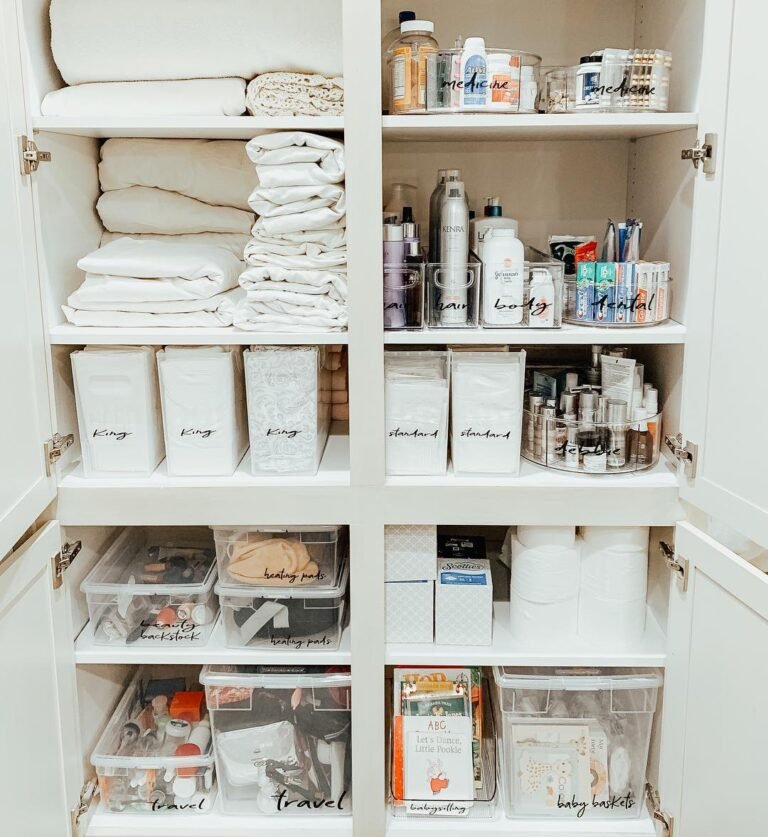
9. Group Toiletries in Washable Caddies
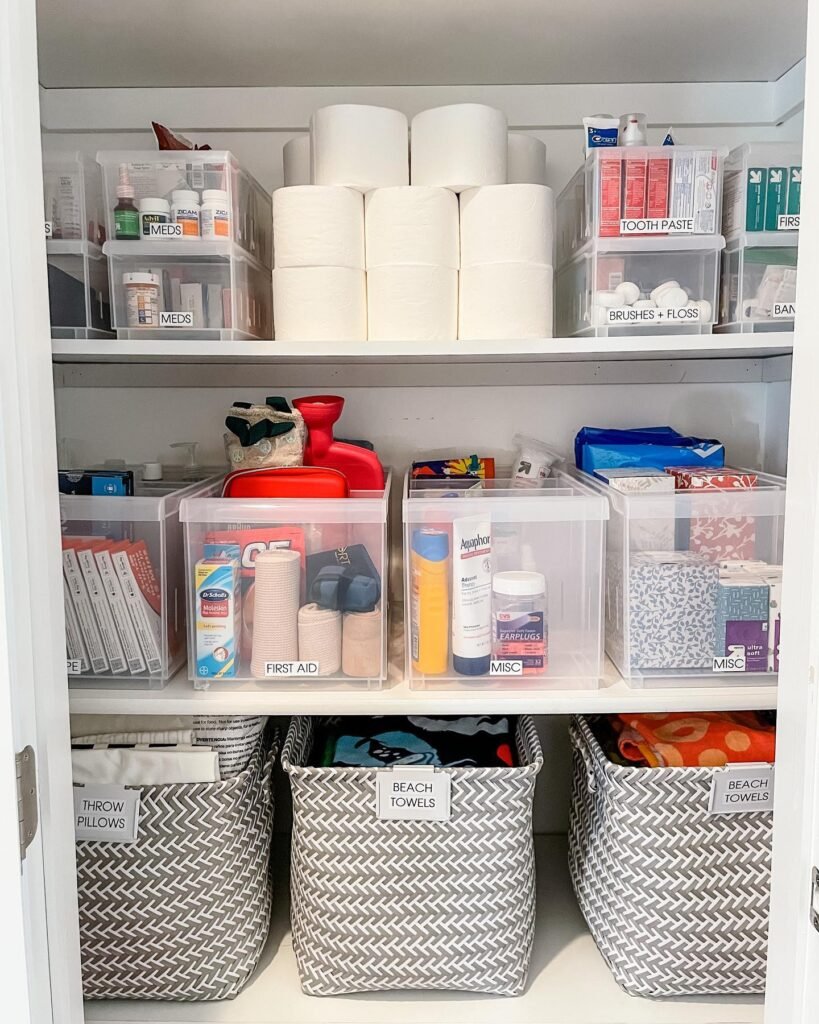
Linen closets often hold extra soap, shampoo, tissue boxes, and first-aid basics. Sort these supplies into washable caddies by purpose rather than mixing them with towels. Keep labels broad enough that family members can put refills away correctly.
Choose containers that can handle small spills and slide out easily. Open tops are useful for daily refills, while lidded boxes suit rarely used backups. Place liquids below fabric so an unnoticed leak cannot damage clean linens.
Practical note: Check product expiration dates before placing toiletries into storage. Keep the items that expire soonest near the front, and avoid buying additional backups until your existing supply has been used.
10. Give Bulky Bedding Its Own Zone
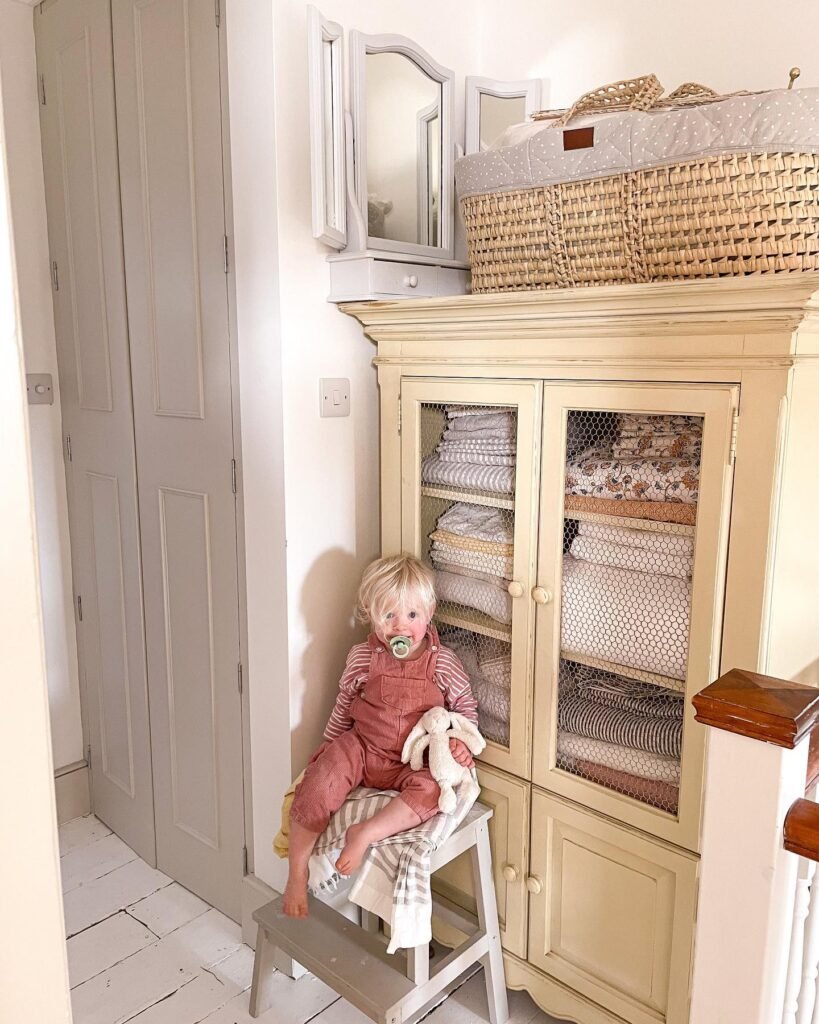
Comforters, quilts, and thick blankets can take over several shelves when folded loosely. Choose one dedicated zone and store only clean, completely dry bedding there. Fold each piece to match the shelf depth instead of forcing oversized squares into place.
Place the heaviest pieces at the bottom of the stack. Use breathable storage bags for seasonal bedding, but avoid compressing natural-filled items for long periods. A loose fabric cover can protect frequently rotated quilts from dust.
Before storing: Make sure every comforter and blanket is completely dry. Even a small amount of trapped moisture can create unpleasant odors and may damage fabric during long periods of seasonal storage..
11. Keep Cleaning Textiles Separate
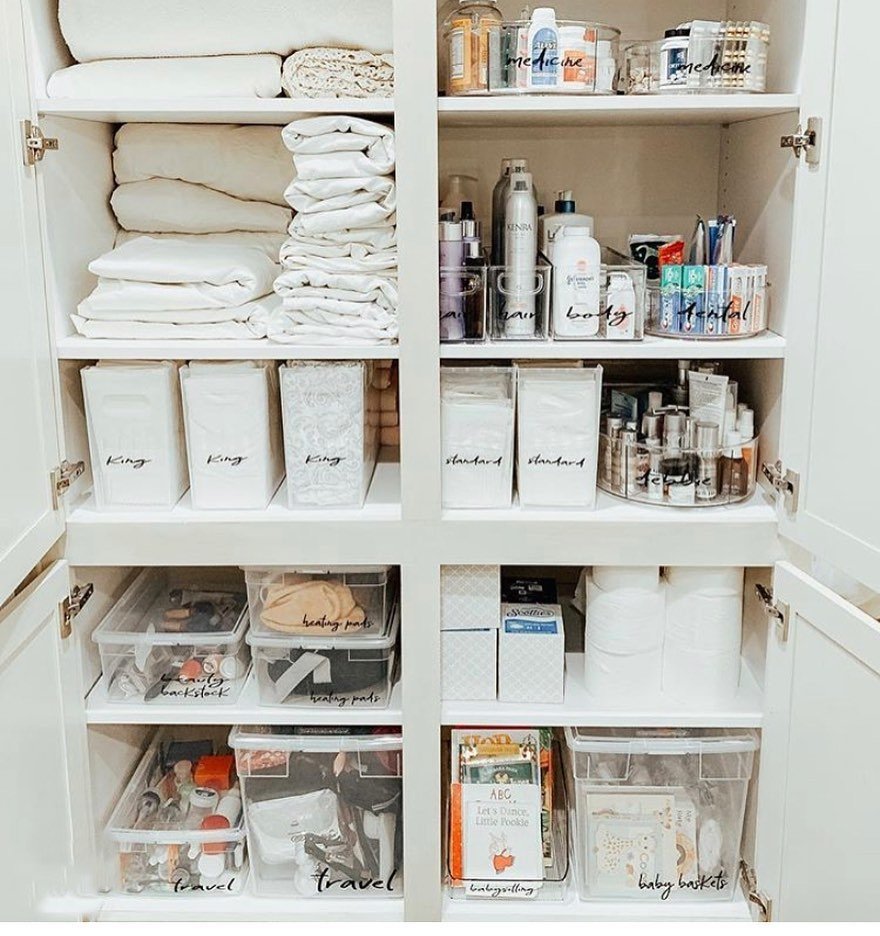
Cleaning cloths, mop pads, and old towels should not share an open basket with bath or bed linens. Store them in a clearly marked bin on a lower shelf. Damp cloths must dry fully before they return to the closet.
This keeps household cleaning items easy to grab while preventing mix-ups during busy laundry days. It also gives worn textiles a useful second life without confusing the closet system. Use a different fold or container color for instant recognition.
Quick tip: Mark cleaning cloths with a small fabric-safe dot or stitch in one corner. This makes them easy to identify even when they are removed from their labeled basket or mixed into a laundry load.
12. Split Tall Shelf Gaps With Risers
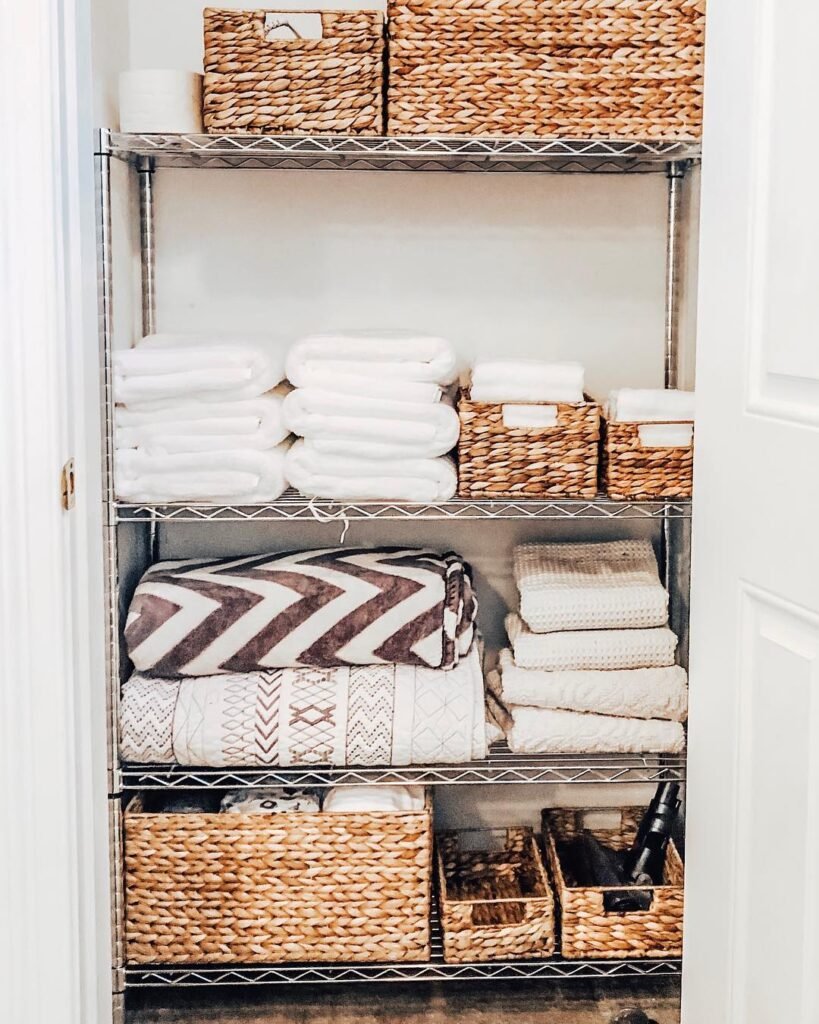
A tall gap above a short towel stack is wasted space. Add a sturdy shelf riser to create a second level for pillowcases, hand towels, or lightweight baskets. This is useful when fixed shelves cannot be moved without a larger renovation.
Risers work best when each level has a single purpose. Avoid balancing heavy stacks on narrow frames or hiding frequently used items behind the riser legs. Test the setup with one shelf before buying several matching pieces.
Practical note: Choose shelf risers with flat, stable feet and enough width to support the items above. Narrow or lightweight risers may wobble when towels are removed and can make the shelf harder to maintain.
13. Add a Small Return Basket
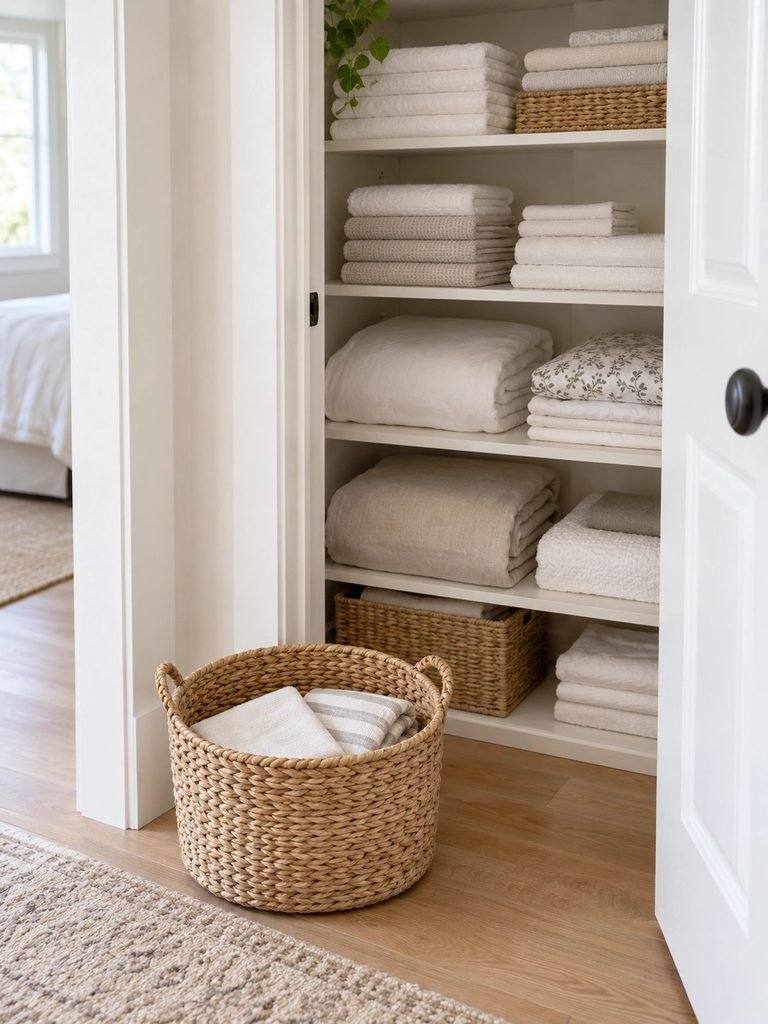
Place a small empty basket near the closet entrance for clean linens that need to be folded, matched, or returned to another room. This prevents temporary items from becoming permanent piles. It also gives family members one obvious place for uncertain items.
Empty the basket during your regular laundry routine. It should act as a short stop, not a second storage zone that slowly fills with random household items. Anything still there after a week needs a permanent home.
Keep the basket temporary:
- Do not allow unrelated household clutter to collect inside.
- Empty it on laundry day.
- Return matched linens immediately.
- Move misplaced items to the correct room.
14. Protect Freshness Without Strong Scents
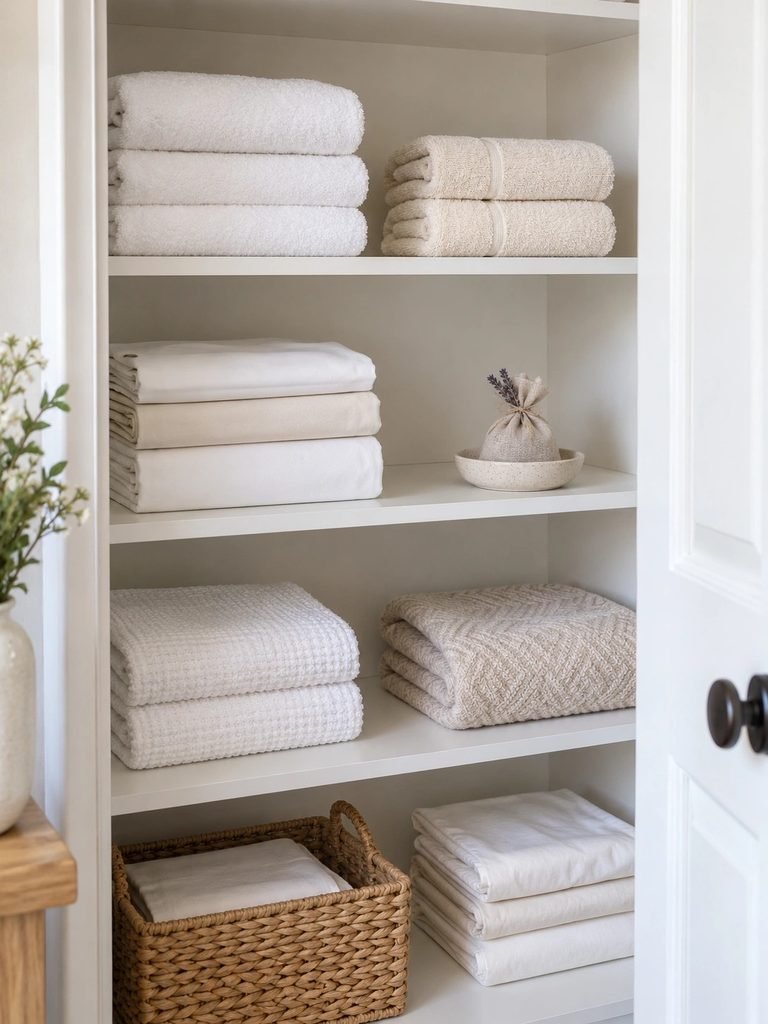
Good airflow matters more than heavy fragrance. Do not pack shelves so tightly that air cannot move around towels, sheets, and blankets. Overfilled shelves can also trap unnoticed dampness and make clean fabric smell stale.
Wash and dry every item fully before storage. For a light fresh scent, use a small breathable sachet, but keep oils and liquids away from fabric to prevent stains. Replace sachets gently rather than layering several strong scents together.
Quick tip: Avoid placing scented products directly against sheets or towels. Instead, keep a mild sachet in a small open dish or breathable pouch so it can be removed easily if the fragrance becomes too strong..
15. Schedule a Ten-Minute Seasonal Reset
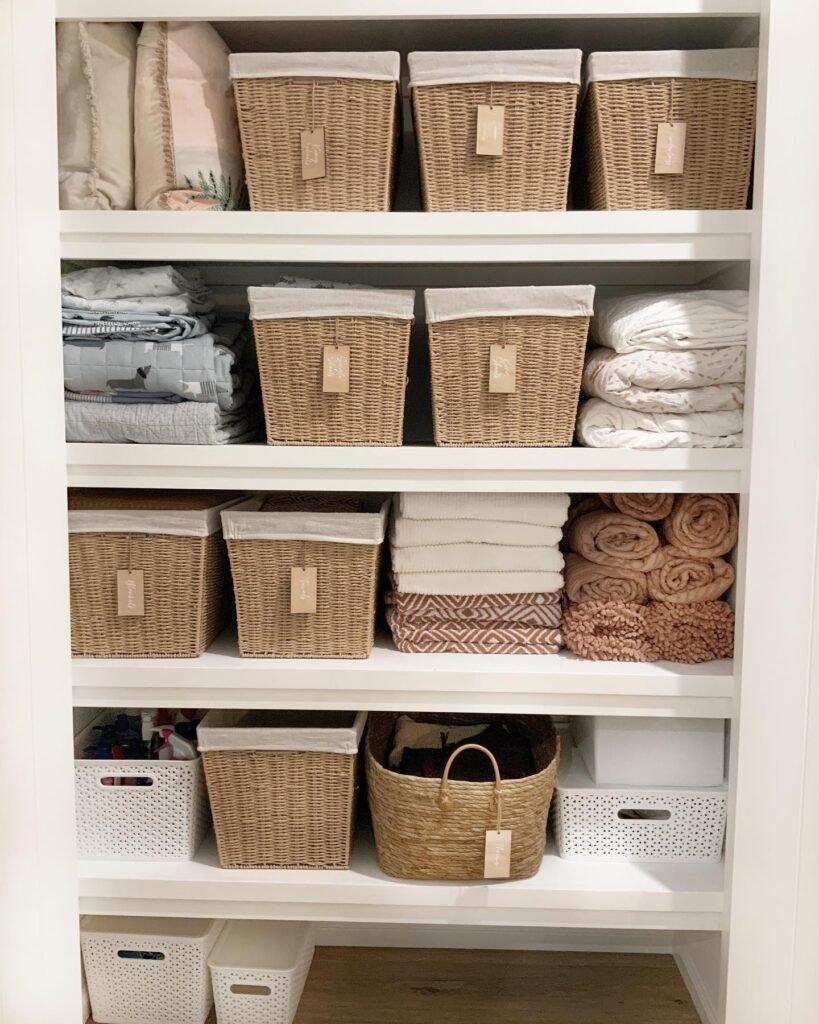
A linen closet stays organized when the system is reviewed before it becomes frustrating. Every few months, straighten stacks, check labels, and return misplaced items to their zones. Invite other household members to mention anything that feels difficult to maintain.
Use the reset to remove damaged linens and adjust storage for the coming season. Move lighter blankets forward in spring and warmer bedding closer in autumn. Small changes are better than waiting for another complete closet overhaul.
Seasonal reminder: Add the closet reset to your phone calendar at the beginning of spring, summer, autumn, and winter. A recurring reminder makes it easier to maintain the system without waiting for visible clutter to return.
FAQs
How often should I reorganize a linen closet?
Do a quick reset every three months and a deeper review once or twice a year. Seasonal changes are a natural time to rotate blankets, inspect stored bedding, and remove items your household no longer uses.
What should not be stored in a linen closet?
Avoid damp items, leaking products, open chemicals, and anything that blocks airflow. Important documents, medicines affected by humidity, and heavy objects that are difficult to lift should also be stored elsewhere.
Is rolling or folding towels better?
Both methods can work. Folding usually creates stable stacks on wide shelves, while rolling suits open bins and shallow cubbies. Choose the method that fits your shelf shape and is easiest for your household to repeat.