21 Smart Coat Closet Organize Ideas for a Calm, Clutter-Free Entryway
A coat closet can become messy faster than almost any other storage space. Jackets get pushed together, shoes spread across the floor, and small items disappear just when you need them.
These practical coat closet organize ideas focus on making the space easier to use every day. You do not need a large budget or a full renovation. A few thoughtful zones, better habits, and simple storage changes can make the closet feel twice as useful.
1. Empty the Closet Before Making a Plan
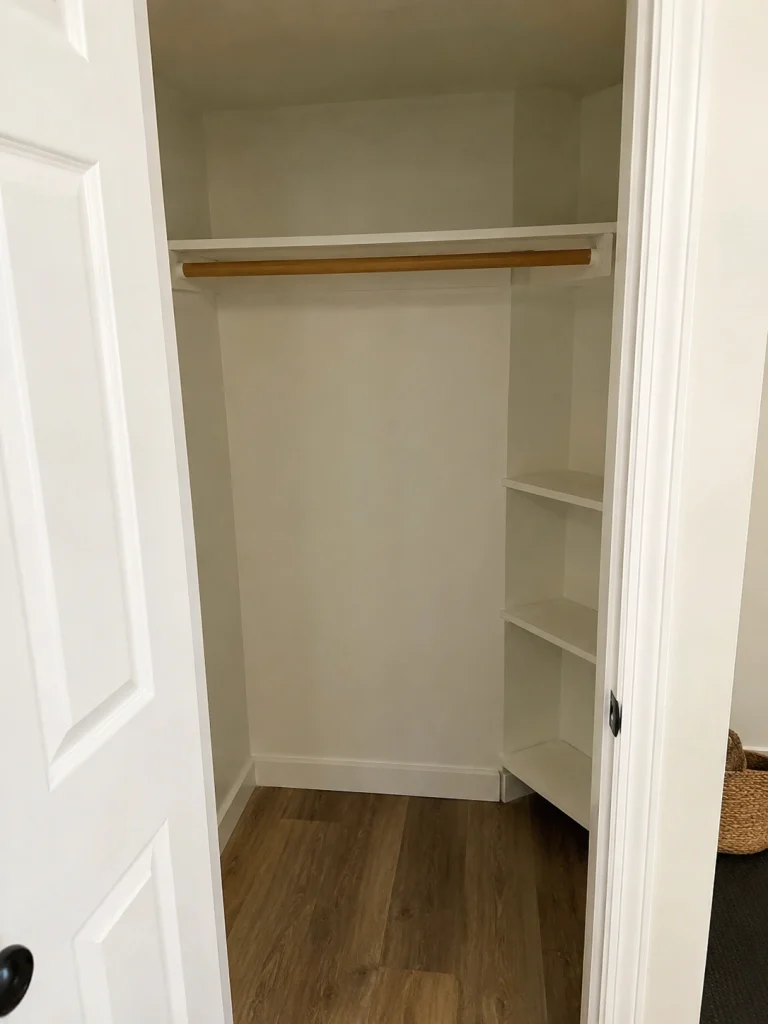
Take everything out before buying bins or adding hooks. Seeing the closet completely empty helps you notice its true width, height, shelf depth, and awkward corners. It also stops you from organizing items that no longer belong there.
Sort the contents into keep, relocate, donate, and discard groups. Only return coats, shoes, and accessories that support the closet’s main purpose. This first reset creates room for every later improvement.
Before sorting: Place a laundry basket nearby for items that belong in other rooms. Removing unrelated belongings immediately prevents them from becoming part of the new closet system and gives you a more accurate view of the available storage space.
2. Set a Clear Coat Limit
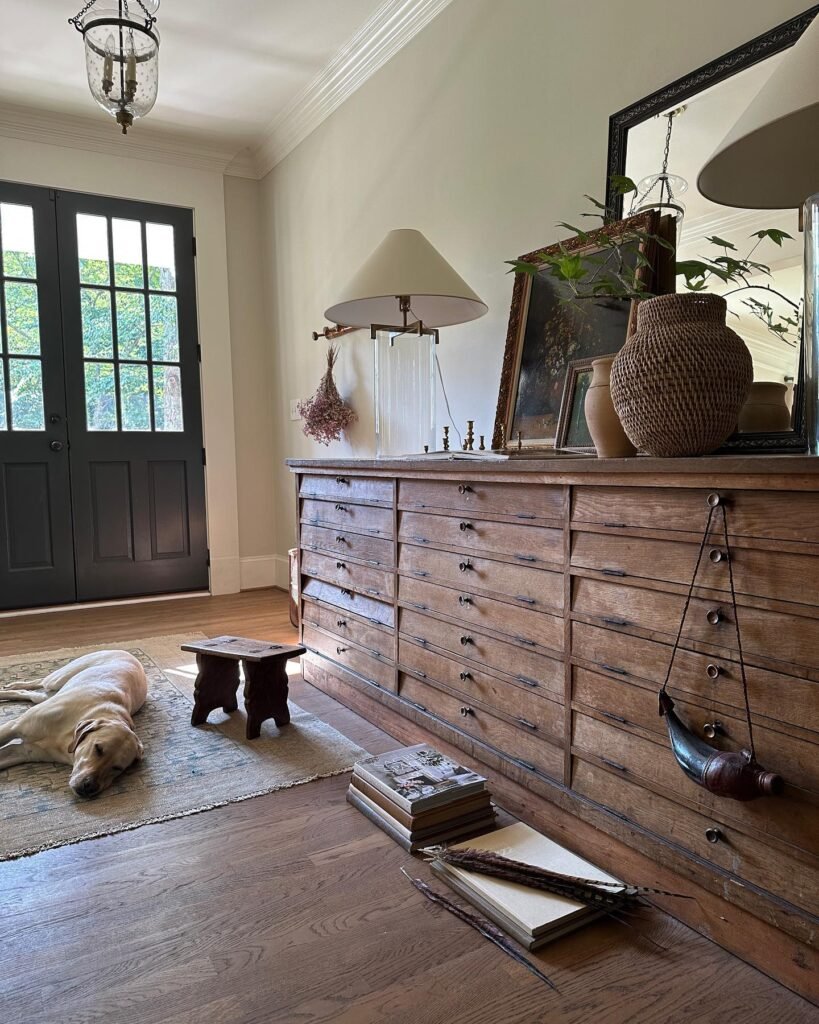
Decide how many coats each person may keep in the closet at one time. A simple limit prevents the rail from becoming so crowded that hangers cannot slide or jackets become crushed.
Store special-occasion and off-season outerwear elsewhere. This works especially well in compact homes where every inch matters. For more ideas that suit tight spaces, see these tiny closet organizing hacks.
Quick tip: Give each family member a realistic number of hanger spaces instead of filling the entire rod. Leave several empty spaces so coats can slide easily and guests have somewhere to hang their outerwear.
3. Group Coats by Person
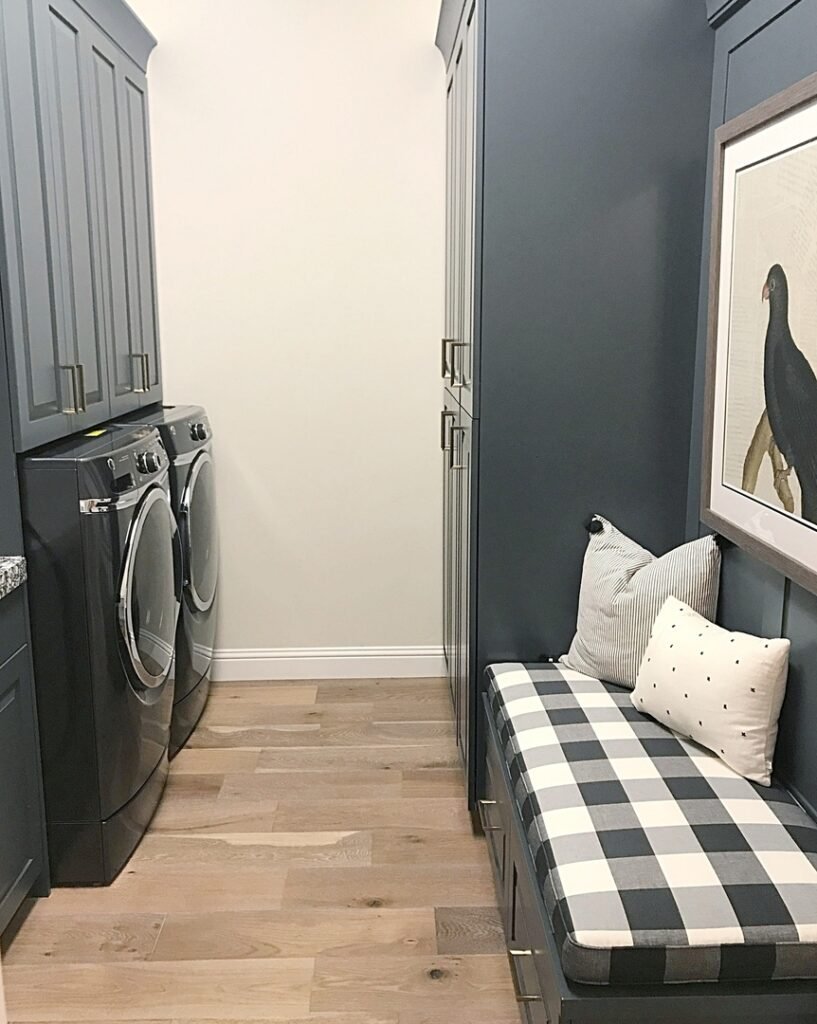
Give each household member a defined section of the hanging rail. This makes morning routines faster because everyone knows exactly where to look and where to return a coat.
Use hanger colors, small rail labels, or simple dividers to mark each section. Keep children’s coats near the front or at the easiest end of the rod so they can reach them without pulling through adult jackets.
Keep sections easy to recognize:
- Assign one rail section to each person.
- Use different hanger colors when helpful.
- Place children’s coats within easy reach.
- Review each section during seasonal changes.
4. Switch to Slim, Strong Hangers
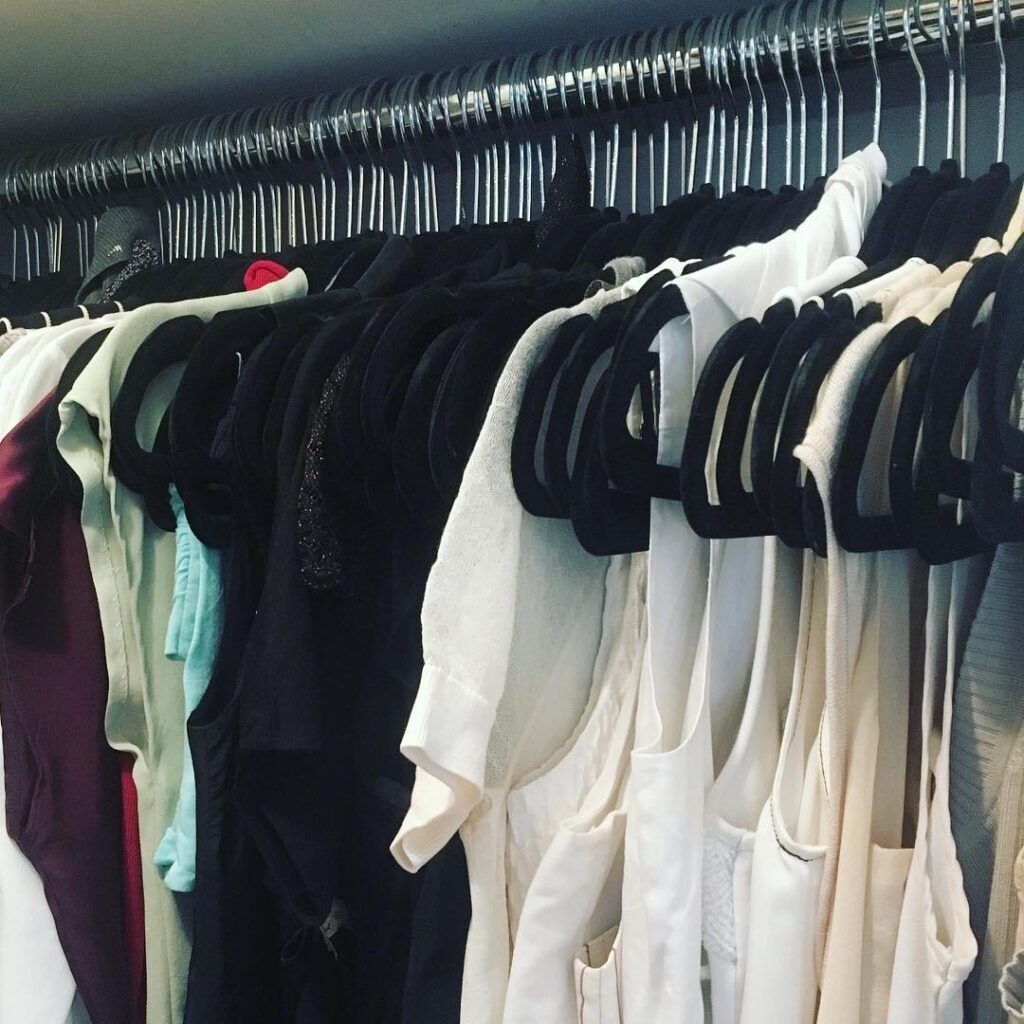
Bulky hangers waste valuable rail space and make a small closet feel packed. Slim hangers create a cleaner line while allowing more breathing room between coats.
Choose a sturdy style that can support heavy winter jackets without bending. Use the same hanger type throughout the closet for a calmer look, but avoid squeezing in extra coats simply because thinner hangers create room.
Practical note: Test one hanger with your heaviest winter coat before replacing the full set. Some slim hangers are designed for shirts and may bend under bulky outerwear, so choose a reinforced style with dependable shoulders.
5. Use the Side Walls for Narrow Storage
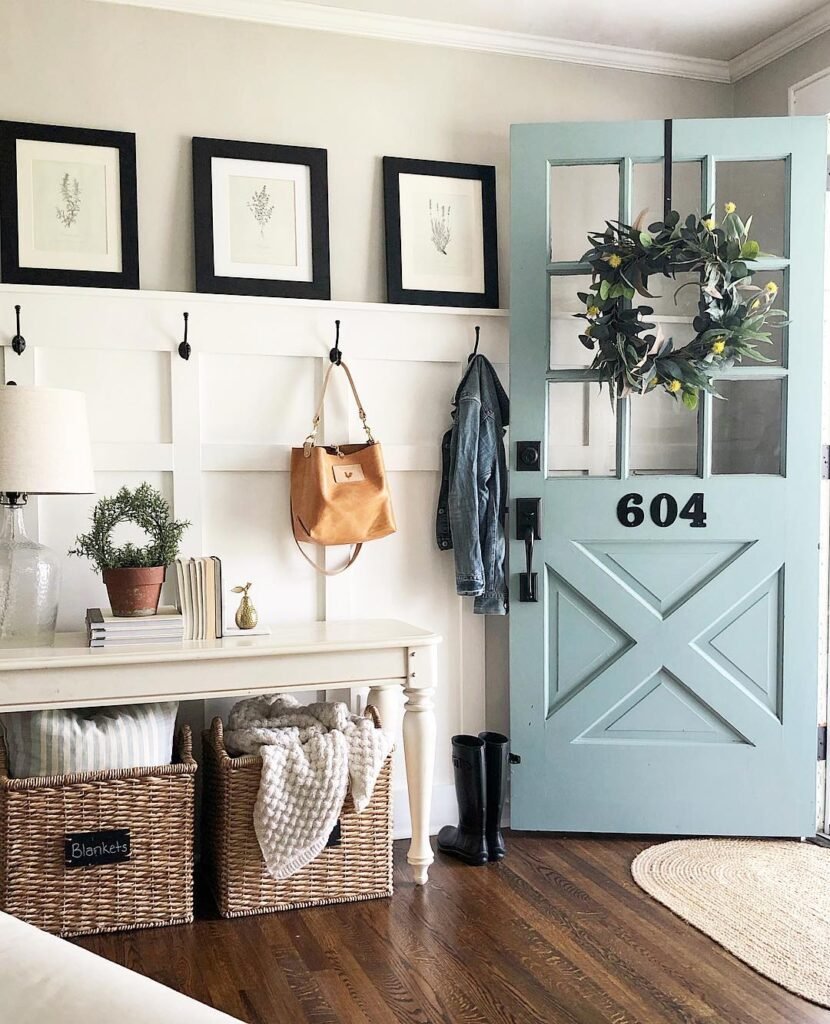
The side walls beside the hanging rail often remain empty. Add shallow hooks, a slim rail, or narrow wall pockets for lightweight items that would otherwise clutter the shelf.
This is a good place for umbrellas, caps, reusable shopping bags, or a small dog leash. Explore more closet wall storage ideas when you need ways to use vertical surfaces without crowding the main hanging area.
Quick tip: Open and close the closet door before installing side hooks. Make sure hanging bags, umbrellas, or accessories will not catch on the door, block the hinges, or press against the coats.
6. Create a Daily Grab Zone
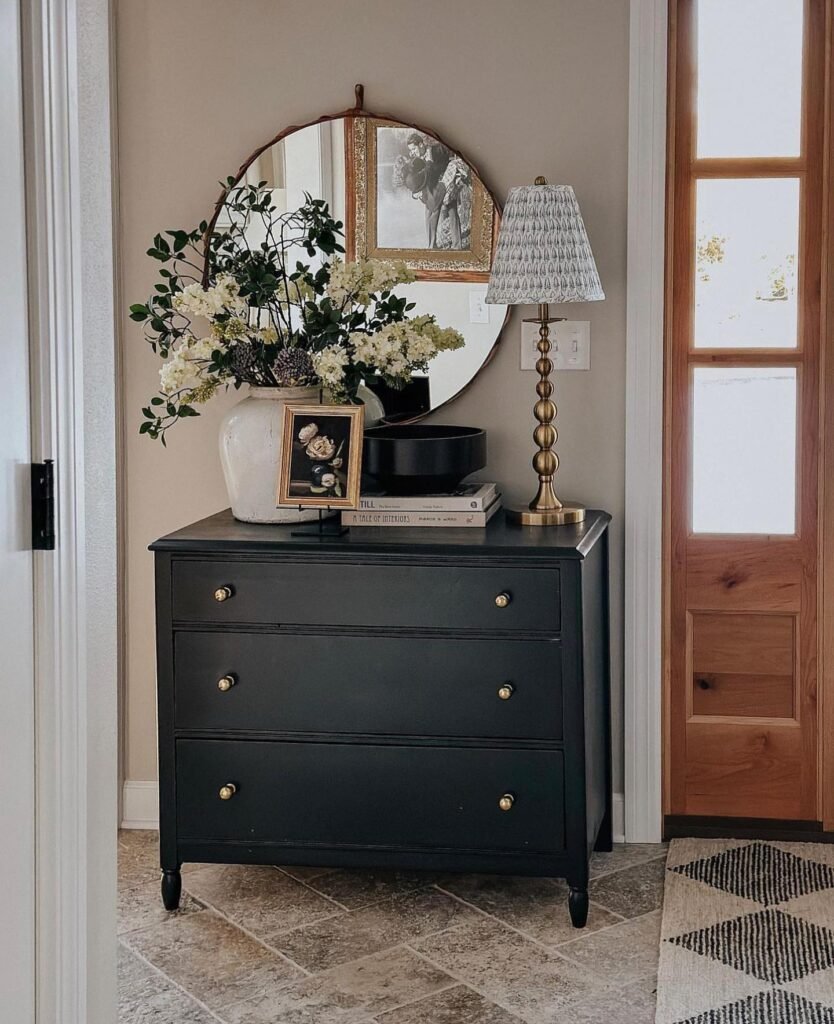
Reserve the easiest-to-reach section for the items used most often. This may include one everyday coat, a school jacket, a work bag, and the shoes worn during the current week.
Keeping daily items together reduces rummaging and helps the rest of the closet stay untouched. Place occasional pieces farther back so they do not interrupt the normal flow of getting ready and leaving home.
Keep the zone focused: Limit this area to items used several times each week. When too many occasional belongings enter the daily zone, it stops saving time and becomes another crowded section that needs frequent sorting.
7. Divide the Top Shelf Into Categories
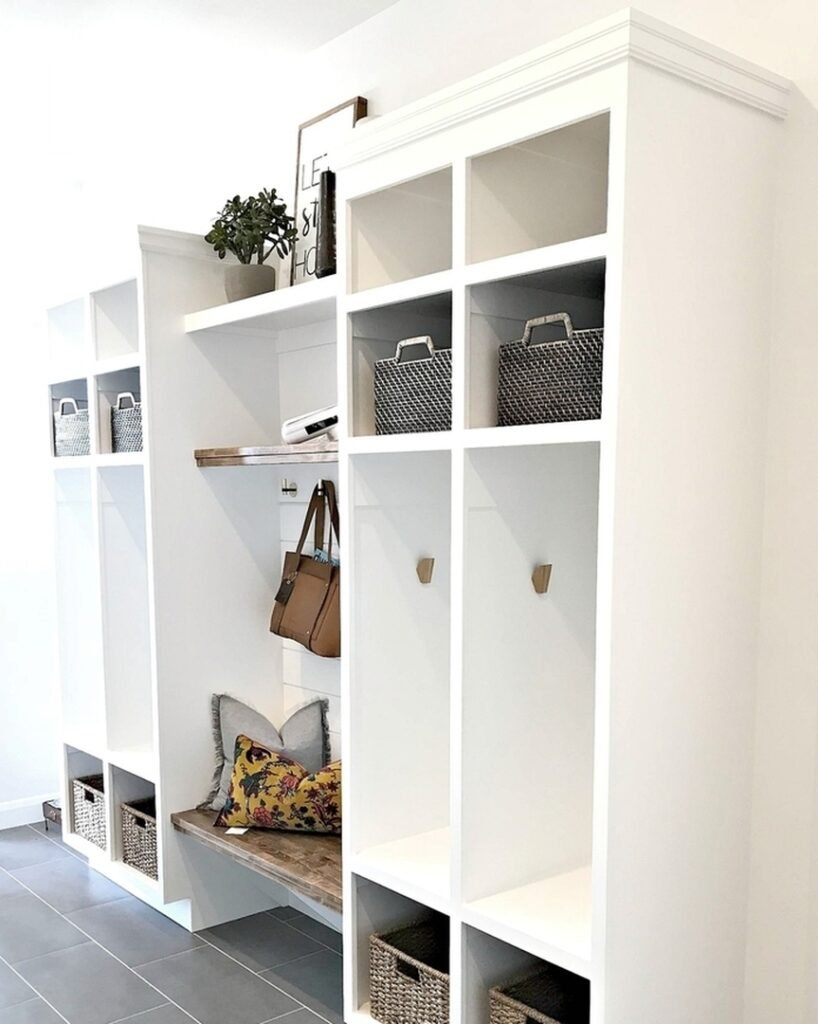
A wide top shelf quickly turns into one loose pile. Use shelf dividers or separate containers to create clear categories for scarves, gloves, hats, travel accessories, and seasonal extras.
Keep each category broad enough to remain easy to maintain. The same zone-based thinking used in these linen closet organizing ideas works well here because it prevents soft items from spreading across the entire shelf.
Before adding containers: Measure the shelf’s height, width, and depth. Choose bins that can be removed without tilting them sharply, especially when the closet opening is narrower than the shelf space inside.
8. Keep Accessories in Small Family Kits
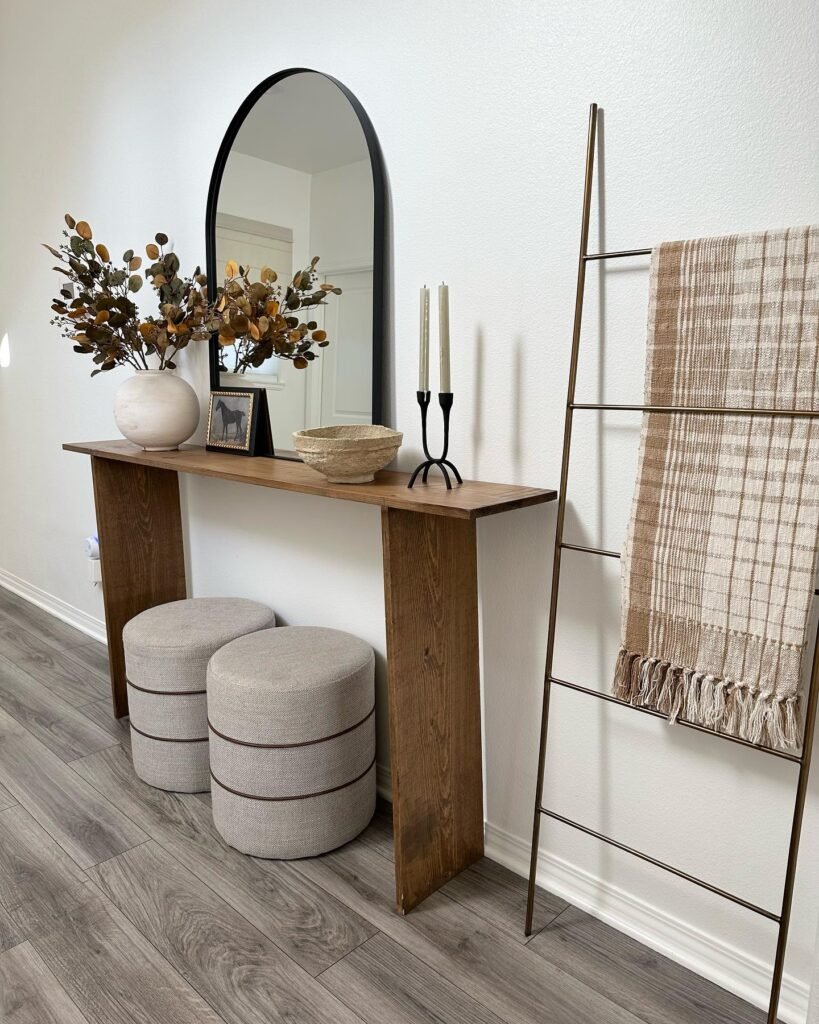
Instead of mixing every hat and glove together, create one small accessory kit for each person. A handled basket or soft zip pouch makes the group easy to pull down and return.
This method also reveals missing pairs quickly. When cold weather arrives, each person can check their own kit rather than searching through one large container filled with mismatched gloves, loose scarves, and forgotten winter items.
Quick tip: Use washable pouches or soft baskets for gloves, hats, and scarves. These are easier to lift from a high shelf than heavy containers, and they prevent small accessories from falling behind larger storage bins.
9. Add a Flexible Pegboard Panel
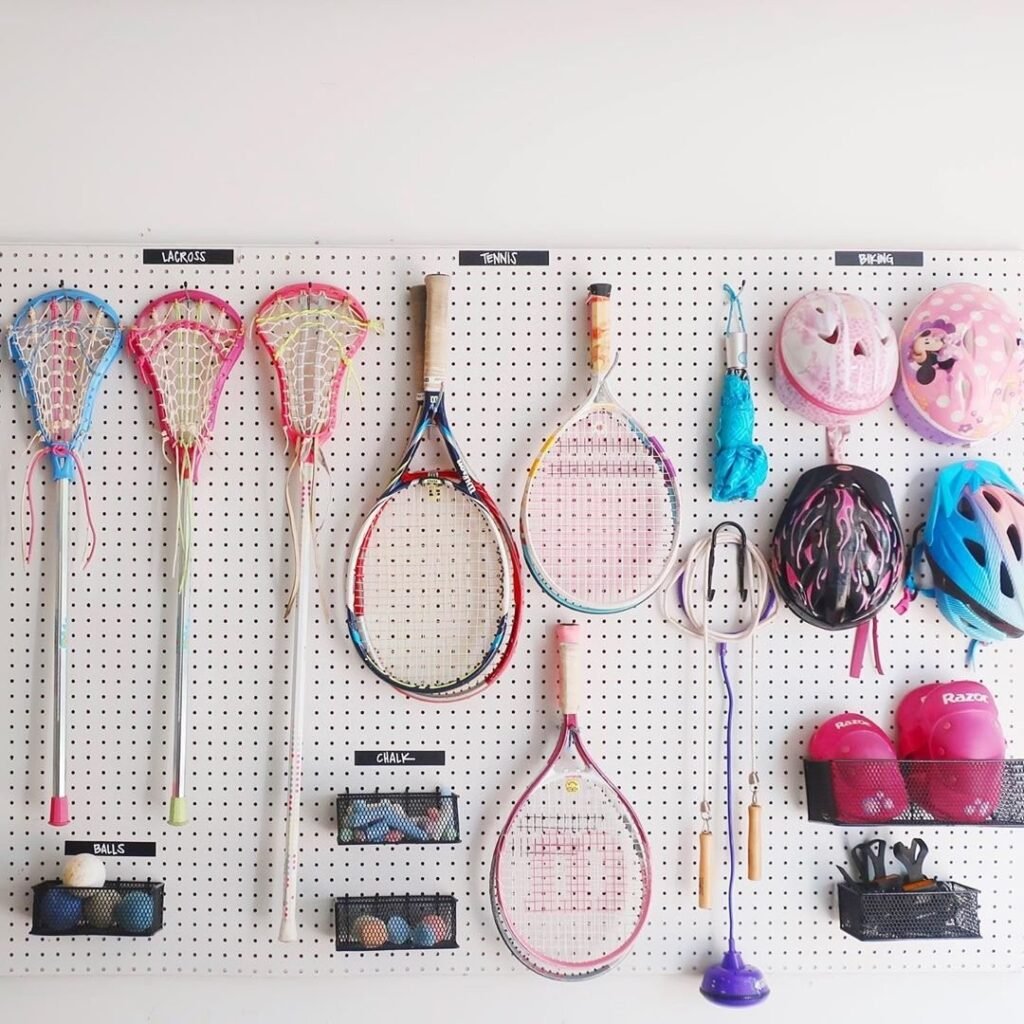
A narrow pegboard can turn a blank interior wall into adjustable storage. Hooks and small cups can be moved as your needs change, which is useful for growing children or shifting seasonal routines.
Use it for keys, lint rollers, compact umbrellas, pet accessories, and small bags. For another example of adaptable storage planning, browse these ways to organize a craft closet.
Practical note: Arrange the hooks before loading the pegboard. Leave enough space between items so keys, leashes, and small bags can be removed without knocking nearby accessories onto the closet floor.
10. Build a Proper Shoe Landing Area
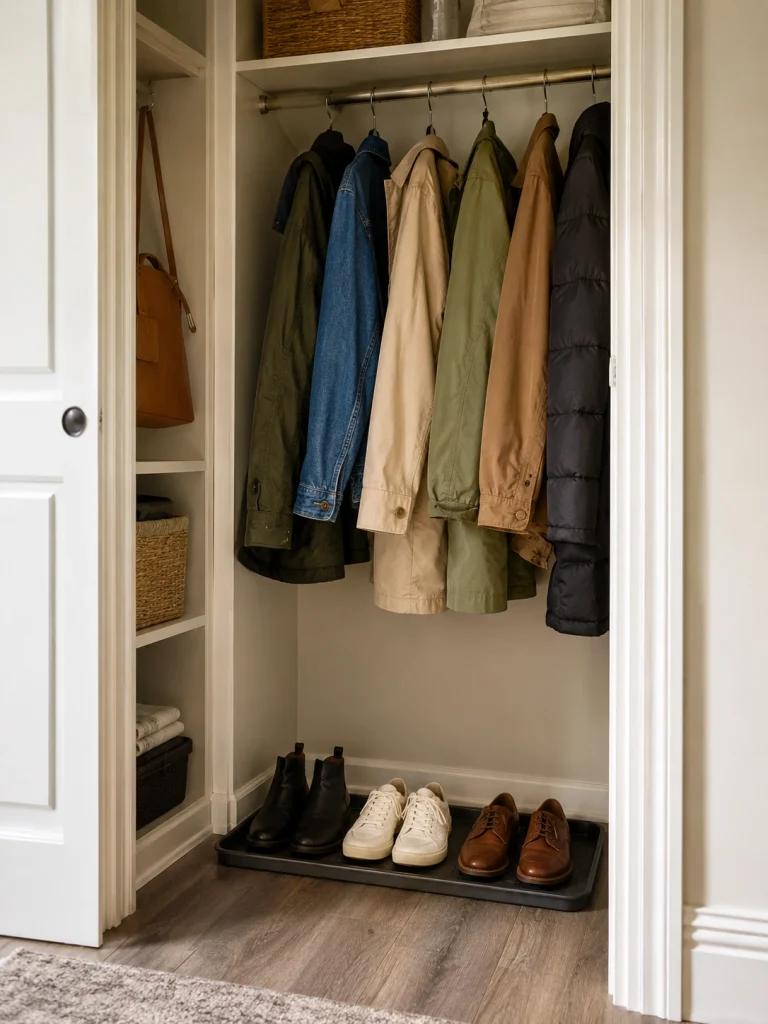
Give shoes a defined landing area instead of letting them spread across the floor. A washable mat, low tray, or marked floor section keeps pairs together and contains everyday dirt.
Limit this zone to the shoes currently in rotation. Move rarely worn pairs to bedroom storage. The open floor becomes easier to clean, and nobody has to dig beneath hanging coats to find a missing shoe.
Simple shoe-zone rules:
- Remove muddy footwear until it is clean and dry.
- Keep only current shoes inside.
- Pair shoes before putting them away.
- Use a washable mat or tray.
11. Adjust Storage to Match Coat Length
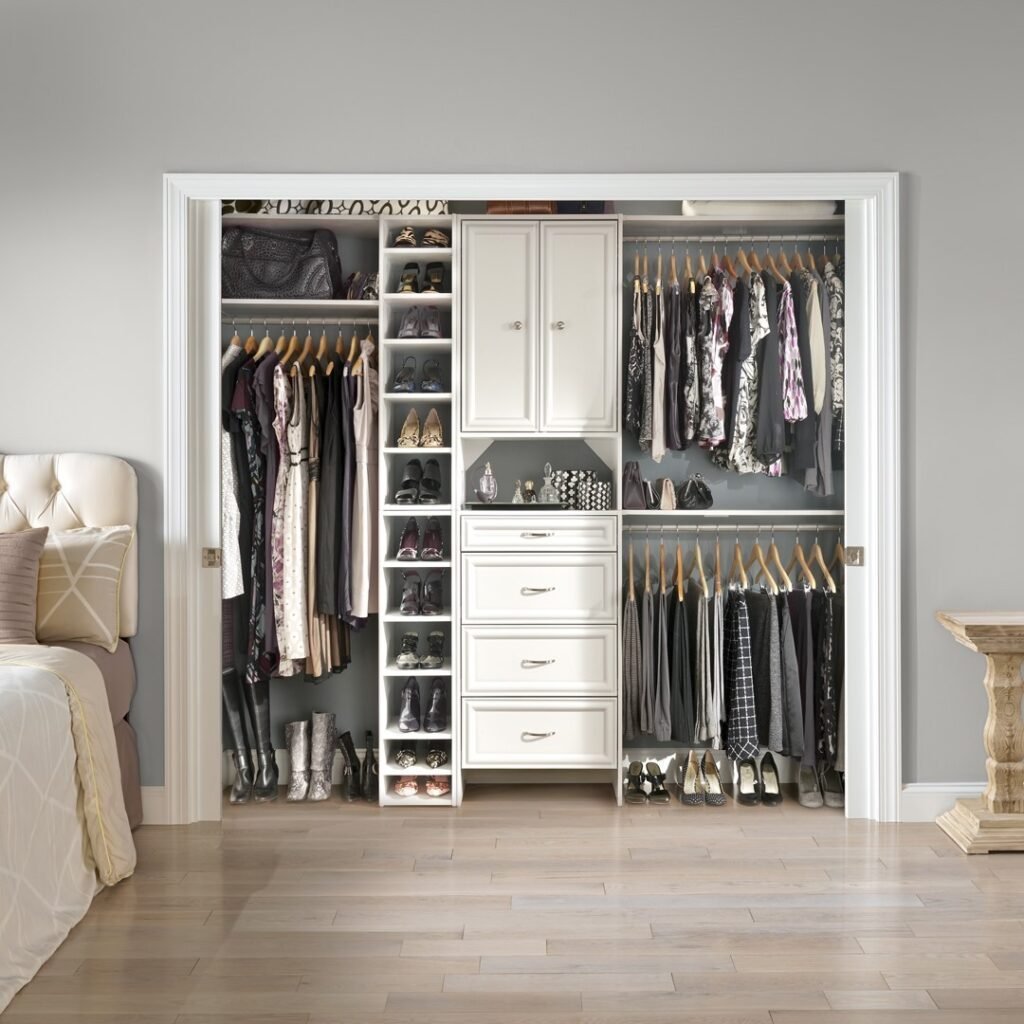
Measure the longest coats before installing any lower shelf, basket, or second rail. Storage beneath short jackets can be useful, but long coats need enough open drop space to hang without folding.
A mixed closet may work best with one full-height section and one section fitted for shorter jackets. Similar space planning appears in these small walk-in closet organizing ideas.
Quick tip: Hang the longest coat on the rod while planning lower storage. Measure from the bottom of the coat to the floor so shelves, baskets, and shoe racks do not crush the fabric.
12. Create a Child-Height Station
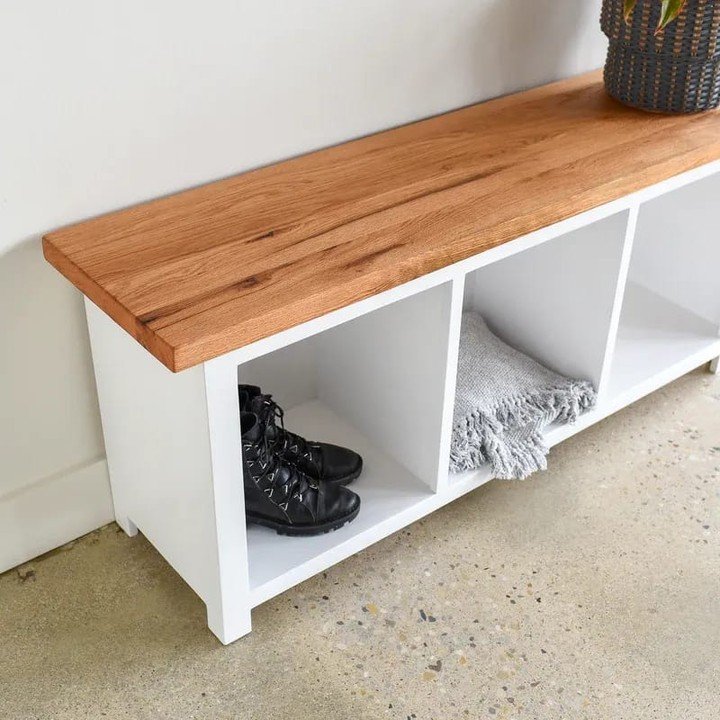
Install a few low hooks for children’s jackets, backpacks, or rain gear. A child-height station makes it easier for kids to put away their own belongings instead of dropping them near the door.
Keep the setup simple and visible. One hook for a coat and one for a bag is often enough. Too many choices can turn the lower area into another crowded storage zone.
Keep it manageable: Give each child one coat hook and one bag hook. A small, clearly defined setup is easier to follow than a crowded row where children cannot tell which hook belongs to them.
13. Give Wet Items a Temporary Home

Wet coats and umbrellas should not be pushed directly into a tightly packed closet. Create a temporary drying spot near the entrance using a sturdy hook, drip tray, or ventilated stand.
Return items to the closet only after they are dry. This small habit protects nearby clothing, reduces stale odors, and keeps moisture from collecting in a dark, enclosed space.
Practical note: Check whether the temporary drying area has good airflow. Leave space around wet coats and open umbrellas fully when possible so they dry faster before being returned to the enclosed closet.
14. Store Bags Upright
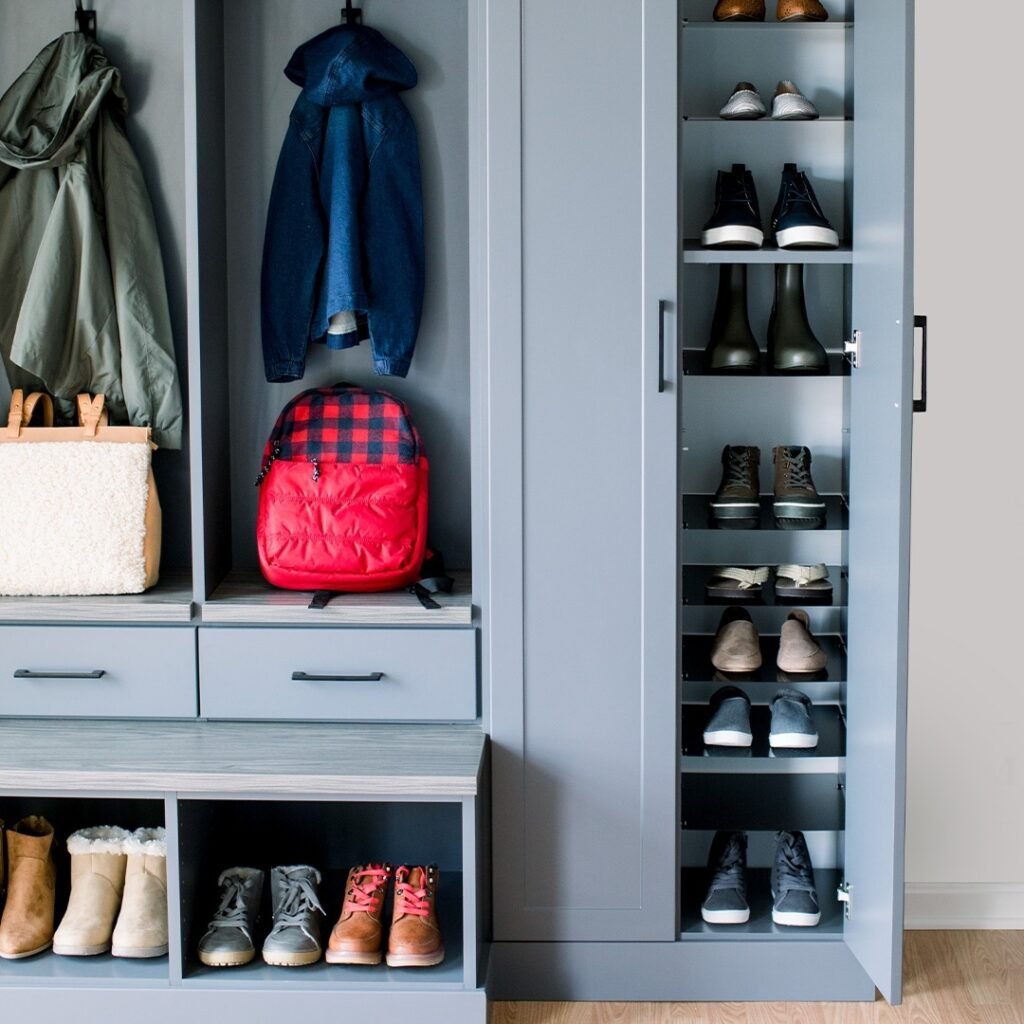
Handbags, totes, and backpacks lose their shape when they are stacked in a heap. Give frequently used bags an upright section where each one remains visible.
Use simple dividers, open cubbies, or spaced hooks that allow straps to hang freely. Avoid placing too many bags together, since overloaded hooks can damage straps and make the closet harder to use.
Quick tip: Empty receipts, snack wrappers, and unnecessary items from bags before storing them. Lighter bags are easier to arrange, keep their shape better, and do not place as much pressure on hooks or shelf dividers.
15. Add Motion-Sensor Lighting
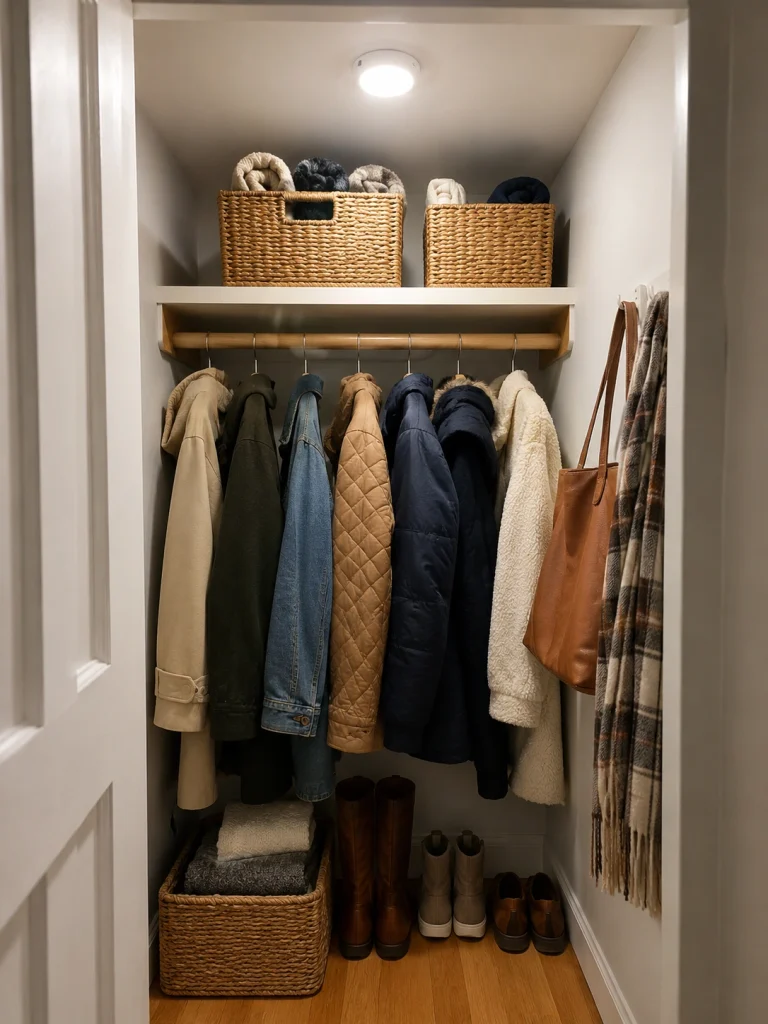
A dark closet encourages messy habits because it is difficult to see empty hooks, shelf labels, or items at the back. A battery-powered motion light can brighten the space without electrical work.
Position the light where coats will not block it. Better visibility makes quick cleanups easier and helps prevent duplicate purchases of gloves, umbrellas, or other items already hidden inside.
Before installation: Test the light in several positions after hanging the coats. The sensor should detect movement near the doorway, while the bulb should illuminate the shelf and floor without being hidden behind bulky jackets.
16. Keep a Small Clothing-Care Kit
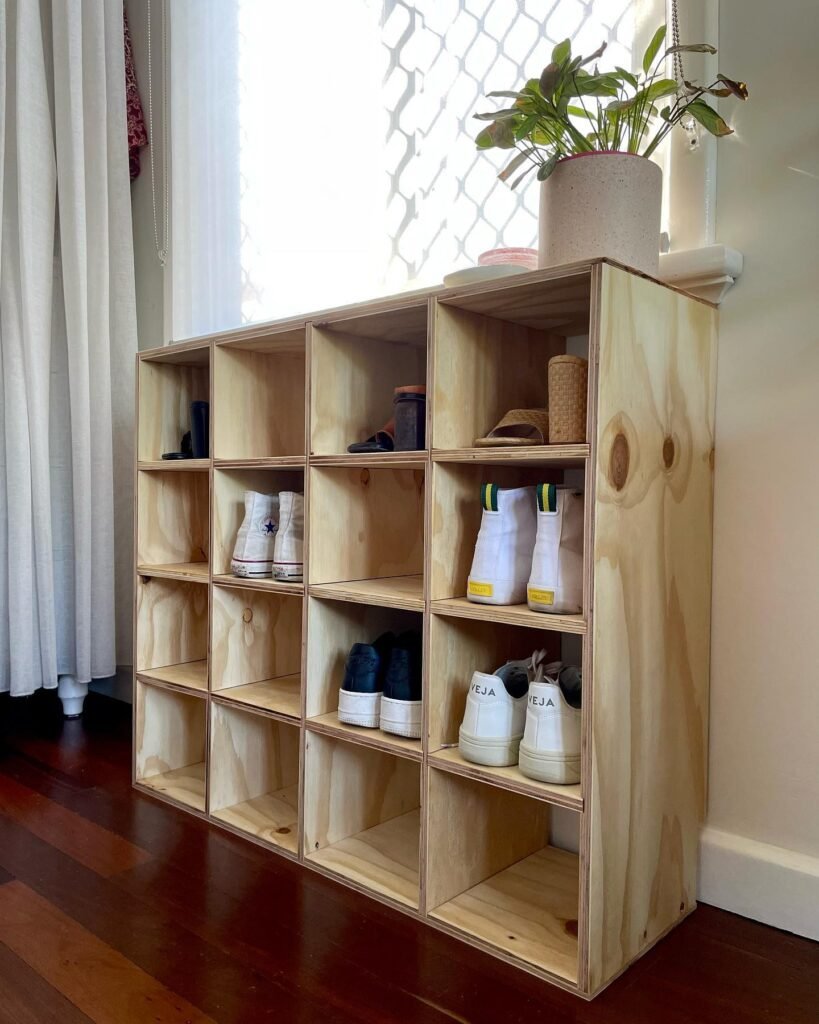
Store a lint roller, fabric brush, stain wipe, and spare buttons in one compact container. Keeping these tools near coats makes quick touch-ups easier before leaving home.
Choose only supplies you actually use. A small kit is more practical than a shelf crowded with cleaning products. Check it every few months and remove dried-out wipes or empty packages.
Useful items to include:
- A lint roller
- A fabric brush
- A small stain-removal cloth
- Spare buttons
- A compact sewing kit
Check the container occasionally and remove anything damaged, empty, or no longer useful.
17. Rotate the Closet With the Seasons

At the start of each season, move the most useful outerwear to the front. Transfer heavy coats, snow accessories, or lightweight rain gear when they are no longer needed.
Seasonal rotation prevents the closet from holding everything at once. Use breathable storage for clean, fully dry items, and label the container by season so the next changeover feels quick.
Quick tip: Wash or clean seasonal coats before moving them into longer-term storage. Empty every pocket and repair loose buttons first so the clothing is ready to wear when the weather changes again.
18. Place a Donation Bag Nearby
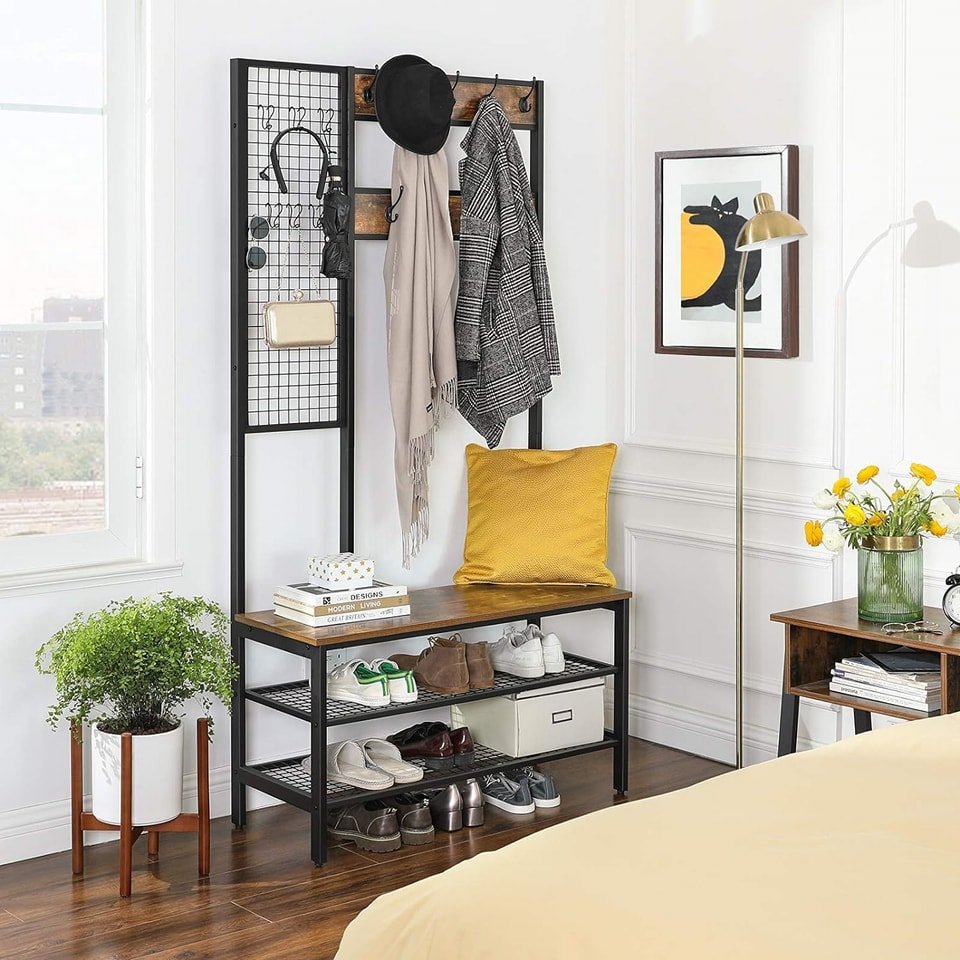
Keep a small donation bag or box in another nearby storage area. When a coat becomes too small, uncomfortable, or unused, move it there instead of returning it to the rail.
Set a date to empty the donation container. This creates a simple exit system and prevents unwanted clothing from taking up space for months while you decide what to do with it.
Practical note: Label the donation bag with the month you started filling it. Choose a regular collection date so unwanted coats and accessories leave the house instead of becoming permanent storage in another corner.
19. Use Labels That Describe Actions
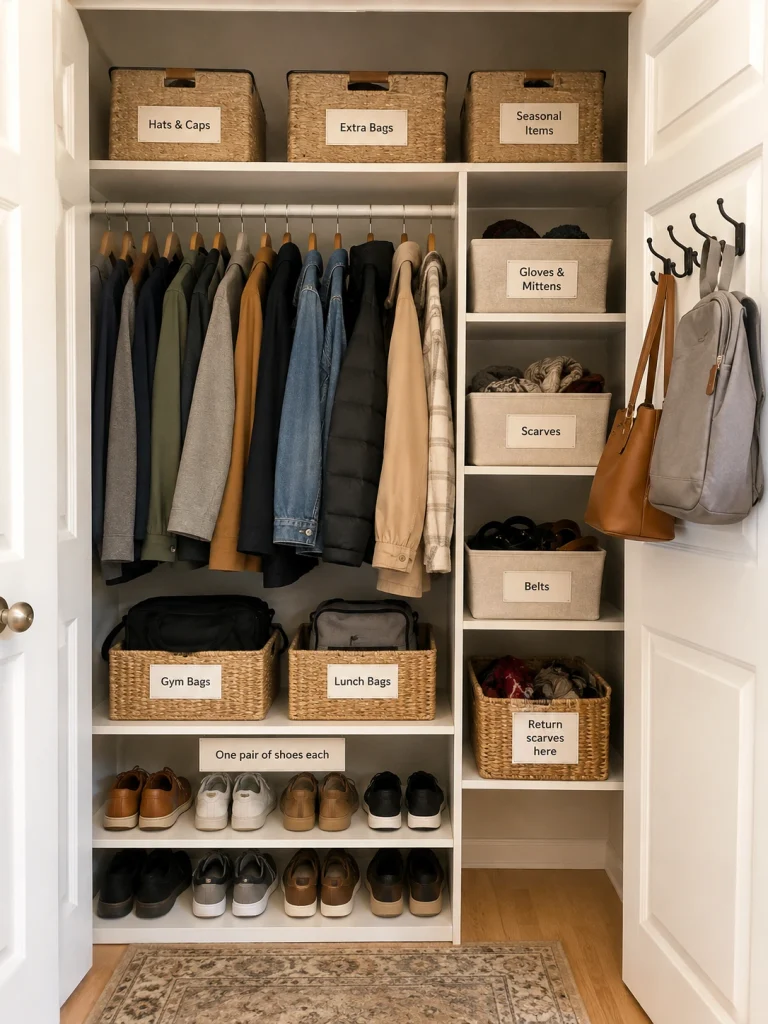
Labels work best when they tell people exactly what belongs in a space. “Return scarves here” or “One pair of shoes each” may be more useful than a decorative label with a vague category.
Keep the wording short and place labels where they are easy to see. Good labels support the routine, especially in a shared closet where several people use the same zones differently.
Keep labels specific: Phrases such as “Return gloves here” or “Daily shoes only” provide clearer instructions than broad labels. Use large, readable lettering so every family member can understand the system quickly.
20. Follow a One-In, One-Out Rule
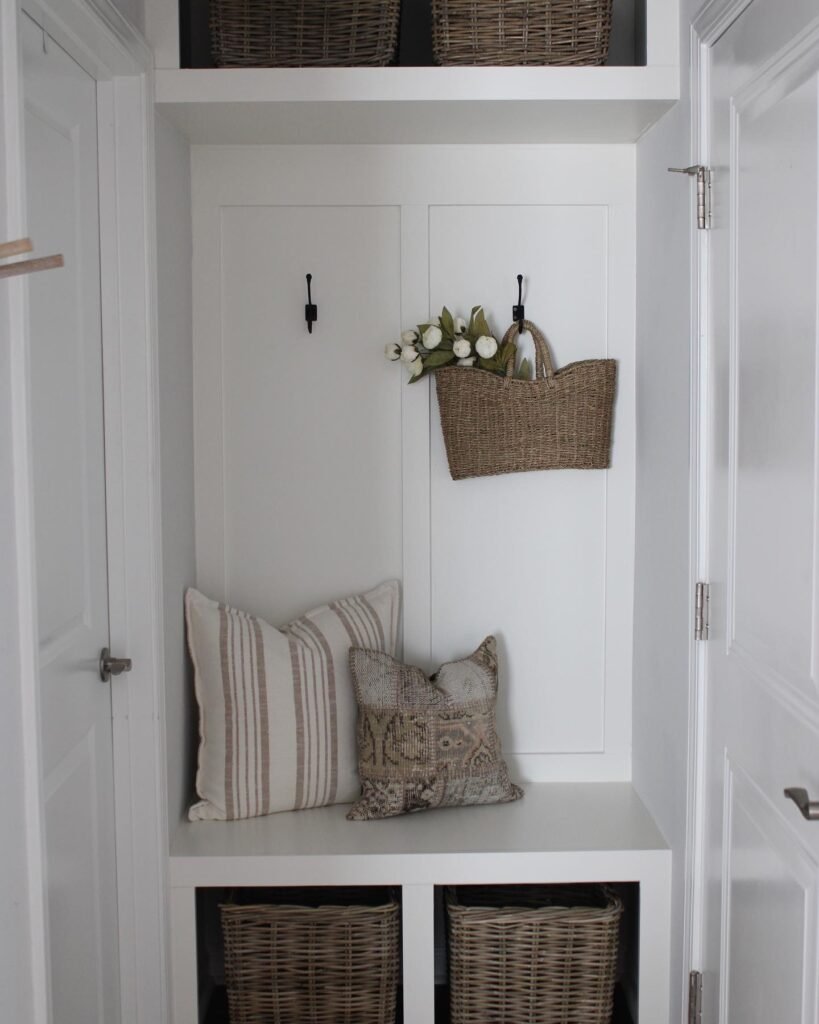
When a new coat enters the closet, choose one older item to donate, relocate, or recycle. This rule keeps the rail from slowly returning to its previous crowded condition.
The rule does not need to be strict for growing children or unusual weather needs. Its purpose is simply to make every new purchase trigger a quick review of what is already stored.
Quick tip: Review similar items whenever you buy something new. A new raincoat should prompt a check of existing rainwear, while a new winter jacket should lead to a review of other cold-weather coats.
21. Schedule a Five-Minute Weekly Reset
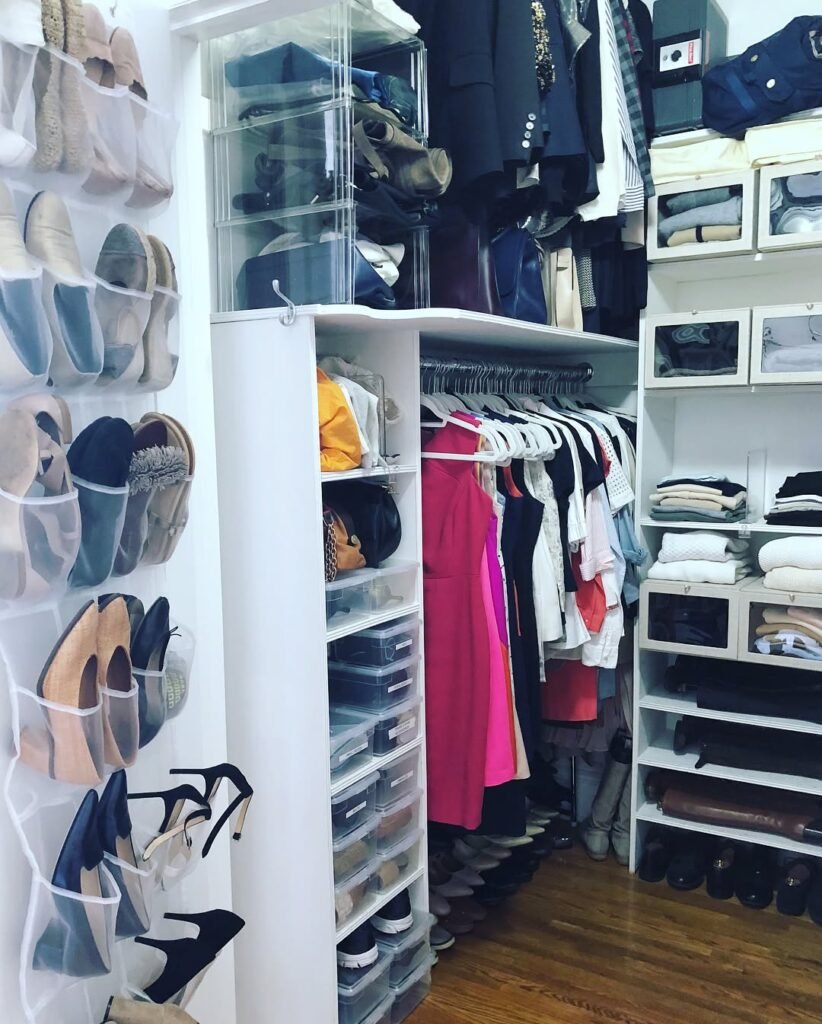
Choose one day each week to return stray shoes, match gloves, empty pockets, and place coats on the correct hangers. Five focused minutes can prevent a full closet cleanout later.
Attach the reset to an existing routine, such as Sunday evening or laundry day. A coat closet organize system succeeds when it is easy to restore, not when it looks perfect for only one afternoon.
During the reset:
- Hang fallen coats.
- Match gloves and shoes.
- Remove rubbish from pockets.
- Return bags to their zones.
- Move wet items after they dry.
A regular five-minute routine prevents clutter from building up again.
FAQs
How often should I organize a coat closet?
Complete a quick reset once a week.
Do a deeper review at the start of each season.
Use seasonal checks to remove outgrown or unused items.
What should not be stored in a coat closet?
Avoid leaking products, damp clothing, and open food.
Do not store items that block safe access.
Keep valuable documents in a more secure location.
How can I organize a very small coat closet?
Limit the number of coats stored inside.
Use slim hangers and available side-wall space.
Prioritize daily essentials instead of every seasonal item.
Should shoes be kept in a coat closet?
Shoes can stay in a washable, ventilated zone.
Keep only frequently worn pairs in the closet.
Clean the shoe tray or floor regularly.
How do I keep a shared coat closet organized?
Assign a clear section to each person.
Make frequently used belongings easy to reach.
Complete a short household reset every week.