20 Attic bedroom Ideas for Cozy Sloped Spaces
Attic bedroom ideas can turn an awkward top-floor space into a cozy, stylish, and useful room. Sloped ceilings, low corners, and skylights may feel tricky at first, but they can work beautifully with the right layout.
From built-in storage to soft lighting and smart bed placement, an attic bedroom can save space while feeling private and comfortable. These ideas focus on real ways to make the room feel charming, practical, and easy to live in.
You may also like related article:
25 Black Bedroom Inspiration Ideas: Create a Cozy and Stylish Dark Space
29 Cozy Bedroom Ideas That Feel Calm, Warm, and Lived-In
20 Bedroom Bench Ideas for Style and Storage
1. Soft Green Attic Retreat
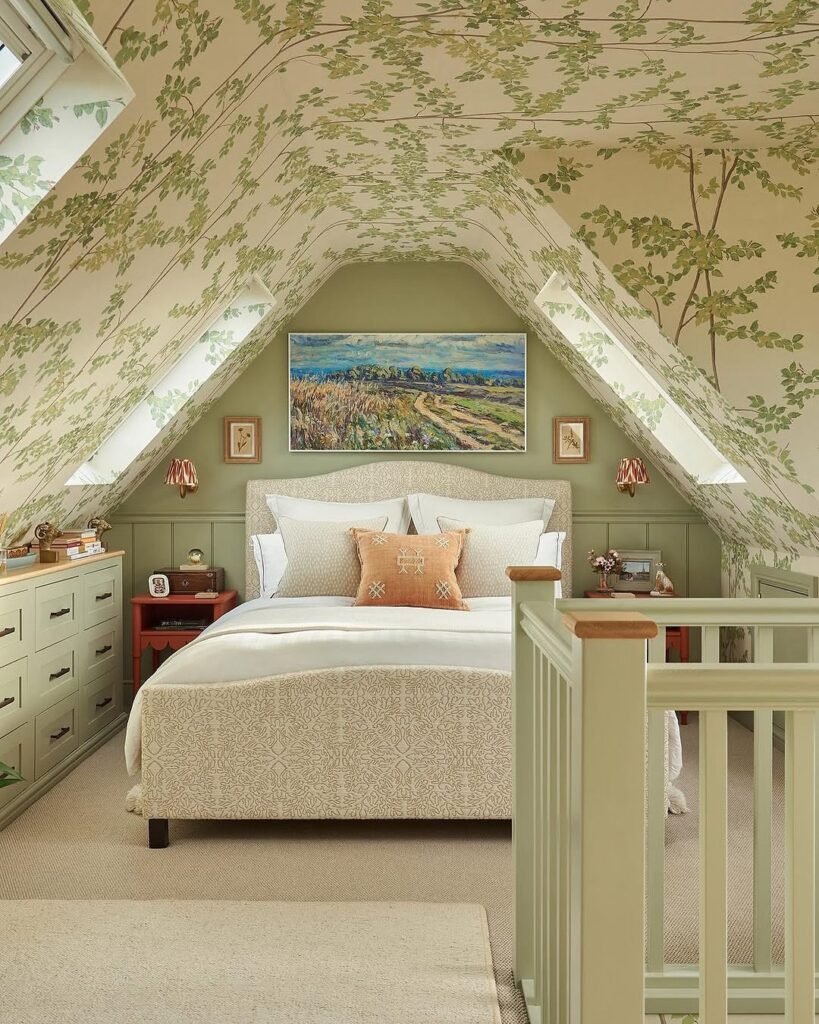
A soft green palette works beautifully in an attic bedroom because it makes the sloped ceiling feel calm instead of closed in. Built-in drawers along the low walls are a smart way to use space that would otherwise be wasted. Patterned wallpaper adds charm without needing much extra decor. Keep the bedding light and simple so the room feels fresh, airy, and not too busy under the angled roof.
2. Twin Beds Under Slopes
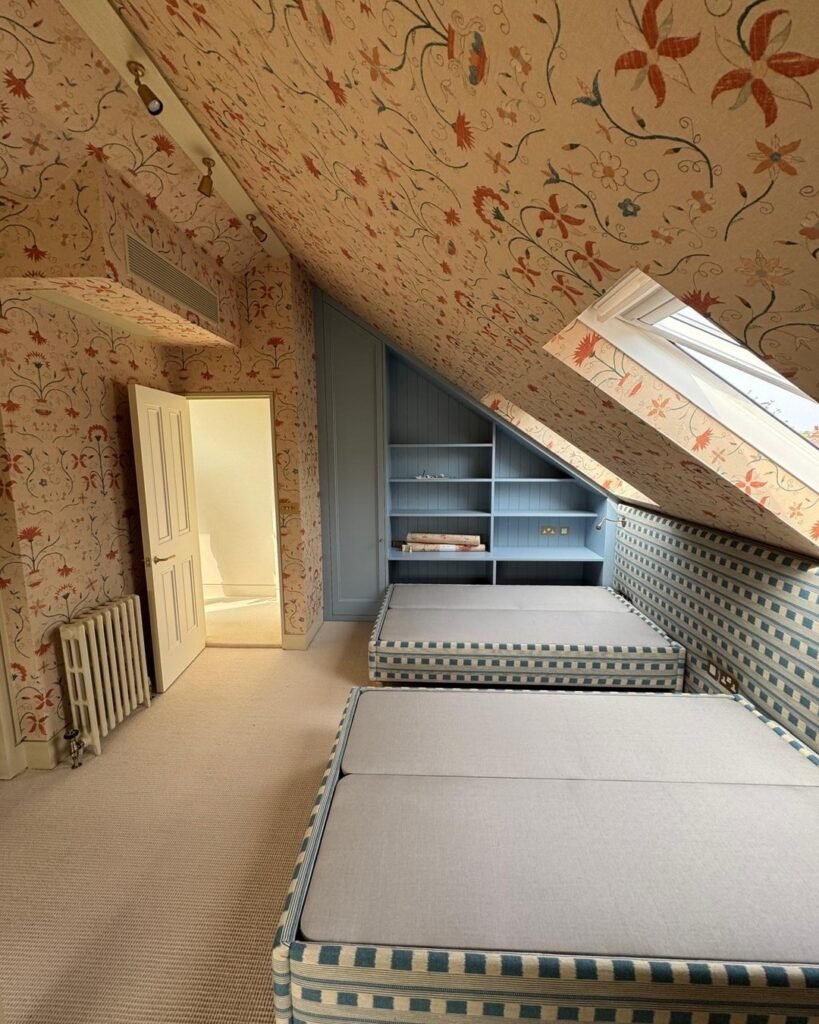
Twin beds are a clever choice for a shared attic bedroom, especially when the ceiling height changes across the room. Placing the beds along the lower walls keeps the center walkway open and makes the layout easier to move through.
Built-in shelving between the beds can hold books, folded blankets, or small baskets. A patterned ceiling adds personality, while low-profile mattresses help the space feel more balanced and comfortable.
3. Cozy Skylight Bedroom
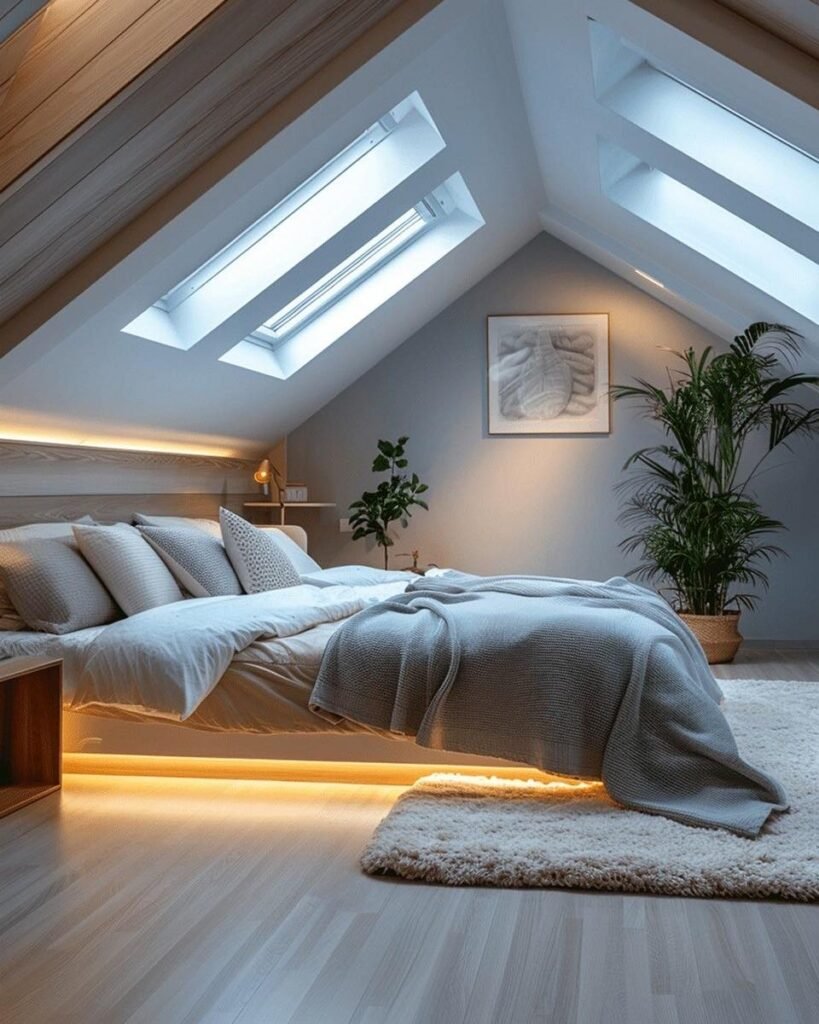
Skylights can make a small attic bedroom feel much larger by pulling natural light into the center of the room. A low bed works well under angled ceilings because it leaves more visual breathing room above.
Soft bedding, a textured rug, and warm under-bed lighting create a cozy mood without adding clutter. Add a plant near the brightest corner for a simple, budget-friendly way to soften the space.
4. Modern Attic Lounge
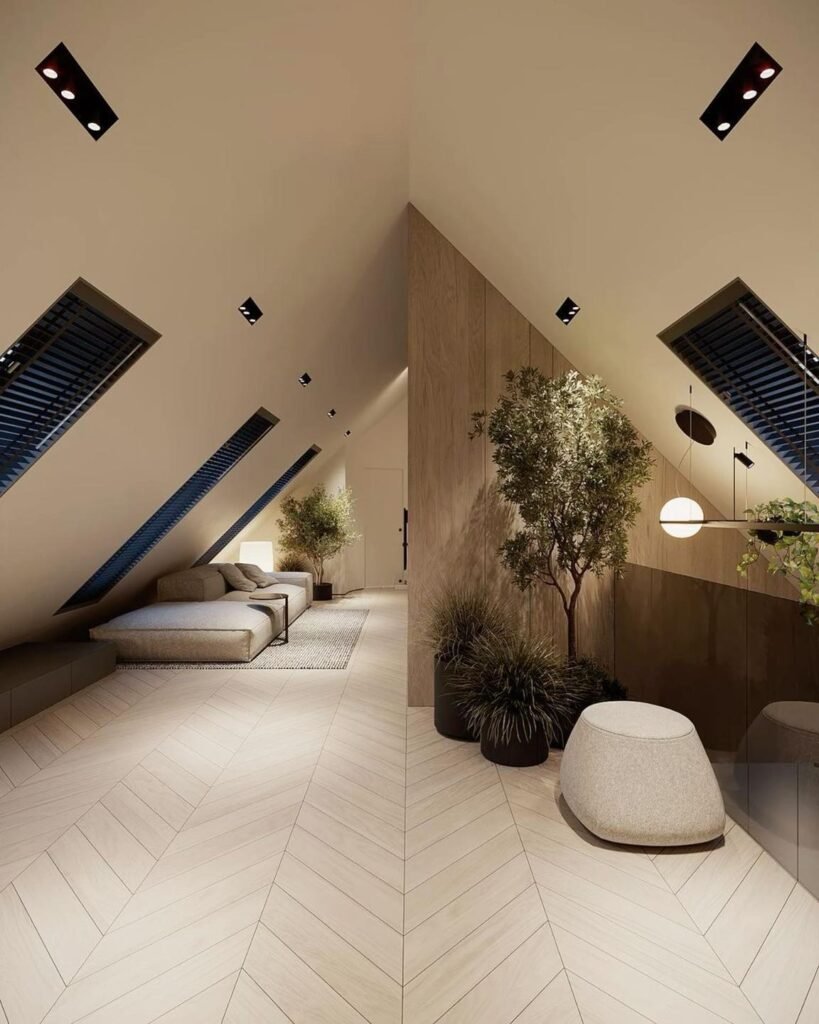
A spacious attic bedroom can feel more like a private suite when you divide it into zones. Use one side for sleeping and another for a small lounge or reading corner. A partial wall, tall cabinet, or wood panel can create separation without making the room feel boxed in. Keep furniture low and streamlined so the angled roof remains the main architectural feature instead of becoming a design problem.
5. Built-In Daybed Layout
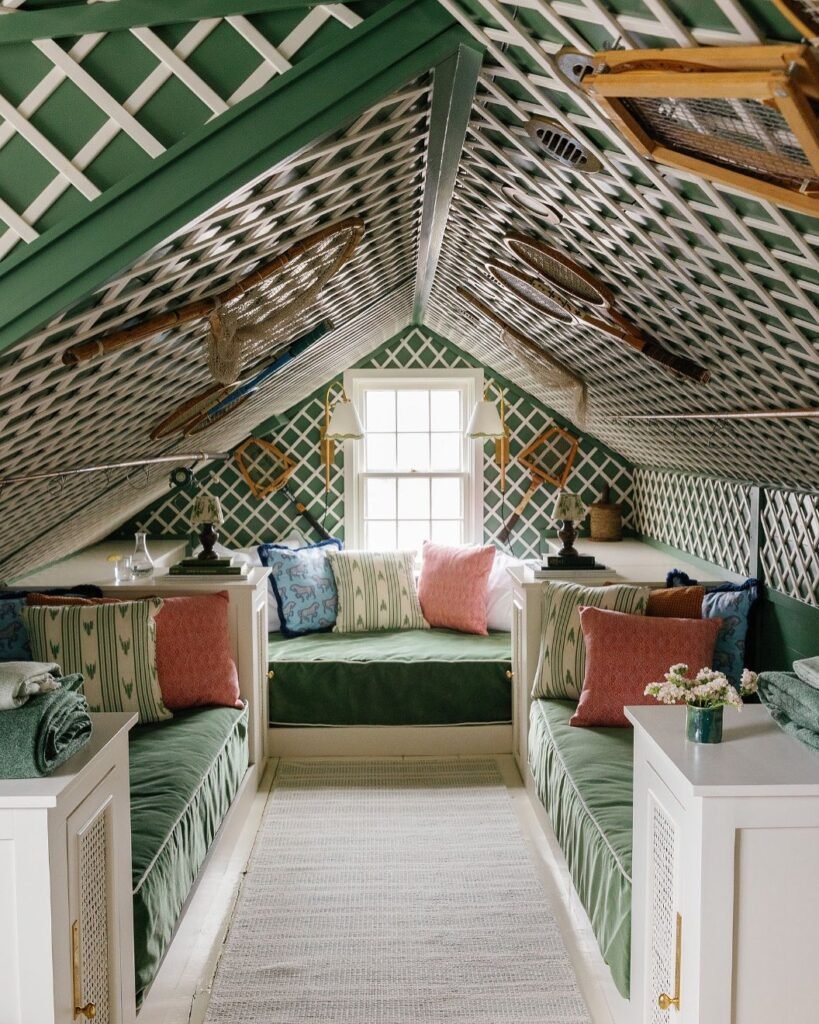
Built-in daybeds are one of the most practical attic bedroom ideas for narrow rooms. They make the low wall areas useful while keeping the middle of the room open for walking, playing, or relaxing.
Storage drawers under each bench can hold bedding, games, or seasonal items. Patterned walls and colorful pillows help the space feel playful, while matching upholstery keeps the design from looking messy.
6. Vintage Cozy Attic
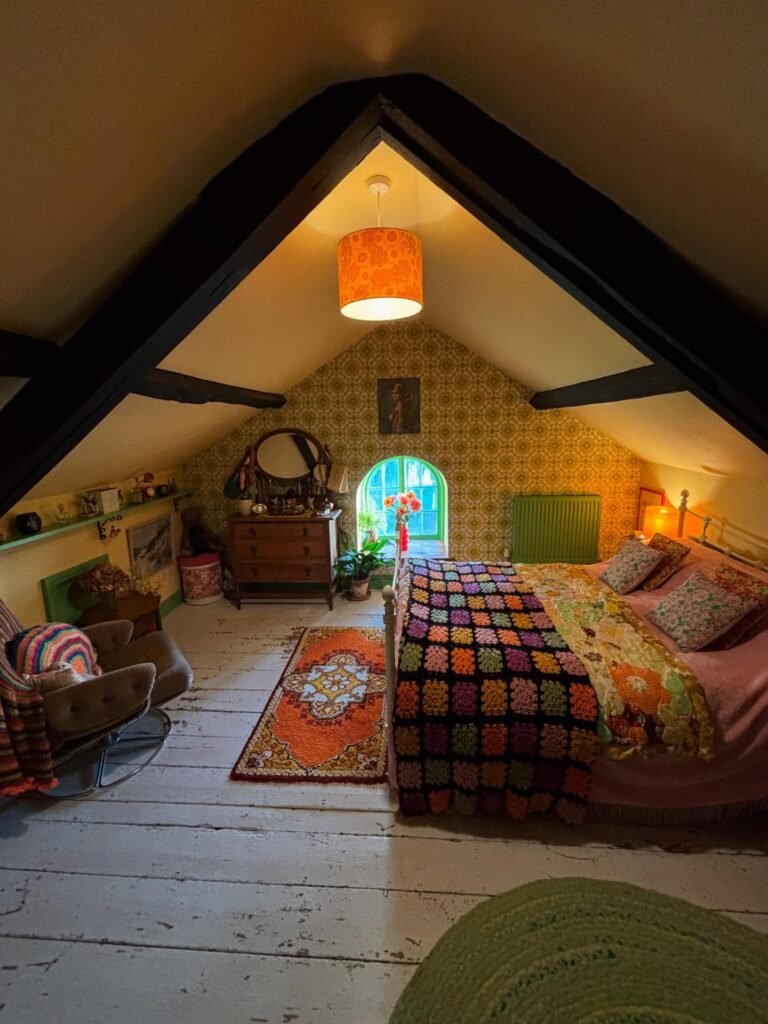
A vintage-inspired attic bedroom can feel warm and personal when you mix color, pattern, and soft lighting carefully. Painted floorboards, an old dresser, and layered textiles give the room character without needing expensive furniture.
Since attic rooms can feel dark at night, table lamps and pendant lighting are important. Choose one main color family so rugs, quilts, and wallpaper feel collected rather than cluttered.
7. Light Wood Work Zone
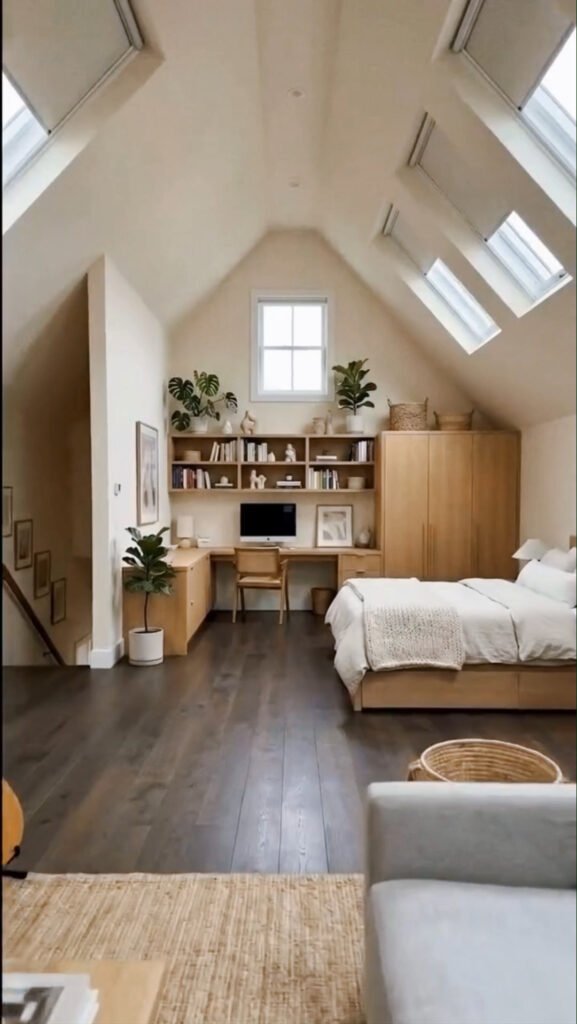
Combining a bedroom and workspace is a smart way to make an attic room more functional. A built-in desk under the tallest wall keeps the work area comfortable, while shelves above add storage without taking up floor space.
Light wood furniture helps the room feel warm but still clean. In a small attic bedroom, matching the bed frame, wardrobe, and desk finish creates a calm, organized look.
8. Relaxed Low Bed Setup
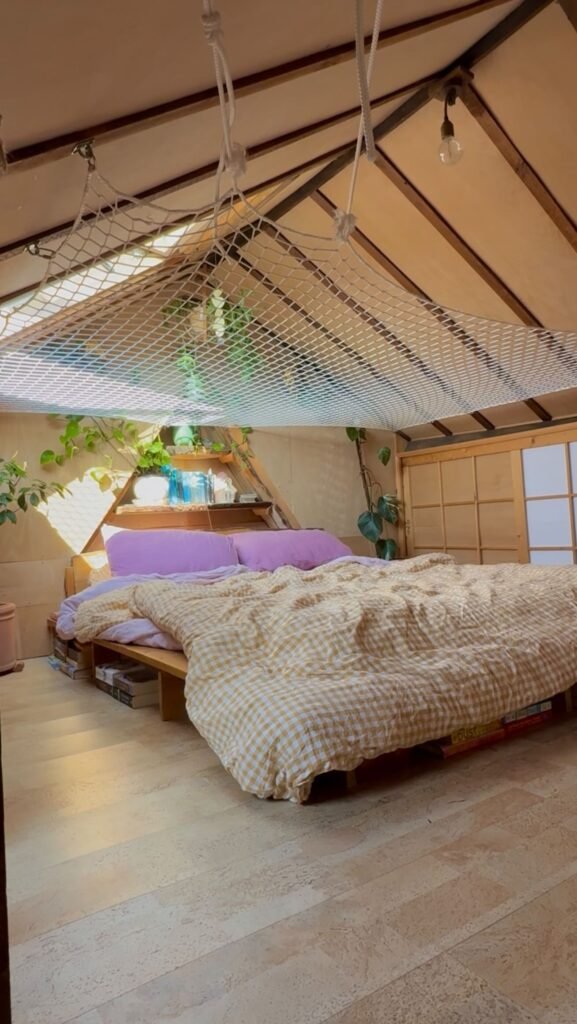
A low platform bed suits an attic bedroom with limited headroom because it keeps the sleeping area comfortable and grounded. Soft bedding, warm wood, and plants make the space feel relaxed without needing heavy decoration.
Ceiling netting adds a cozy, tucked-away feeling, but keep it safely secured and away from light fixtures. Under-bed storage boxes are useful here because they stay hidden while making the room more practical.
9. Spacious Blue Accent Room
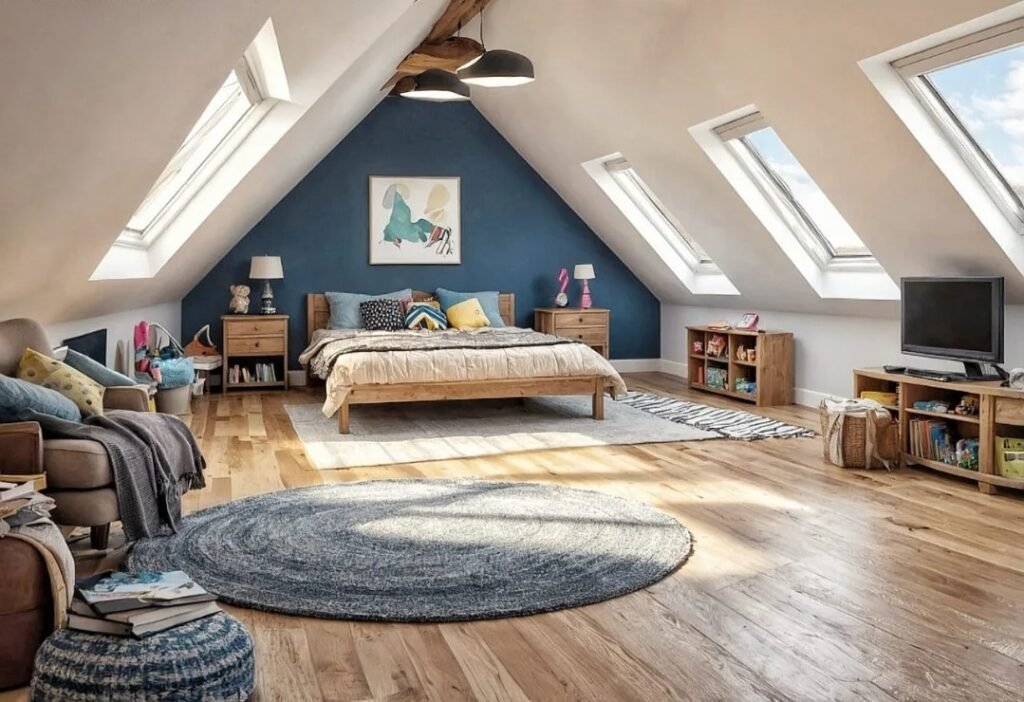
A deep accent wall can help define the sleeping area in a large attic bedroom. Blue works especially well because it adds depth while still feeling restful. Leave open floor space in the middle so the room does not feel crowded, then use rugs to create softer zones. Low cabinets along the sloped walls are great for books, baskets, or media storage without blocking natural light from the skylights.
10. Warm Wood Attic Bedroom
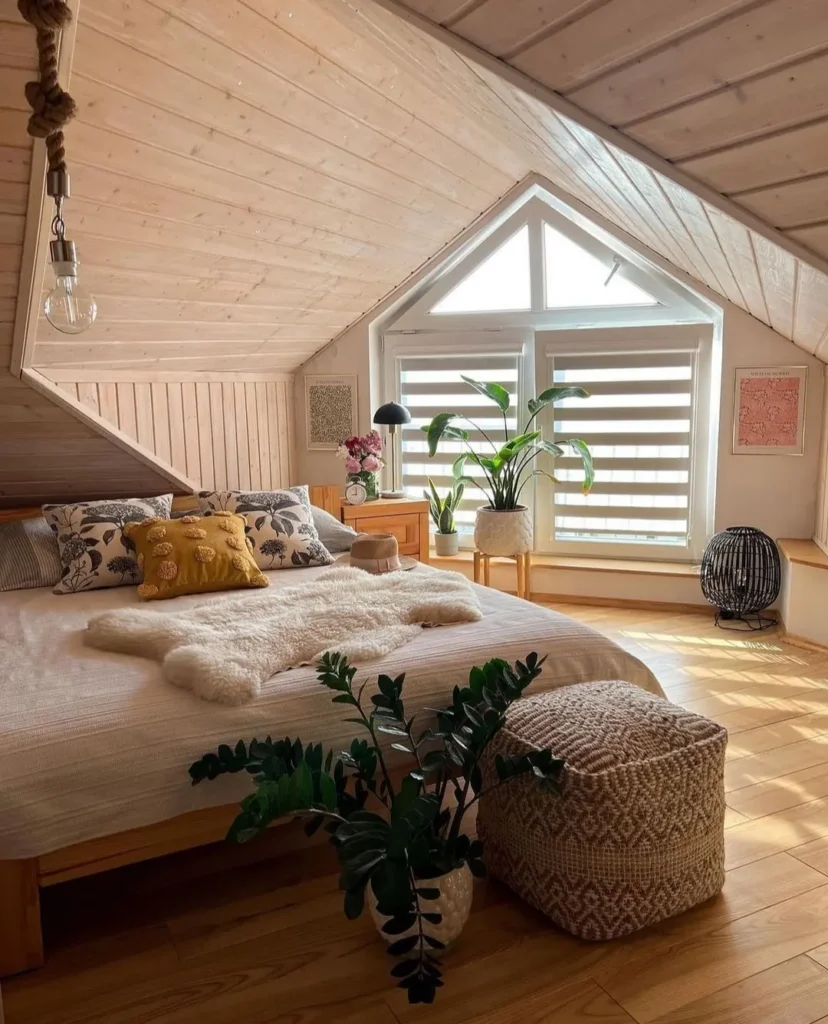
Natural wood brings instant warmth to an attic bedroom and makes the sloped ceiling feel intentional. Keep the bedding neutral, then add texture through pillows, throws, and a woven ottoman.
Window shades are useful in bright attic spaces because they control heat and glare during the day. Plants near the window add freshness, while simple furniture keeps the room peaceful and easy to maintain.
11. Window Seat Storage Wall
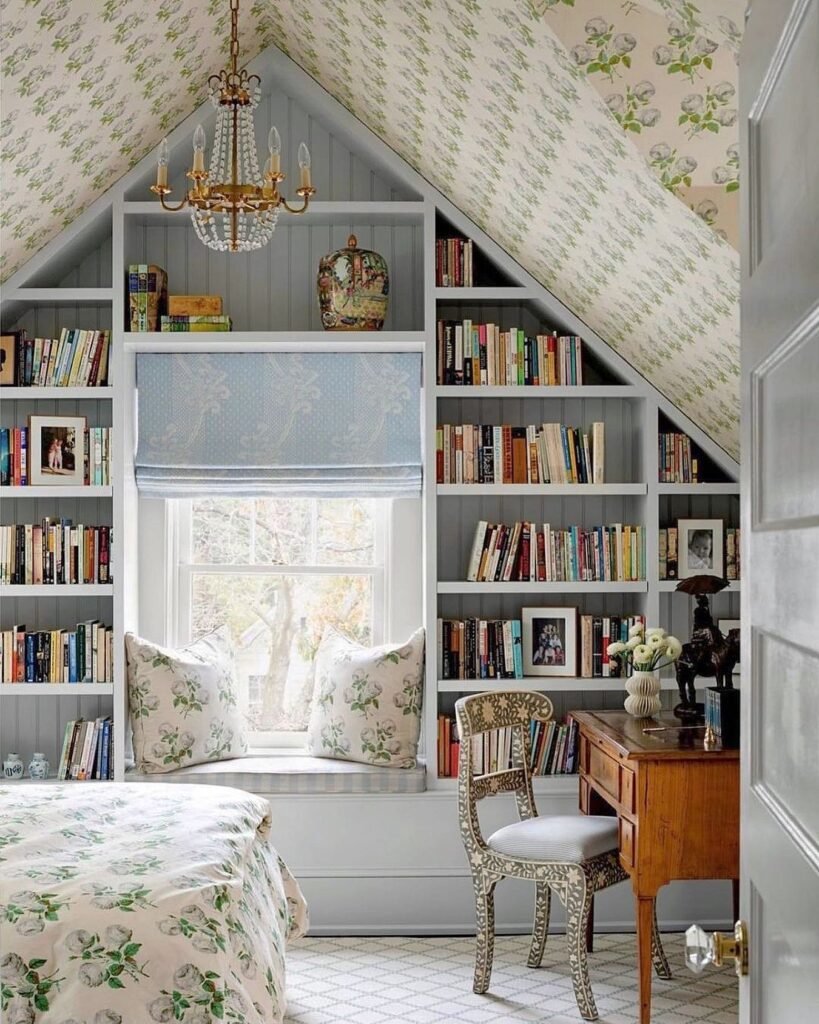
A window seat framed by bookshelves is a smart way to make an attic bedroom feel useful and cozy. Low walls can be hard to decorate, but built-in shelves turn awkward angles into storage for books, baskets, and keepsakes.
The seat adds a quiet reading spot without needing another chair. Soft floral bedding and pale cabinetry keep the room gentle, while a desk nearby makes the space work for both rest and focus.
12. Bright Attic Studio Bedroom
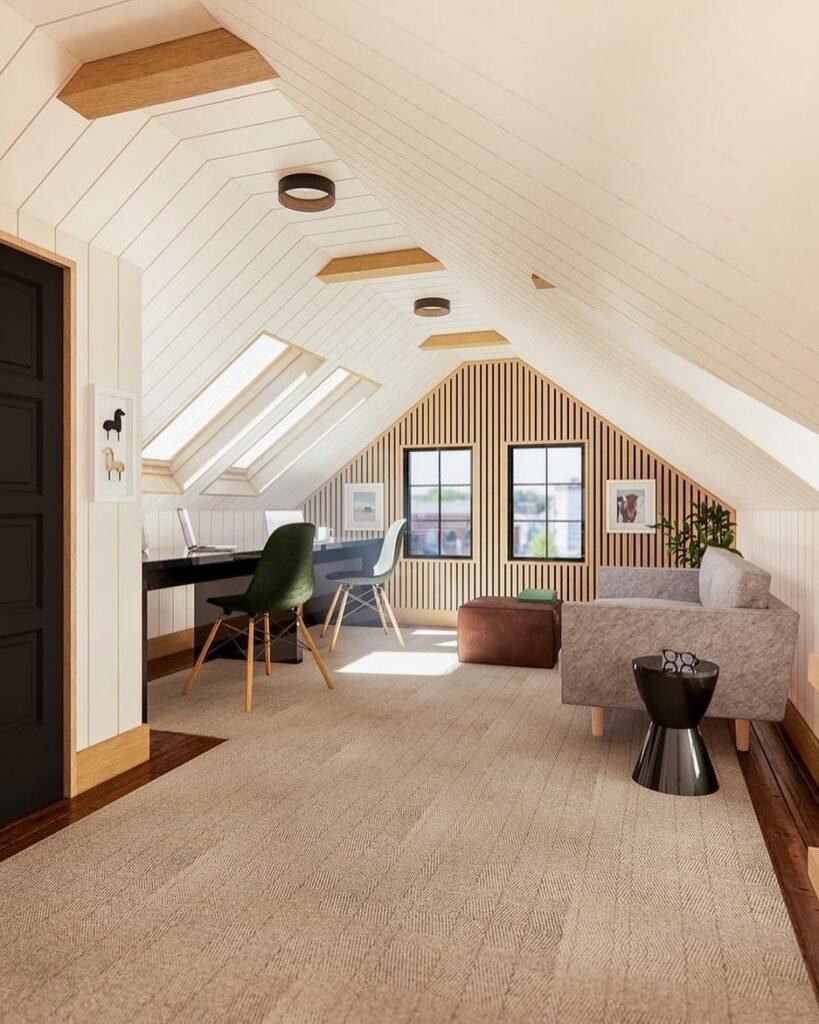
A long attic bedroom can work well when the layout is divided into clear zones. Place a desk near the skylights for natural task light, then keep the sofa or bed area on the opposite side for relaxing. White paneled walls help bounce light around the room, while wood accents add warmth. For a small attic conversion, use slim furniture so the walkway stays open and comfortable.
13. Clean Sloped Ceiling Suite
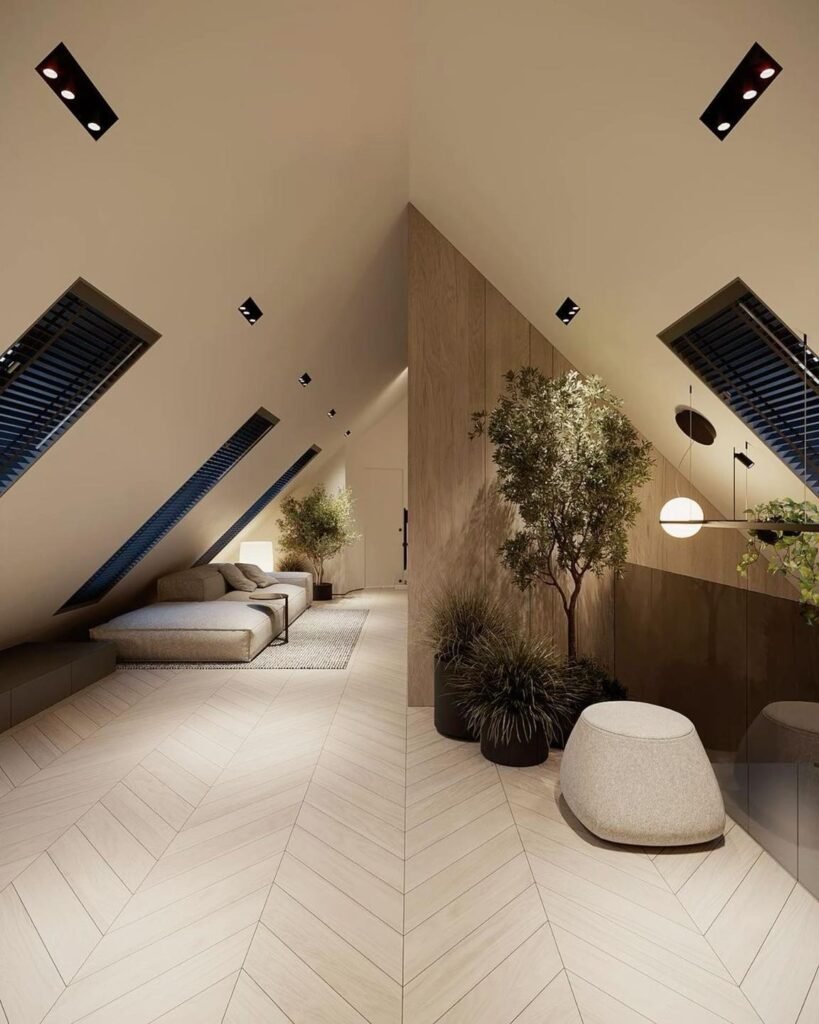
Repeating the same light wall finish across the ceiling and side walls makes an attic bedroom feel taller and less broken up. A desk tucked along the sloped wall keeps the room practical without stealing the main floor area.
Add texture through carpet, wood panels, or soft seating instead of heavy decor. In a renter-friendly setup, a compact desk and low sofa can create the same flexible feeling.
14. Simple Beam Bedroom
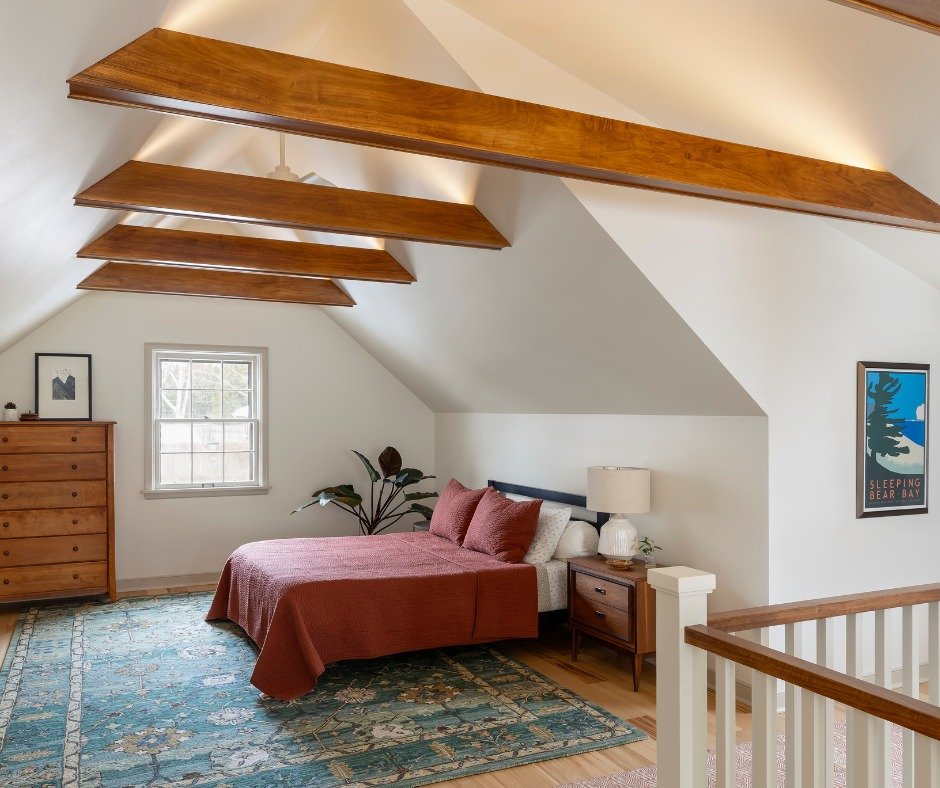
Exposed beams can make an attic bedroom feel warm and architectural without much extra styling. Keep the bed low and centered under the safest headroom, then use a large rug to anchor the sleeping area.
Simple wood furniture works well because it repeats the tone of the beams. A colorful quilt or pillow set adds personality, while empty wall space keeps the room from feeling crowded.
15. Gallery Wall Attic
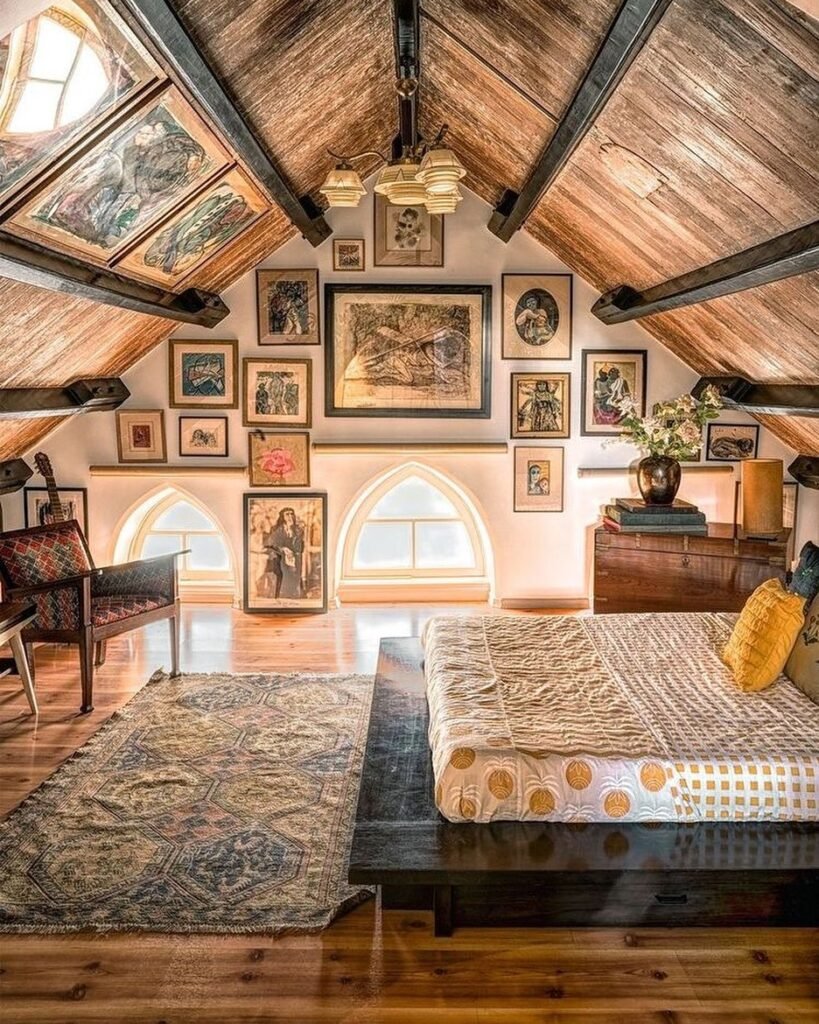
A gallery wall can turn a tall attic end wall into the main feature of the room. Mix framed art in different sizes, but keep the spacing controlled so the display feels intentional. A low platform bed is helpful under sloped ceilings because it keeps sightlines open. Use under-bed drawers or baskets for storage, especially if large dressers make the attic feel too full.
16. Patterned Guest Attic
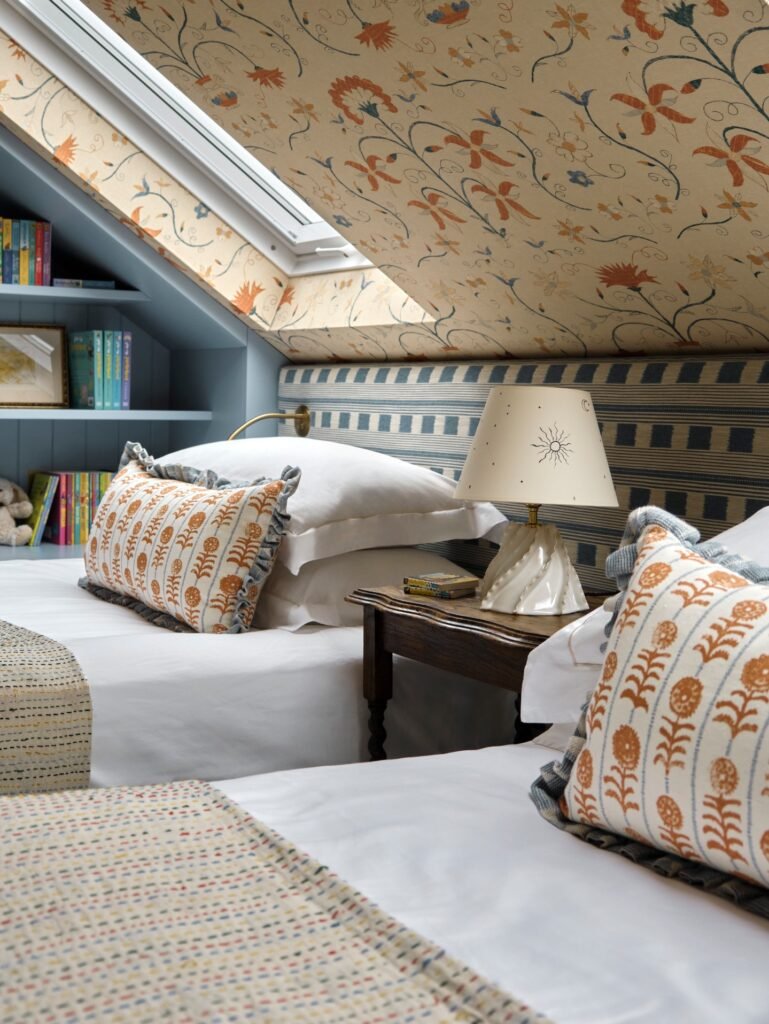
A guest attic bedroom feels more finished when beds, pillows, and wall patterns share a similar color story. Twin beds are practical for visitors, children, or flexible sleeping arrangements.
A small table between the beds gives each guest a place for a lamp, phone, or book. Built-in shelves near the low corner make great use of space and help keep the floor clear.
17. Moody Attic Hideaway
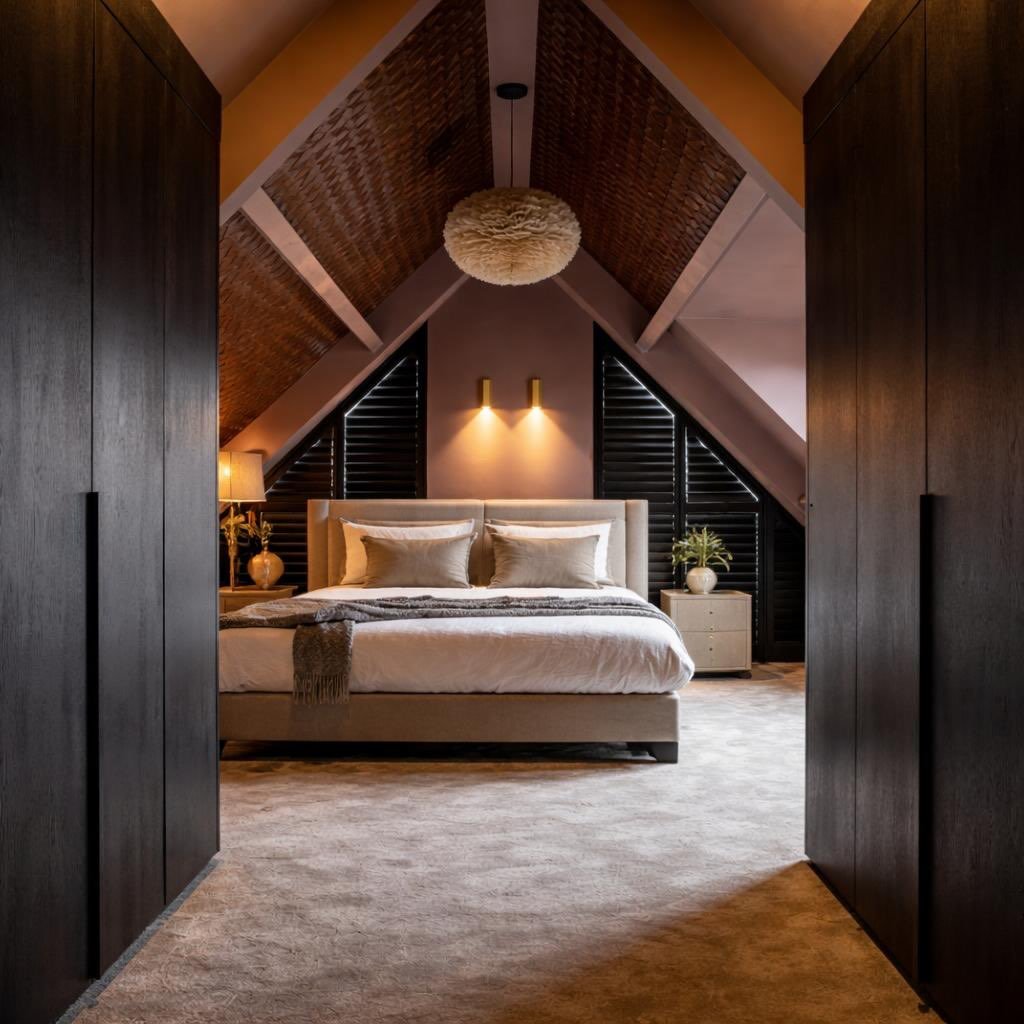
Dark wardrobes and warm lighting can make an attic bedroom feel calm, private, and hotel-like. The trick is balancing deeper colors with pale bedding, soft carpet, and layered lamps so the room does not feel heavy.
Built-in storage on both sides is useful for keeping clothes hidden and the sleeping area clean. Wall sconces above the bed save nightstand space and add a polished finish.
18. Natural Neutral Bedroom
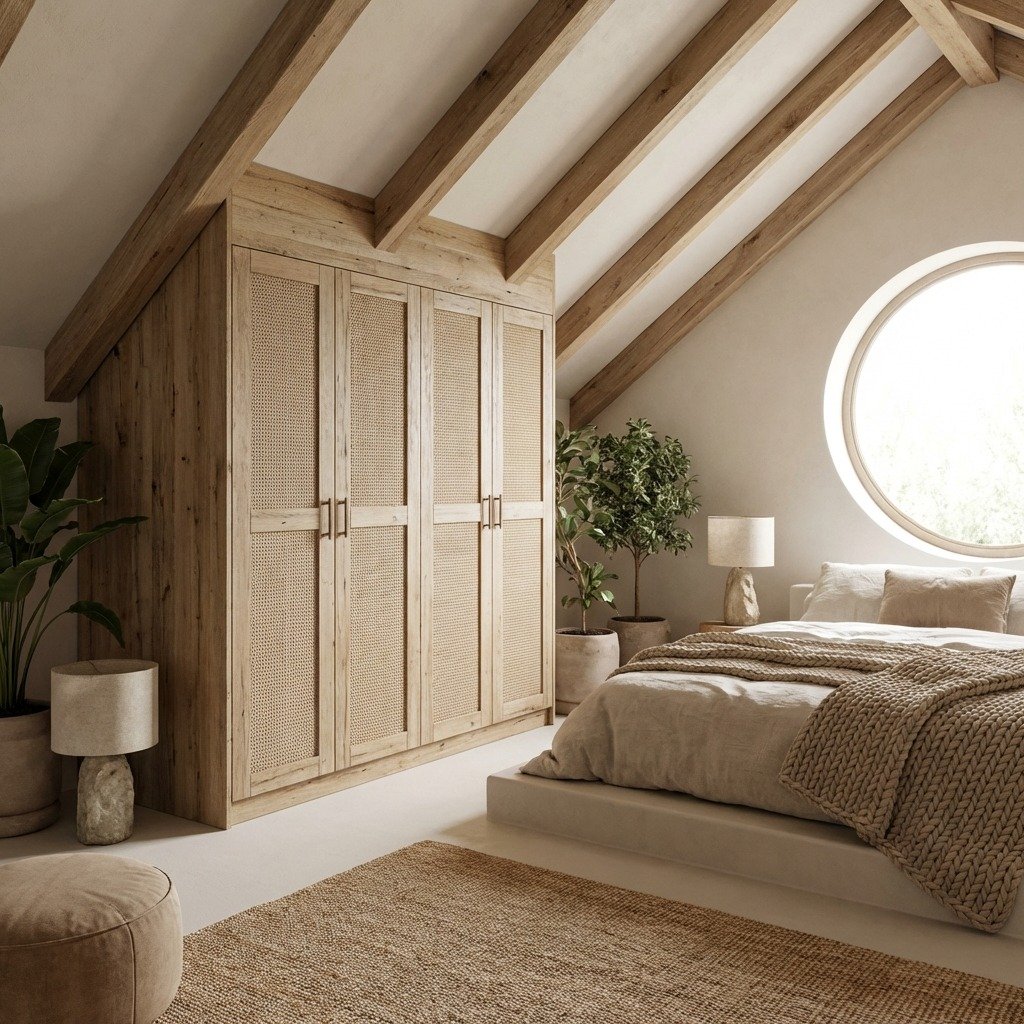
Natural textures are perfect for an attic bedroom because they soften the sharp lines of sloped ceilings. A cane-front wardrobe adds storage while still feeling light and airy.
Neutral bedding, woven rugs, and wood beams create a peaceful look without needing bold colors. If the attic gets strong sunlight, choose breathable curtains or shades to control brightness while keeping the room relaxed and comfortable.
19. Colorful Cozy Corner
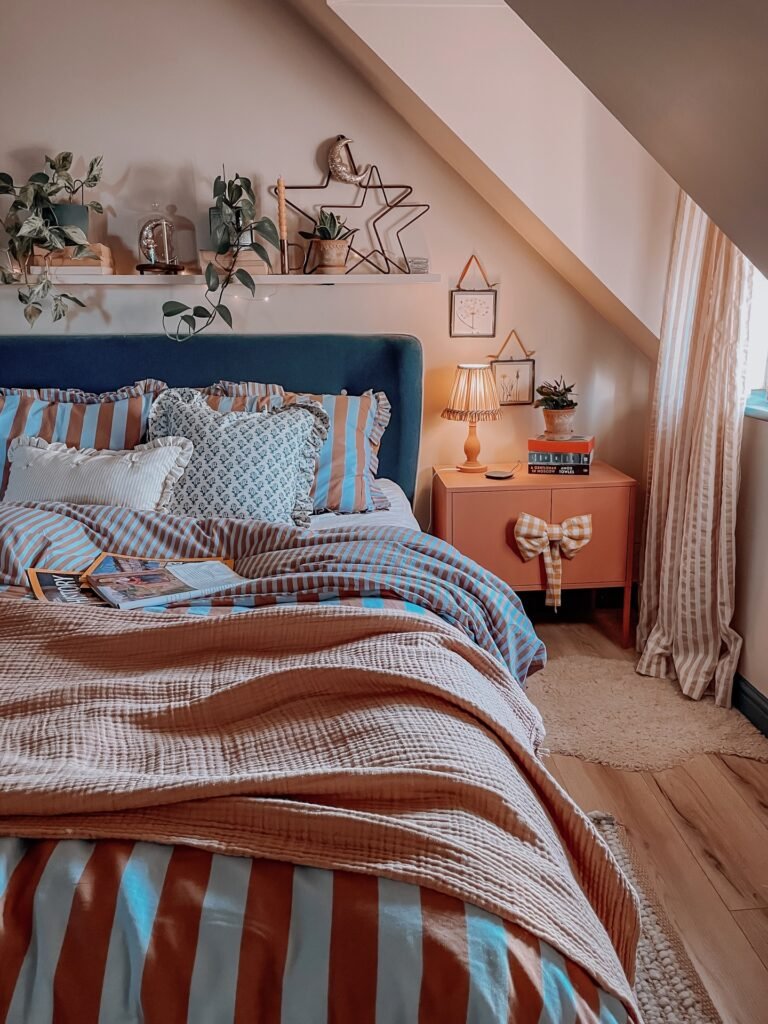
Soft peach walls, striped bedding, and playful bedside details can make a small attic bedroom feel cheerful instead of cramped. A shelf above the headboard is useful for plants, framed prints, or small decor, but avoid overloading it. Sheer curtains help soften angled windows while still letting light through. Choose one or two accent colors, then repeat them in pillows, lamps, and bedding for a pulled-together look.
20. Classic Attic Bedroom
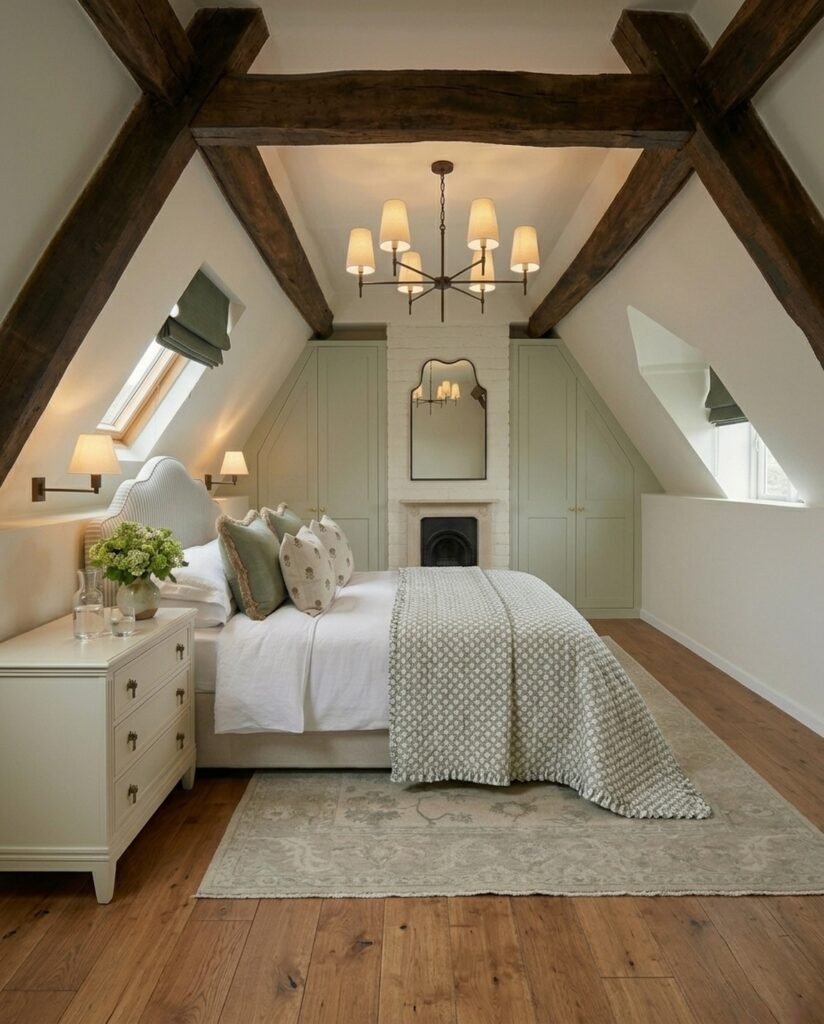
A classic attic bedroom works best when storage is built into the lower wall areas. Soft green cabinets blend beautifully with white walls and make the room feel calm rather than busy.
Matching bedside lamps create balance, while a large rug makes the sleeping area feel grounded. Exposed beams add character, so keep the bedding simple and let the architecture do most of the work.
FAQS:
What is the best layout for an attic bedroom?
Place the bed where headroom feels most comfortable, then use low walls for storage, seating, or built-in shelves.
How do you make an attic bedroom feel bigger?
Use light colors, low furniture, mirrors, skylights, and simple bedding to keep the room open and airy.
What furniture works best in an attic bedroom?
Low beds, slim desks, built-in wardrobes, storage benches, and compact nightstands work best under sloped ceilings.
How can I decorate a small attic bedroom on a budget?
Use paint, removable wallpaper, thrifted lamps, soft bedding, baskets, and plants to add style without major renovation.
Are attic bedrooms good for guests?
Yes, attic bedrooms can make cozy guest rooms, especially with twin beds, soft lighting, extra blankets, and simple storage.