19 Minimalist Bedroom Ideas for a Calm Space
A minimalist bedroom can feel calm, comfortable, and practical without looking empty or cold.
The key is choosing fewer pieces that work harder, then adding warmth through natural materials, soft lighting, and layered textiles. These minimalist bedroom ideas show how to save space, reduce visual clutter, and create a restful setup that still feels personal.
Small changes, such as simplifying the color palette or improving bedside storage, can make the whole room easier to live in.
Related Bedroom Articles :
19 Neutral Bedroom Ideas for a Calm, Cozy Space
35 Animal Print Bedroom Ideas for Bold and Stylish Spaces
26 Light Blue Bedroom Ideas for a Calm, Cozy, and Stylish Space
1. Warm Wood and White
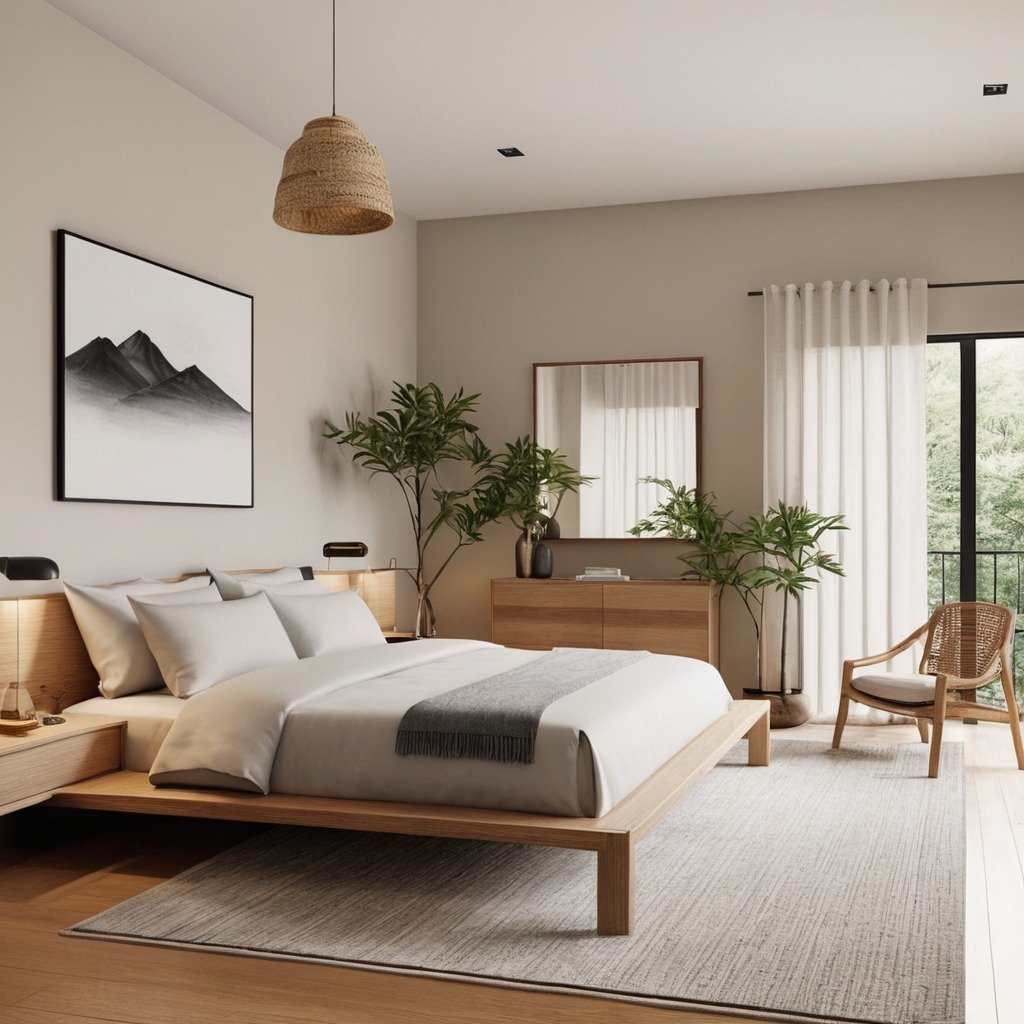
Pairing pale wood with crisp white bedding creates a clean foundation that still feels welcoming.
Keep furniture low and streamlined so the room appears more open, then use a large neutral rug to soften hard flooring. A dresser, mirror, and compact chair can add function without crowding the layout.
For an affordable update, introduce one oversized black-and-white print and a few leafy plants instead of filling every wall with decor.
2. Choose Floating Bedside Shelves
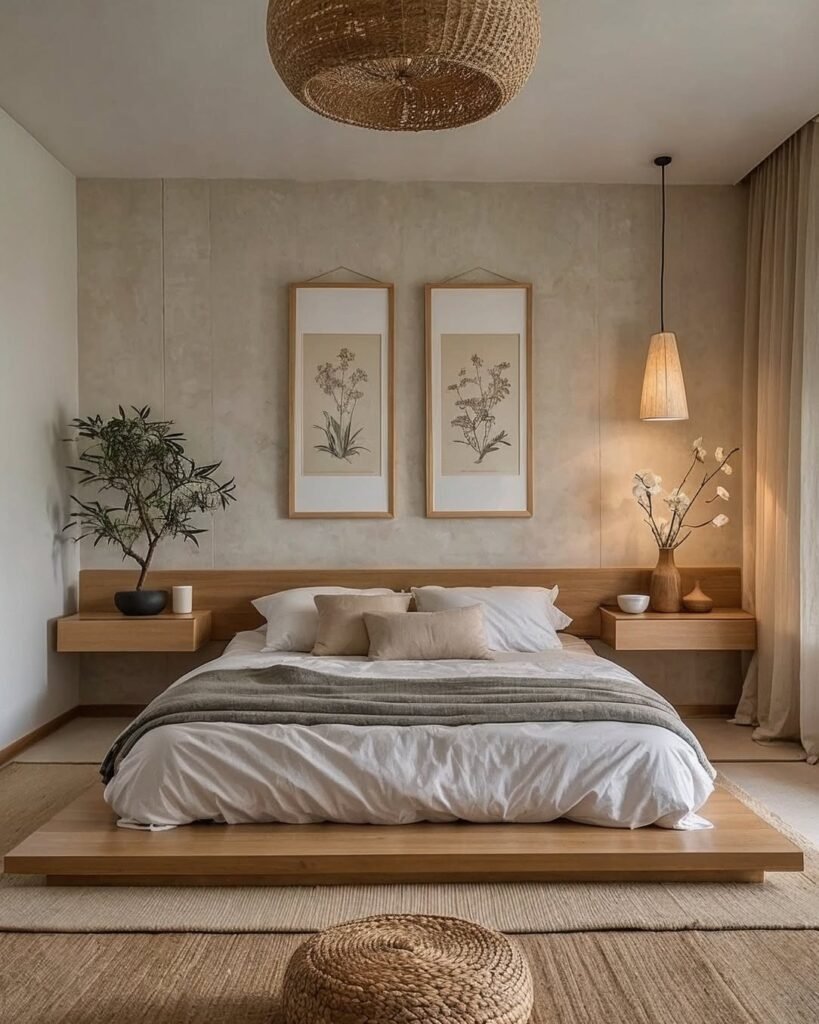
A platform bed with an extended wood headboard gives a minimalist bedroom useful structure while replacing bulky bedside furniture.
Floating shelves keep the floor clear and provide enough room for a lamp, book, or glass of water. Soft beige walls, linen curtains, and simple botanical prints prevent the space from feeling stark.
Choose warm bulbs for pendant lighting, since gentle illumination makes neutral finishes look richer and creates a more relaxing evening atmosphere.
3. Let Natural Light Lead
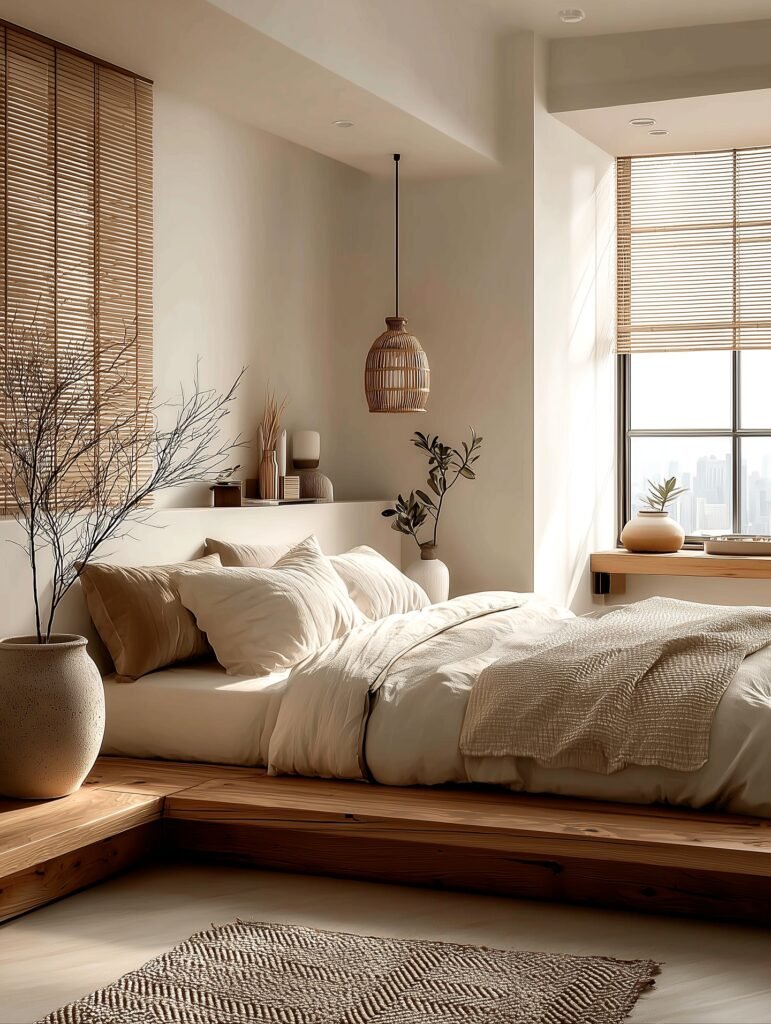
Natural light does much of the decorating in a small neutral bedroom. Positioning a low bed near the window keeps the room visually open, while bamboo blinds offer privacy without adding heavy fabric.
A narrow ledge above the headboard can hold a few ceramics and books, freeing the bedside area for essentials. Stick to cream, sand, and light wood tones, then vary the textures so the limited palette still feels layered and comfortable.
4. Add Dark Wood Drama
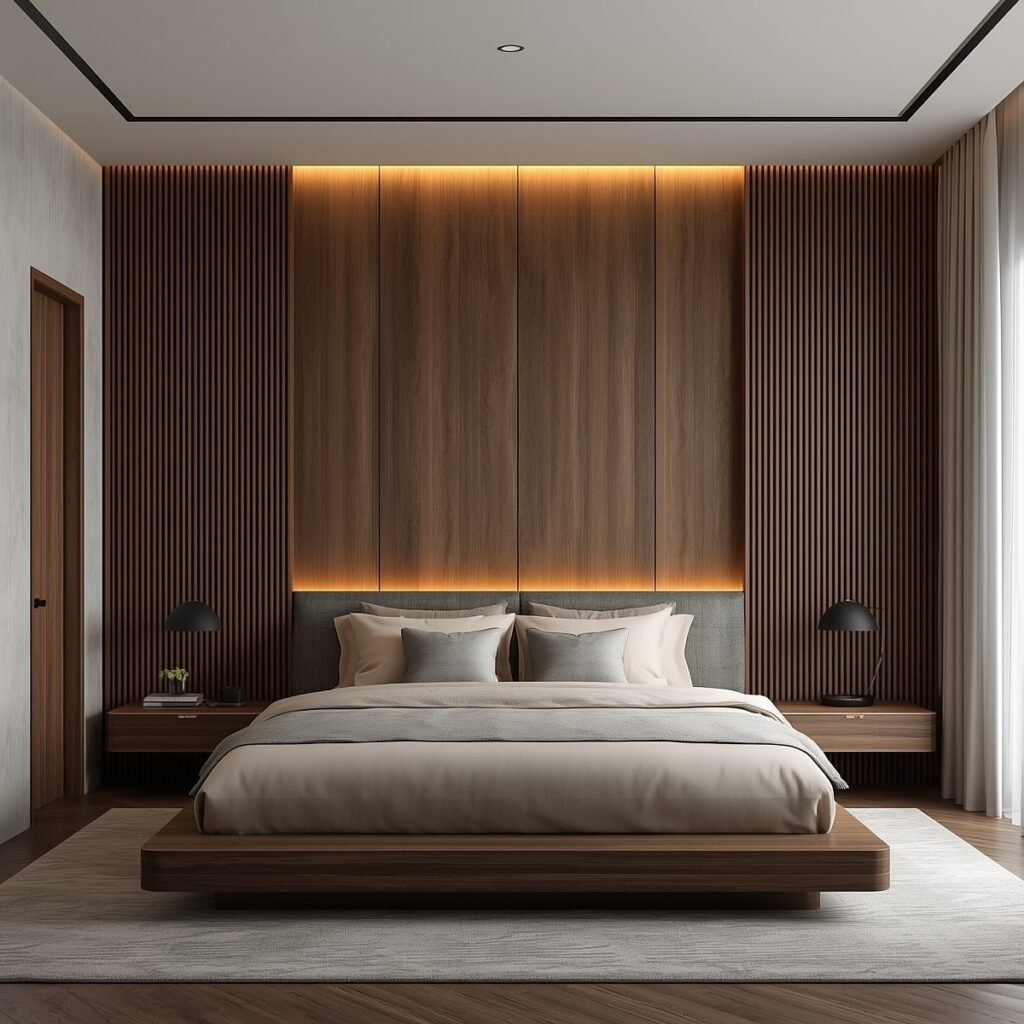
Dark wood can work beautifully in a minimalist bedroom when the layout stays balanced and uncluttered.
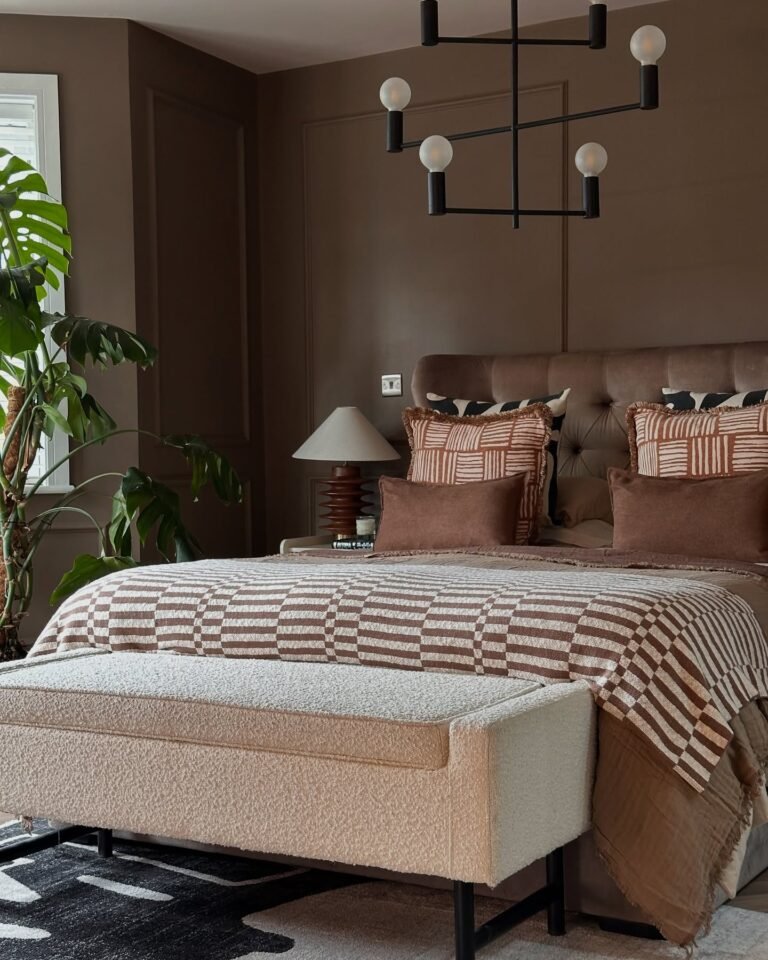
A tall paneled feature wall creates drama behind the bed, while hidden lighting adds warmth without requiring extra lamps or decor. Keep bedding pale to break up the deeper tones and use matching bedside tables for symmetry.
If full wall paneling is beyond budget, apply wood slats only around the headboard and paint the center section a coordinating brown.
5. Keep the Layout Open
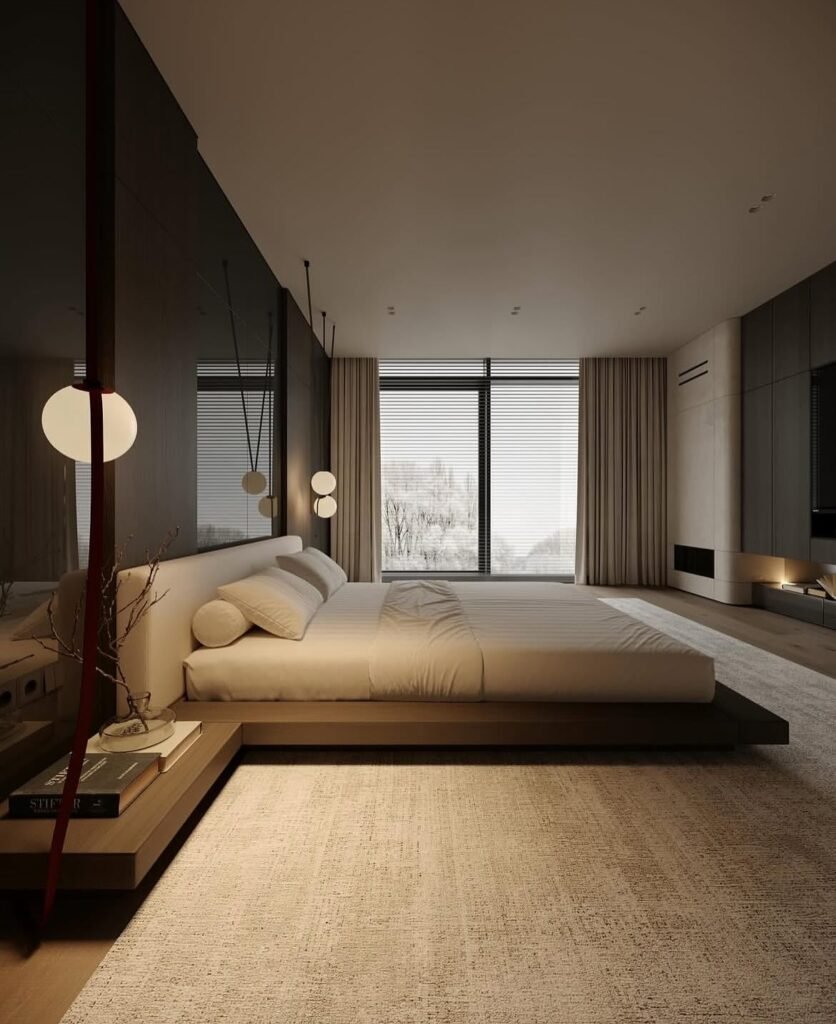
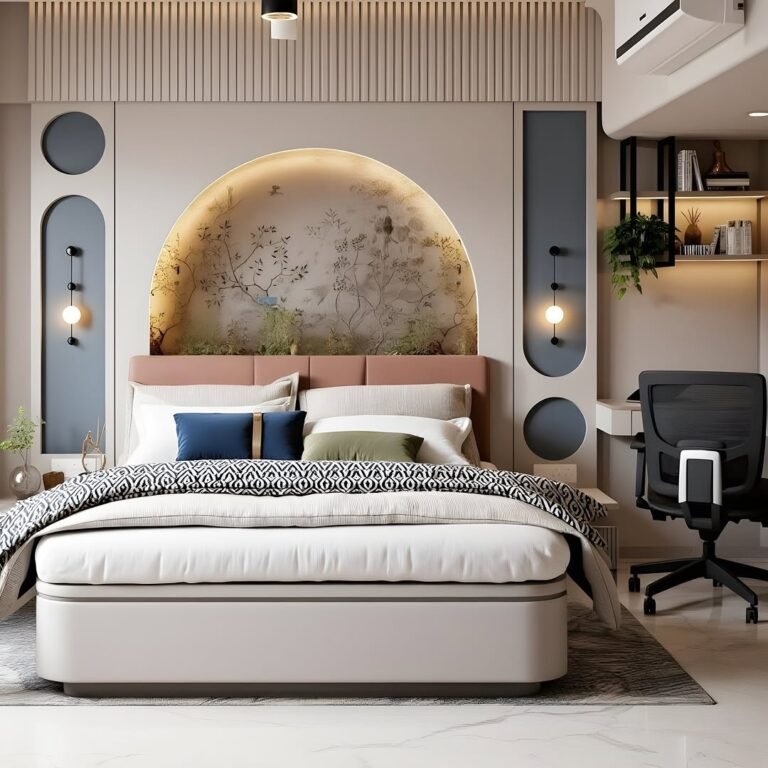
For a more contemporary look, combine a low bed with smooth wall panels, concealed storage, and sculptural lighting.
The spacious feeling comes from keeping the floor plan open and limiting furniture to pieces with a clear purpose. Floor-to-ceiling curtains soften the sharp architectural lines and improve sleep by controlling light.
In a smaller room, copy the same mood with one slim pendant, a wall-mounted shelf, and a simple upholstered headboard rather than built-in cabinetry.
6. Introduce Restful Olive Green
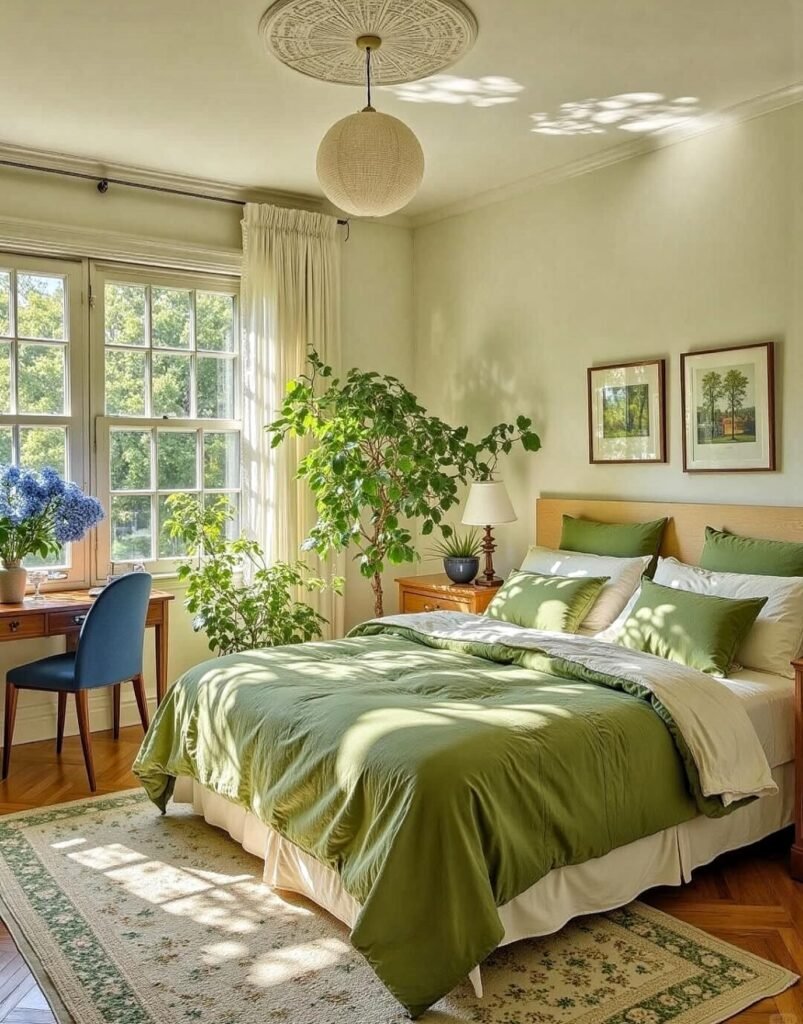
Minimalism does not require an all-beige palette. Olive green bedding brings freshness to a simple bedroom while keeping the mood grounded and restful.
Repeat the color in a few cushions or a subtle rug border, then let white walls and pale wood furniture provide breathing room. A compact desk by the window can double as a vanity or study spot.
Choose one healthy indoor tree rather than several small plants to reduce visual clutter.
7. Use Stripes for Interest
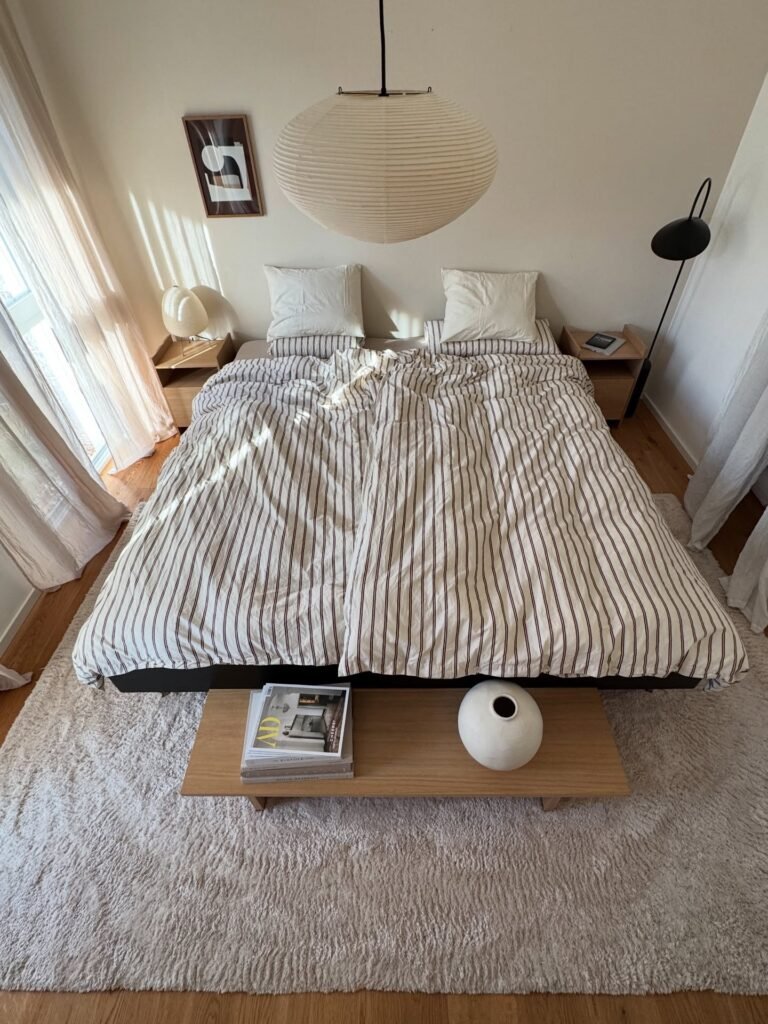
Striped bedding adds gentle pattern without making a minimalist space feel busy. Keep the surrounding elements simple with white walls, plain curtains, and small wood nightstands that hold only daily essentials.
A paper pendant creates a soft focal point overhead, while a slim floor lamp provides focused reading light without occupying the bedside surface.
For easier maintenance, choose washable cotton bedding and repeat the stripe color in only one small artwork or accessory.
8. Layer Cozy Neutral Textures
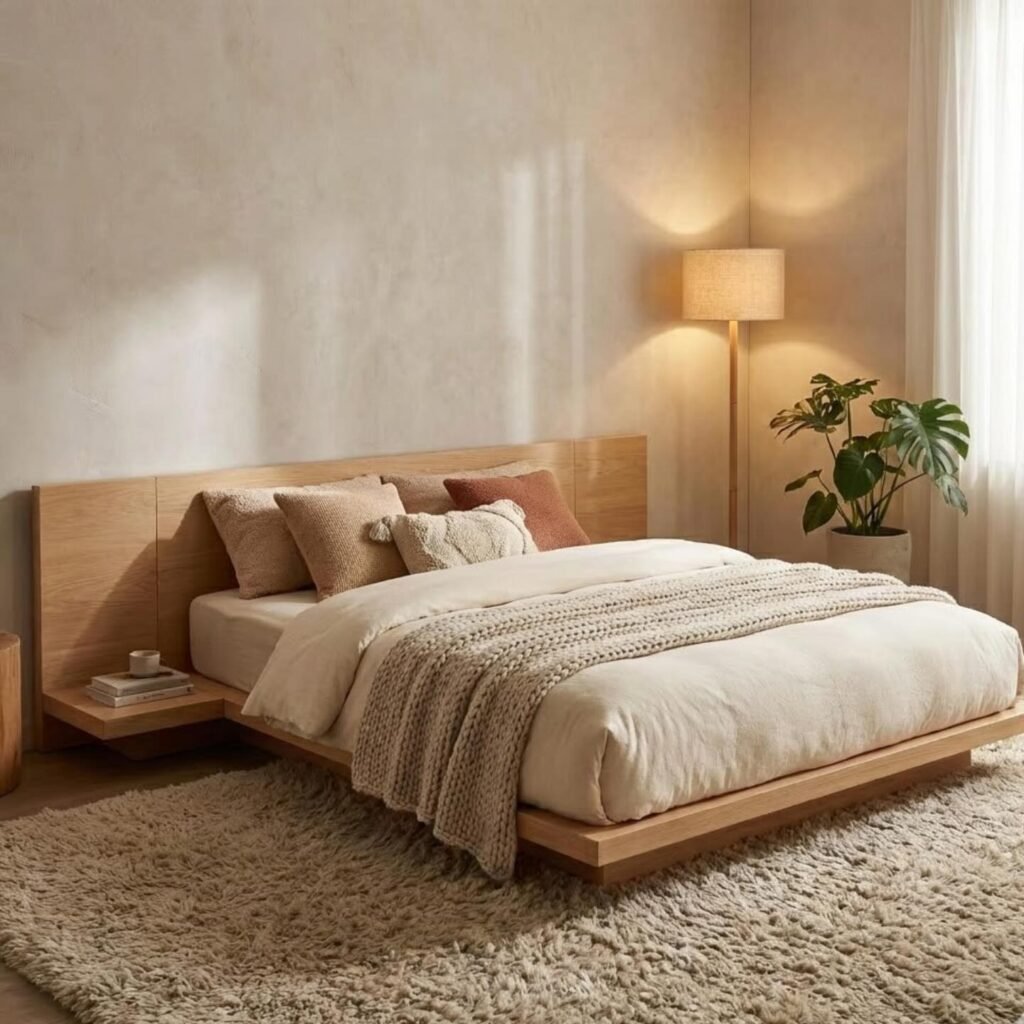
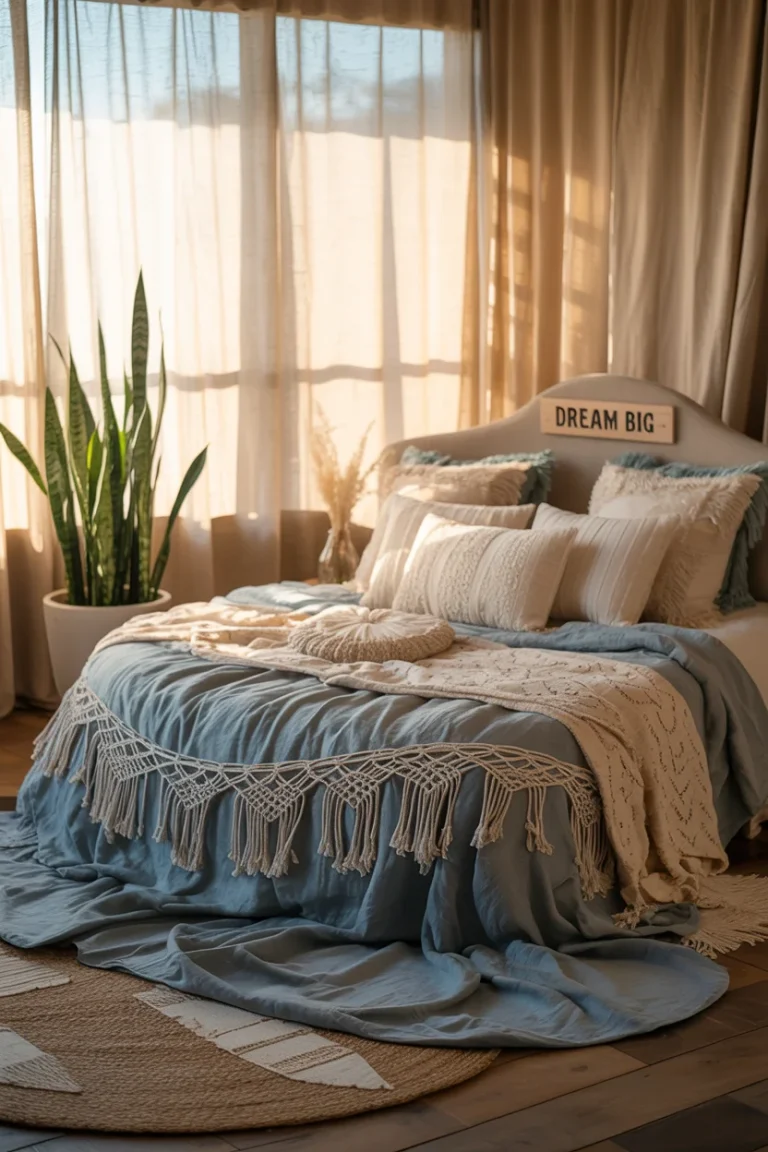
A warm minimalist bedroom often depends more on texture than decoration. Chunky knit throws, boucle cushions, a plush rug, and smooth wood bring depth to a simple cream palette without adding unnecessary objects.
A floor lamp beside the bed saves space on the nightstand and creates a cozy reading corner. To keep the look practical, select removable cushion covers and a rug with a low enough pile to vacuum easily around the bed frame.
9. Make Cane the Feature
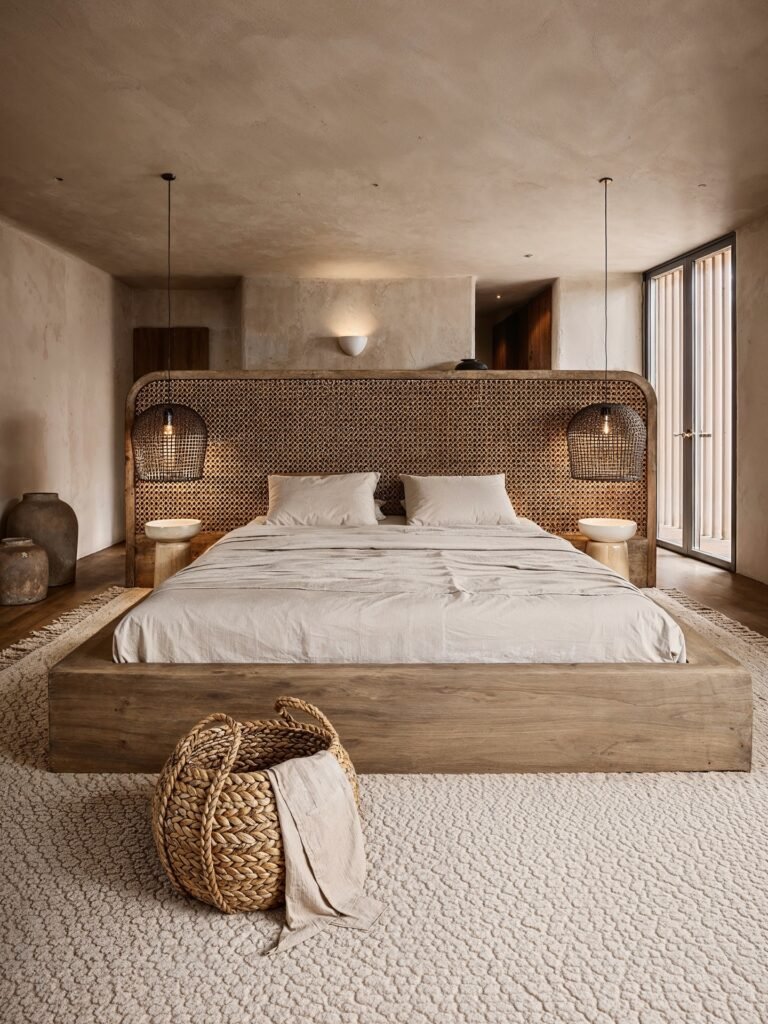
Woven cane can turn a plain headboard into the main decorative feature of a minimalist bedroom.
Its texture adds warmth and character, so the rest of the room can remain simple with neutral bedding, plain rugs, and compact bedside surfaces. Hanging pendants free up table space and create balanced lighting on both sides of the bed.
A lidded basket at the foot is useful for storing extra blankets while keeping everyday clutter out of sight.
10. Highlight a Textured Wall
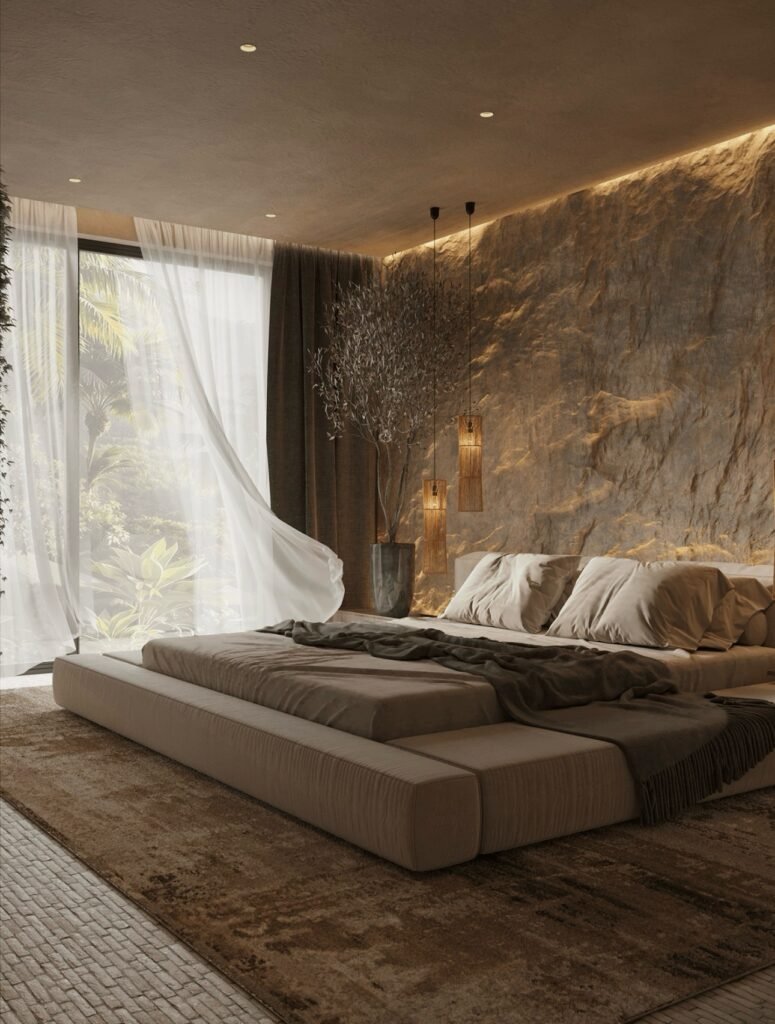
A textured stone or plaster wall gives a luxurious minimalist bedroom depth without relying on artwork or multiple accessories.
Concealed lighting along the ceiling washes the surface gently and creates a calm evening glow. Keep the bed low, the bedding tonal, and the curtains full length to maintain a quiet, cohesive look.
Renters can achieve a similar effect with removable textured wallpaper, warm LED strips, and layered taupe linens in slightly different shades.
11. Frame the Bed with Light
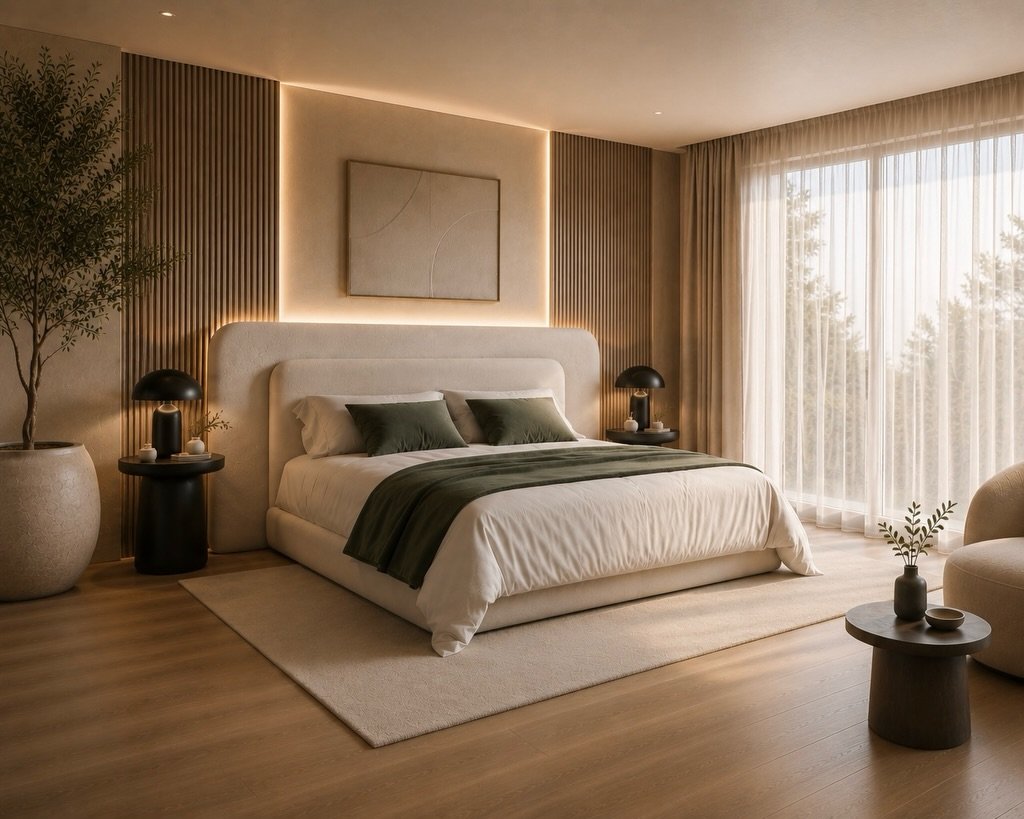
Vertical wood slats and concealed lighting create a polished focal point without filling the walls with extra decor.
A rounded upholstered headboard softens the straight lines, while olive bedding adds a calm touch of color. Keep bedside tables small and choose matching lamps to preserve balance.
Installing dimmable LED strips behind simple wall panels is a practical way to recreate the look while controlling brightness throughout the evening.
12. Mix Classic and Minimal
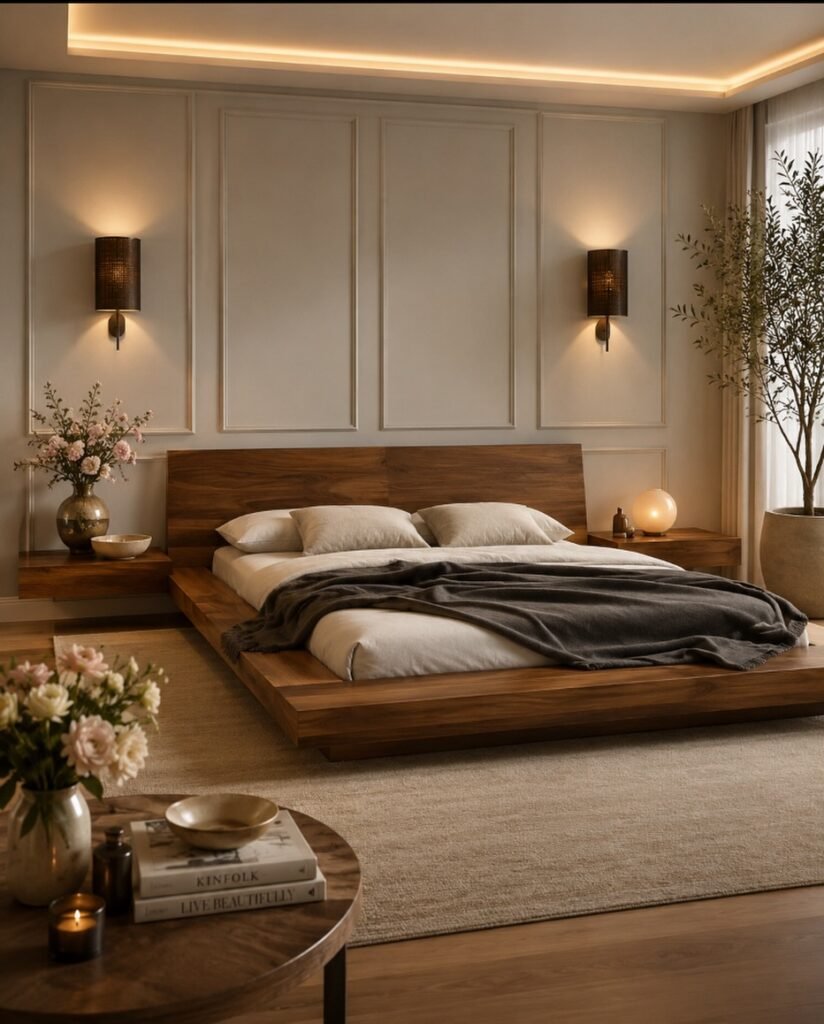
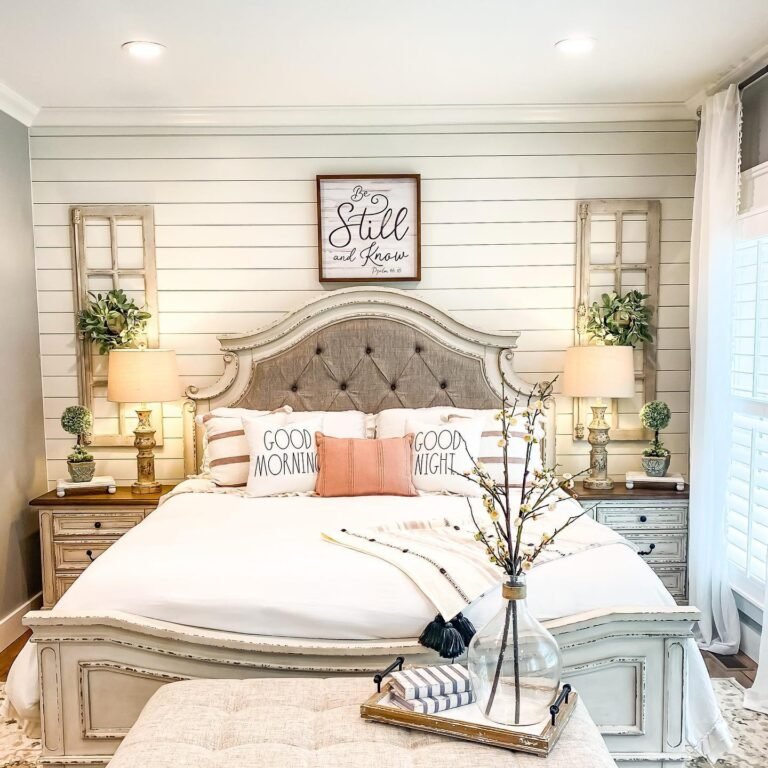
Traditional wall molding can give a minimalist bedroom more character without making it feel ornate.
Pair the detailing with a low wooden platform bed, plain neutral bedding, and uncomplicated bedside furniture. Wall sconces reduce clutter on the nightstands and provide comfortable reading light.
Paint the molding the same shade as the wall for a subtle finish, then introduce warmth through dark wood and one loosely draped blanket.
13. Create a Flexible Small Room
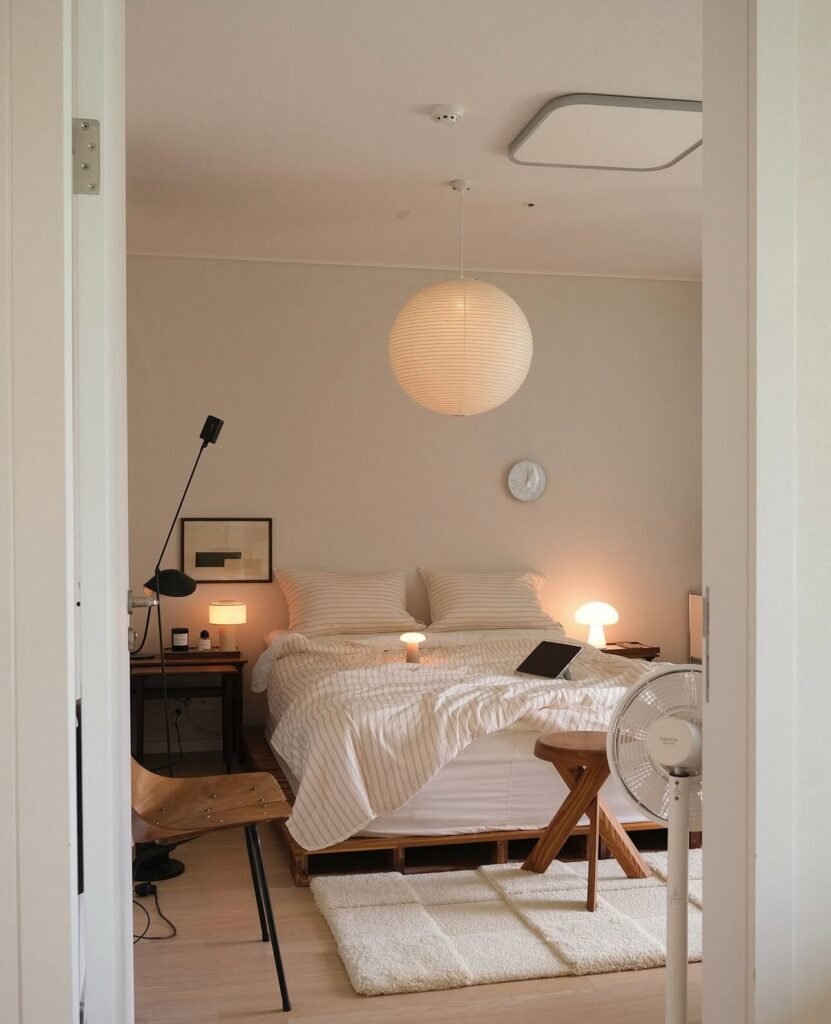
A compact bedroom works better when every item serves a clear purpose.
A simple platform bed provides space underneath for baskets, while a narrow desk can function as a workspace and bedside surface. Keep lighting varied with one ceiling pendant, a task lamp, and a small warm bedside light.
Instead of adding decorative furniture, use a lightweight stool that can move between the desk, bed, and dressing area as needed.
14. Build Storage into Walls
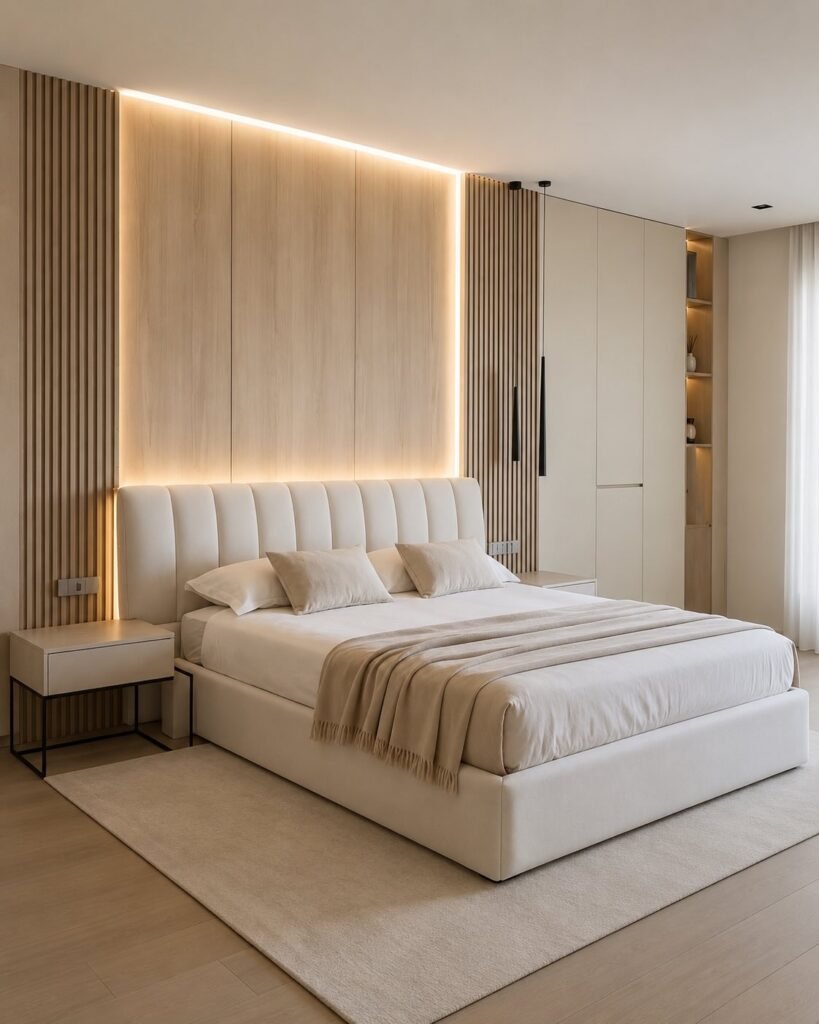
Floor-to-ceiling wardrobes help a minimalist bedroom stay orderly by hiding clothing, bedding, and everyday belongings behind clean doors.
Continuing the wood paneling behind the bed makes the storage feel integrated rather than bulky. Choose handle-free cabinets or long slim pulls for a quieter appearance.
A padded headboard keeps the room comfortable, while soft perimeter lighting reduces the need for multiple lamps and leaves bedside surfaces easier to maintain.
15. Organize a Vanity Corner
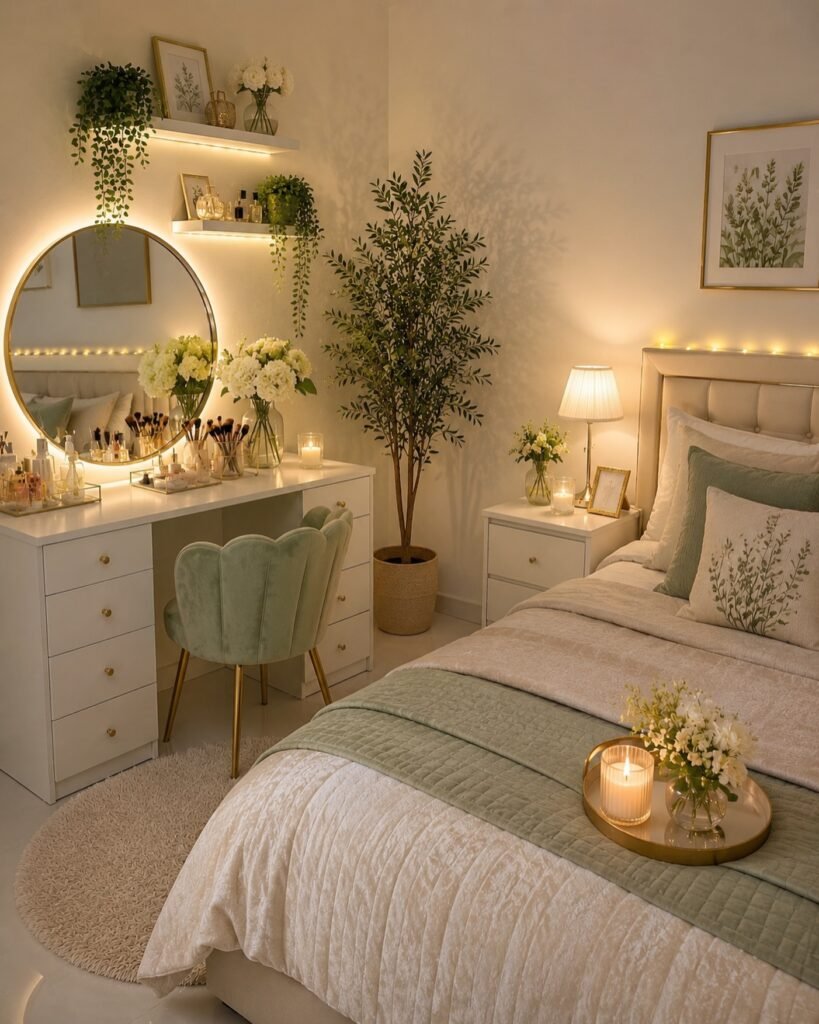
A minimalist bedroom can include a vanity without feeling crowded when storage is planned carefully.
Choose a desk with drawers, use trays to group cosmetics, and reserve floating shelves for a few attractive essentials. A large round mirror reflects light and makes the corner feel more spacious.
Green accents and botanical prints add personality, but keeping containers consistent prevents the setup from becoming visually messy during a busy morning routine.
16. Connect Bedroom and Garden
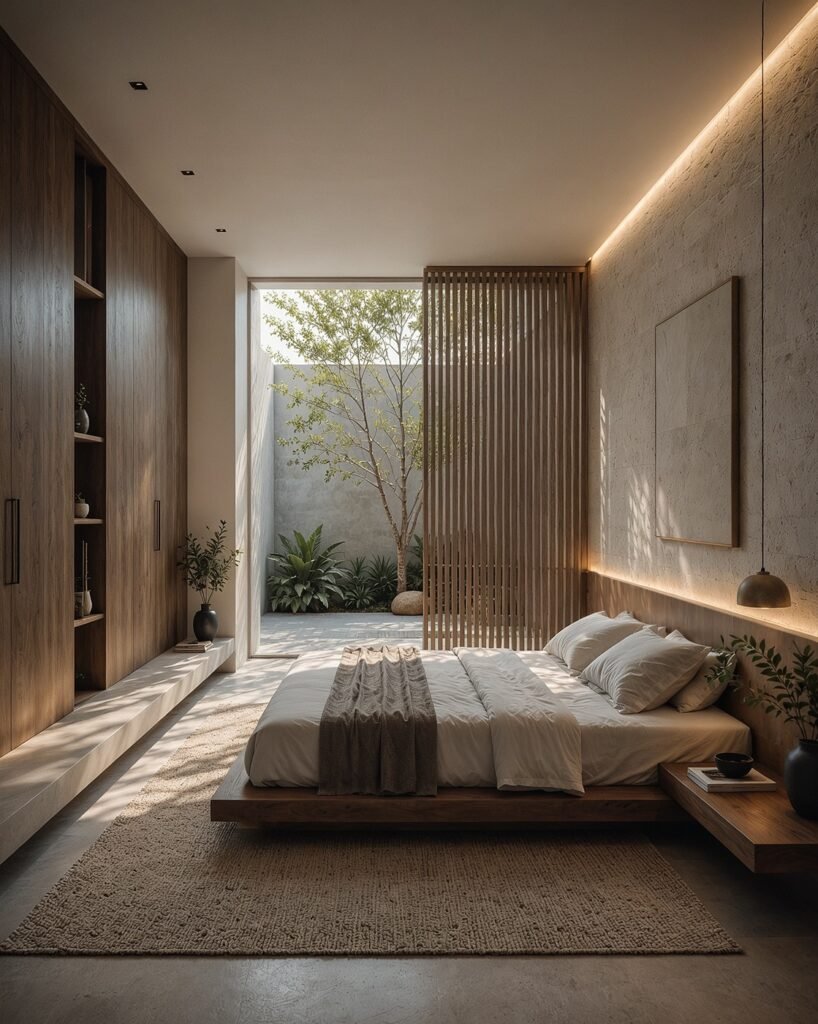
Opening a bedroom toward a private courtyard can make even a restrained interior feel rich and calming.
A wood screen offers privacy while allowing daylight and garden views to filter through. Inside, built-in wardrobes keep storage flush with the wall, and a low platform bed maintains an open sightline.
Where outdoor access is not possible, tall plants, natural wood, and a large nature print can create a similar indoor connection.
17. Plan a Narrow Bedroom
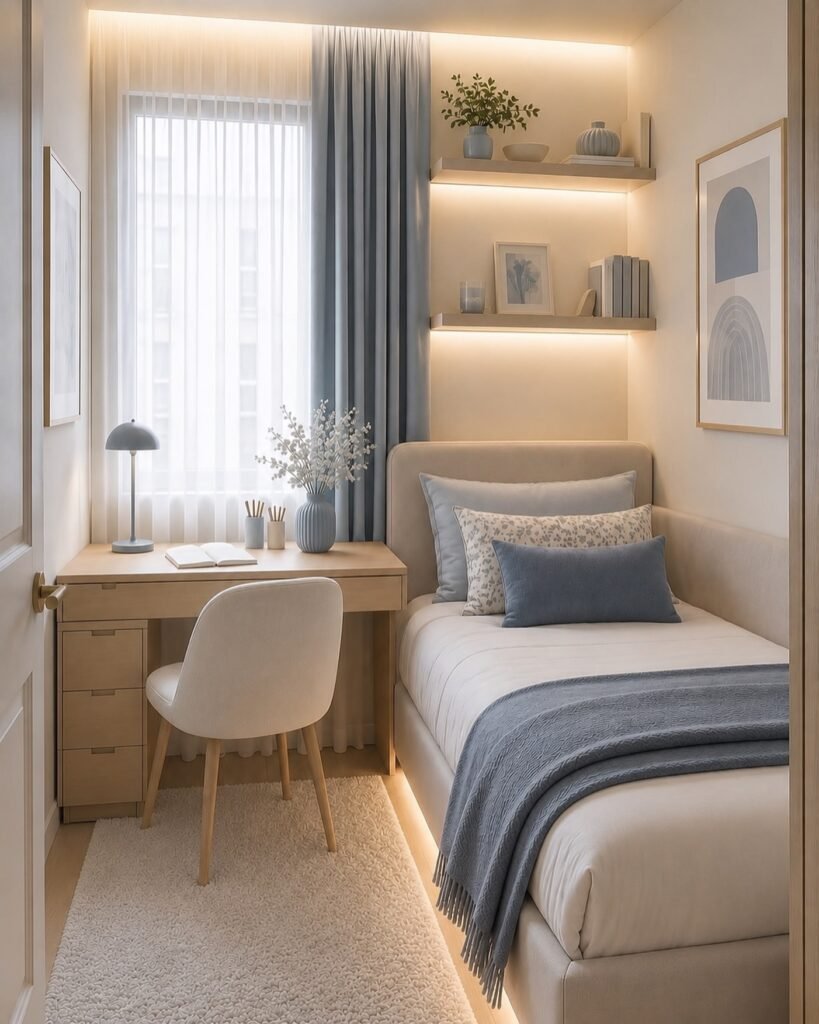
Small single bedrooms benefit from placing the bed and desk along opposite sides of the same walkway.
A compact desk beneath the window uses natural light efficiently, while floating shelves provide storage without taking up floor space. Blue-gray textiles add gentle contrast to the cream palette.
Keep shelf displays sparse and use closed desk drawers for school or work supplies so the narrow room remains comfortable rather than cramped.
18. Repeat One Accent Color
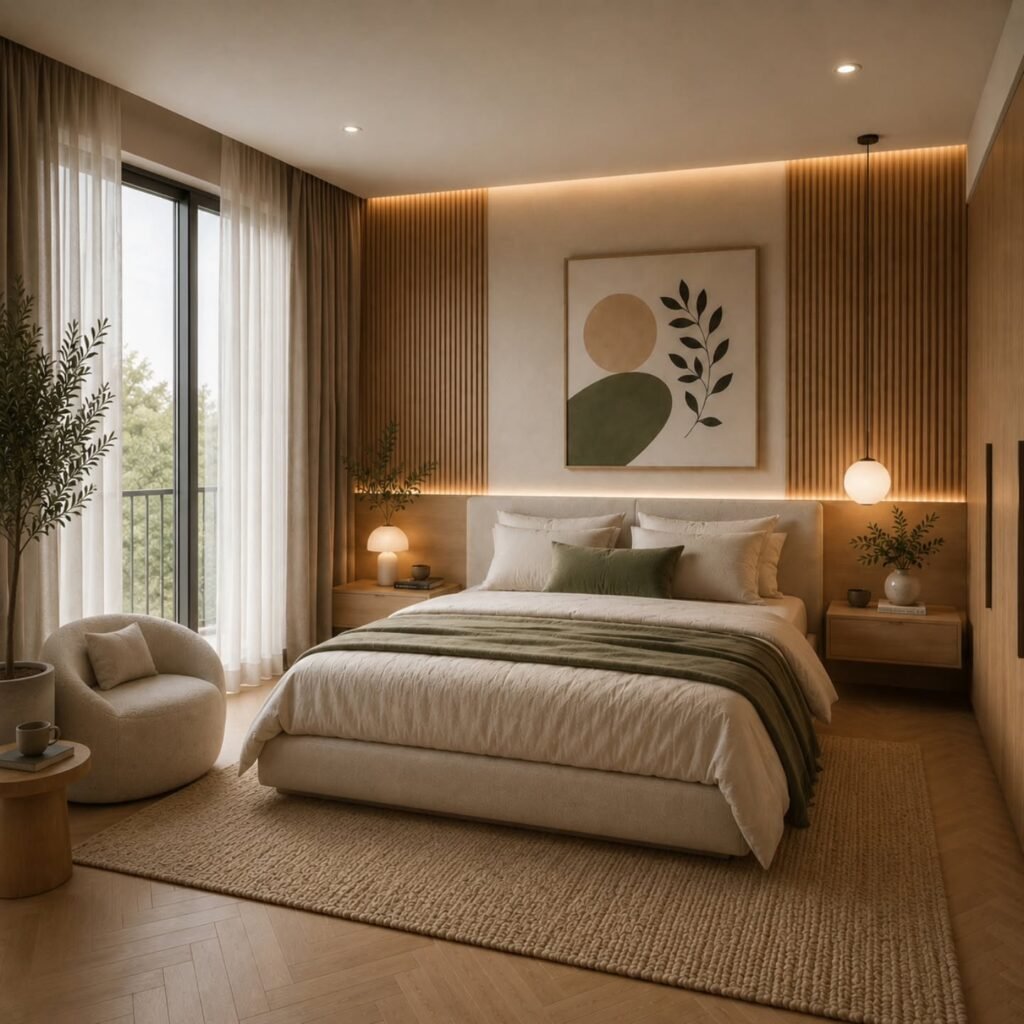
Repeating olive green across bedding, artwork, and small plants creates a coordinated minimalist bedroom without relying on many decorative objects.
Wood slats bring warmth to the feature wall, while a single large print anchors the bed area. Layer sheer curtains with heavier drapes for both daylight and privacy.
Choosing one accent color also makes future updates easier, since cushions and throws can be changed without replacing the main furniture.
19. Balance a Shared Bedroom
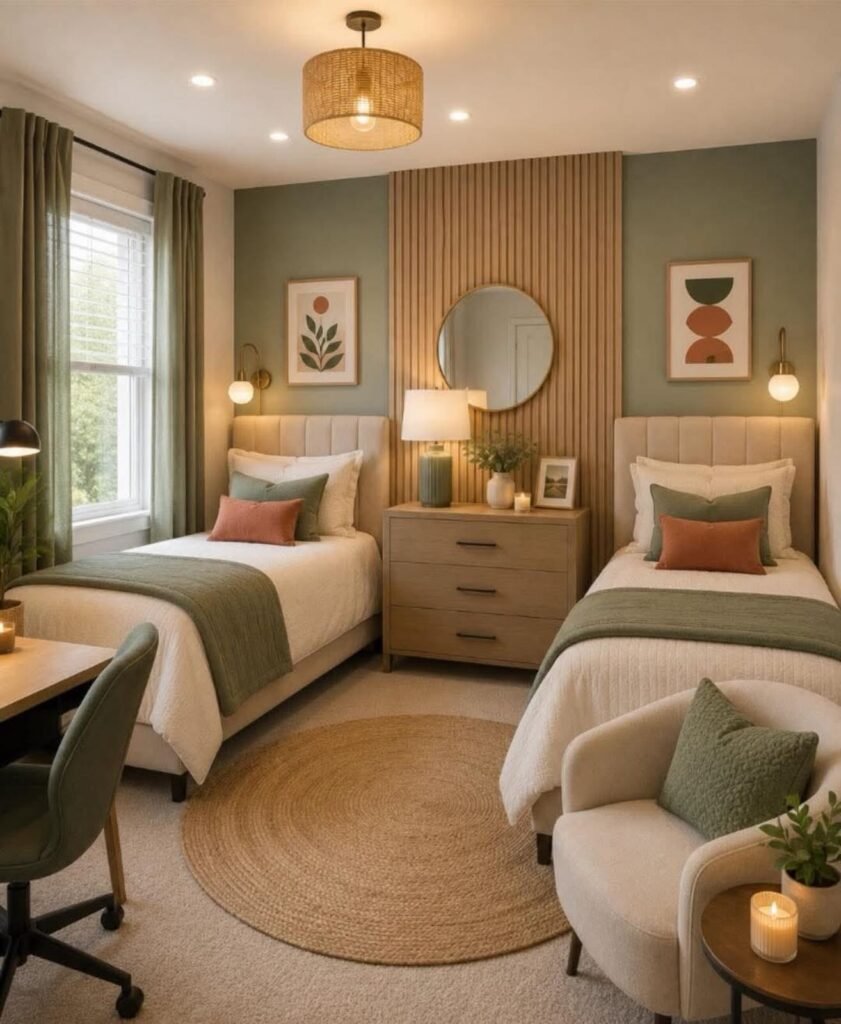
Two single beds can feel organized and spacious when the room follows a symmetrical layout.
Position a shared dresser between the beds, then repeat matching headboards, blankets, wall lights, and artwork. A round rug softens the center and keeps the walkway visually connected.
Each sleeper still needs personal storage, so provide a drawer or basket on their side rather than allowing the shared surface to collect loose belongings.
Frequently Asked Questions
How do I make a minimalist bedroom cozy?
Layer soft bedding, a textured rug, warm lighting, and natural wood. Limit decorative objects, but include a few personal pieces so the room feels welcoming rather than empty.
What colors suit a minimalist bedroom?
Warm white, beige, taupe, gray, and soft brown create a flexible base. Muted green, blue-gray, or terracotta can add personality without disturbing the calm atmosphere.
How can I minimize clutter in a small bedroom?
Use closed wardrobes, under-bed containers, floating shelves, and furniture with drawers. Keep frequently used items accessible and give every remaining object a consistent storage location.
Can renters create a minimalist bedroom?
Yes. Use removable wallpaper, plug-in sconces, lightweight rugs, simple curtains, and freestanding storage. Neutral bedding and carefully chosen artwork can transform the space without permanent renovations.