21 Colorful Bedroom Ideas to Brighten Your Space
A colorful bedroom can feel energetic, cozy, and deeply personal without becoming visually overwhelming. The best approach is to balance bold shades with practical choices, such as layered bedding, focused accent walls, useful storage, and flexible decor.
Whether you are decorating a compact rental or refreshing a larger room, these colorful bedroom ideas show how to add personality while keeping the space comfortable, functional, and easy to update over time.
Related Bedroom Articles :
20 Girls Room Ideas for a Cute Cozy Bedroom
19 Neutral Bedroom Ideas for a Calm, Cozy Space
19 Small Bedroom Wardrobe Ideas That Save Space
1. Extend Florals Overhead
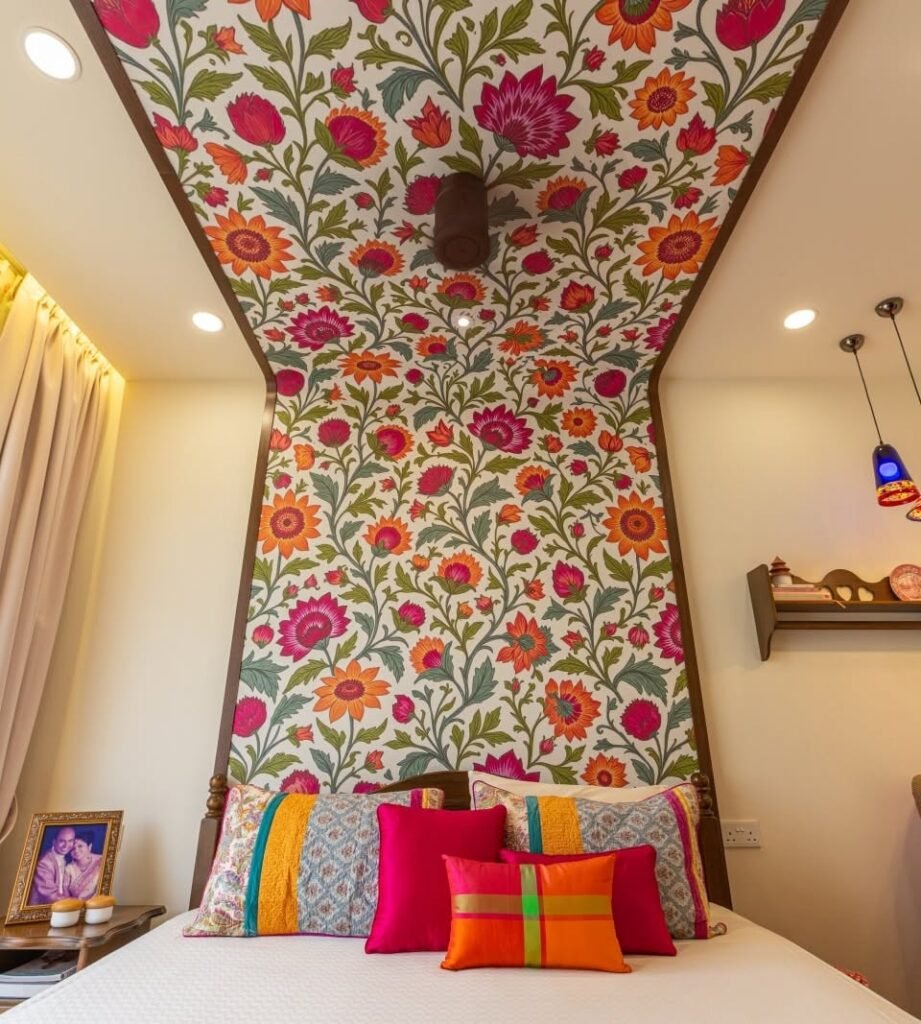
Turn the wall behind the bed into a dramatic floral feature that continues onto the ceiling. Extending the pattern upward draws attention away from a narrow footprint and makes the sleeping area feel more intentional.
Keep the surrounding walls neutral so the flowers remain the main focus. Coordinated pillows in pink, orange, and turquoise can repeat the wallpaper colors without requiring a complete bedding replacement.
2. Create a Pink Disco Room
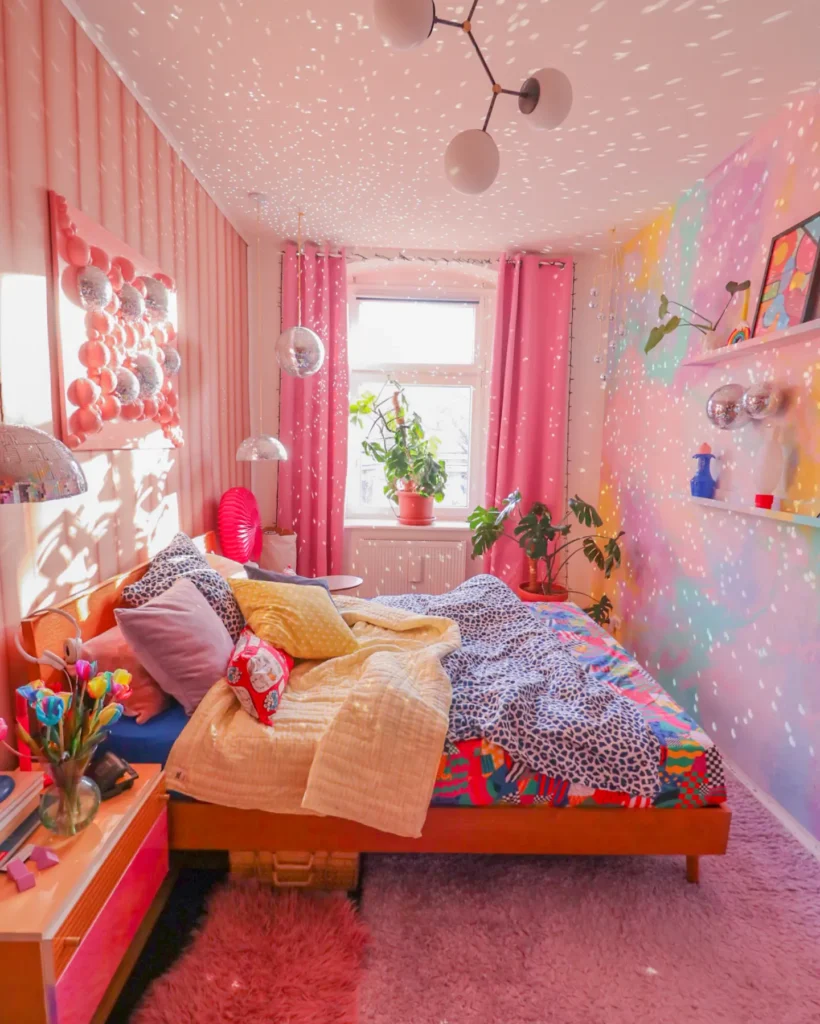
Layering pink walls, bright curtains, patterned bedding, and reflective decor creates a playful bedroom with plenty of movement. A disco ball or light-catching accessory can spread soft patterns across the room while using very little floor space.
To prevent the palette from feeling chaotic, repeat two or three colors throughout the textiles and accessories. Plants add a natural pause between the stronger shades and make the room feel fresher.
3. Mix Warm Modern Colors
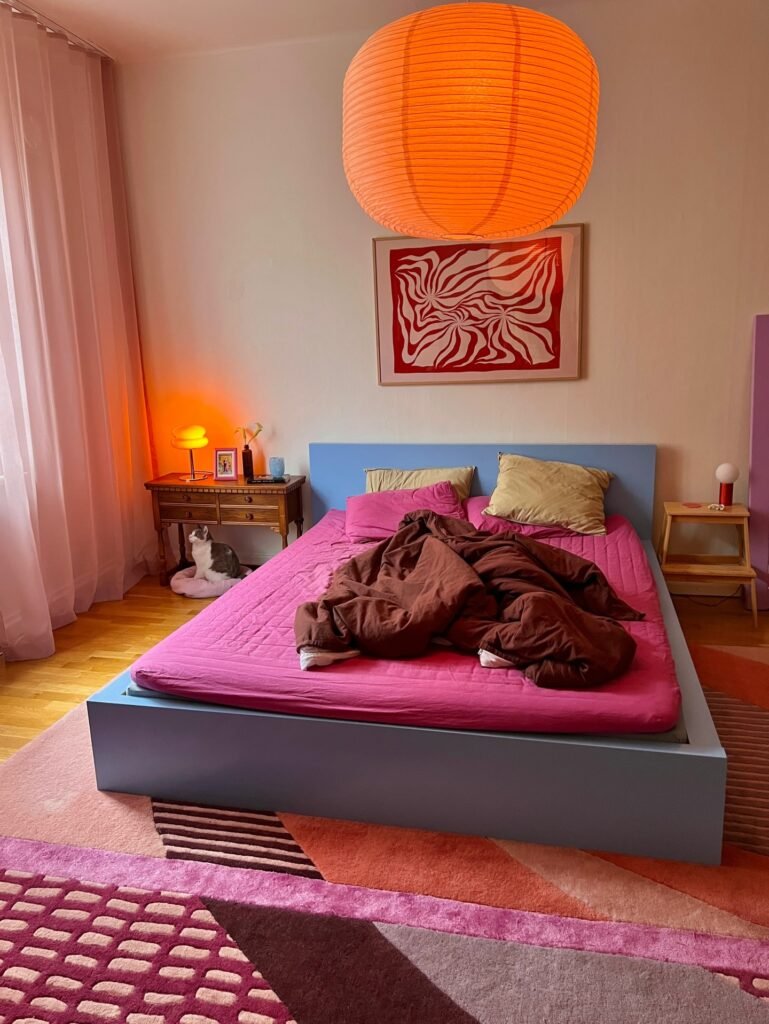
Build a modern color scheme around one bold combination, such as hot pink, pale blue, chocolate brown, and orange. A painted bed frame can anchor the room while a large paper pendant adds warmth without taking up bedside space.
Keep wall art simple and limit smaller accessories so the strong bedding and rug can stand out. Using sheer curtains helps soften the richer colors with plenty of natural light.
4. Brighten Neutral Walls
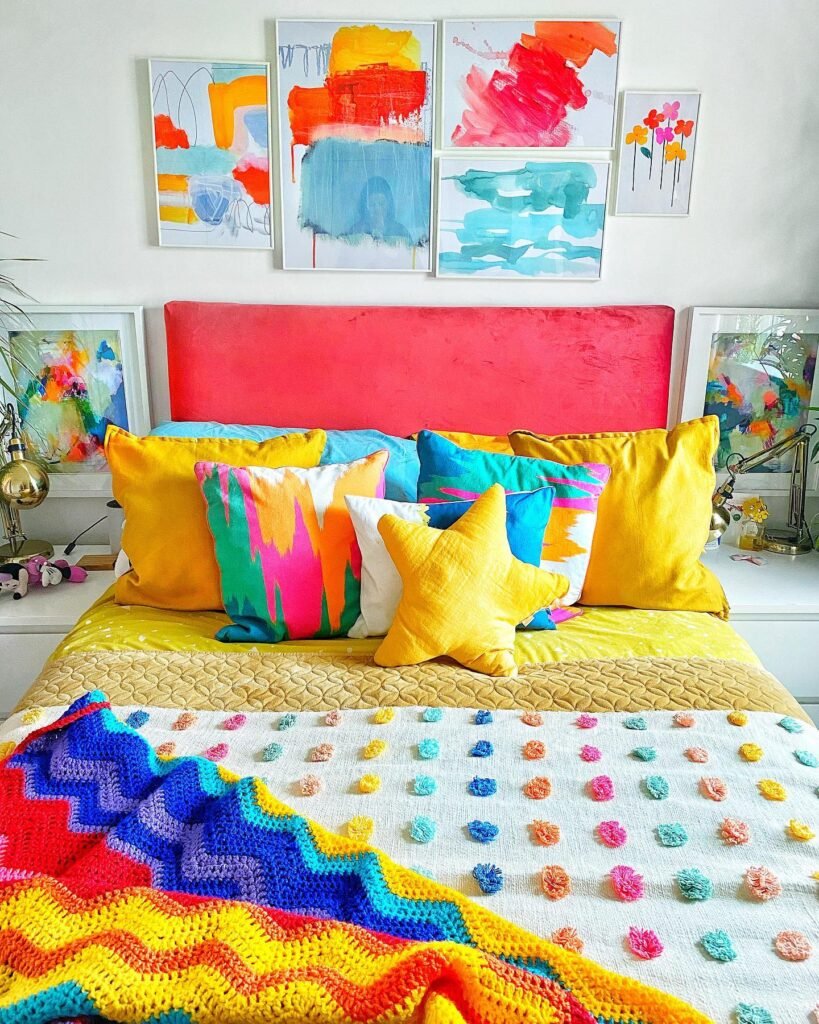
Bright bedding is an easy way to transform a white bedroom without painting the walls. Combine a coral headboard with sunny yellow pillows, turquoise accents, and handmade textures for an energetic but comfortable look.
A small gallery of abstract prints can pull the colors together above the bed. For a budget update, recover existing cushions or add removable covers instead of buying an entirely new bedding set.
5. Try Sunny Yellow Walls
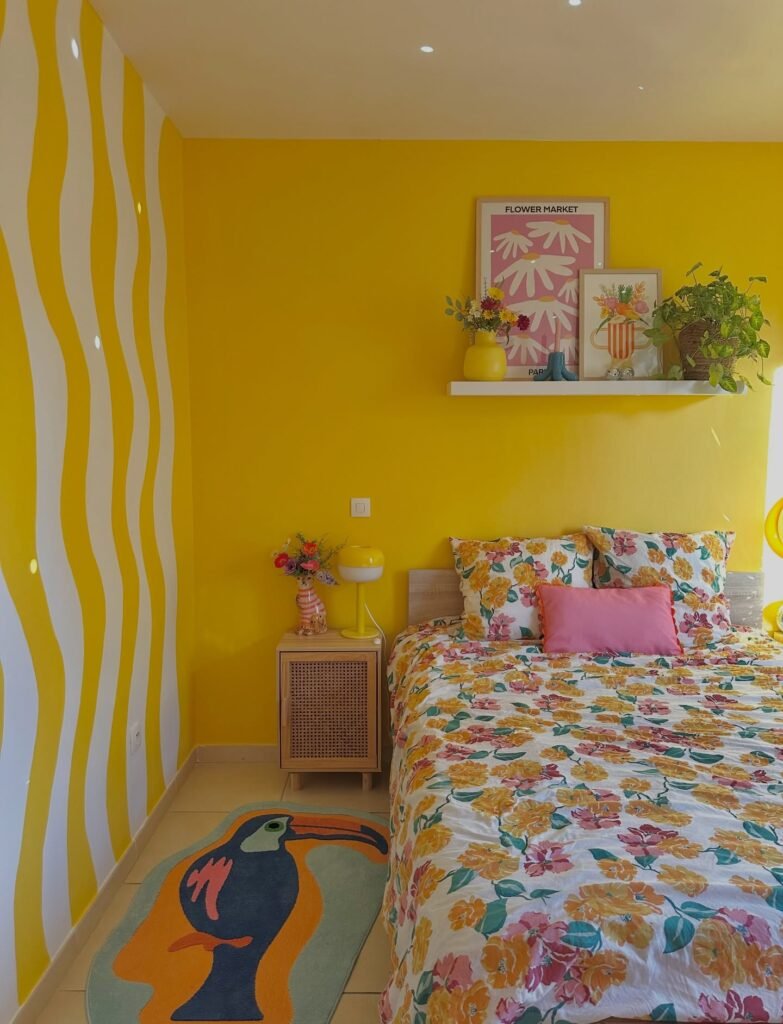
A saturated yellow wall can make a compact bedroom feel cheerful and surprisingly warm. Pair it with floral bedding, pale wood furniture, and a whimsical rug to create personality without crowding the floor.
A floating shelf above the bed provides display space while keeping bedside surfaces clear. For better balance, use white or cream in the pattern so the strongest yellow areas have room to breathe.
6. Layer Soft Pastel Colors
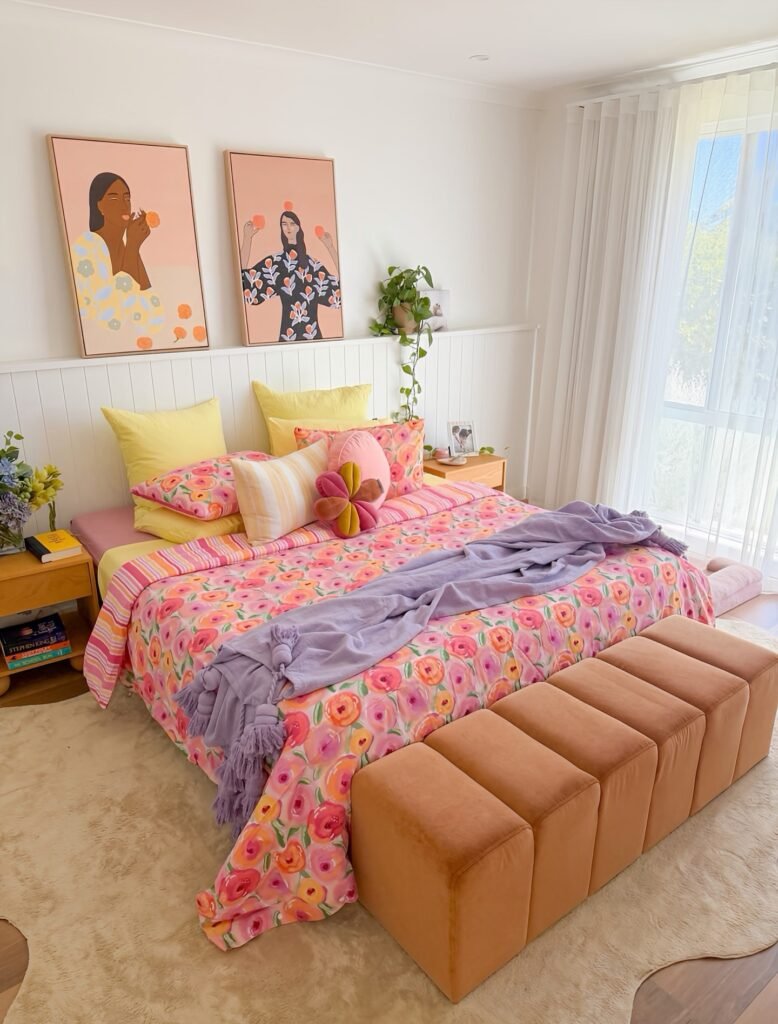
Soft color can still create a lively bedroom when several gentle shades are layered together. Pink floral bedding, yellow pillows, peach furniture, and a lavender throw bring variety while maintaining a relaxed atmosphere.
White walls and sheer curtains keep the room bright and stop the palette from feeling heavy. Choose a storage bench at the foot of the bed to add seating and hide extra blankets, books, or seasonal bedding.
7. Combine Stripes and Jewel Tones

For a more polished colorful bedroom, combine deep neutrals with muted jewel tones. Black and cream stripes create structure, while olive bedding, dusty rose upholstery, burgundy curtains, and pink accents add richness.
Repeating curved patterns through lamps, artwork, and the rug helps the room feel coordinated rather than overly busy. Keep bedside tables compact and symmetrical so the bold materials still look organized and restful.
8. Blend Teal and Terracotta

Terracotta, teal, and golden yellow form a warm palette that feels especially inviting in a sunlit bedroom. Use the darker teal on one wall to frame the view, then balance it with earthy orange surfaces and woven lighting.
Layering patterned rugs and blankets adds depth without needing extra furniture. Natural materials such as rattan, wood, and macramé help connect the strong colors and give the room a relaxed, collected character.
9. Display a Maximalist Collection
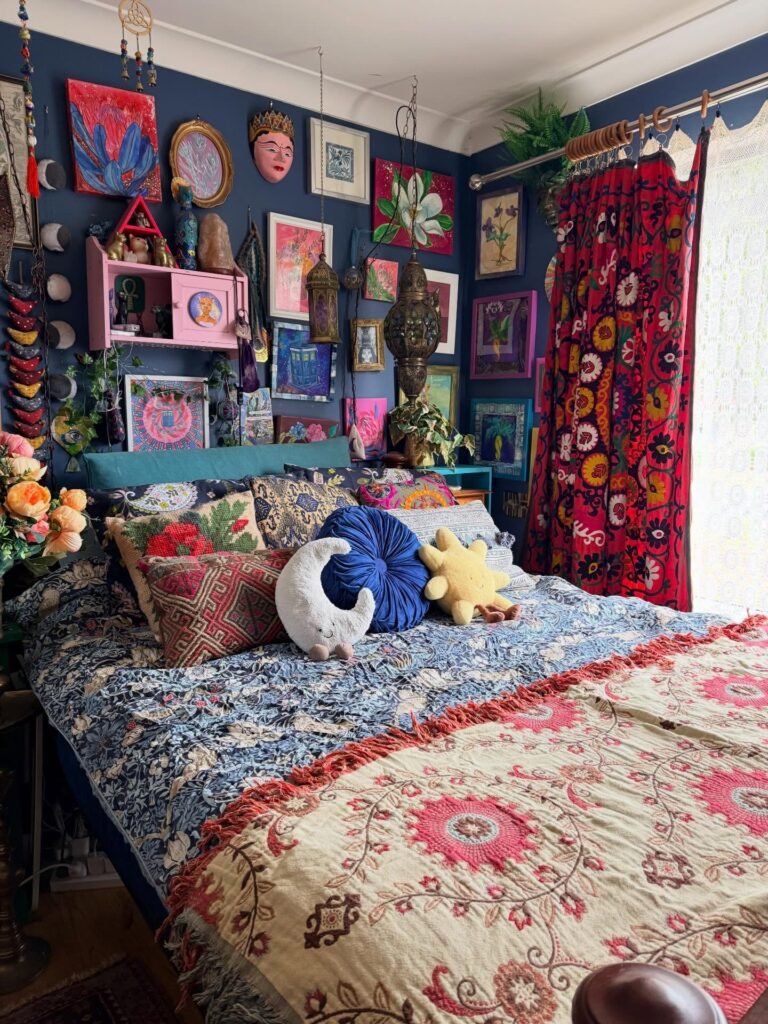
A maximalist bedroom works best when personal collections are arranged with clear visual anchors. Start with a dark wall color, then group framed art, decorative objects, and textiles by shared shades such as red, pink, blue, and brass.
Keeping the bed linens within a related palette prevents the room from feeling random. Use wall-mounted shelves and hanging decor to display more pieces while preserving valuable floor and bedside space.
10. Add Retro Rainbow Layers
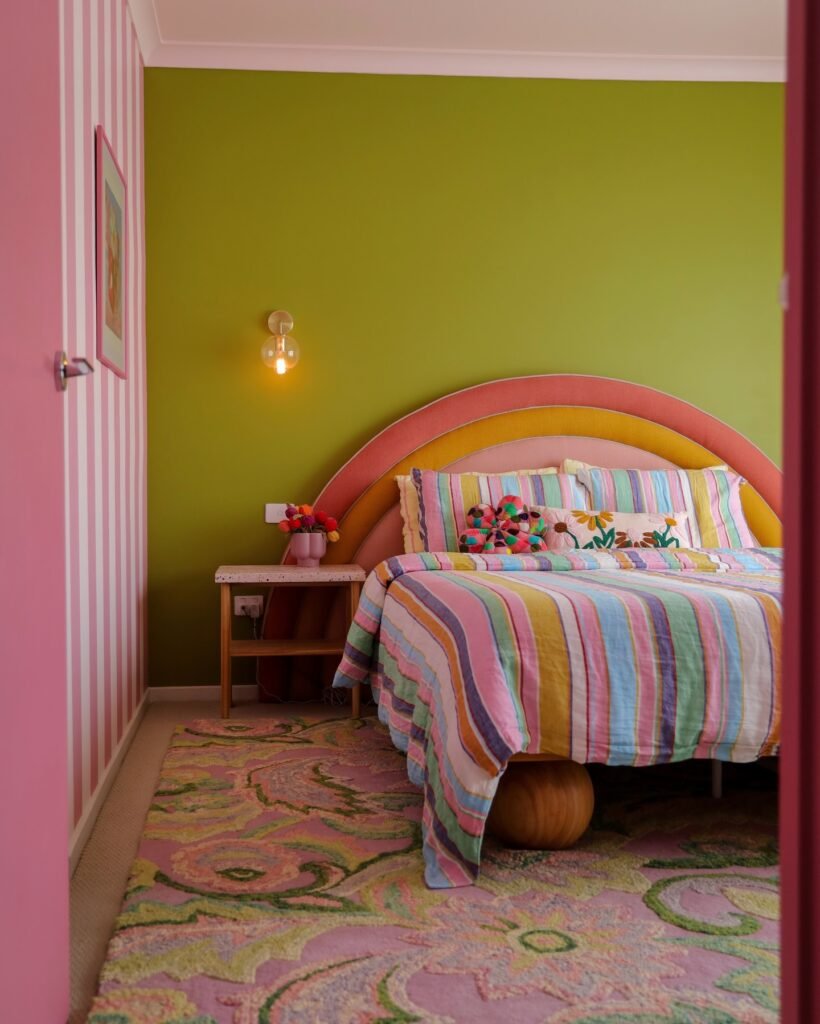
Mixing olive green with pink, coral, mustard, and soft blue creates a cheerful retro-inspired bedroom. A curved upholstered headboard provides a strong focal point, while striped bedding carries the palette across the room.
Balance the solid accent wall with a smaller striped surface so the patterns feel intentional rather than excessive. A large rug can unify the colors and make the room feel softer, especially when flooring is plain.
11. Build a Lilac Gallery
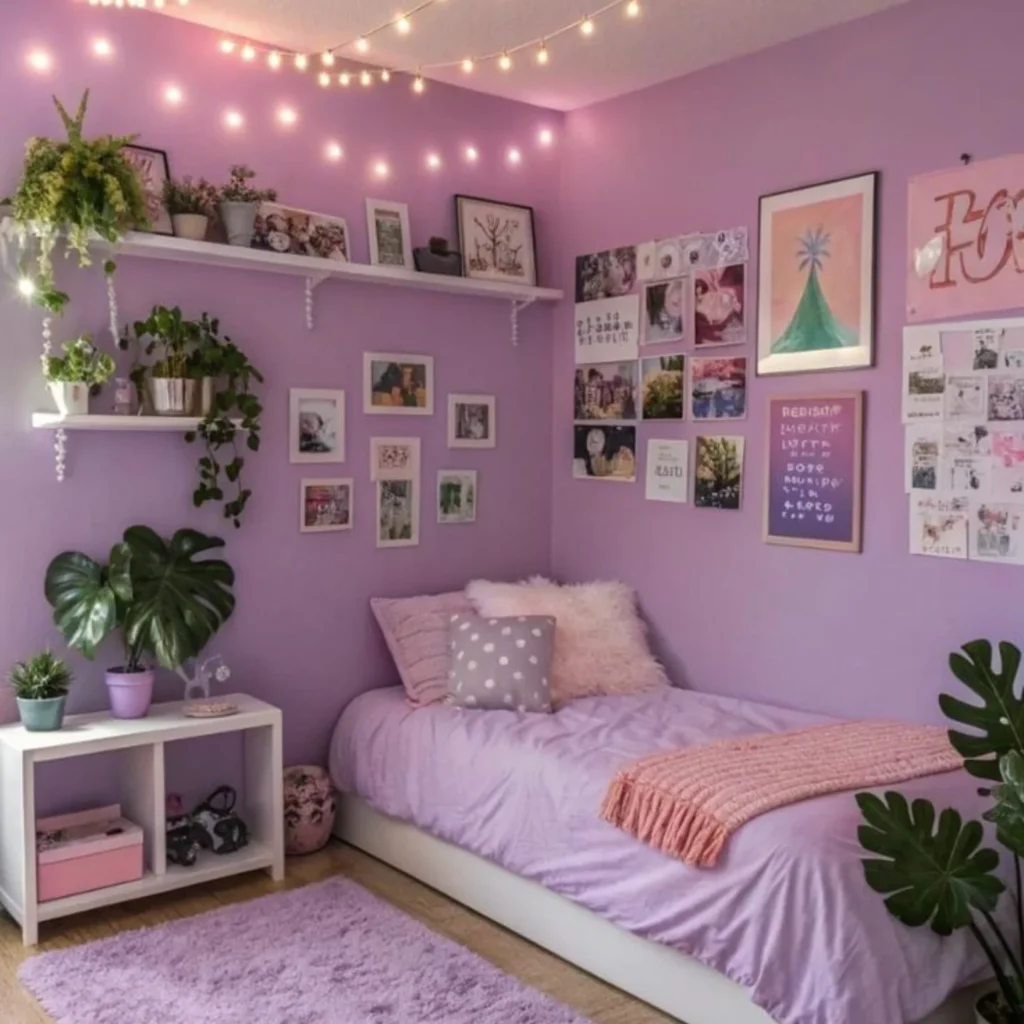
Lilac walls create a soothing backdrop for personal artwork, photographs, and trailing plants. Arrange frames in small clusters rather than filling every open area, which keeps the display relaxed and easier to update.
White shelves and furniture brighten the palette while providing useful storage in a compact bedroom. Warm string lights add gentle evening illumination, especially when overhead lighting feels too strong for reading or winding down.
12. Choose Classic Blue Stripes
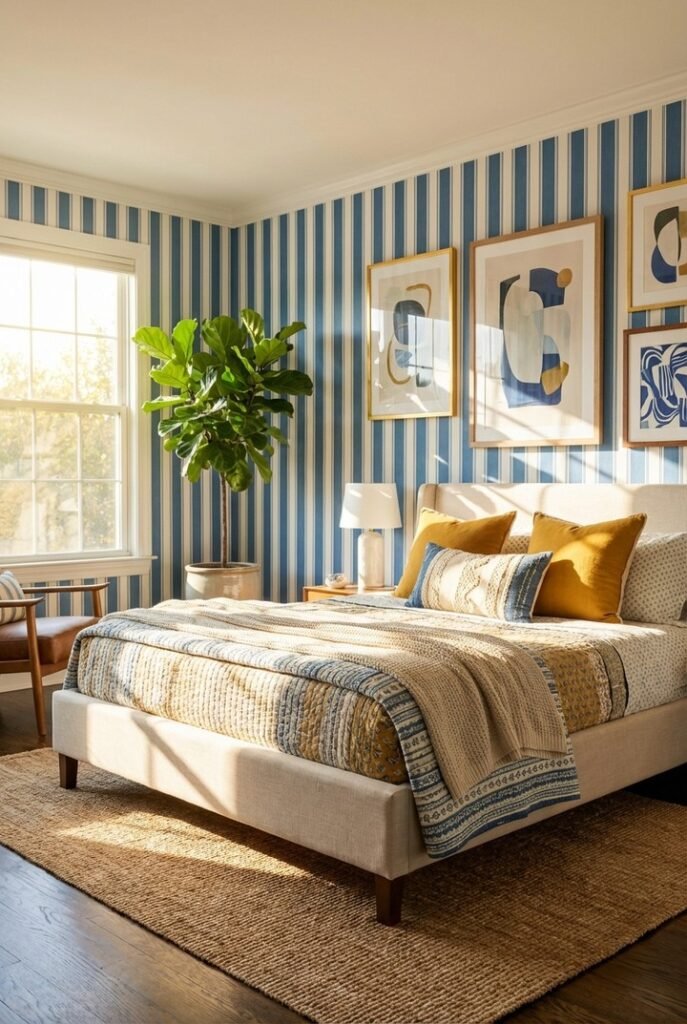
Blue striped wallpaper adds color while giving a bedroom a clean, structured appearance. Vertical lines can visually raise the ceiling, making the idea particularly useful in rooms that feel low or narrow.
Balance the pattern with an upholstered neutral bed, woven rugs, and simple wooden furniture. Mustard pillows introduce warmth without competing with the walls, while coordinated artwork helps the room look collected rather than overly formal.
13. Try Bold Color Blocking
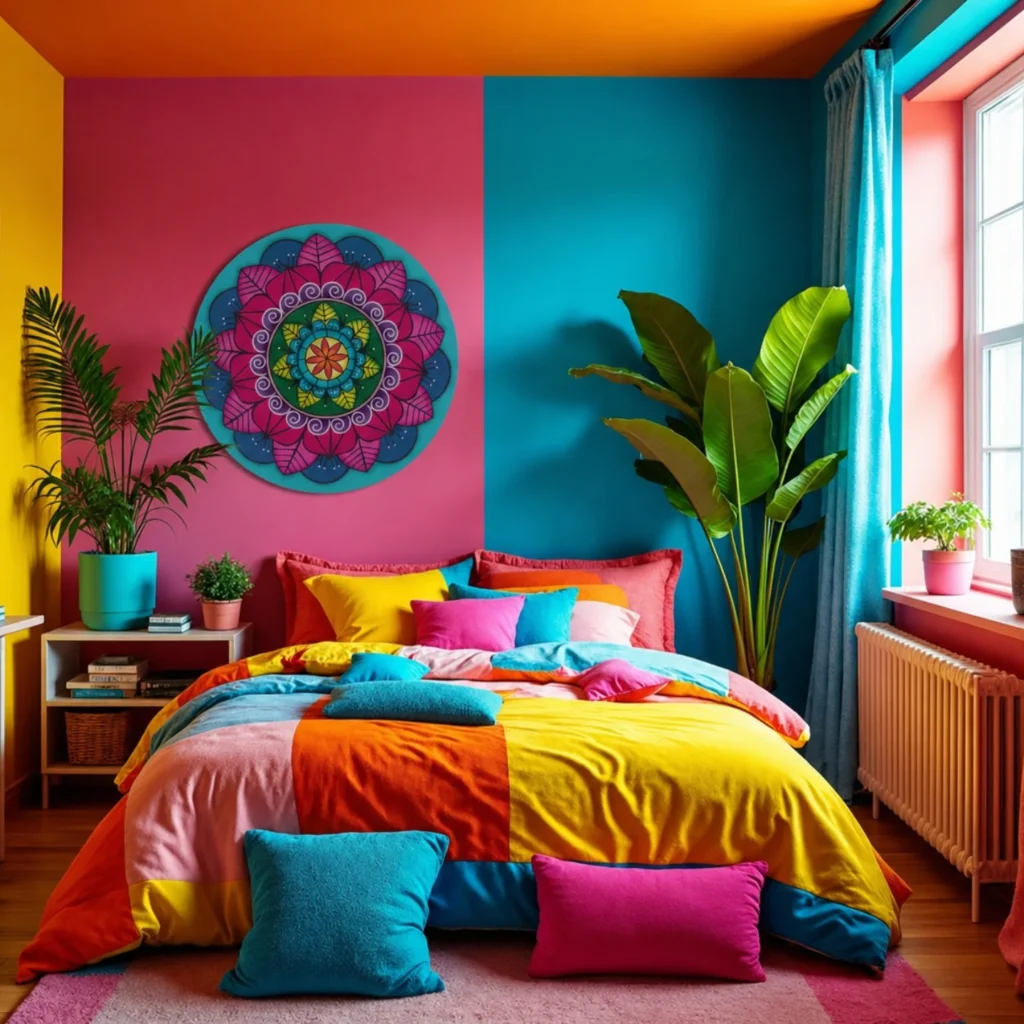
Color blocking allows several bright shades to share one bedroom without relying on busy prints. Divide the walls into large sections of turquoise, pink, and yellow, then carry those colors into the bedding and curtains.
Limiting each shade to a clearly defined area creates visual order. For a renter-friendly alternative, use removable wall panels or large fabric backdrops instead of painting every surface.
14. Create a Sunny Corner
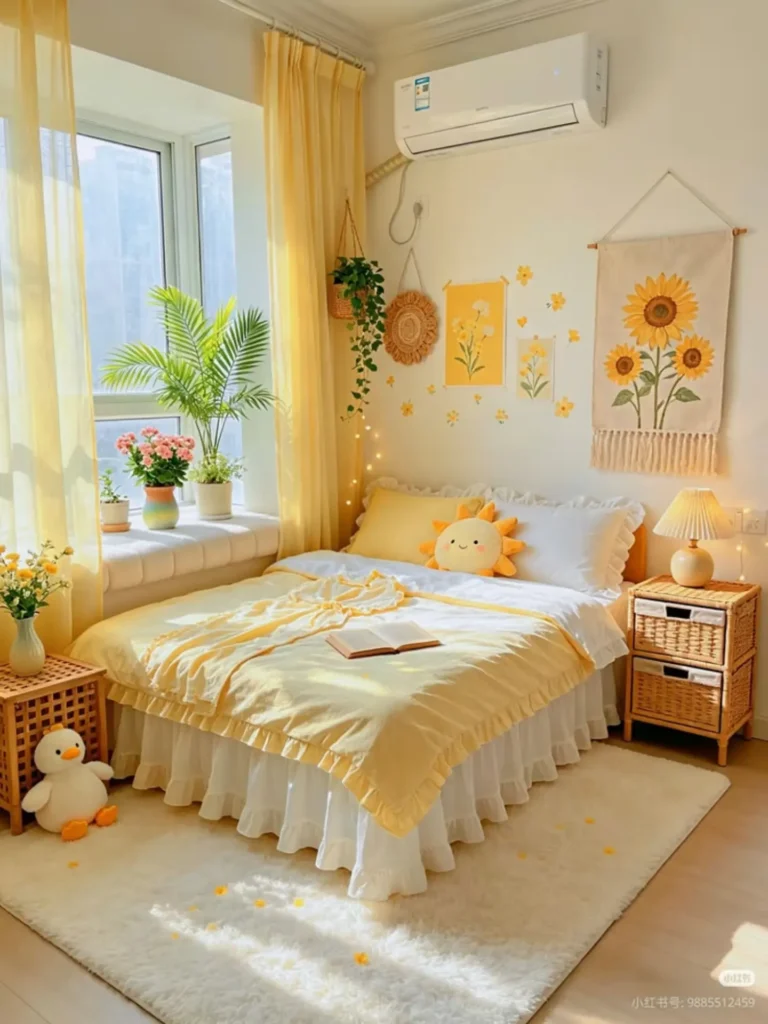
Pale yellow accents can brighten a small bedroom while keeping it calm enough for rest. Use creamy bedding as the base, then add yellow curtains, floral wall hangings, and a few playful cushions.
Rattan drawers and hanging planters provide storage without making the room feel heavy. Placing plants near the window creates a fresh focal point and leaves the area around the bed open and easy to navigate.
15. Mix Stripes With Texture
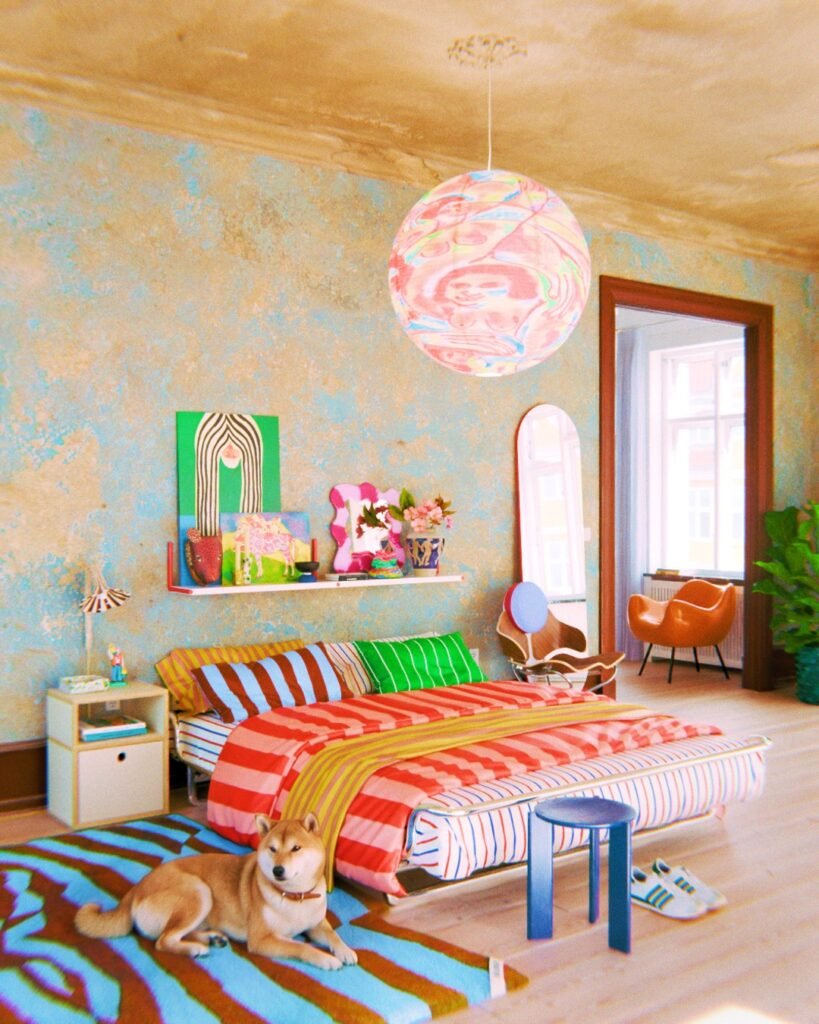
Combining striped bedding with textured walls creates a colorful bedroom that feels artistic rather than overly coordinated. Choose one dominant stripe, such as coral or red, then introduce smaller amounts of green, blue, and pink through pillows and accessories.
A low bed keeps attention on the patterns and can make a spacious room feel more relaxed. Open shelving above the headboard offers display space without requiring bulky furniture.
16. Use Moody Floral Color
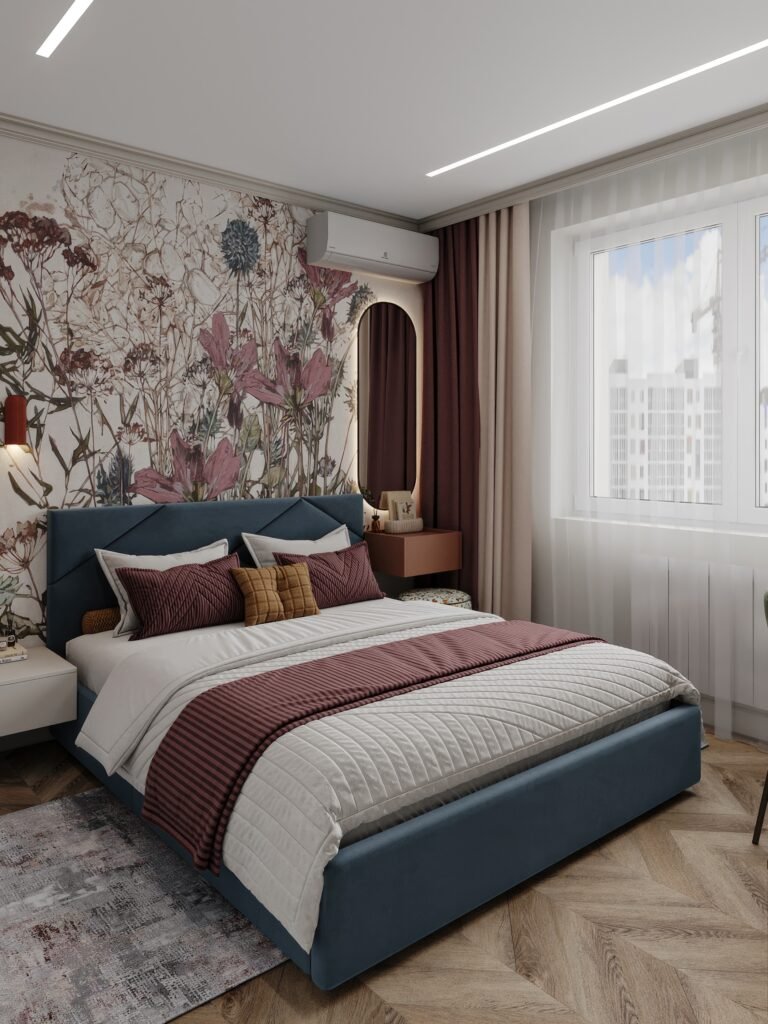
A floral wall treatment can bring color into a modern bedroom without making it feel overly sweet. Muted burgundy, dusty pink, blue, and brown work beautifully with a deep upholstered bed and crisp white linens.
Keep accessories limited so the botanical pattern remains the main feature. Floating nightstands are especially useful in smaller rooms because they free the floor and make cleaning around the bed much easier.
17. Wrap Walls in Florals
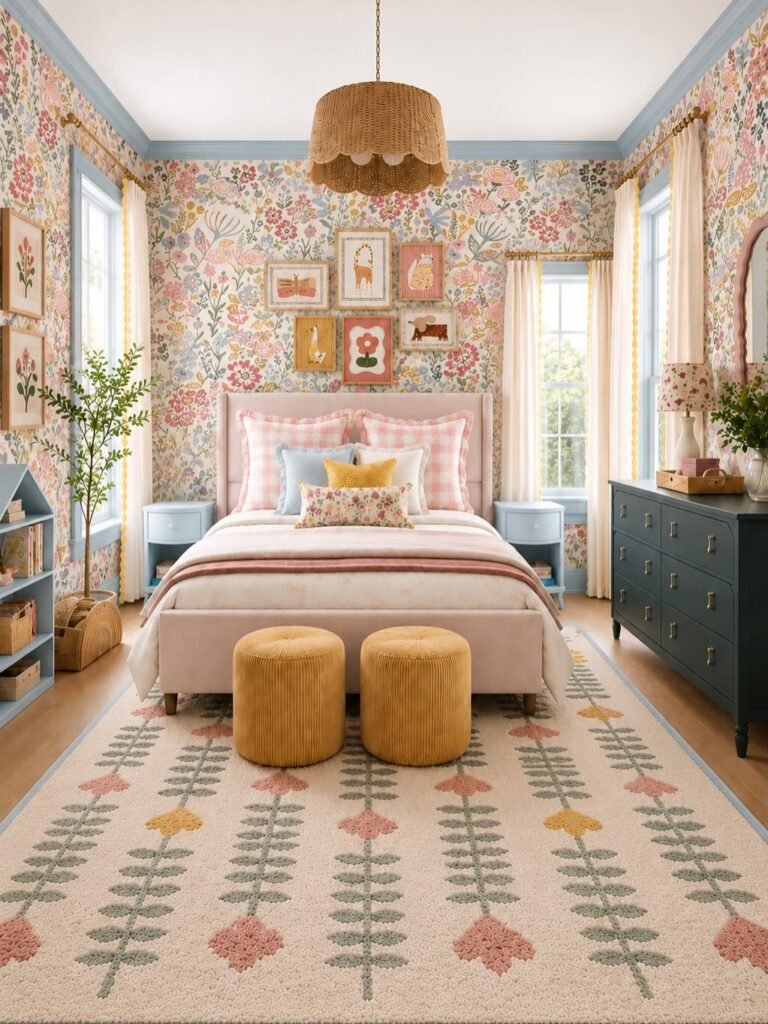
Covering several walls in a soft floral pattern creates a cozy, immersive bedroom with cottage character. Choose wallpaper that includes gentle pink, blue, green, and yellow, then repeat those shades through pillows, stools, and painted furniture.
Plain bedding prevents the room from becoming visually crowded. A large patterned rug can define the sleeping zone, while slim bedside tables preserve comfortable walking space on both sides.
18. Pair Olive With Patterns
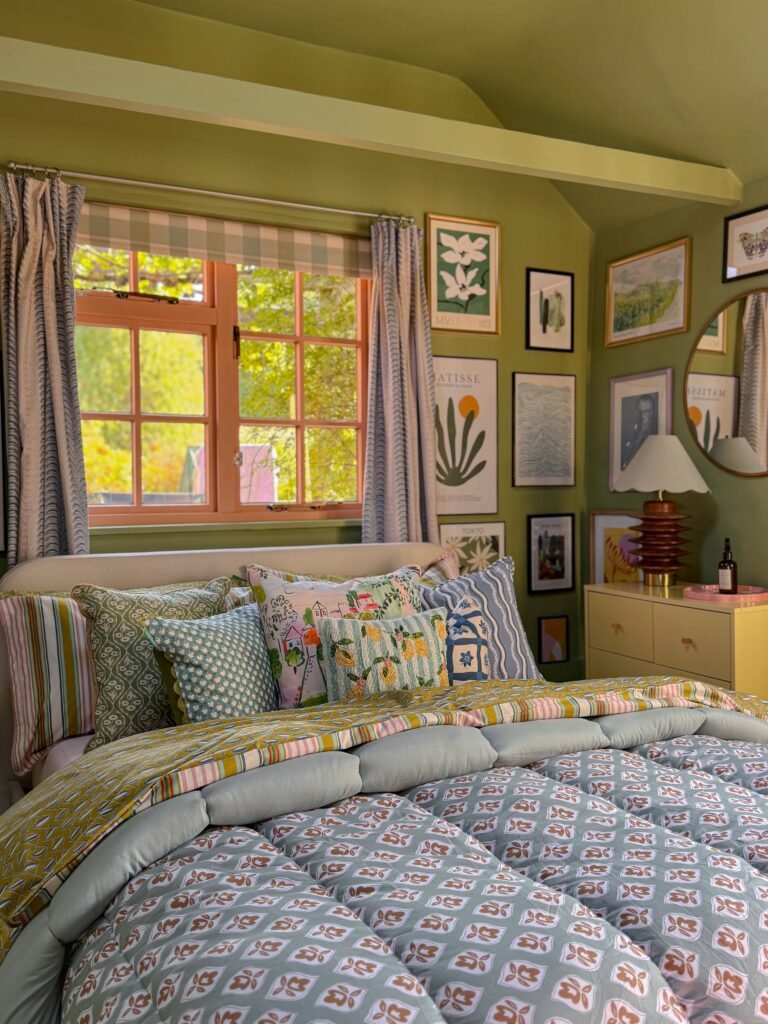
Olive green walls provide a warm, grounded base for patterned bedding and colorful artwork. Layer blue, mustard, coral, and cream through cushions and quilts, but keep the larger furniture pieces fairly simple.
A gallery wall can fill an awkward corner while adding personality without taking up floor space. Matching the window trim to one accent color gives the room a thoughtful, custom look on a manageable decorating budget.
19. Combine Pink and Yellow
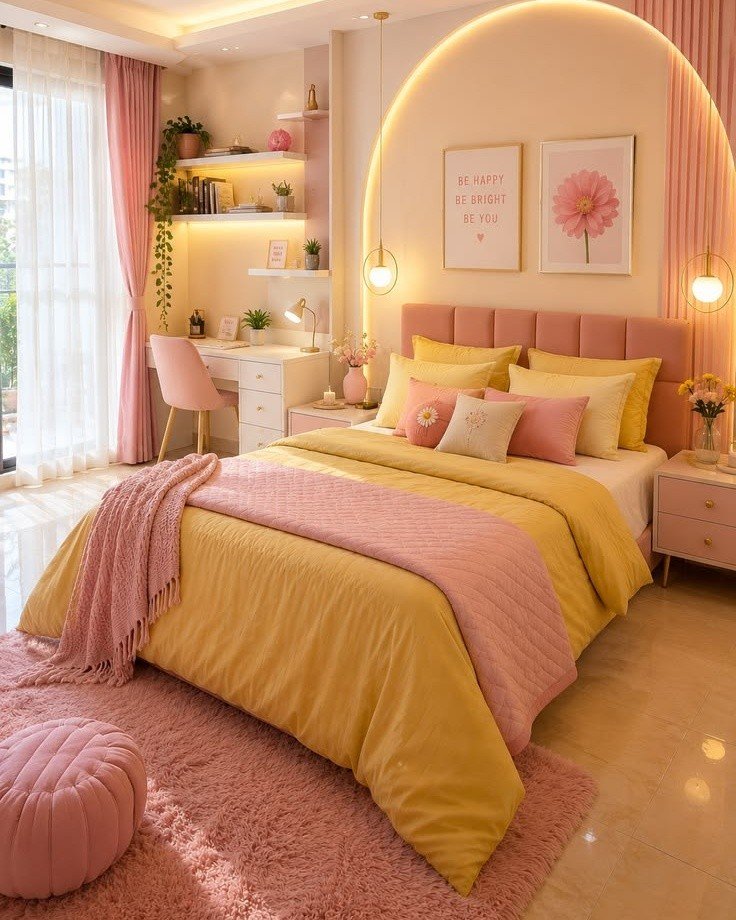
Pink and yellow create an uplifting bedroom palette that can still feel organized and practical. Use yellow bedding for warmth, then soften it with pink curtains, cushions, and an upholstered headboard.
A compact desk beside the bed turns an unused wall into a functional study or dressing area. Built-in shelves with concealed lighting provide storage and reduce the need for extra lamps, cabinets, or freestanding bookcases.
20. Use a Retro Citrus Palette
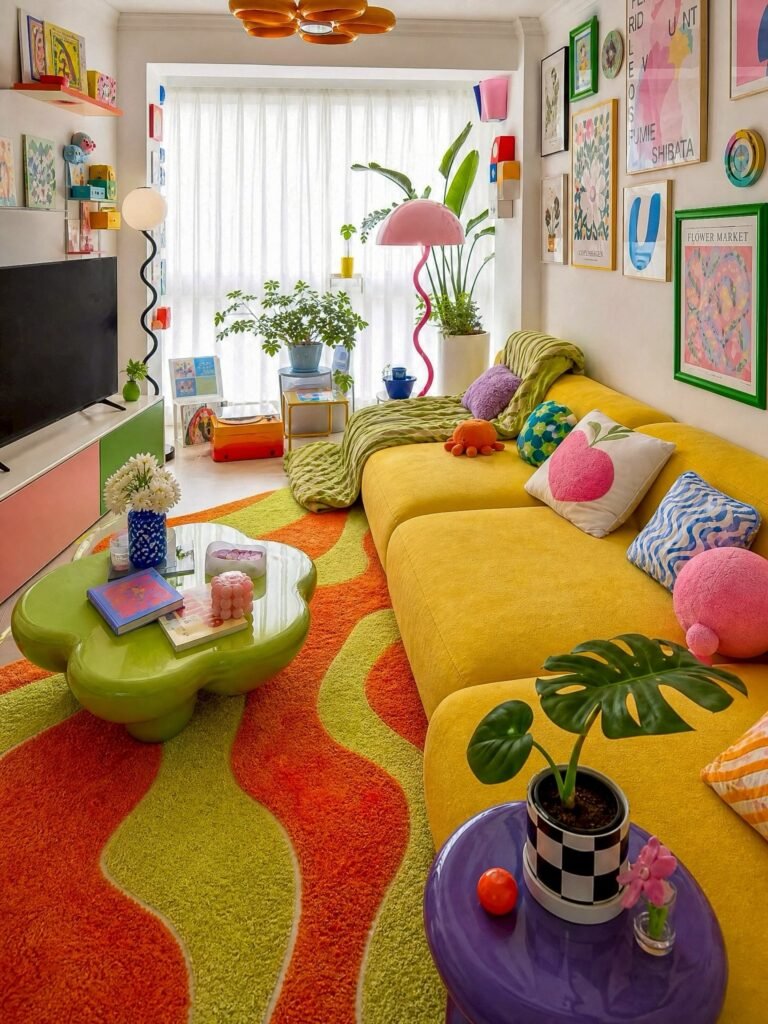
Bring retro energy into a colorful bedroom with mustard yellow, lime green, orange, pink, and purple. Choose one large anchor, such as an upholstered bed or bench, then repeat the remaining shades through a wavy rug, framed prints, cushions, and small tables.
Clear acrylic or glass furniture keeps the busy palette from feeling crowded. For a smaller room, limit decor to the walls and leave the main walking path open.
Frequently Asked Questions
How do I make a bedroom colorful without painting?
Use colorful bedding, rugs, curtains, artwork, lamps, and removable wall decals. Repeating two or three shades will help the room feel coordinated.
Which colors make a bedroom feel cozy?
Terracotta, mustard, dusty pink, olive green, burgundy, and warm teal can create a cozy atmosphere, especially when paired with soft lighting and layered fabrics.
Can a small bedroom handle bold colors?
Yes. Keep the largest furniture simple, use one strong focal color, and add brighter shades through smaller accessories to avoid overwhelming the space.
How many colors should a bedroom have?
A balanced scheme usually includes one dominant color, one supporting shade, and two or three smaller accents. Repeating them around the room creates a connected look.
What is the easiest budget-friendly update?
Changing pillow covers, adding a colorful throw, and displaying affordable prints can refresh a bedroom without replacing furniture or repainting the walls.