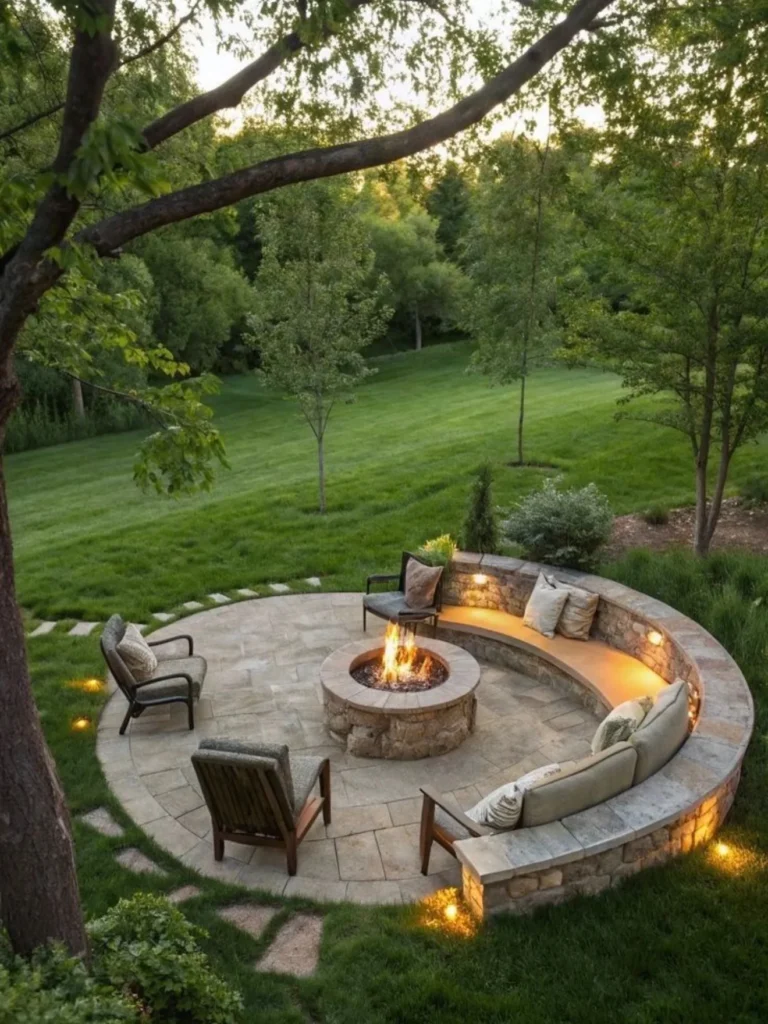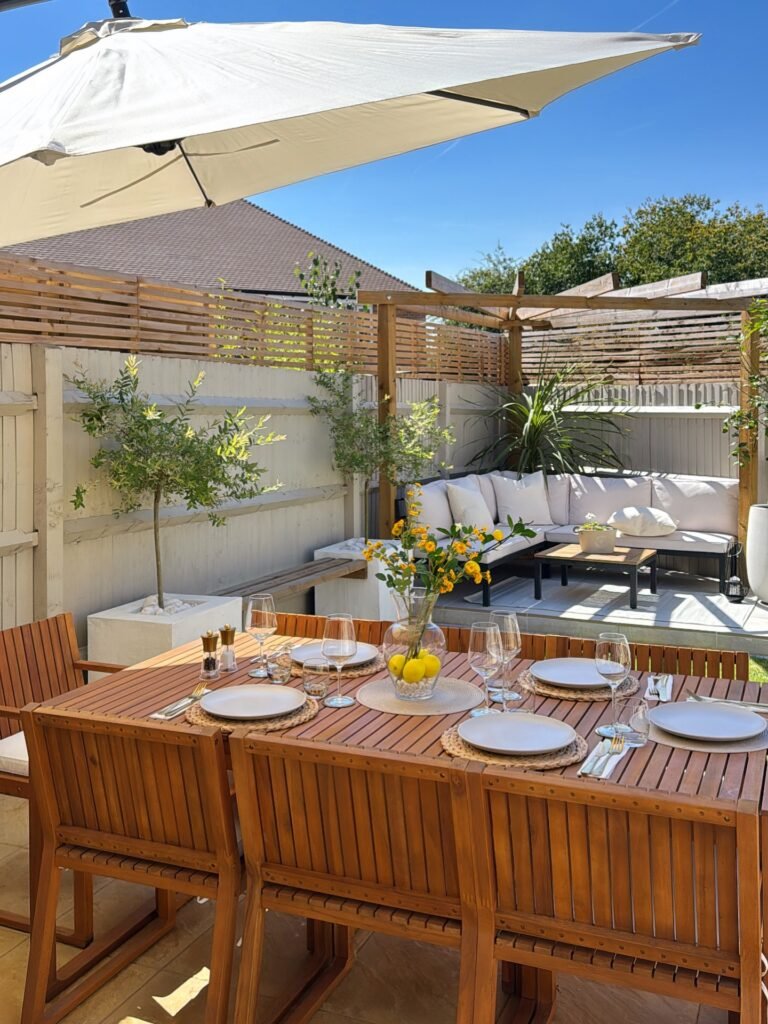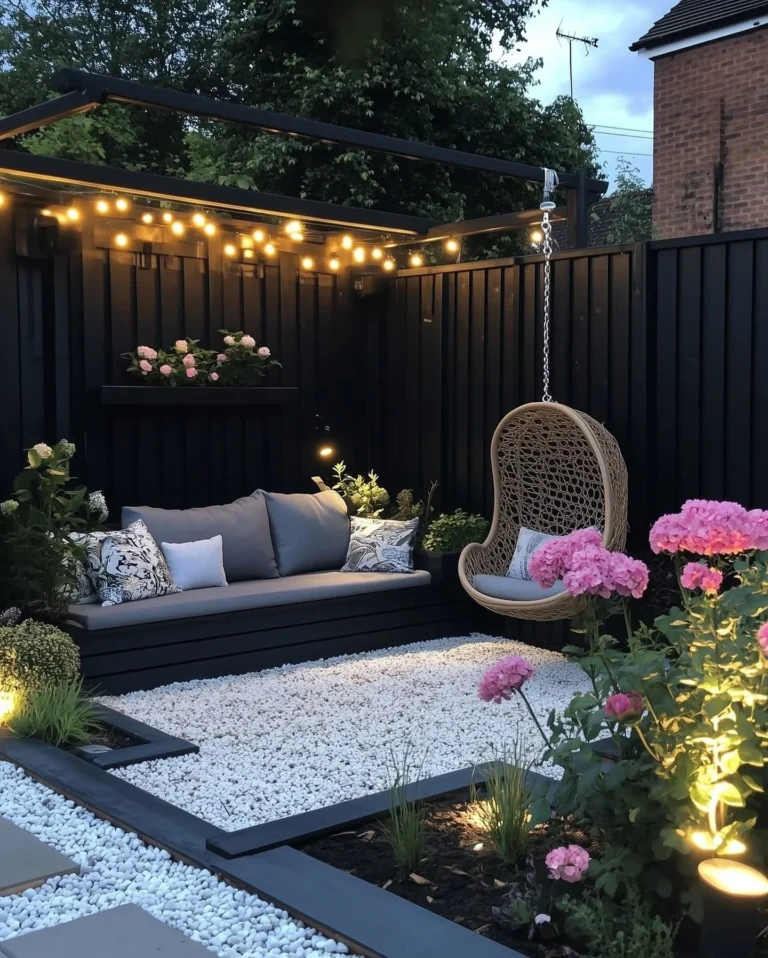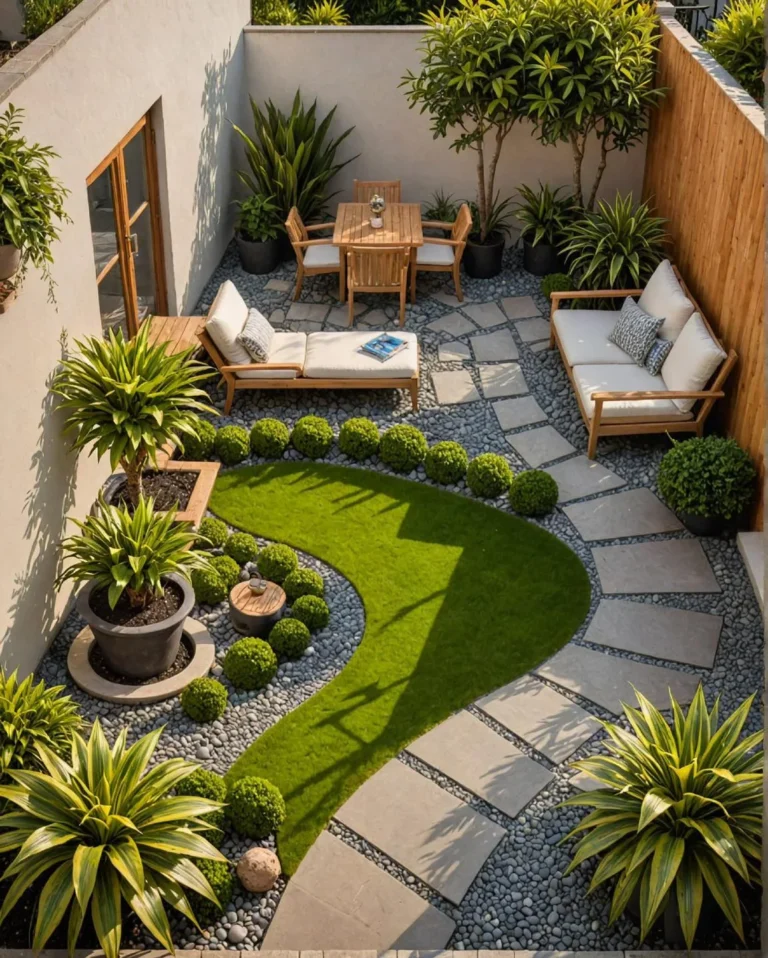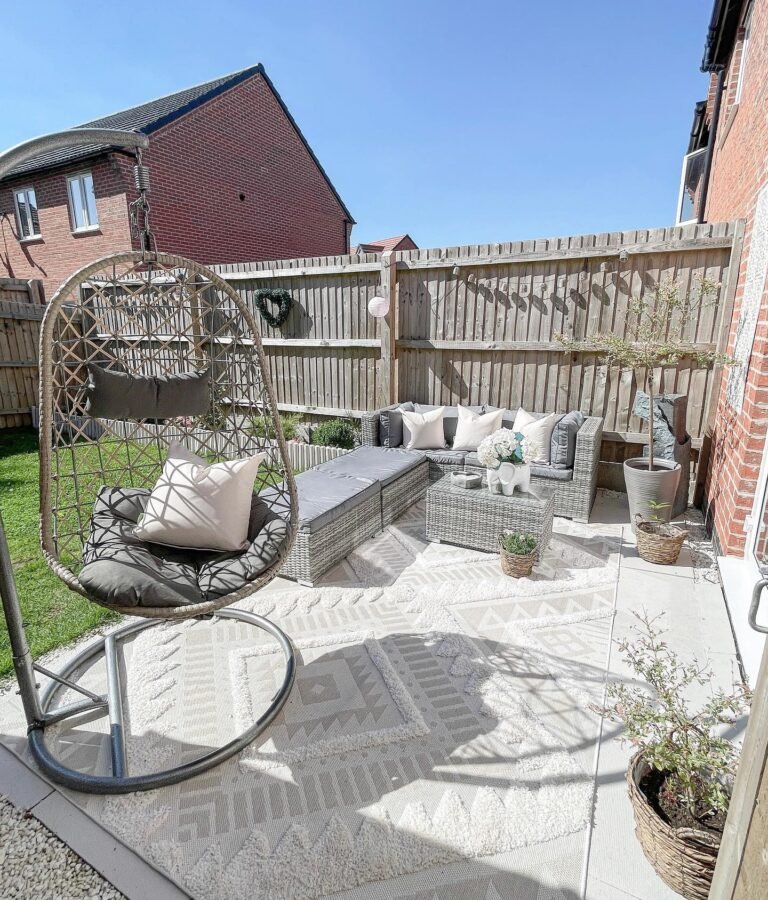
Small Backyard? 12 Clever Layouts That Make It Feel Twice as Big
You do not need more space. You need a smarter plan.
There is a specific kind of frustration that comes with a small backyard. You walk outside, look at the fence that feels like it is six feet away on every side, and think: what am I supposed to do with this?
The good news is that size is not the real problem. Layout is. Get the structure right and the space expands. Get it wrong and even a large yard feels cramped.
Read more articles:
- 20 Cozy Backyard Deck Ideas That Feel Warm and Inviting
- 18 Narrow Hallway Ideas That Feel Cozy and Inviting
- 20 Clever Storage Ideas for Small Spaces
- 27 Terracotta and Sage Living Room Ideas That Feel Calm and Cozy
Layout 1: The diagon meri Jagahal line
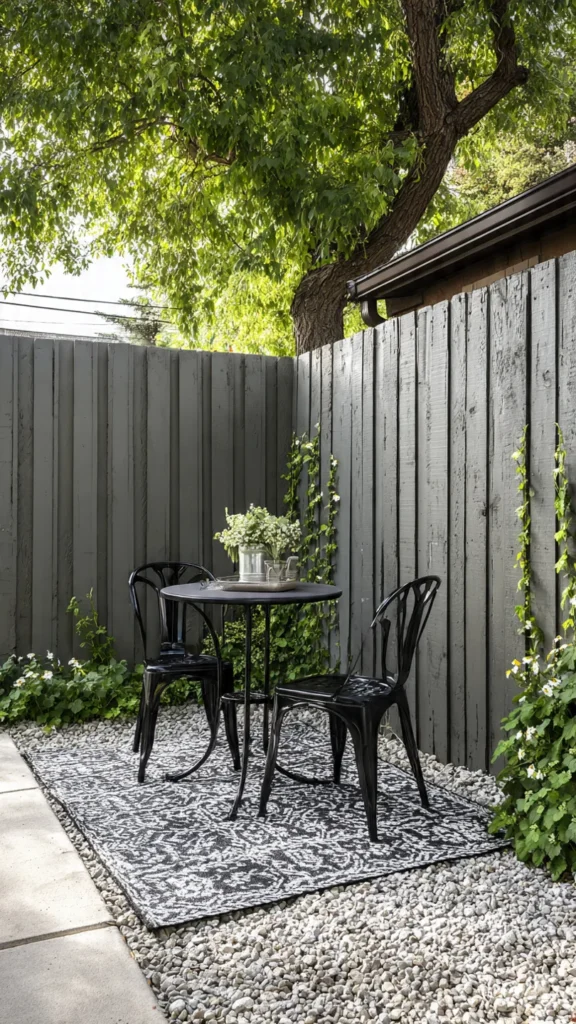
Most people arrange everything parallel to the fence. Furniture runs along the back wall. Pathways follow the straight edge. This is the most natural thing to do and it is exactly what makes small backyards feel like boxes.
Rotate everything 45 degrees. The diagonal of a rectangle is always longer than its sides, so your eye travels further before hitting a boundary. The space registers as bigger without changing a single measurement.
Quick tip: Start by rotating just your outdoor rug 45 degrees under your table and chairs. You will see the difference in under five minutes. Cost: zero.
Layout 2: The single hard surface zone
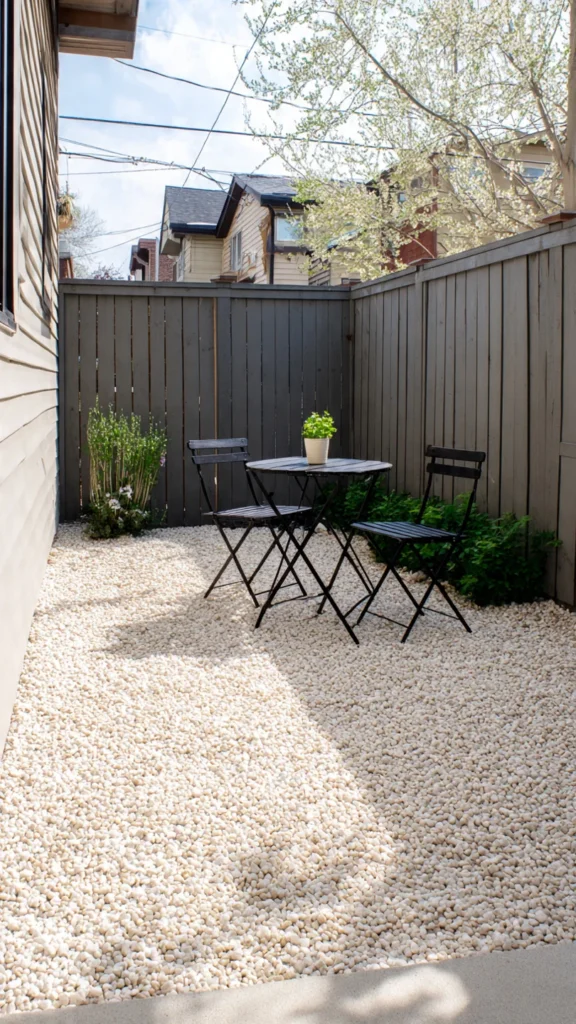
Splitting a small backyard into too many surfaces is one of the most common mistakes people make. A patch of patio here, a strip of grass there, some gravel in between. Each transition creates a visual border and borders chop space into pieces.
Pick one surface and commit to it for your main zone. One continuous plane of gravel, pavers, or decking reads as a single large space. Three small surfaces read as three small spaces.
Layout 3: Vertical gardening walls
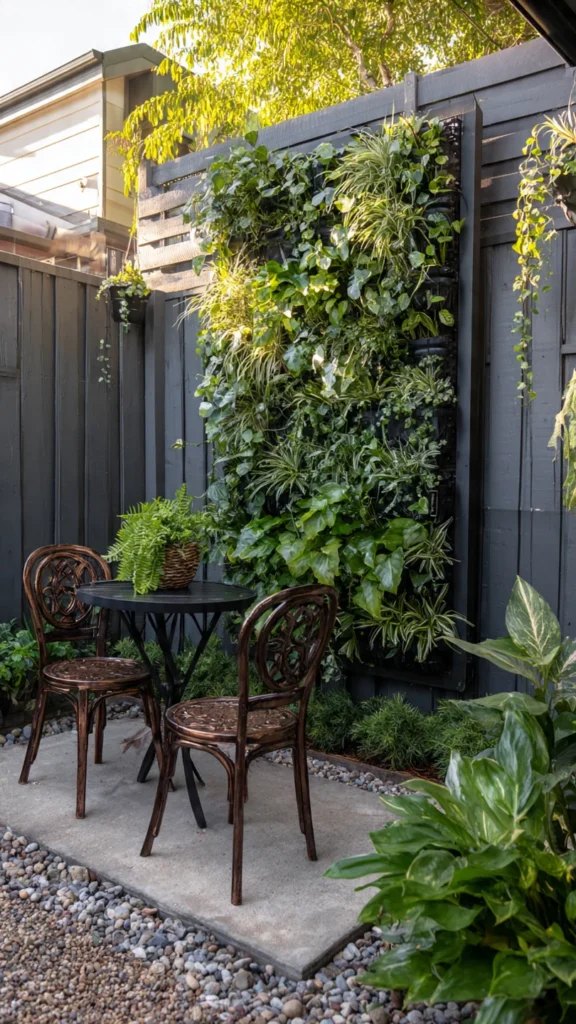
The fence is the most ignored surface in most backyards. People treat it as a boundary. It is actually your biggest opportunity.
A vertical garden wall on even one fence panel shifts the yard from two dimensions to three. Your eye moves up instead of only out, and upward movement is the fastest way to break the feeling of confinement.
Quick tip: Cover at least two thirds of the fence panel height with greenery. A single small planter mounted low does nothing for scale. A full column of plants changes the whole wall.
Layout 4: The far corner focal point
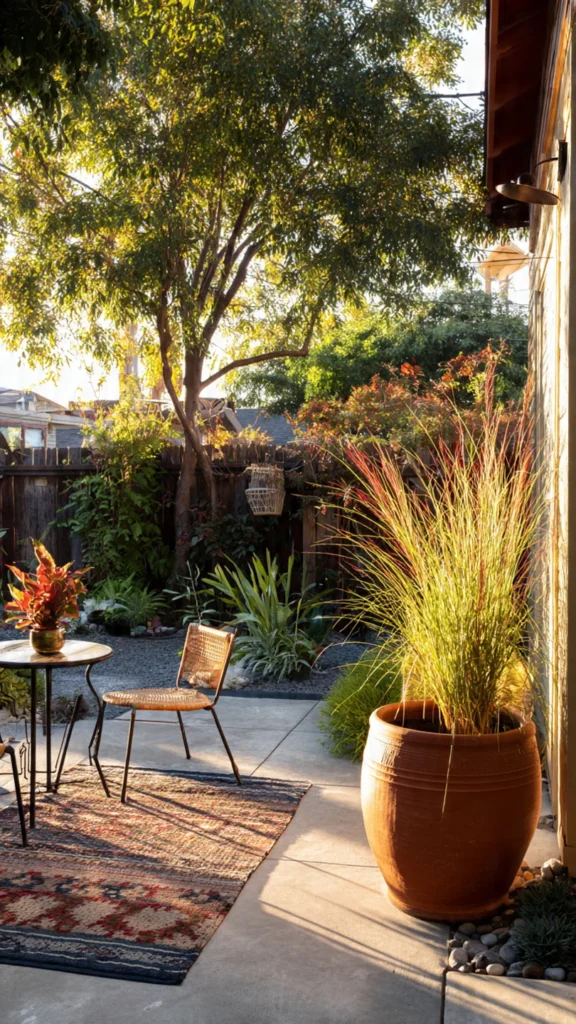
In most small backyards, the eye hits the back fence immediately and stops. The space is read in one glance and filed as small.
Give the eye somewhere to travel. Place something in the far corner that pulls attention to the furthest point in the yard. A tall pot, a sculptural plant, a lantern on a stand. The eye now has to cross the full length of the yard before it settles, and that journey creates the feeling of depth.
Quick tip: A large terracotta pot with a tall ornamental grass costs under $40 and has more impact on the feeling of space than almost any other single change.
Layout 5: Low furniture only
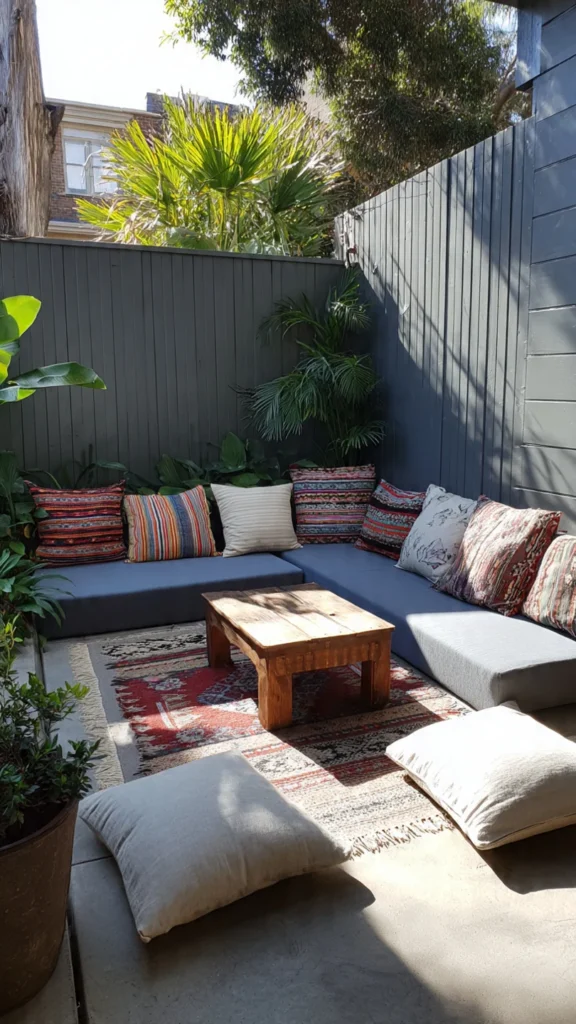
Standard outdoor furniture creates vertical lines at eye level. Chair backs, table legs, umbrella poles. Every vertical element subdivides the space and makes the boundaries feel closer.
Switch to low-profile furniture throughout the seating zone. Floor cushions, low sofas, poufs, and low coffee tables keep sightlines open. When you sit in a low arrangement, the fence line drops out of your field of vision entirely.
Quick tip: Two large floor cushions and a low wooden crate as a table cost less than one standard outdoor chair and create a far more considered, intentional atmosphere.
Layout 6: The borrowed landscape trick
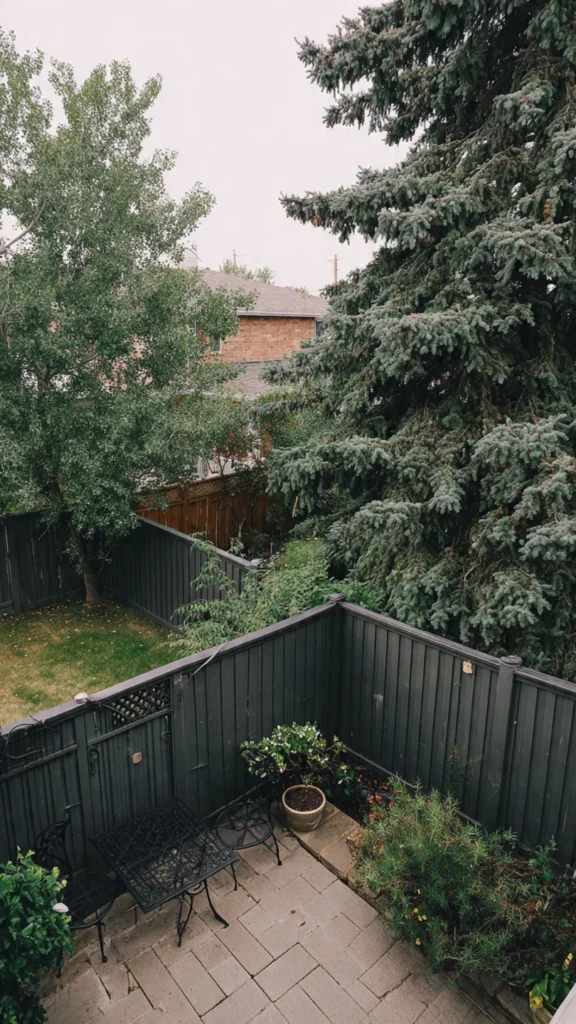
Your backyard does not have to end at your fence. Visually, it can extend far beyond it.
Look over your fence. Trees in a neighbour’s garden, open sky, distant greenery. Whatever is there, frame it deliberately so it reads as part of your view. Keep the top of your fence clear of anything that blocks the sightline. Your yard ends at the fence but your view does not.
Quick tip: Remove any trellis or bamboo screening from the top rail of your fence. Even clearing the top 30cm of fence creates a sightline that visually doubles the perceived depth of the yard.
Layout 7: One shade structure
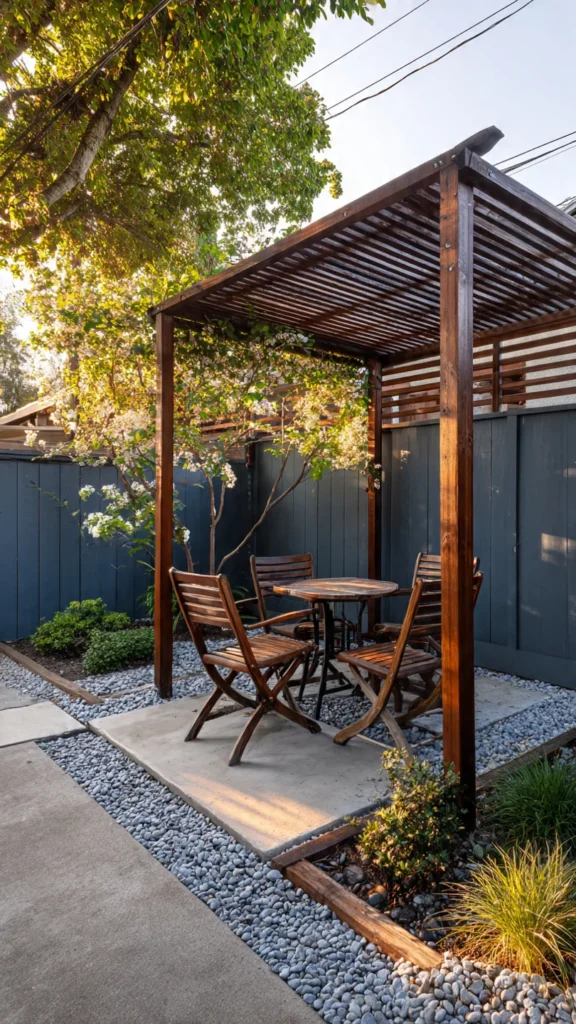
A pergola or shade sail in a small yard might seem like it would make the space feel tighter. The opposite is true when done correctly.
A defined overhead structure turns a patch of ground into a room. Rooms feel purposeful and complete. A shade structure over the seating area only, with open sky beyond, creates an anchored zone without closing off the rest of the yard.
Quick tip: Keep the shade structure proportional to the seating area only. A 2×2 metre pergola over a bistro table costs as little as $150 flat-packed and takes one afternoon to build.
Layout 8: The disappearing path
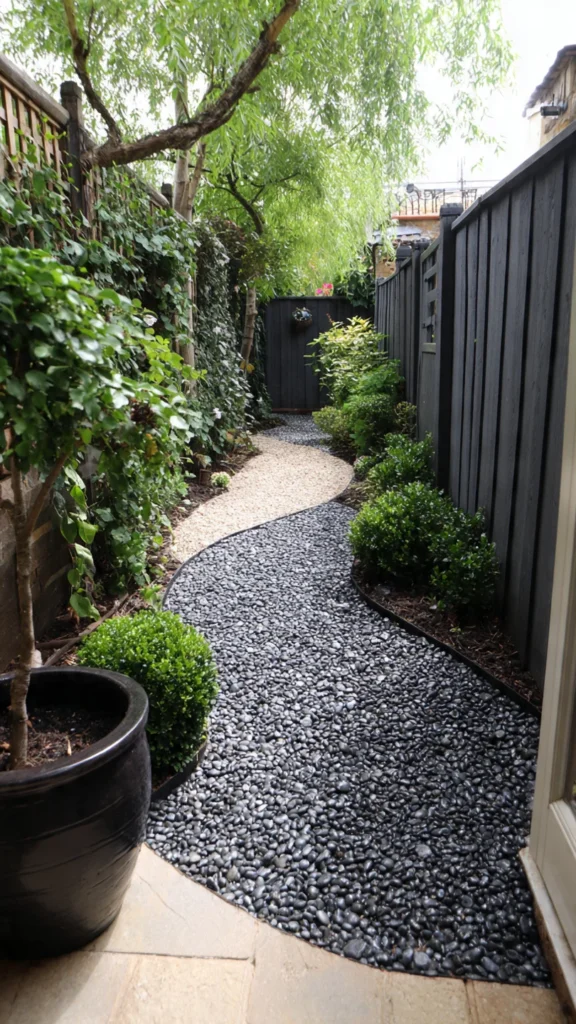
A path you can see the end of reads as short. A path that curves or disappears behind a planter reads as long, regardless of the actual distance.
A straight path from your door to the back fence tells the eye exactly how small the yard is in one second. A path with even a gentle curve creates the suggestion of a yard that continues beyond what you can see.
Quick tip: A 10-degree curve is all you need. End the path behind a large pot so it disappears from view. The brain fills in the rest and assumes there is more yard beyond.
Layout 9: Mirrored or reflective surfaces
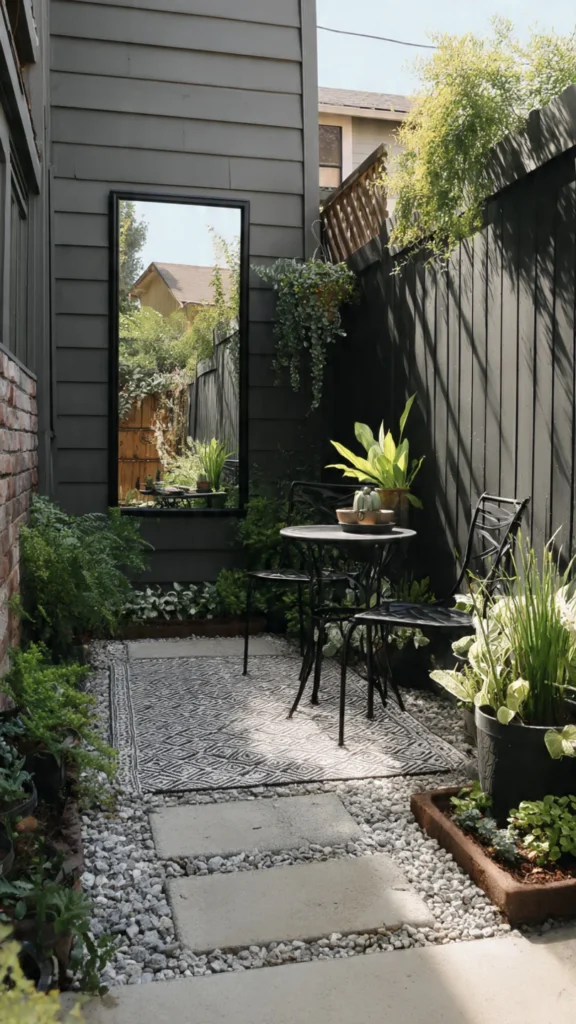
An outdoor mirror on a fence panel creates the visual impression of a second yard on the other side.
Position it to reflect greenery rather than furniture or the house. The reflected image reads as a continuation of the garden and the boundary simply disappears.
Quick tip: Outdoor-rated mirrors cost $30 to $80. Mount at eye level, angle very slightly downward, and frame with climbing plants on both sides so it looks embedded in the garden rather than accessory stuck to a wall.
Layout 10: Zone by function, not by size
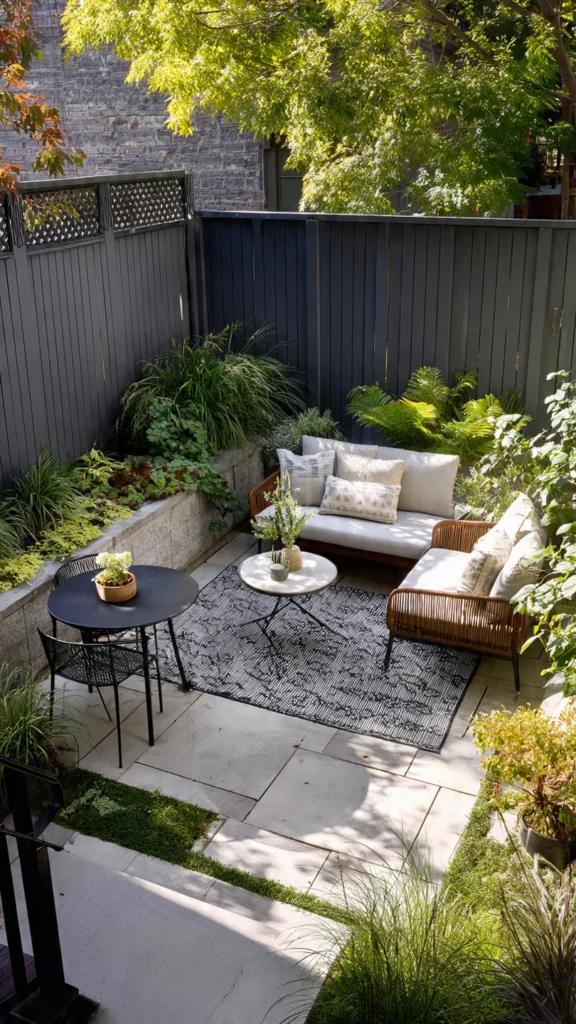
Most people try to fit everything into a small backyard and end up with a space that does nothing well. A half-hearted seating area, a struggling patch of lawn, a forgotten garden bed, a bin corner always in view.
A yard that does one thing well feels complete. A yard that attempts five things badly feels chaotic, and chaos always reads as small.
Quick tip: Write down the single thing you use your backyard for most. Design the entire layout around only that. Minimise or remove everything else.
Layout 11: Continuous perimeter planting
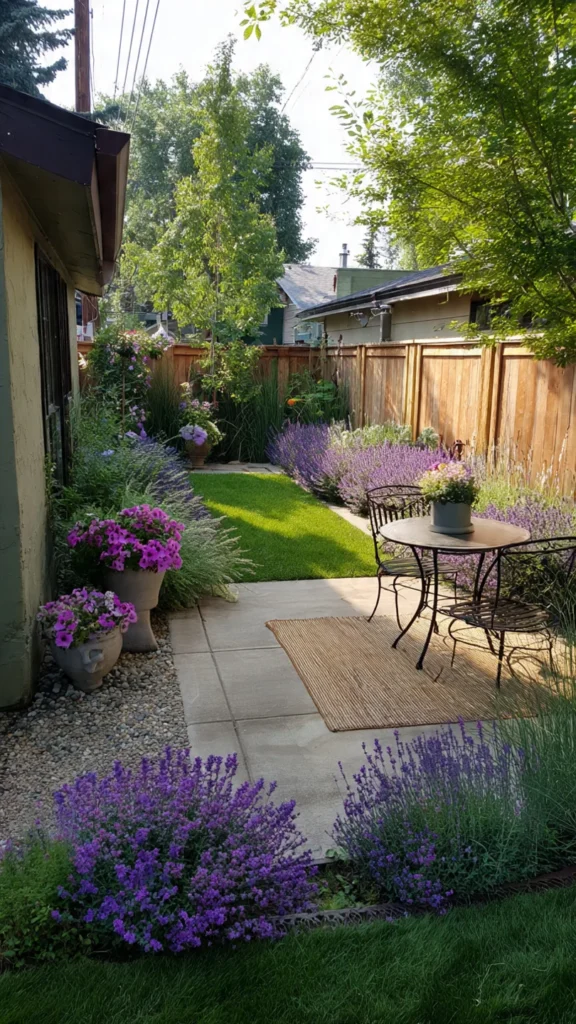
Bare fence panels remind the eye exactly where the boundary is. The walls feel close because they are clearly visible.
The solution is a continuous band of planting along the perimeter: not scattered pots, but one connected line of greenery running the full length of each fence. It softens the boundary and frames the open centre, and a framed space always feels larger than an unframed one.
Layout 12: Light after dark
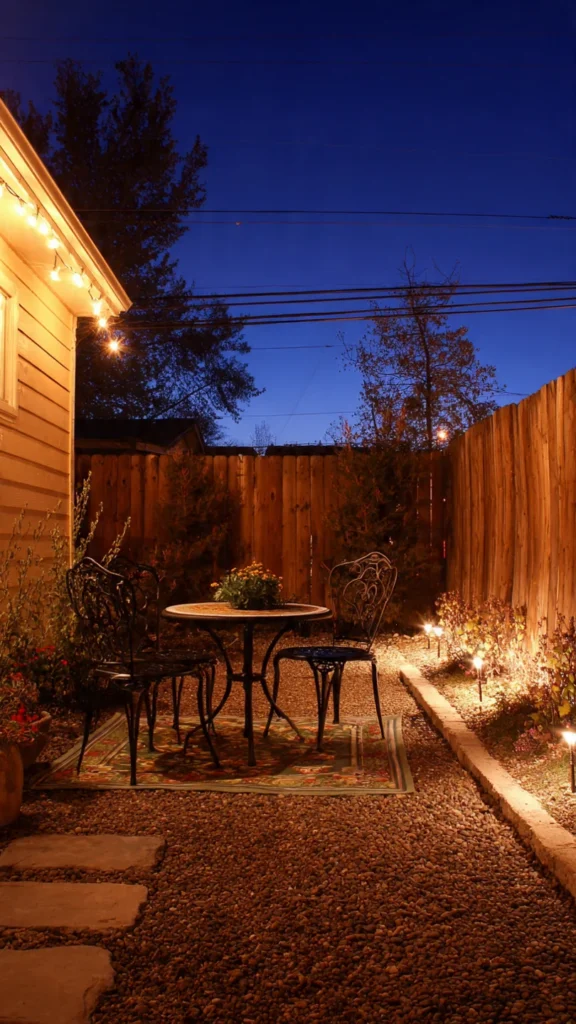
Every other layout on this list changes how your yard looks during the day. This one changes how it feels at night, which for most people is when they actually use it.
Light the perimeter and the plants, not the centre. When you light the edges, the eye reads the illuminated boundary as the furthest point. The space feels as large as the lit area. Light only the centre and the darkness contracts everything back to nothing.
Quick tip: Use three layers: solar stake lights along the fence base, uplighting aimed at the tallest plant or focal point, and warm string lights over the seating zone. Total cost under $60 with no electrician needed.
The one rule that connects all 12
Every layout here works on the same principle. The feeling of space is created by the eye, not by the tape measure.
Give the eye somewhere to travel, layers to move through, and a reason to look up and look further than the fence. A small backyard is not a problem. It is a constraint that forces smarter decisions. And smarter decisions always win.
Start with one layout. Just one. Then step back and see what changed.
Save this post so you have all 12 layouts ready when you start planning.