How to Make a Bedroom Look Bigger: 20 Clever Design Tricks That Actually Work
Tired of feeling boxed in by your bedroom walls? Whether you’re in a studio apartment or working with a compact master suite, you don’t need to knock down walls to make a difference.
Smart design choices can trick the eye and create a sense of space. In this guide, you’ll find 20 creative, practical tips to make your small bedroom look bigger, without sacrificing comfort or style.
1. Use Light Colors to Open Up the Space
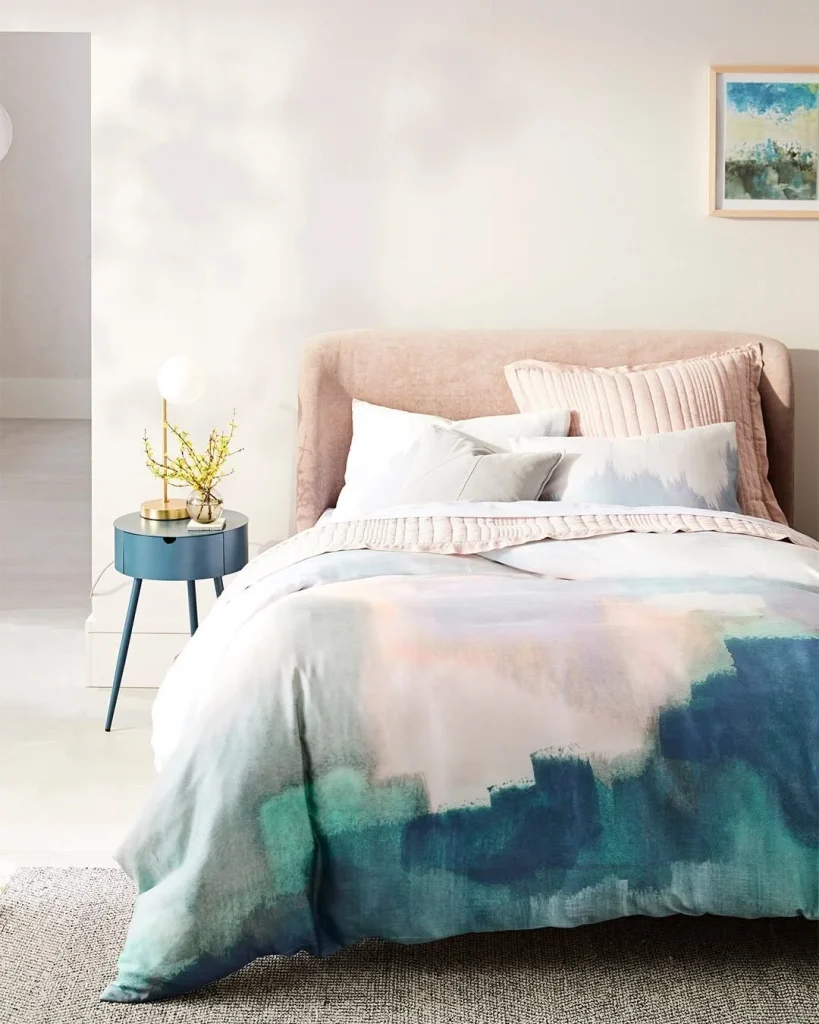
Color is one of the most powerful tools in making a room appear larger. Light shades like soft white, pale beige, icy blue, or gentle grays naturally reflect more light, giving your bedroom a brighter, more expansive feel. These tones push the walls outward visually, helping the room breathe.
To enhance this effect, keep ceilings and trim slightly lighter than your walls. This subtle contrast adds visual depth and keeps the space from feeling flat. Avoid dark or saturated colors across all four walls and they can make your bedroom feel cozy but will definitely close it in visually.
Bonus Tip: Keep trims and ceilings lighter than the walls for added depth.
2. Choose Multi-Functional Furniture
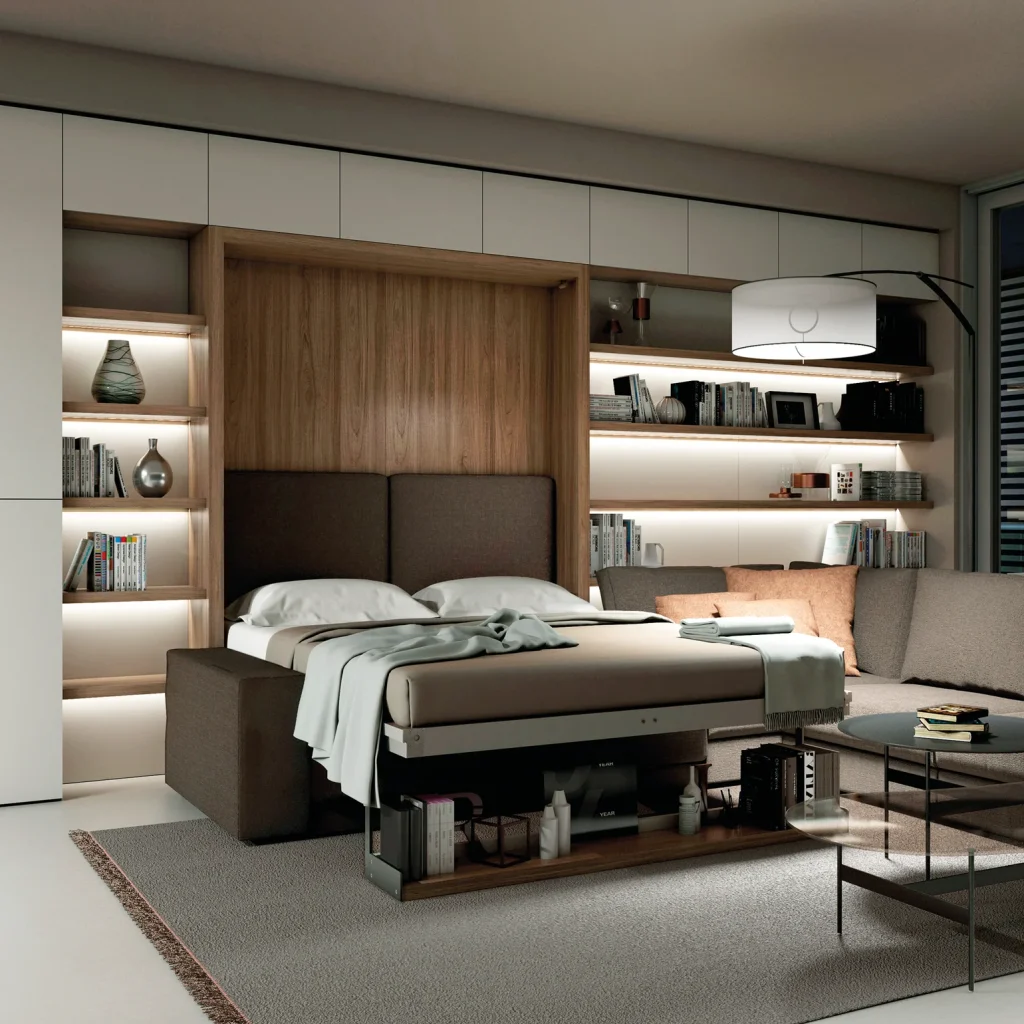
In a small bedroom, every inch matters. Instead of cluttering the space with separate pieces for storage, sitting, and working, invest in furniture that can serve more than one purpose. A bed with deep built-in drawers or a lift-up mattress can hold linens, shoes, or out-of-season clothes. A floating desk that folds away when not in use can double as a vanity.
This approach clears unnecessary items from the floor and simplifies the layout, which leads to a cleaner and more open feeling. Choose pieces that visually blend with the room for an even more seamless look.
3. Use Tall Architectural Details
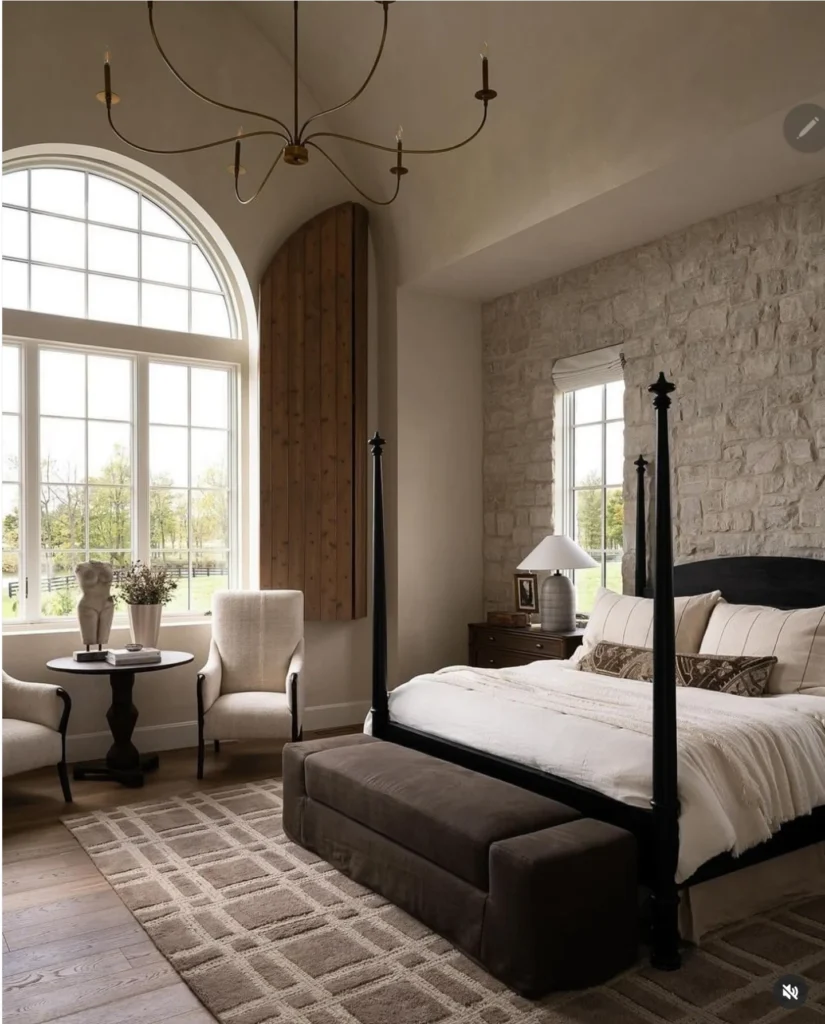
Tall details instantly pull the eye upward, which makes a bedroom feel bigger and more open. In this room, the arched window, tall bed posts, high ceiling, and vertical wood panel all create a strong sense of height.
This works especially well if your bedroom has large windows or a high ceiling because it makes the space feel grand instead of crowded.
To copy this look, use tall curtains, vertical wall paneling, slim floor lamps, or a tall headboard. Keep the furniture low and simple so the vertical elements become the main focus.
Extra tip: Avoid bulky furniture near tall windows. Let the natural light and height stay visible so the room feels larger.
4. Keep the Floor Clear
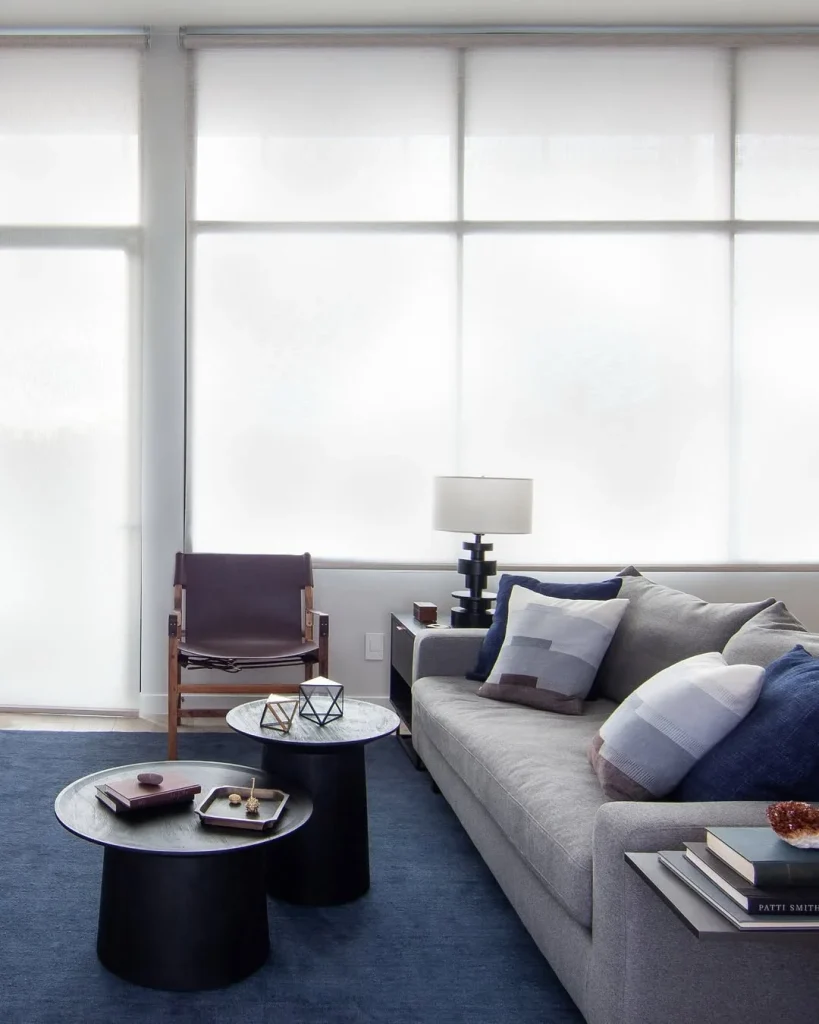
A clean, visible floor gives the impression of openness. That means choosing furniture with legs rather than solid bases and minimizing the number of items that rest directly on the ground. Even small things like a laundry basket or cluttered cords can visually crowd your space.
Opt for floating furniture where possible, like wall-mounted desks or shelves. If you must use floor-based items, go for fewer and larger pieces instead of many small ones, which can look messier. A clear floor not only looks neater but makes walking around more comfortable, too.
Read more article:
- 36 white kitchen Ideas Feel Bright, Calm, and Timeless
- 24 Cozy Red Door Ideas That Instantly Feel Like Home
- 25 Boho Bedroom Ideas That Feel Warm, Relaxed & Stylish
5. Choose a Large Light Rug
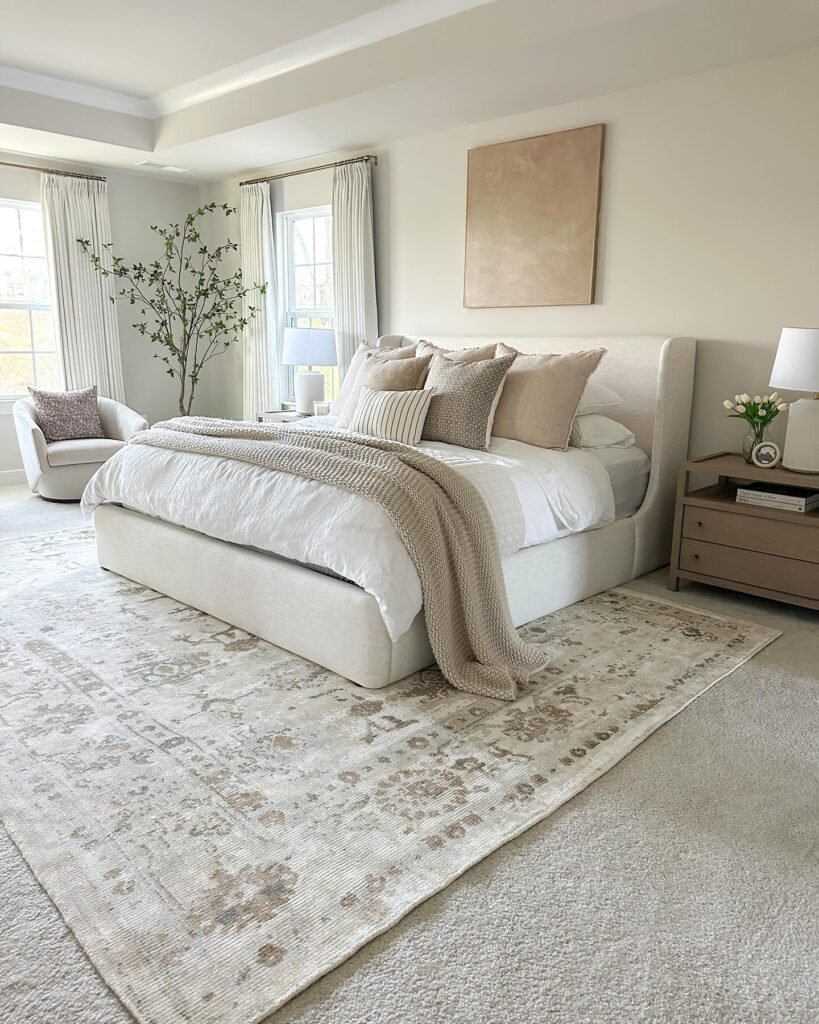
A large rug can make a bedroom look bigger when it sits under the bed and extends beyond the sides. It visually connects the furniture together instead of making the room feel broken into small sections.
In this bedroom, the soft neutral rug blends with the bedding, walls, and curtains. That light color palette keeps the floor from looking heavy, which helps the entire room feel brighter and more spacious.
For the best result, choose a rug that is wider than your bed and reaches at least halfway under the nightstands.
Extra tip: Stay away from very dark or busy rugs in a small bedroom. A soft pattern in beige, cream, gray, or muted tones will open the space better.
6. Use Slim Four-Poster Beds Carefully
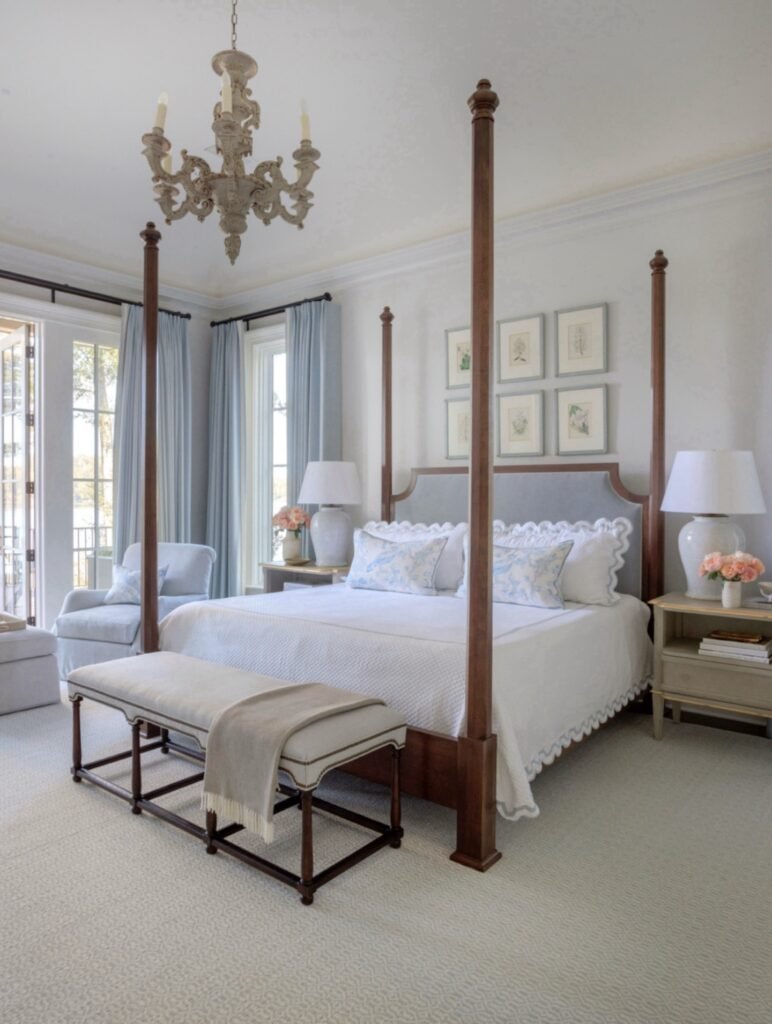
A four-poster bed can still work in a bedroom if the frame is slim and open. The key is choosing thin posts instead of a heavy canopy or bulky wooden frame.
This room feels airy because the bed frame creates height without blocking the view. The light bedding, pale walls, soft curtains, and open walking space balance the tall structure.
If you love a classic bedroom style, pick a four-poster bed with clean lines and avoid too many heavy layers around it.
Extra tip: Keep the bedding mostly white or light-colored so the bed does not dominate the entire room.
7. Add Reflective Closet Doors
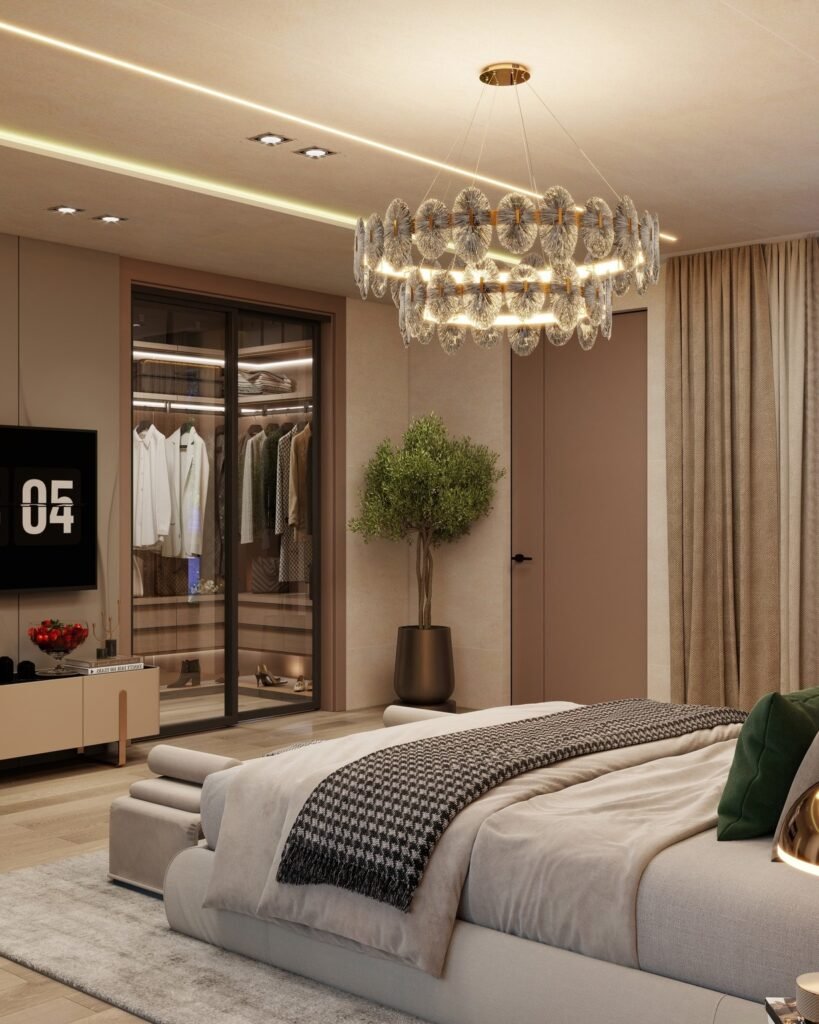
Reflective surfaces are one of the easiest ways to make a bedroom look bigger. In this room, the glass closet doors reflect light and add visual depth, making the wall feel less flat and closed in.
This idea is especially useful for bedrooms with built-in wardrobes. Instead of using solid dark doors, choose glass, glossy, mirrored, or semi-reflective finishes to bounce light around the room.
The warm ceiling lighting also helps the space feel deeper and more luxurious.
Extra tip: If mirrored closet doors feel too bold, try glossy cabinet fronts or glass panels with subtle tinting.
8. Build Storage Around the Window
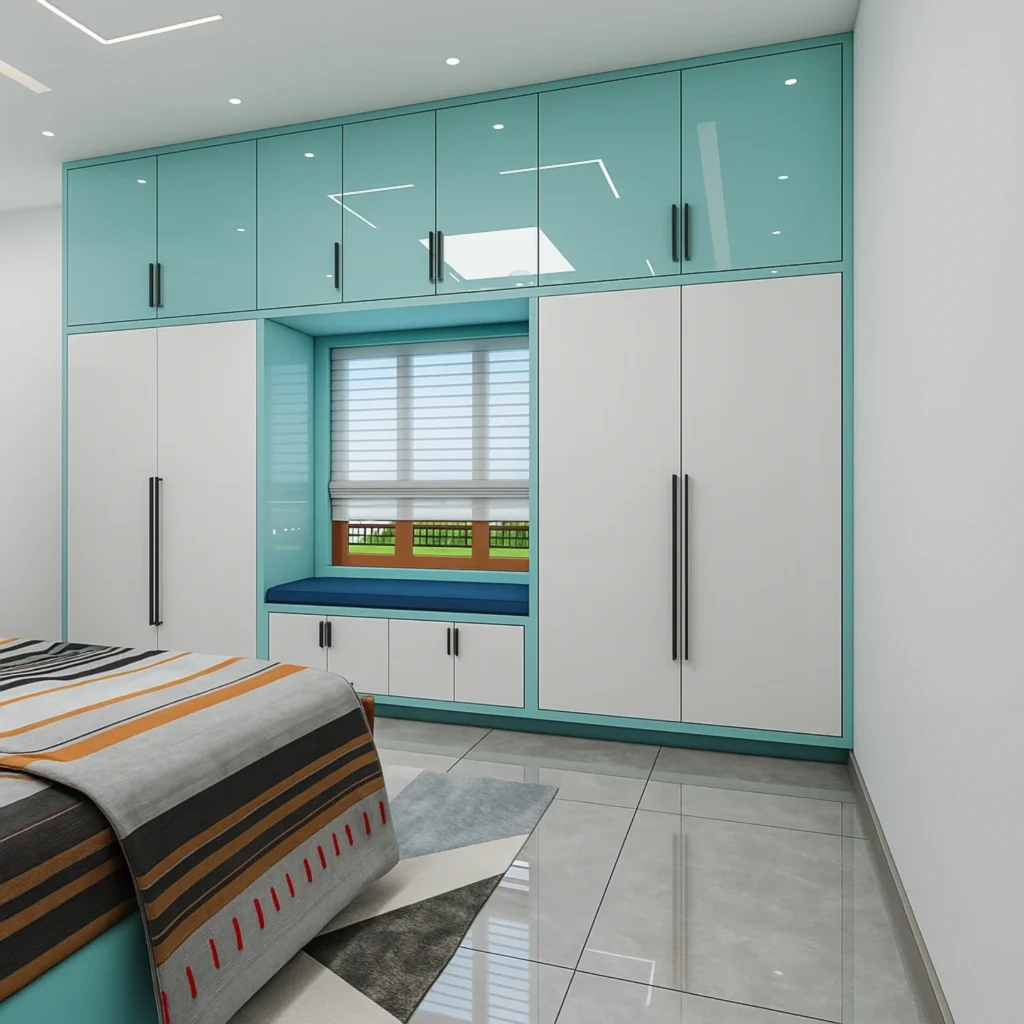
Built-in storage around a window is a smart way to use vertical wall space without making the bedroom feel crowded. It keeps clutter hidden while leaving the center of the room open.
In this design, the cabinets go all the way up to the ceiling, which makes the wall look taller. The window seat also turns unused space into a cozy sitting area without adding extra furniture.
This is perfect for small bedrooms because it combines storage, seating, and style in one wall.
Extra tip: Use light cabinet colors with simple handles. Too many dark cabinets can make the room feel boxed in.
9. Let Natural Light Lead the Room
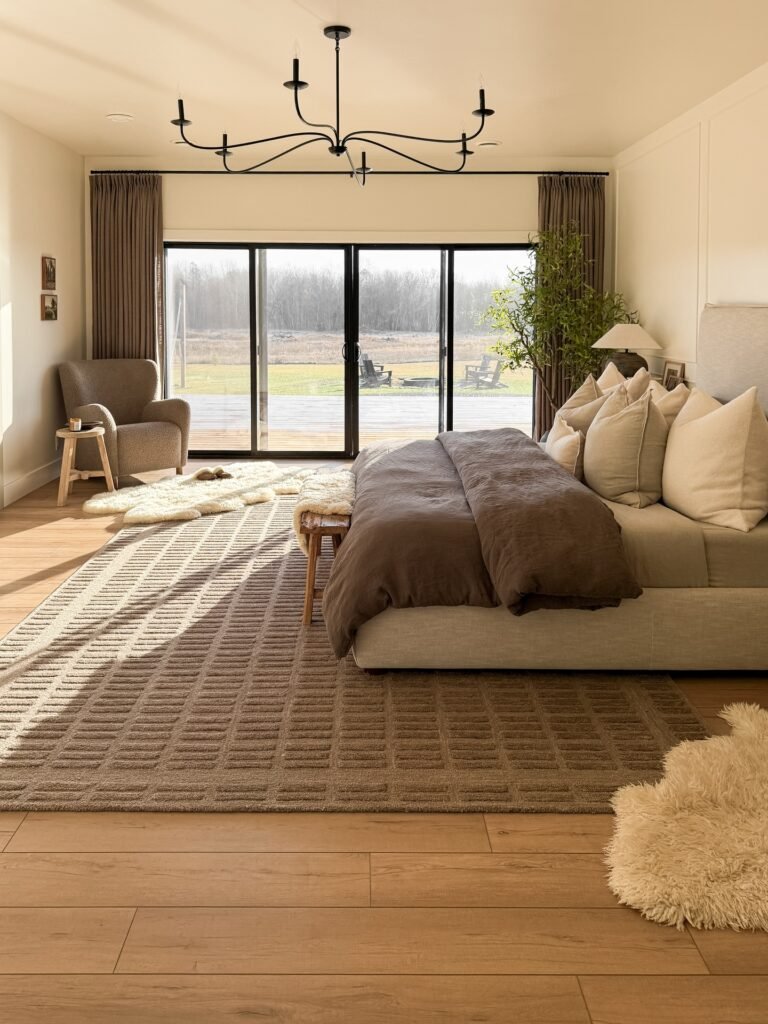
Natural light can make even a simple bedroom feel much larger. This room uses wide glass doors, light walls, soft curtains, and a neutral rug to let the sunlight become the main feature.
The furniture is kept low and relaxed, which makes the eye travel straight toward the window view. That open sightline creates the feeling of more space beyond the bedroom.
To copy this, avoid blocking windows with tall dressers or heavy chairs. Keep the window area clean, open, and easy to see.
Extra tip: Use sheer curtains or light-filtering panels so the room stays bright during the day.
10. Use One Large Rug Instead of Several Small Ones
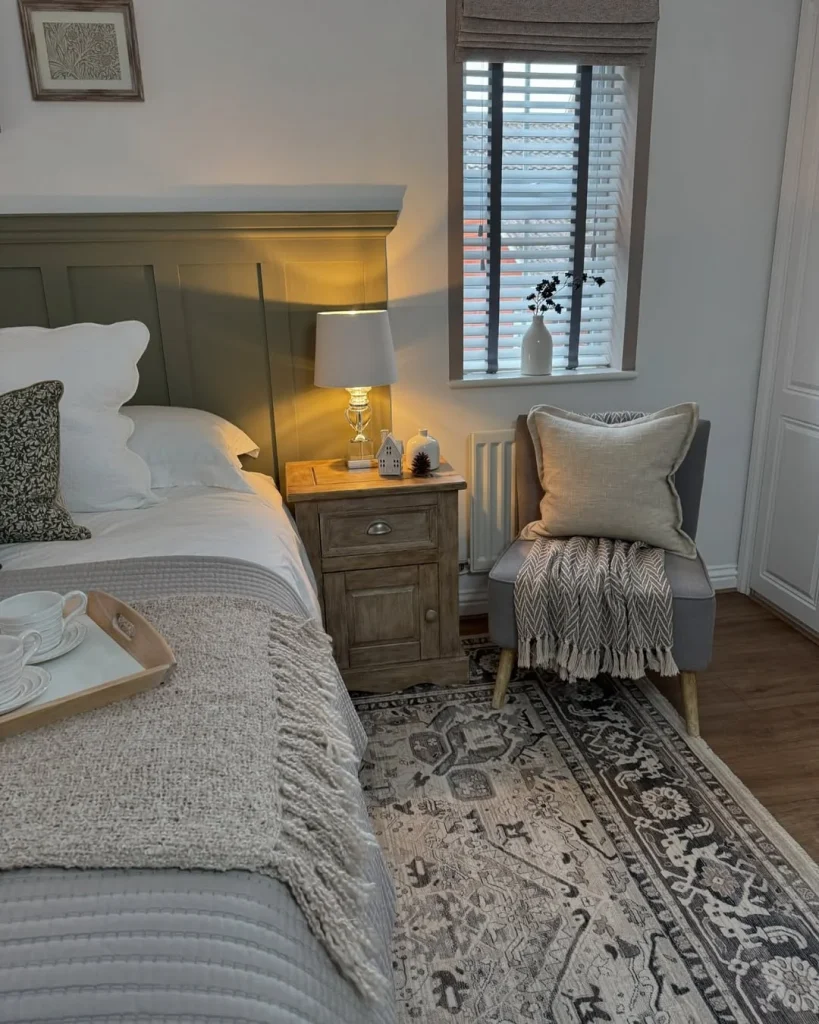
A large area rug can visually anchor the entire room, giving it cohesion. Using several small rugs may create unnecessary breaks in the space, making it feel chopped up or even cluttered. Look for rugs that extend beneath the bed and surrounding furniture to pull everything together.
Stick to simple patterns or solid colors that match your palette. Textured rugs, like jute or looped wool, can add depth without making the room look busy. This grounding effect helps trick the eye into seeing the room as larger than it is.
11. Use One Statement Wall
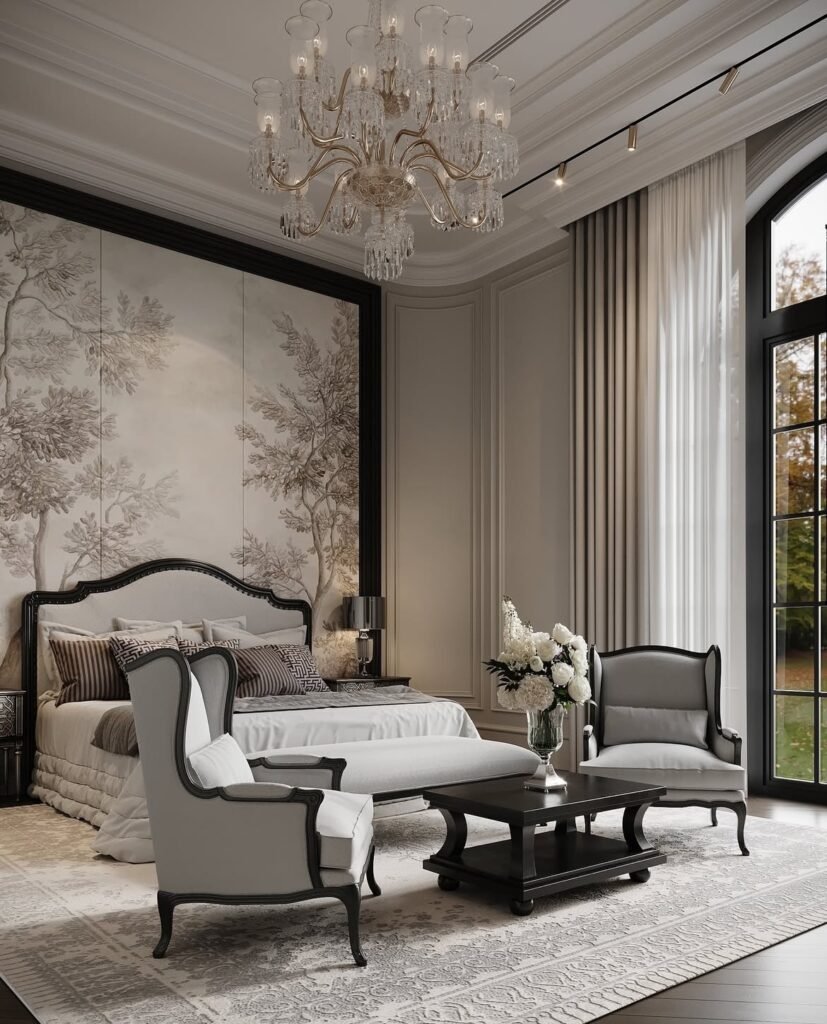
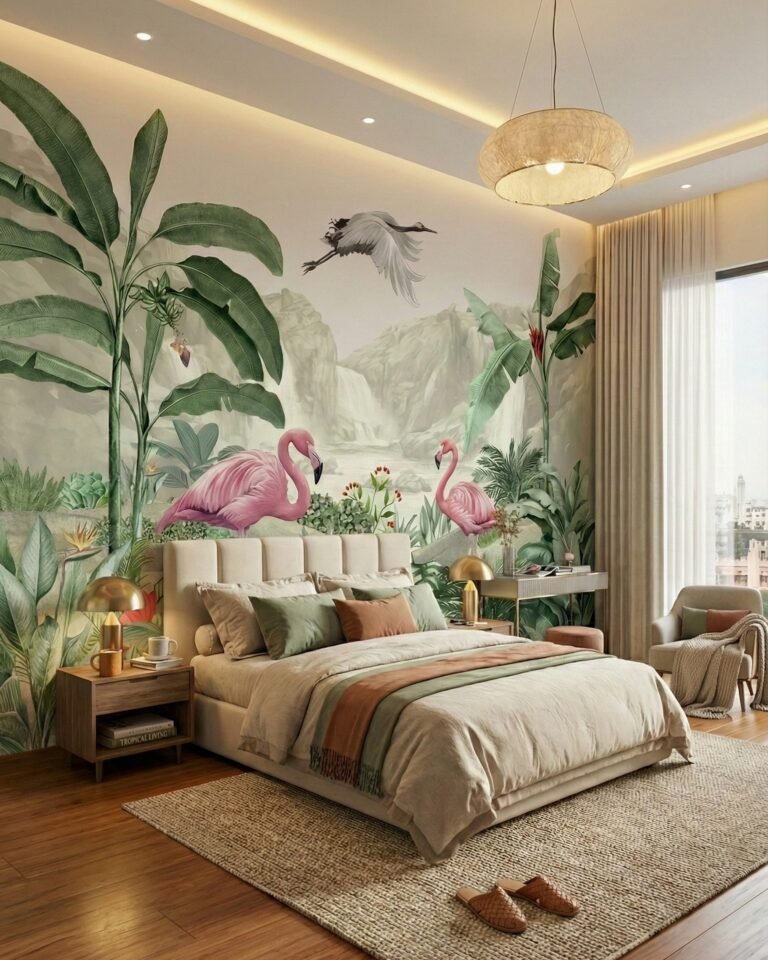
A statement wall can make a bedroom feel bigger when it adds depth instead of clutter. In this room, the large mural-style wall behind the bed creates a focal point and gives the space a designer look.
The trick is keeping the rest of the room controlled. The neutral rug, matching chairs, soft bedding, and tall curtains balance the bold wall so the room still feels elegant and open.
This works best when the statement wall is behind the bed because it anchors the layout without taking over every corner.
Extra tip: Choose soft scenic prints, subtle wallpaper, or large-scale patterns instead of small busy prints. Large designs make the wall feel wider.
12. Keep the Door Area Clear
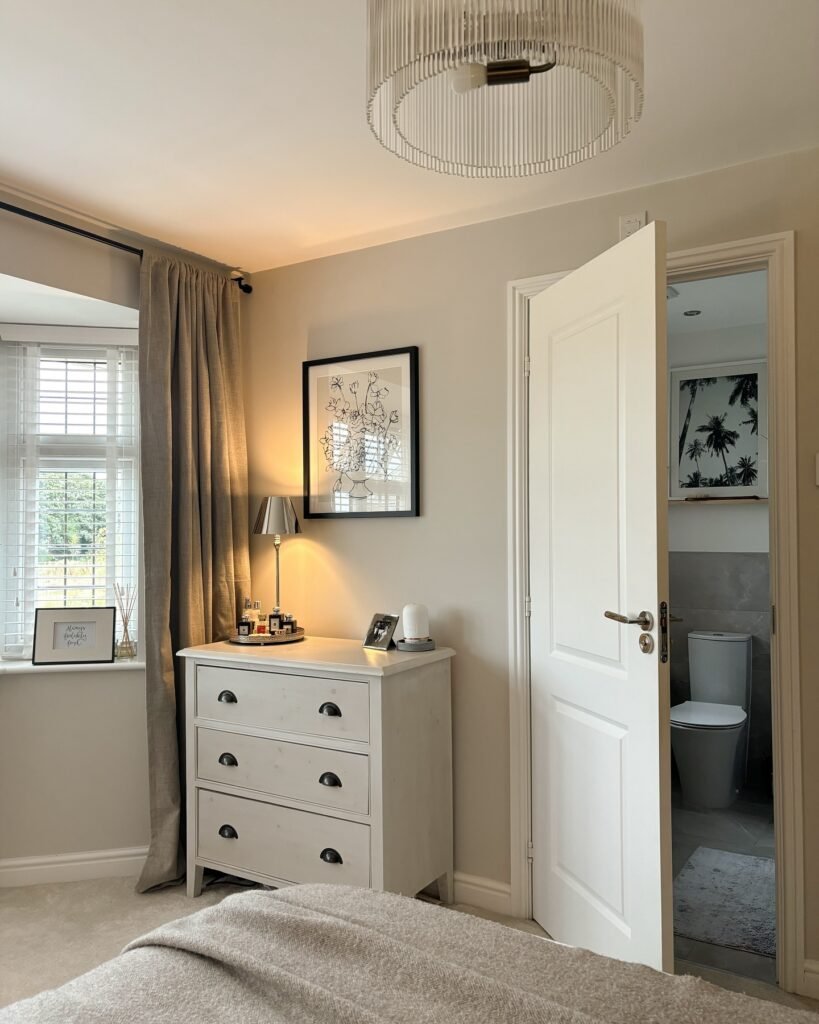
A bedroom can feel smaller when the entry area is crowded with furniture, baskets, or decor. In this room, the space around the door is open, which makes the bedroom feel easier to move through.
The light wall color, white door, simple dresser, and soft curtains all help the room feel calm instead of busy. Even though there is furniture near the window, it still feels balanced because the walking path stays clear.
This is a simple trick for small bedrooms because the first view into the room matters.
Extra tip: Avoid placing tall or bulky furniture directly behind the door. It can make the room feel tight before you even step inside.
13. Use Clear or Lucite Furniture
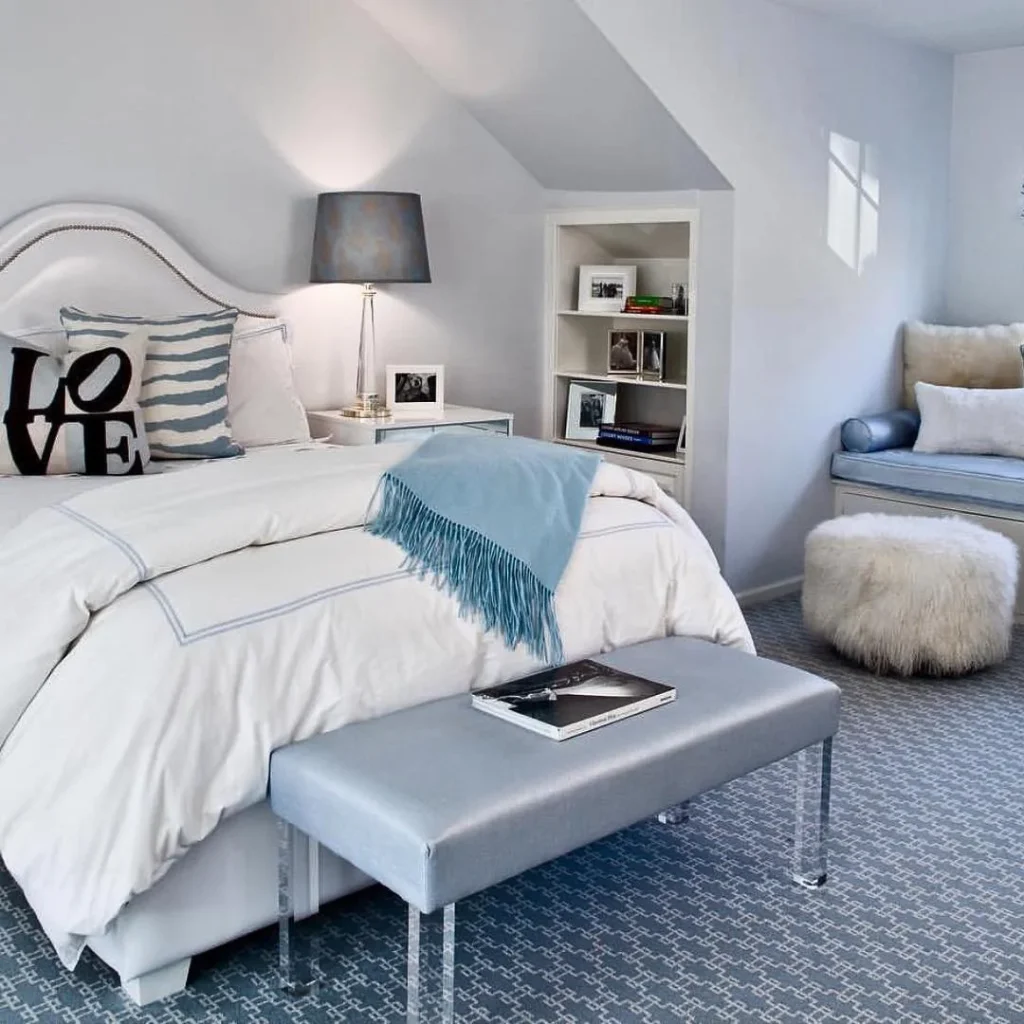
Transparent furniture—like acrylic chairs or glass desks—visually “disappears” into the room. Because your eyes can see through them, they don’t interrupt the visual flow. This is perfect for tight spaces where every visual inch matters.
You’ll often see lucite furniture in modern decor, but it also pairs beautifully with minimalist, boho, or glam interiors. Use sparingly—one or two pieces are enough to make a noticeable difference without making the room feel cold.
Note: They’re stylish and invisible at the same time, ideal for tight rooms.
14. Mount Lighting on the Wall
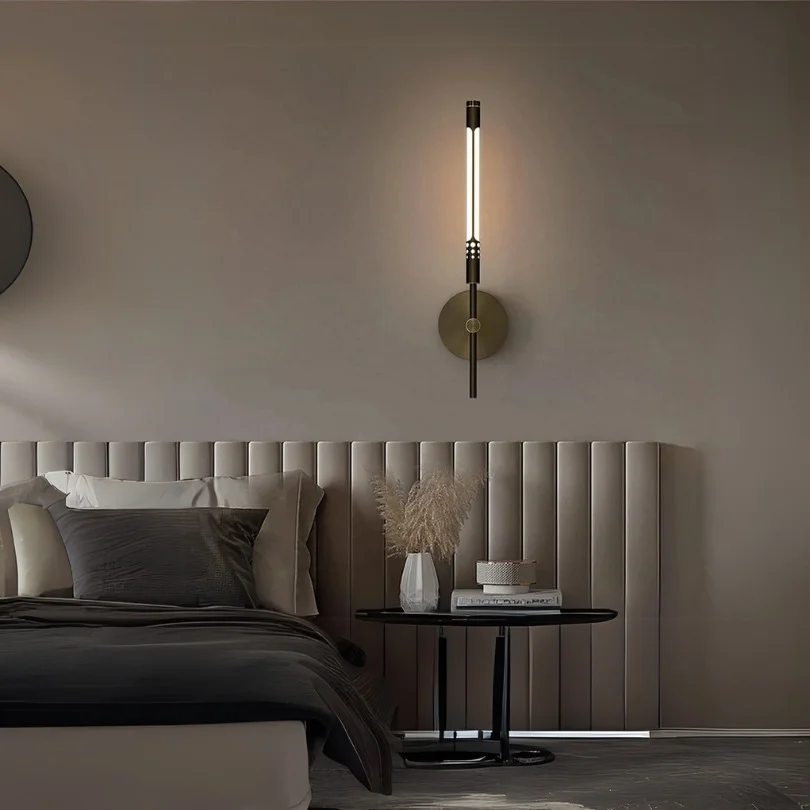
Wall-mounted lights such as sconces or pendant lamps can replace traditional bedside lamps, freeing up valuable surface space. They also draw attention upward, enhancing the vertical scale of the room.
Choose designs that match your decor sleek black sconces for modern rooms or brass swing-arm lights for a more classic feel. For renters, peel-and-stick wall lamps or battery-operated options offer flexibility without the need for drilling.
Tip: Adjustable wall lights also make excellent reading lights above the bed.
15. Use Light Wall Paneling
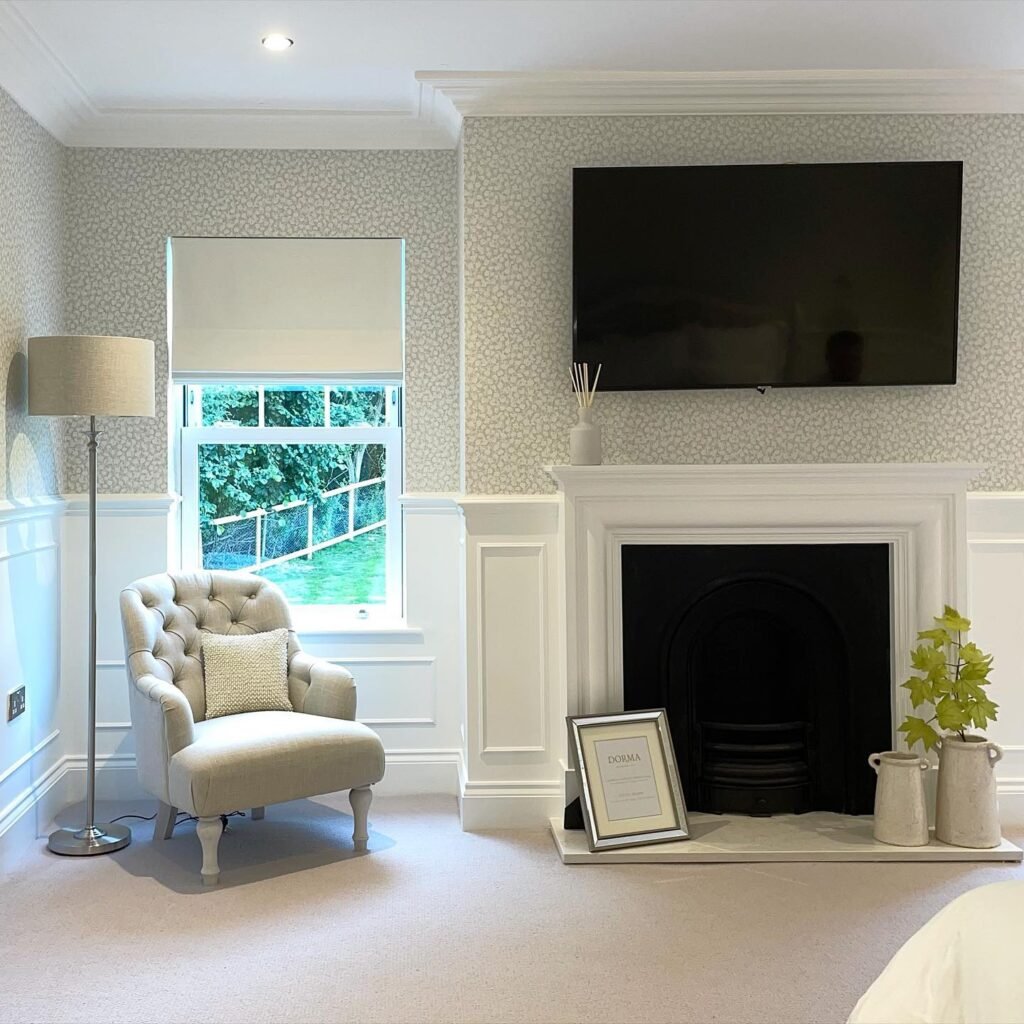
Wall paneling can make a bedroom look bigger when it is painted in a soft, light color. In this room, the white lower paneling adds texture without making the walls feel heavy.
The paneling also creates a clean horizontal line that makes the space feel more structured. Paired with the pale wallpaper and light carpet, the whole room feels brighter and more finished.
This idea works well if your bedroom feels plain but you do not want to add dark paint or bold wallpaper.
Extra tip: Keep the trim, paneling, and baseboards in similar light shades for a seamless look.
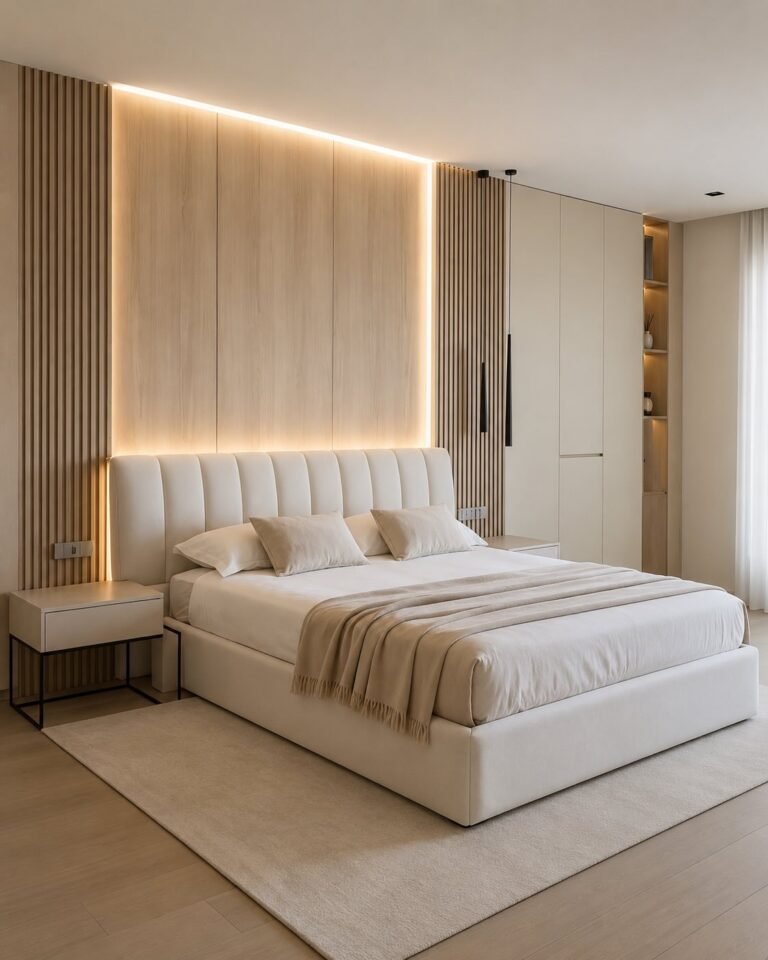
16. Add Vertical Texture Behind the Bed
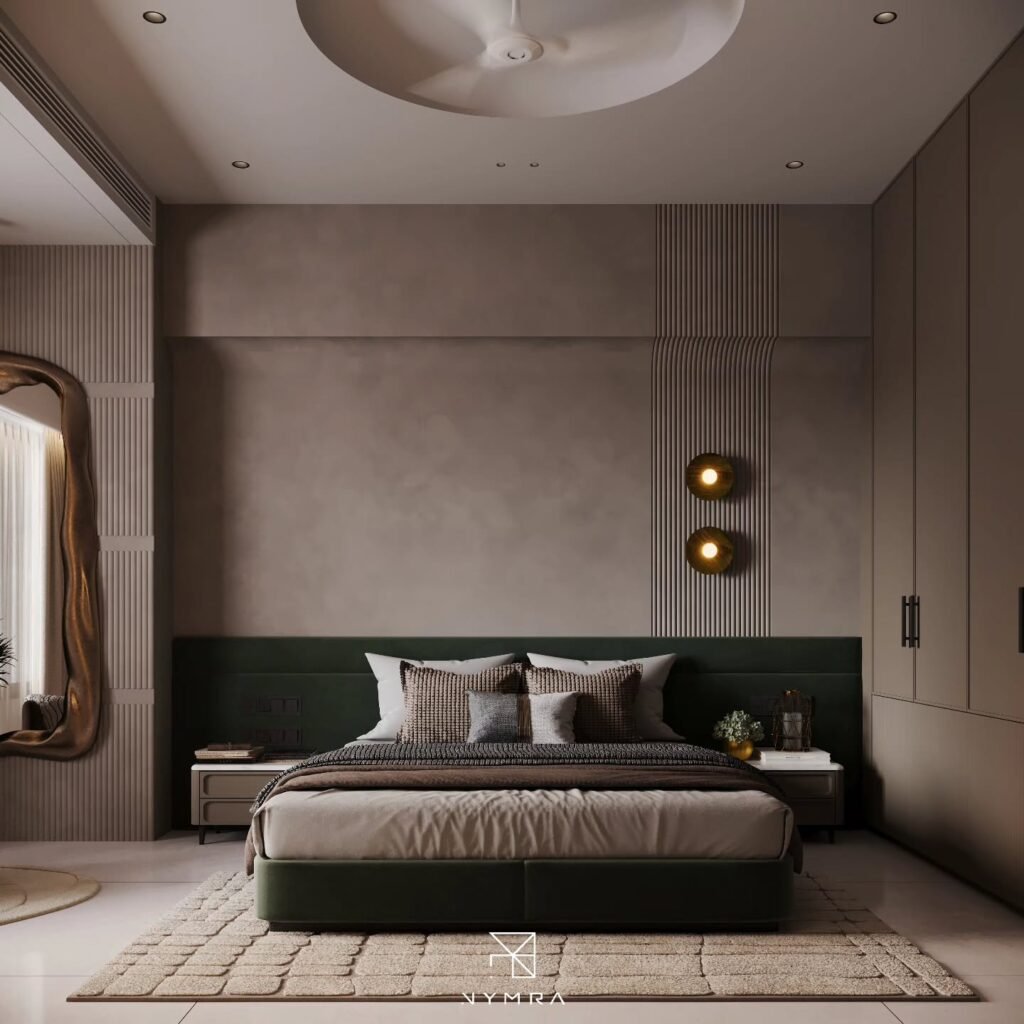
Vertical texture is a smart way to make a bedroom feel taller. In this room, the narrow fluted wall detail behind the bed draws the eye upward and gives the wall more depth.
The design also keeps the room from feeling flat, which is helpful when you are using neutral colors. Even with darker bedding and a deep green bed frame, the vertical lines make the space feel designed rather than cramped.
This works especially well behind the headboard because it becomes a focal point without taking up floor space.
Extra tip: Try slim wood slats, vertical paneling, or textured wallpaper if you want this look on a budget.
17. Style the Dresser Lightly
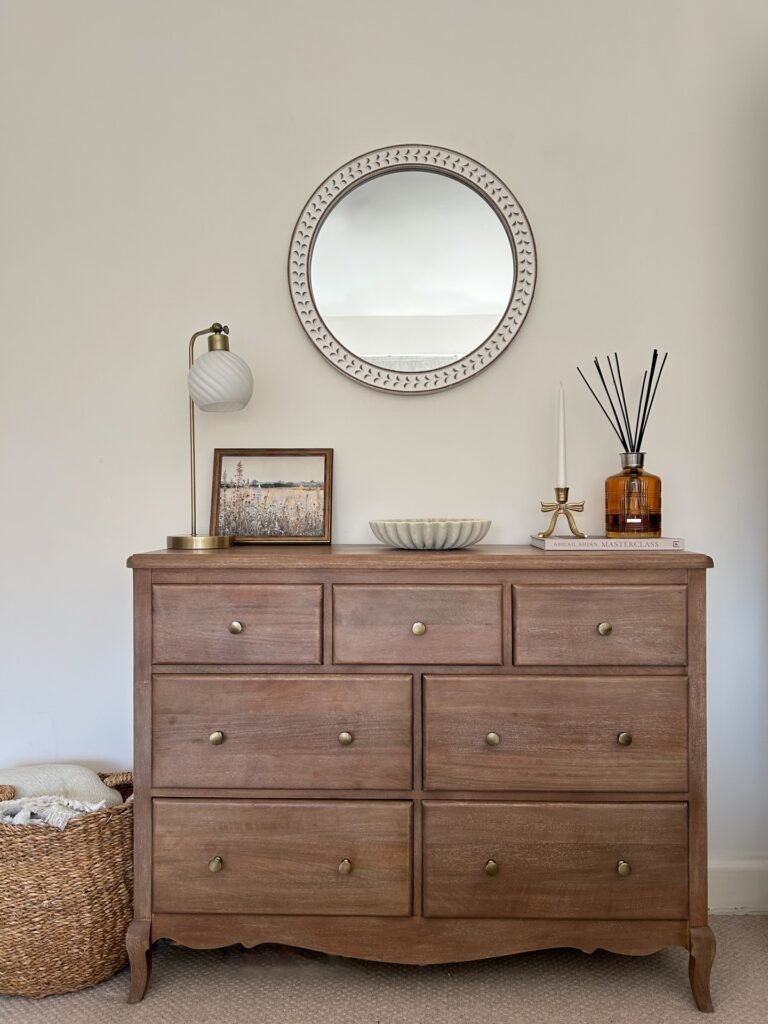
A dresser can easily make a bedroom feel cluttered if the top is covered with too many small items. In this setup, the styling is simple, balanced, and easy on the eye.
The round mirror above the dresser helps bounce light around the room, while the lamp, small artwork, bowl, candle, and diffuser add personality without crowding the surface. The open wall space around the mirror also keeps the area from feeling heavy.
This is a great idea if your bedroom needs storage but you still want it to feel open.
Extra tip: Use one mirror, one lamp, and two or three small decor pieces. Too many items will make the dresser look messy.
18. Use Matching Mirrors Beside the Bed
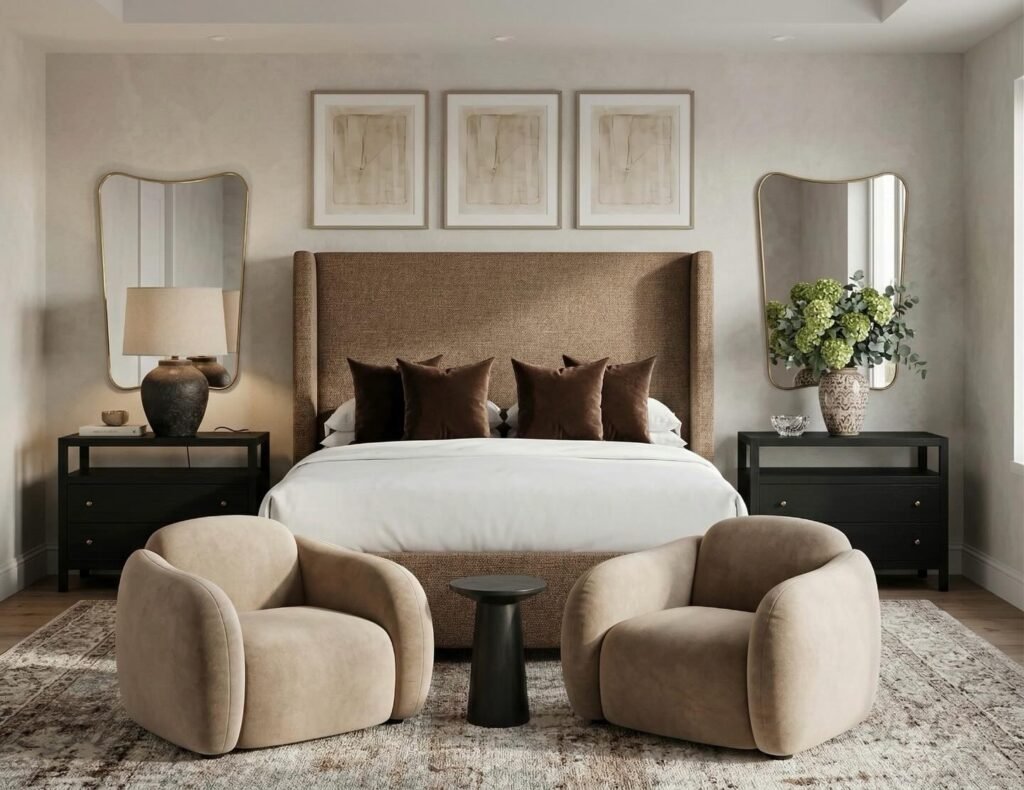
Mirrors on both sides of the bed can make a bedroom feel wider and more balanced. In this room, the mirrors reflect light from the windows and help the wall feel less closed in.
The matching nightstands, artwork, lamps, and soft chairs create symmetry, which makes the room feel organized. When a bedroom has a clear layout, it naturally feels larger because the eye knows where to look.
This works best in medium or small bedrooms where the bed is the main focal point.
Extra tip: Choose mirrors with slim frames so they add brightness without looking too bulky.
19. Try Vertical Shiplap Walls
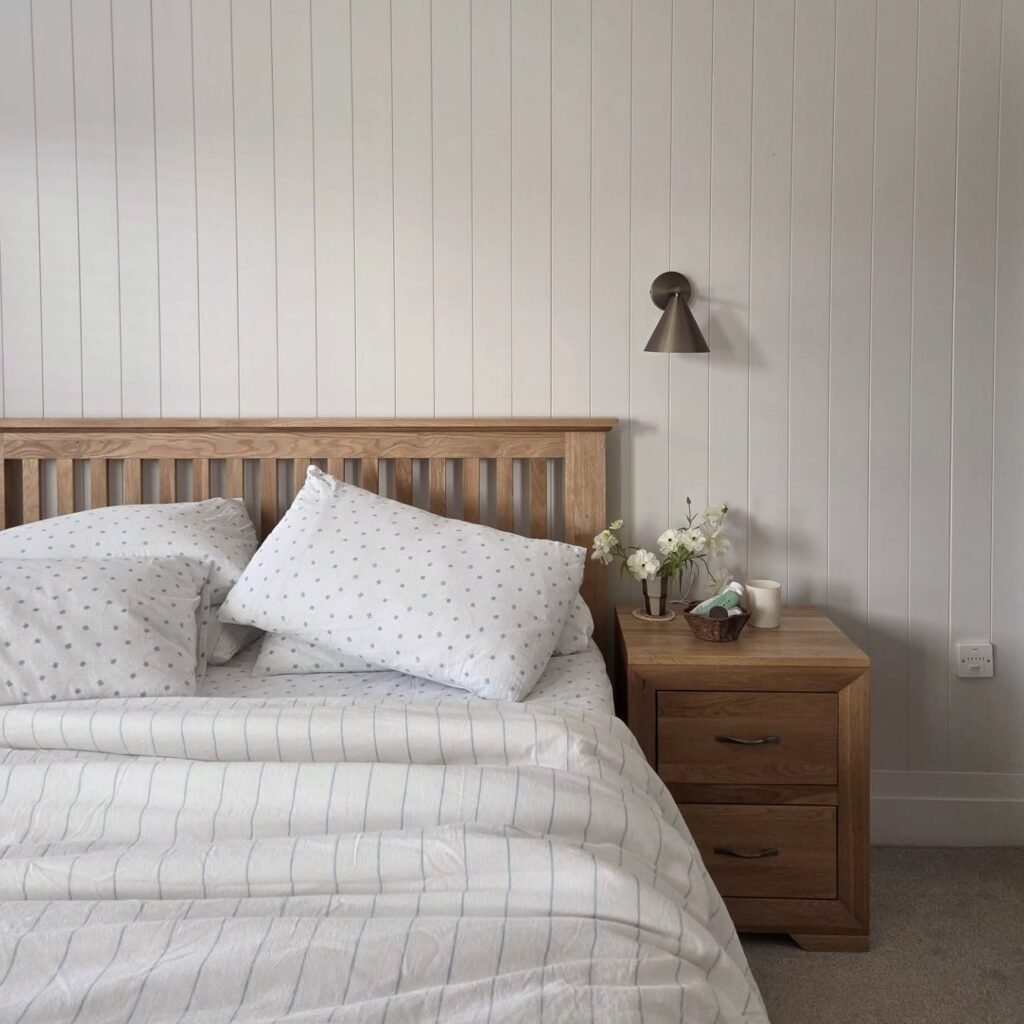
Vertical shiplap is a great way to make a bedroom look taller without adding extra decor. The thin lines guide the eye upward, which helps the wall feel higher and cleaner.
In this bedroom, the white shiplap, light bedding, and simple wood furniture create a calm and airy look. The wall sconce also saves space on the nightstand, which keeps the bedside area more open.
This is a useful idea for small bedrooms because it adds style while keeping the floor clear.
Extra tip: Paint vertical shiplap white, cream, or soft gray for the most spacious effect.
20. Use Sheer Curtains for Soft Light
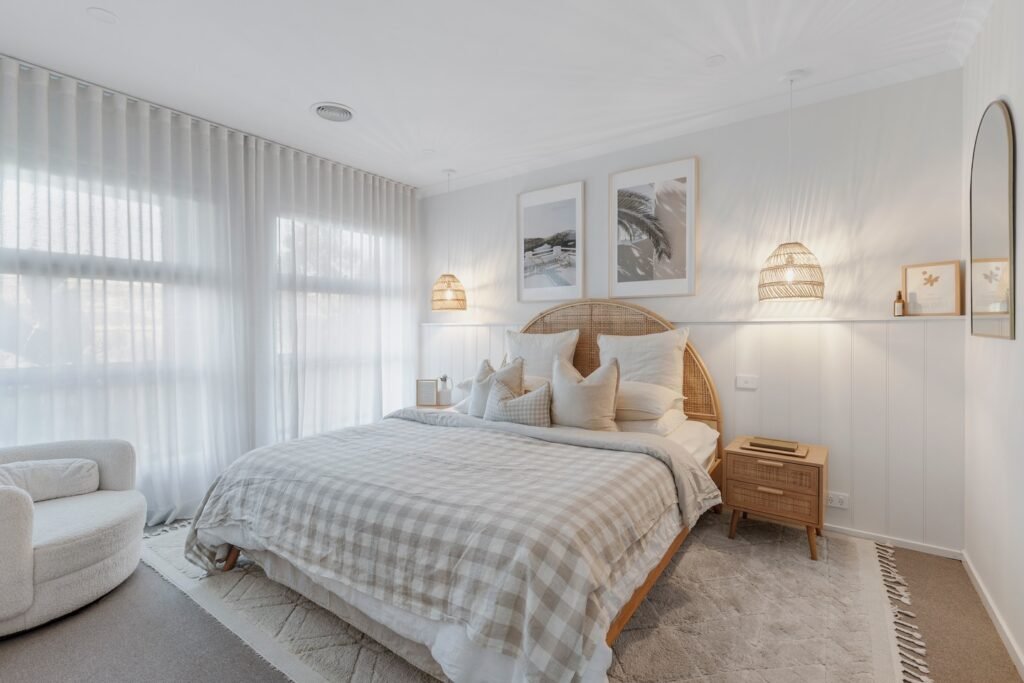
Sheer curtains help a bedroom feel bigger because they let natural light spread across the room. Instead of blocking the window with heavy fabric, they soften the light and make the space feel bright and relaxing.
In this bedroom, the white curtains, pale bedding, woven furniture, and soft rug all work together to create an airy look. Nothing feels too heavy, so the room appears wider and more open.
This is one of the best ideas for small bedrooms, especially if you have a large window.
Extra tip: Hang sheer curtains close to the ceiling and let them reach the floor. This makes the windows look taller.
FAQs
How can I make a small bedroom look bigger?
You can make a small bedroom look bigger by using light wall colors, sheer curtains, mirrors, low-profile furniture, and smart storage. Keep the floor as open as possible and avoid filling every corner with furniture. A large light rug, tall curtains, and simple bedding can also help the room feel more open.
What color makes a bedroom look bigger?
Light colors usually make a bedroom look bigger because they reflect more light. White, cream, soft beige, pale gray, and warm off-white are great choices. You do not have to use plain white everywhere, but keeping the main colors soft and neutral will make the room feel brighter and more spacious.
Do mirrors really make a bedroom look bigger?
Yes, mirrors can make a bedroom look bigger because they reflect light and create the feeling of more depth.
A mirror above a dresser, beside the bed, or across from a window can help open up the room. For the best effect, choose a mirror that reflects natural light instead of a cluttered corner.
What furniture makes a bedroom feel more spacious?
Low-profile beds, slim nightstands, wall-mounted lights, and dressers with clean lines can make a bedroom feel more spacious.
Furniture with legs also helps because you can see more of the floor underneath. Avoid oversized pieces that block windows, doors, or walking paths.
How do I make my bedroom look bigger without spending much money?
Start by decluttering, moving furniture away from windows, using lighter bedding, and hanging curtains higher. You can also add a mirror, style your dresser with fewer items, and use baskets to hide small clutter. These simple changes can make a bedroom feel bigger without a full makeover.